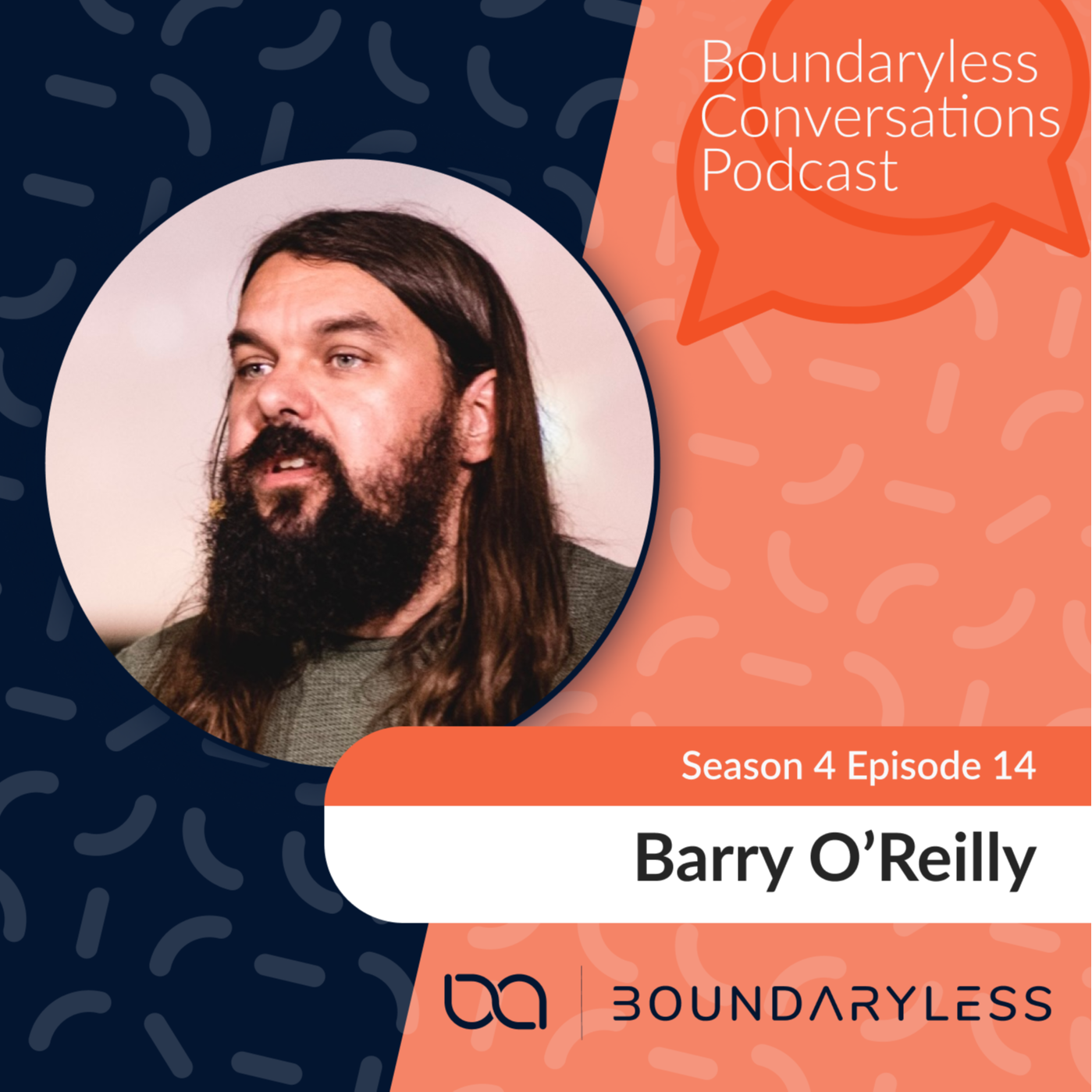
S04 Ep. 14. Barry O’Reilly Software architecture for a rapidly changing world episode artwork

EPISODE · Apr 17, 2023 · 53 MIN

S04 Ep. 14. Barry O’Reilly Software architecture for a rapidly changing world

from Boundaryless Conversations Podcast · host Boundaryless SRL

Most software architects represent the environment in a very static way, and from that static representation, produce static software. As a result, the software structure they create is like a picture of a picture…used to describe what is actually a movie. This problem, rooted in a mechanistic worldview, is where Barry O'Reilly’s Residuality Theory was born. Residuality Theory - in very few words - is a method of designing software architectures inspired by how the most talented architects do it: starting from the stress conditions that the system could eventually face as it operates. Barry O'Reilly is a software architect with 25 years of experience in the IT industry. He has held leading roles at global software companies, has spent many years educating architects, and is currently pursuing a PhD in Complexity Science and Software Engineering at The Open University. Residuality theory looks at the world not as a bunch of static things or still pictures, but as a constantly moving set of processes which we can't really see and grasp. It requires designers to move away from a static view of the system. By letting the architecture design be inspired by its “stressors,” O'Reilly believes that not only can we design more resilient systems but also more efficient ones. In this episode, Barry also describes the philosophical background behind the theory and why Residuality can be a viable approach to designing organizations too. Remember that you can always find transcripts and key highlights of the episode on our website: https://boundaryless.io/podcast/barry-oreilly Key Highlights 👉 Static representation of reality as a practice of software architecture is embedded in Western philosophy and worldview. 👉 Software engineers should start asking themselves: “What is the underlying philosophy behind what I do and the frameworks that I use?” 👉 Residuality is a way to look at the world as a constantly shifting, moving set of processes that we can't really see and grasp. 👉 The residue is what remains from the system after it breaks down: it's the leftover of the system. And those leftovers will define the future of the software system. 👉 Criticality as an indication of the system’s ability to function across a wide range of attractors, which we may or may not even know about. 👉 It is known that software performing well in its environment is modular, but how to make structured decisions around such modularity remains unknown. 👉 The impossibility to separate organizational design from software architecture. Topics (Chapters) (00:00) Barry’s quote (00:59) Introduction (02:12) What residuality theory is (12:59) Residuality: philosophical background (18:24) Residuality: from software to organizations (27:01) Residuality and microservices: is a match possible? (36:13) Is residuality fit for the society we’re living in, or is it a next generation’s thing? (43:03) How to (easily) adopt a residuality approach (48:48) Barry’s breadcrumbs To find out more about Barry’s work: Twitter: https://twitter.com/technologytulip LinkedIn: https://www.linkedin.com/in/barry-o-reilly-b924657 Website: https://www.blacktulip.se Other references and mentions: Nassim Nicholas Taleb: https://en.wikipedia.org/wiki/Nassim_Nicholas_Taleb Antifragile (book): https://en.wikipedia.org/wiki/Antifragile_(book) NK model: https://en.wikipedia.org/wiki/NK_model Transcendental idealism: https://en.wikipedia.org/wiki/Transcendental_idealism Post-structuralism: https://en.wikipedia.org/wiki/Post-structuralism The Biological Reality of Organizing - with Alicia Juarrero: https://www.boundaryless.io/podcast/alicia-juarrero Bezos’ famous API mandate: https://nordicapis.com/the-bezos-api-mandate-amazons-manifesto-for-externalization/ Characteristics of decision-making during coding: https://www.researchgate.net/publication/303515570_Characteristics_of_decision-making_during_coding Promise Theory. Principles and Applications: http://markburgess.org/pr

Most software architects represent the environment in a very static way, and from that static representation, produce static software. As a result, the software structure they create is like a picture of a picture…used to describe what is actually a movie. This problem, rooted in a mechanistic worldview, is where Barry O'Reilly’s Residuality Theory was born. Residuality Theory - in very few words - is a method of designing software architectures inspired by how the most talented architects do it: starting from the stress conditions that the system could eventually face as it operates. Barry O'Reilly is a software architect with 25 years of experience in the IT industry. He has held leading roles at global software companies, has spent many years educating architects, and is currently pursuing a PhD in Complexity Science and Software Engineering at The Open University. Residuality theory looks at the world not as a bunch of static things or still pictures, but as a constantly moving set of processes which we can't really see and grasp. It requires designers to move away from a static view of the system. By letting the architecture design be inspired by its “stressors,” O'Reilly believes that not only can we design more resilient systems but also more efficient ones. In this episode, Barry also describes the philosophical background behind the theory and why Residuality can be a viable approach to designing organizations too. Remember that you can always find transcripts and key highlights of the episode on our website: https://boundaryless.io/podcast/barry-oreilly Key Highlights 👉 Static representation of reality as a practice of software architecture is embedded in Western philosophy and worldview. 👉 Software engineers should start asking themselves: “What is the underlying philosophy behind what I do and the frameworks that I use?” 👉 Residuality is a way to look at the world as a constantly shifting, moving set of processes that we can't really see and grasp. 👉 The residue is what remains from the system after it breaks down: it's the leftover of the system. And those leftovers will define the future of the software system. 👉 Criticality as an indication of the system’s ability to function across a wide range of attractors, which we may or may not even know about. 👉 It is known that software performing well in its environment is modular, but how to make structured decisions around such modularity remains unknown. 👉 The impossibility to separate organizational design from software architecture. Topics (Chapters) (00:00) Barry’s quote (00:59) Introduction (02:12) What residuality theory is (12:59) Residuality: philosophical background (18:24) Residuality: from software to organizations (27:01) Residuality and microservices: is a match possible? (36:13) Is residuality fit for the society we’re living in, or is it a next generation’s thing? (43:03) How to (easily) adopt a residuality approach (48:48) Barry’s breadcrumbs To find out more about Barry’s work: Twitter: https://twitter.com/technologytulip LinkedIn: https://www.linkedin.com/in/barry-o-reilly-b924657 Website: https://www.blacktulip.se Other references and mentions: Nassim Nicholas Taleb: https://en.wikipedia.org/wiki/Nassim_Nicholas_Taleb Antifragile (book): https://en.wikipedia.org/wiki/Antifragile_(book) NK model: https://en.wikipedia.org/wiki/NK_model Transcendental idealism: https://en.wikipedia.org/wiki/Transcendental_idealism Post-structuralism: https://en.wikipedia.org/wiki/Post-structuralism The Biological Reality of Organizing - with Alicia Juarrero: https://www.boundaryless.io/podcast/alicia-juarrero Bezos’ famous API mandate: https://nordicapis.com/the-bezos-api-mandate-amazons-manifesto-for-externalization/ Characteristics of decision-making during coding: https://www.researchgate.net/publication/303515570_Characteristics_of_decision-making_during_coding Promise Theory. Principles and Applications: http://markburgess.org/pr

NOW PLAYING

S04 Ep. 14. Barry O’Reilly Software architecture for a rapidly changing world

0:00 53:38

No transcript for this episode yet

We transcribe on demand. Request one and we'll notify you when it's ready — usually under 10 minutes.

That Hoarder: Overcome Compulsive Hoarding That Hoarder Hoarding disorder is stigmatised and people who hoard feel vast amounts of shame. This podcast began life as an audio diary, an anonymous outlet for somebody with this weird condition. That Hoarder speaks about her experiences living with compulsive hoarding, she interviews therapists, academics, researchers, children of hoarders, professional organisers and influencers, and she shares insight and tips for others with the problem. Listened to by people who hoard as well as those who love them and those who work with them, Overcome Compulsive Hoarding with That Hoarder aims to shatter the stigma, share the truth and speak openly and honestly to improve lives. The Small Business Startup School – Business Notes | Financial Literacy | Retail Psychology – For Professionals & Entrepreneurs The Small Business Startup School Inc. Starting or buying a small business? While personal circumstances may vary, business patterns remain timeless. On The Small Business Startup School, we explore strategies, insights, and practical solutions to help entrepreneurs confidently navigate their journey.Hosted by Ola Williams—a retail entrepreneur, fintech founder, and financial coach with over two decades of experience—this podcast marries financial awareness and retail psychology with optimism to deliver actionable takeaways.Join us to learn, grow, and connect as we uncover the keys to business success.Let’s continue to learn together and be encouraged to keep on connecting! DIOSA. Carolina Sanper This podcast is a sacred space created by Carolina Sanper where you connect with your inner wisdom and embody your magnetic feminine power.It is the realization that the mystical realm is where you plant the seeds of your desired reality.It is a portal to your true essence: awareness, presence, and receiving with ease. Welcome home, DIOSA. 🖤 XXX Tech by SOVRYN Dr. Brian Sovryn The crossroads between technology, sensuality, and metaphysics - and the longest running anarchist podcast in the world! Brought to you by Dr. Brian Sovryn.

Frequently Asked Questions

How long is this episode of Boundaryless Conversations Podcast?

This episode is 53 minutes long.

When was this Boundaryless Conversations Podcast episode published?

This episode was published on April 17, 2023.

What is this episode about?

Most software architects represent the environment in a very static way, and from that static representation, produce static software. As a result, the software structure they create is like a picture of a picture…used to describe what is actually a...

Can I download this Boundaryless Conversations Podcast episode?

Yes, you can download this episode by clicking the download button on the episode player, or subscribe to the podcast in your preferred podcast app for automatic downloads.
URL copied to clipboard!