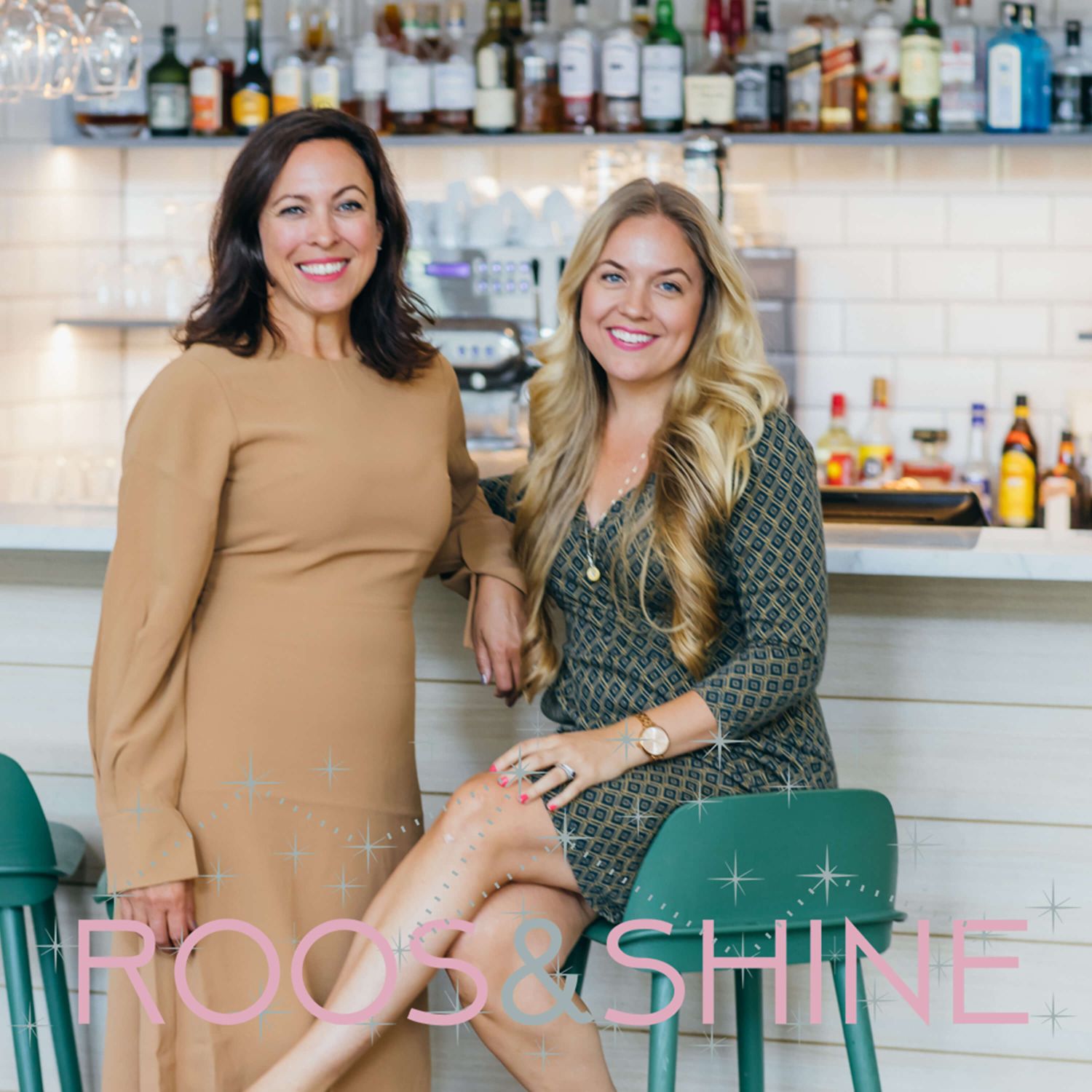
This is the Rose and Shine podcast with us, Victoria Rousalsen and Jessica Rousalsen and And it could argue like really isn't this gratefulness becoming an industry on its own. I mean, I was in Whole Food yesterday and I managed to pick up a cute little box with nice crystals for my gratefulness, meditation, right? And I saw so many little things around gratefulness that was dying to get into my trolley, right? But so yes, is it becoming an industry?
Is it becoming a trend factor? What do you think does it be? Yeah, I mean, it's hard to have a conversation like this without thinking, you know, that half of the audience would be like, Oh, no, not greatfulness again. As if that is this magical cure to all of our, you know, mental health problems, which, it's not obviously.
And yes, there's a huge industry of course that is benefiting so much around this. And I was watching it. I just read nine perfect strangers. And now I'm watching it on the on the Netflix or Amazon prime or wherever it is.
Yes. Oh my God. I love that show nine perfect strangers, everyone, you have to watch it. It's the premise is that there's a number of people coming to this wellness retreat and it's just a glorious wellness retreat.
I think you're supposed to have a mixed sense of emotions when you start to watch that movie, certainly, or a series, certainly towards the end of the series. But for me, when I see them entering that wellness retreat, I'm like, that's where I want to live. That's where I want to be. Take me to that beautiful wellness retreat.
And in each episode, it's like a new, amazing smoothie, you know, that is being mixed. And I want to point out to the audience that they are micro dose. Everyone gets, you know, really quite extra happy. And I think that they get more and more and more, you know, less micro and more dose as the series goes on.
So you are an episode four, right? Or what did you tell me? How many? Yes.
Yeah. And I've seen it all. So I'm not going to give any more spoilers, but maybe you're still on a high. Let's see.
So I point more than that I want to move into that beautiful location where they're at. It's a range of different people that are entering this. And they really kind of showcase these different amount of these different types of people that we perhaps even have within ourselves sometimes, but just like the enthusiasm. Like I'm going to embrace everything, wellness and gratefulness and, you know, so on, kind of like Napoleon, which is one of the characters in this.
And then you have, you know, some of the somewhat skeptics, kind of like, I like it, but can I have a glass of wine when I do this? I can sometimes fall into that category. Really? And then you have the, you know, total anti and wellness and gratefulness and whatever, kind of the grumpy reluctance.
But they're still there. Yes. And maybe you are still here listening to this podcast, you know, recognizing that you're one of those. So enjoy the ride.
Exactly. Wherever you are, let's enjoy that. And I really think it is important, you know, just the, I love your analogy there. Just maybe these nine perfect strangers are all representing different parts within us, right?
Where we have that. Yeah. So that's really good. It also made me think, you know, being grateful and being like overly, it's not necessarily the same thing as being overly positive or overly optimistic, but we all have different characteristics.
And one of the workshops I work with a lot right now is multipliers with Liz Biesman and I, I just love that content and I might have spoken about it before. But really what she does talk about is so on her research is how we all have tendencies that are amazing and very positive. But if we bring them on too much in particular as leaders, they actually end up being diminishing. You know, so for example, like, if you are like, I am super optimistic, you know, it's almost like you come in as a leader and you're so optimistic that everyone else would be like, but she's not really hearing the reality here.
Like that's not me. I can't relate it. Or another one I can relate to is like, I'm the case setter, you know, when it's like a nice speed and you're thinking that you're showing the way by walking really fast so that everyone, it's a little bit like that man I spoke about in the last episode who was kind of just like running and jogging and trying to encourage his wife and reality. She was just like, I don't ever want to run again.
Or like, you know, all these things and another one is always on. Oh my goodness. I mean, I can recognize myself and all of them like always on right. I swear I've had teams were like, okay, let's avoid Victoria a little bit on Monday mornings when she's on the weekend that she comes with all her and thirsty ass right?
All of her energy. So what I wanted to say is that yes, gratefulness is important, but it's okay. Sometimes also to not be grateful, right? Yes.
Absolutely. What are the things you're not grateful for? Just think, can you make like the non gratefulness list? My metabolism.
Yes. I mean, I'm happy that I have the aim of that. Yes. Perhaps sounds really ungrateful.
But even like, look at that. What's happening now? So maybe the trick is like if we start to challenge yourself and say like, I'm not up to this. What are the things?
I'm really not grateful over. And now you started and you said that thing and it came very speedy. And then you started to, well, I guess I'm happy I do have it. Yeah, no, exactly.
What about you? No, that would probably be on top of my list. And it's like one thing I'm like, sometimes I can mutter over like my knees, for example, that they've, you know, I've had so much surgery and like, oh, like, you know, but then on the other hand, I'm thinking like, but I have pretty good legs, right? They really take me places and up for hills and I'm like, right?
So it's good like for knees. Like I just need to do a little bit like I don't want to be hard on them. So I guess that's one thing. Yeah.
I'm just having to analyze some needs. Over analyzing probably some might, but apparently now, you know, our astrologist told me that that that's part of my, you know, Libra and Sarsai. Yes. The race is.
Yeah. I must say I find myself being so very fortunate and I see I'm, yeah, I'm so optimistic. I really need to stop talking now because I'm going to drive you away. Yeah.
Exactly. Yeah. Okay. Never mind.
Okay. So that's our non, non grateful list, but the point I want to make is it's okay. Sometimes there are things that are really hard and we're not grateful for them right now. I can't really think of them, but I'm thinking like, you know, when Andreas was stuck in Sweden for five months and he wasn't here, that wasn't, I wasn't grateful for that.
But I did try to think like that I really missed him and thinking that, okay, that's excuse my language, it's a little bit shitty, right? But being grateful that I, that at least it wasn't dead, you know, like that I still have a husband, right? He said like all the poor people that lose their, their partners, right? And that it just proves that I'm really loved and right.
So I really just tried to turn it around. But I think to do that maybe first it's okay to just acknowledge that that wasn't great or that was bad. Yeah. No, exactly.
And I think that's okay. And I think that in terms of gratefulness as well, you know, sometimes if you're feeling perhaps particularly in a challenging context and maybe if you're feeling, you know, even triggered or you're feeling jealous, yeah, let's perhaps look at jealousy if you're feeling that and that can be a very hard time to then also feel gratefulness. But sometimes when you look at other people's life and what other people have, I read this and really resonated with that is that if you ever feel in this situation, you know, like, I would like to change, I would like to have what that person have, you know, I would like to have whatever she's experiencing right now. And then the question is, would you actually be prepared those to exchange everything that you have for that person's life than experience?
Oh, that makes me think of that book. We both read I think in the invisible life of Audrey De La Vee or something like that. Oh, yeah, yeah, of course, where she's actually she gets to trade it like she can live forever. But no one remembers her.
Yes. I think this is kind of a side step. But the idea if we keep to the point, yes, is really that idea if you're feeling this kind of sense of lack of gratefulness or even jealousy or you would like to have someone else's life is really that would you be prepared to then have their strange childhood or their in this being remembered relationship with someone. Give it the back of like we can be jealous, but we only jealous of this like small part that we see, you know, that we don't have, but we don't know the whole packet around it.
You see the Instagram happiness and you pick you pick that one part that got on Instagram, which is like a not even a percent of that person's life. Yeah. And that's where I saw a quote, which was cultivate the habit of being grateful for every good thing that comes to you and to give thanks continuously. And because all things have contributed to your advancement, you should include all things in your gratitude.
So that is a bit of kind of taking the negative with with the whole and say, you know, perhaps it's like seeing your shadows and sort of expecting them, right? So there's so many theories out there now. And I have some friends doing research on this too. I'm just sort of accepting a little bit the sides of yourself as well that you also might not really like so much that you find annoying, like, why am I always whatever it is, talking too much, talking too little, what are these things are and just sort of embracing them and say, that's okay too, right?
Be a little bit forgiving for ourselves. And going back to the key idea here, we started off, you know, in terms of positive psychology and gratitude and should we be so positive all the time? One of my favorite meditation stories that keeps on coming up in different meditations that I'm doing is the story around this Japanese farmer. And you know, one day his horse is injured and then everyone in the village comes to him and says, Oh, no, for you, you're so unlucky.
Your horse is injured. And they said, I will see. And then the next day it happens that everyone that has a horse need to contribute to the army. And it was, Oh, you're so lucky that, you know, that you don't have a horse, your horse is injured, you don't have to contribute it.
And he'll say, Oh, we'll see. And the story goes on and on. In the end, his son doesn't have to go to war because his son gets injured and so on. And the man is just constantly this kind of, Oh, we'll see.
And the moral of the story is this kind of equanimity of being okay with what is. So it's not so much about like trying to see the positive side, but being a little bit okay with both sides. And you know, we'll see, we don't really know what lesson we're going to learn from the hardship that we're facing or from the positive thing that we are facing. Hmm.
Yeah, I like that. And also, but I would say also now when you are in the moment, just because you will never know the future, also take the time to enjoy and be grateful for the things that you have, right? I was really thinking the other day because I just read this off. I mean, the book was really good, but it was both about the First World War and the Second World War.
And it was about females' fights, very interesting, the Alice network for anyone wanting to read. It was quite awful because it was based on the one when you can't sleep. Yes. Because then I Googled and realized that the awful things that happened actually did happen in reality.
And yeah, so, and then I thought like poor people born like 1900, especially like in Europe, like first they have the First World War when they're teenagers, then they get like the Great Depression, then they have when they have just getting, are getting children and like, then they have the Second World and when they retire in time for the Cold War, right? Like how unfortunate to be living, that must have been a hardship. So just look at us, how grateful we can be. And I know we are having us the whole world right now, COVID, of course, still here is still spruping around.
But in the big scheme of things, we have so many things to be fortunate and grateful over right now. Yeah, absolutely. And so in terms of living gratefulness, if we're at least establishing here in this podcast, you know, let's see what kind of practice and so on that we can have in terms of cultivating gratefulness and how to do that. How do we live gratefulness on a daily basis?
So let's just take a moment and think about why we should do it. And there is actually quite a lot of research. I did a super quick Google and found psychology, positive psychology today. And they came up with a list of nine reasons psychological findings related to the study of gratitude.
So here are like nine reasons why we should be doing it. Number one is enhanced wellbeing, two deeper relationships, three improved optimists, four increased happiness, five stronger self-control, six better physical and mental health, seven, and overall a better life, eight stronger athleticism and nine stronger neurologically based morality. So those were nine reasons. Any surprises?
Well, I think that, you know, on the website, what I saw that they go into detail, some of them, and we might not do that now, such as, you know, stronger athleticism, for example. No, and I mean, in terms of the neurologically based morality, I'm not sure, but obviously the neuroscience is showing, you know, how we're creating these new connections, you know, depending on what kind of thoughts we have. So that is the whole essence of sensation and a priming and so on, is that we actually creating new connections in our brain. So it makes sense that gratitude would support that.
You know, I'm thinking to the athleticism point, having played tennis this morning, right? And when I'm like, it's like, oh, wow, I'm grateful for that, sir, right? It's easier that it comes again, the second sir, right? So I can definitely see the point.
All right, so, just me, what are we then going to do? What practices could we put in place to be more grateful? Well, so we can of course have a daily check-in or a daily gratefulness ritual, which I've always found to be very helpful. I sometimes live out of it.
I sometimes keep it. And there's a lot already out there in terms of, you know, having a gratefulness journal, writing down, you know, what are three things that you are the most grateful for today? And for example, I also really like, you know, people have different feelings around Tony Robbins, I'm sure, and very much a positive psychologist, high person. But he has these priming videos, which are when you do them, they're quite excellent.
It's like a 15 minute video where he goes through with his audience and finds them around what are some of the most extraordinary and ordinary things in their lives that they are grateful for. And I'm not doing this every day, and I'm not suggesting perhaps that people, I mean, some people will do this every day, but it's a really good reminder because when you do that priming video, 15 minutes, you do feel really good. So it's just this clear feeling of if you think about moments in your life, I'm hate, you're really happy. If anything else, it's steering you away from worrying or from thinking in negative thoughts or from doing nothing.
So clearly it's having a really positive and it's kind of supportive impact. Yeah. So I think that sounds like a good idea for anyone that need that little bit of a boost. I have it very simple and I know I've shared it before, but practicing that every morning, three things that I'm grateful for.
And I find most mornings, it's super easy. It's like, you know, there's so many things that could make this list. But I think I guess the list is more important to make the days where you don't feel like making the list because like, you know, and then it's so rewarding, I'd say, because you are there with your list and you're looking like, wow, these things are amazing. Like I am really, really happy about these things, but whatever that might be, right, that really makes a difference.
So to just take that moment before we step into the day and just really reflect on three things in our life that really is something to be grateful for, that's amazing, I think. And once someone framed it to me, just in terms of like, what are three things that you grateful for that happened this past month? And I thought that's really helpful, especially if you're not feeling that great, because you always have this feeling or I always have the feeling that it needs to be something that I'm grateful before right now. But it can be helpful to them think about what happened to me this month that I can find gratefulness is.
And that's a little bit easier, it's a little bit gentler, but you still can get that bossy, warm feeling of that. This thing happened to me. Yeah. So here's what we want to inspire all of you to do because inspired, I guess, by Thanksgiving and sort of like, I was asking you this all over the world or is it just me discovering it.
I feel like November is the gratefulness month almost. But what about doing like a yearly sort of gratefulness check in like a little bit of a ritual around that? We love those yearly rituals, right? So we wanted to give you a little bit of inspiration and a few questions that you might be asking yourselves when it comes to your gratefulness.
Yeah. So perhaps even like we're creating our yearly vision board, this would be a yearly from thing you for a yearly check in or just a check in that you're having now in November to see where are the different areas and aspects of your life where you can find gratefulness. Because sometimes we just end up with the same list, right? Yeah.
We've talked about it before. It's like, oh, I'm grateful for that. My kids are healthy and I'm grateful for the birds singing this morning or something like that. And sometimes it can't be nice to have some new things from that list.
But by all means, you might want to bring up that vision board right now, if you did make it when we were working on that in January last year or this year, it can help us. So here are a few sort of questions we can ask ourselves if we're now doing like a little bit of a check in. And I would say the first point is like, just take a little bit of a moment and stop and think about what really happened this year, right? What were like the bigs like almost go back a year from now and all the things and exactly.
So perhaps looking at the vision board and also see whether anything on that vision board happened. And whether you're grateful for it happening or if you're grateful for it not happening for some reason as well. Yeah. Could be one way of doing that.
So if we just look back over all this year, just what would you pick like, what's the nativity? Doesn't need to be your top three. But I also think that's very important. If you're like, what's the thing I'm the most grateful for, that also becomes a little bit of, you know, really hard.
Then that's the dilemma, like how to order it. Let's not order it. But yeah, what's some things that you're really grateful for this year? I'm incredibly grateful that we ended up going to New Zealand, that we were able to go to New Zealand.
And that is, I hadn't thought about announcing as a question, but that is it's not a question. It came out of it being a really hardship time and lockdown in the UK. And really not a nice time to be there. And really that feeling if we talk about the Japanese farmer again of being like, oh, why is this happening now?
We moved to the UK and now we're in lockdown and we're in lockdown in Colombia. Blah, blah, blah. But out of that came our opportunity in South Zealand, which was incredible and really, really wonderful. So that's so interesting because that makes me think of will we be more grateful if something bad is happening first, right?
Because one of the things that I'm like was wow, was for me and Isabel to be able to go back to Sweden again. I mean, I've never been so grateful to go to Sweden in my entire life as then. And it's because we weren't able to go for so long, right? So I think that pandemic for sure has made us see what we have and what we can take for granted and what we can't take for granted and what's important to us.
So a bit, yes. Yeah, your question, yes. Yeah. All right, here's another thing that I'm going to throw out there for you and for all our listeners.
What's the feeling that you love that you've had this year, like, or this past month or, like, you know, something that you're like, wow, I remember when it had that feeling. That was awesome. What could that be? Oh, now I don't sit in with your questions here, like, I'm going to be like, I'm going to talk about the difficult student.
That's okay. Let's take it where we go. Some of the meditation work that I'm doing right now is a lot around feelings and it's a lot around kind of holding on to positive feelings versus, you know, letting go of negative feelings. And the meditation around it is talking more about the sense of, you know, equanimity and this idea of this tapping into the general okayness that is beyond the feeling or beyond the thought.
So a feeling apparently only stays in our body for an emotion, only stays in our body for a few seconds unless we hold on to the emotion by putting the work into it. So for example, today I had a strong sense of fear. I felt I was running and then there was some dog sparking and I got scared and that led me to have fear around something happening to my kids. It was just like a mental thing.
I just spend the way. Oh, no, but I could remember, you know, my meditation and I said, okay, let's just pass, let's just pass through me rather than holding on and think, oh, yeah, something really bad could happen to my kids. And that would be really awful, you know, but that feeling of kind of just letting it go. So perhaps my long story is around the feeling that I love this year is probably more around kind of that acceptance of overall okayness of thing.
Yeah. And maybe not attaching too much to each and every single feeling. Does that make sense? Yeah, that's I like it.
And maybe I, you know, what I'm picking up from that too is when you do have that good feeling, how do you stay on it? How do you use that effect, right? So let go of the feelings that aren't positive or that aren't good. But how do I stay on when the feeling is good?
Maybe that's what it didn't say in your meditation. But that's what I'm thinking. Or yeah. Okay.
Yeah. And that's fine. Because what I'm thinking is, for example, a really good feeling that I've had when I was asking you this, and I was thinking for myself, and I've done a little bit of exploration or thinking around myself where this feeling that I'm trying to sort of please everyone. And I say yes to everyone.
And I'm just ending up doing too much. Obviously not a great feeling ultimately. You know, it's a very short term great feeling because you feel great when you say yes to people, but then you don't feel great afterwards. And I've just really worked with myself on that.
And I wrote a little piece on LinkedIn where I sort of called myself my time guard warrior, right? So to be this like guard of guarding my time and that feeling that the picture, even the mental image for myself gave me so much strength. So that is like a feeling that I want to hold on to, right? So when I was thinking about feelings is like these positive feelings that we experience.
And I really love how you said like, you know, if we don't use them, they'll trickle away. But when we have them, what do we do to like internalize that feeling and use the power of having that? What did you say? A warrior.
Yes. A time guard warrior. And I've had so many different responses on that, right? And I know that image stayed for me.
And when I'm getting these questions from people, like, could you do like, I really think about, you know, ask myself a little bit deeper, will this add long term value? Yes or no, from me, right? And I'm like, really my time guard warrior left that. Yes.
Right. And I even said in the text that I wrote, you know, very often people have no clue that they're meeting a time guard warrior or just like, think, they're just being led. Sure. I'm enjoying my time.
But I need to be that person be a little bit more visible like my time guard warrior. So I love the idea of having I think the visualization there is absolutely key. I perhaps wouldn't say kind of to hold on to specific feeling. But in one way, it's perhaps similar to it's a priming, you know, and setting yourself up and setting those brain connections to go, you know, the way that you would the path you would like them to go on.
So I think the idea of having those different visualizations and whether that is even the specific parts of yourself that you can kind of look into, like, how would they respond to these different elements? What's my time guard warrior going to say? Yeah. Exactly.
All right. So here's another one to ask for you and you can, you know, take it whatever way you want to, but what are like a connection that you are like a relation or a connection, something that you're grateful for in your life and maybe just go beyond like the most normal, well, whatever you want. I mean, you can say your sister, but it's okay to read. But if there is anyone else, perhaps with our newest geologist.
Yeah. No, I mean, but just to say something, you know, I mean, I think that connections, there's so much, obviously, happiness coming through our connections. I was skimming through this icky guy book that we have referred to before and there are these quotes from the people that they have interviewed. So, you know, relatively old, quite old.
Yeah. They live a long time. Yes. Exactly.
In Japan. And they talked about, you know, one, one of them said that, you know, their secret or several of them actually mentioned that their secrets along in happy life is that they went up really early and then they walked out and said, hello to everyone that was driving to school and the kids in the school bus and so on. And you know, said, have a safe ride and so on. And that sense of connection that created just brings a lot of happiness.
Yeah. So perhaps without bringing up the one profound connection over the year, just kind of micromolements of connection. Yeah. I think most recently I had it through a lot of my workshops that I'm facilitating and holding and just been receiving a lot of connection through them with people all over the world, which is amazing.
But yeah, it's perhaps that kind of blowing of micro connections. Yeah. I love that too. I agree.
And I think through travels and workshops and working with clients and, but also on the tennis courts, right? It's like, it's everywhere. It's like, look out for these connections and, and cherish them, if you know what I mean, right? Do you have a little bit?
Yeah. Yeah. And we do this sort of yearly check in is, are there things we are grateful over that this happened? It was like totally outside of our control, maybe it's sort of bigger than anything else that we're used to.
I think it could also add our list and whatever, if that's like your sports team winning or, or like, or yeah, the vaccine got here this year, like it's not amazing and our parents got the vaccine. And I mean, there's so many good things to look at that. Yeah. So exactly.
So things that are not perhaps directly connected to you, but that you really appreciated or could drive thanks to or, yeah, that's also nice because it's so kind of, if you think about your vision board, for example, that can sometimes be connected to a lot of achievement, how I achieve or haven't I achieved, but we can also just be grateful for things that just randomly happen. Yeah. Right. Like it's out there.
Let's just put it on our list and it works. Do you, I put another thing on the checklist and that's, are you grateful for something magical that happened? Like, was there something with a touch of magic that happened to you this year? Yeah.
I mean, the whole New Zealand trip. And now I already mentioned it, but how it happened, it's another story for another time, but that's a touch of magic. So it was things out of our control that enabled that to happen. And today I've also mentioned our astrologist already, but that was very much sought, I saw it after that way of, let's see if we can let a little bit of magic in.
Yeah. And there were elements of that, but you know, touch a bit on magic. What about you? I was just thinking right now.
So it was so funny that it's, I think four years ago, since the girls and I were visiting you in New York and it popped up in my memories. So and there was this one cute picture of me and the girls that having breakfast, you were not there then. And I sent the picture to Isabelle and Flippen. I said, Oh, hey girls, wouldn't it be so nice to go to New York again?
This was yesterday, this morning I wake up in my inbox from one of my art clients, I have a chore, like our CEO would like for you to come to New York like the day after, isn't it? Yeah. And I think sometimes we throw things out there and it just comes back. So I think that's also gratefulness.
It's being grateful about that amazing time that we had in New York and like, it's a new time again. And then it just, and I do think that's something magical with gratefulness that sometimes I can get almost this feeling like, Oh my goodness, I have so many things to be grateful over that it's really scary. Like, did I, did I get too much in my bucket of gratefulness? Like, is it going to be all taken away?
Do you ever, does it happen to you? Like that feel like there's so many things going too well. Yeah. I'm thinking is that a Swedish thing?
Like, John did like, don't be too happy about all the lovely things you have. So it's almost like that feeling, but I do think you can never lose by being grateful, right? And then just stop and think like, Wow, I'm here now and I'm experiencing this and I'm grateful about it. Yeah.
And again, going back to meditation, I think that's why meditation can be so useful because I heard this poet say that, you know, I meditate so that when I walk into the market each day, I can notice the little blue flowers along the way. And that is a really nice way. So whether, you know, we're feeling quickly when we're standing our life, whether we have a lot of things to be grateful for or not, I think if we slow down and sit down, if that's what we do when we meditate or whatever we do to take that extra breath and listen and there's so much that we can see and smell and hear and be grateful for. That is one reason to meditate because it can really open your eyes for the small things that really are the big things.
Yeah. Anyway, I love that. Makes me think of another quote. Let me read it out to you.
And it's by Marcel Pagnole, French filmmaker and playwright. The reason people find it so hard to be happy is that they always see the past better than it was, the present worse than it is and the future less resolved than it will be. Yeah. So it's a little bit that the moment I've actually, you know, right now I'm thinking back to your New Zealand trip and all the craziness and you were like, ah, and now that you look back to New Zealand, you see this beautiful, amazing time in New Zealand.
I'm not saying that you were not grateful. You were grateful that you were there and I remember, you know, you're sharing all these things. But I'm just thinking like, wow, we're here now. And when we look back five or 10 years or even a month from now into this, what are the things we'll look back and say, wow, that was so amazing.
Yeah. And I think that's really true. It's about being grateful now in this moment. I was looking back and I was looking back in Facebook and pictures from 2000 sometimes, 2002, whenever Facebook, when we just got active, just in a four-barber.
And looking at back the university times and I was speaking to my friend, also, I was like, how do you feel when you look back at those pictures? Because a strong sense has that kind of like, wow, that was such an amazing time. And wasn't it awesome to be 20 or 22 and the amount of parties, you know, I'm drunk the most of the pictures. Like nowadays you'd never let them at that time, you know, there was just, it was just a long party according to my Facebook page at that time anyways.
But how do I feel? I think that's really is when I look at it. Of course, it's like, oh, wow, time gone past sense of longing and missing. But then the other part, I think is exactly what you're saying.
It's that awareness of, well, that was up and down. Yeah. And it was awesome. A lot of it.
But it was also hard. And you know, it's a full, you know, it's a full life of different experience. So it's not kind of overly glamorized the time in your life, just like your quotes said. Yeah.
But that makes me think that one of the professors at Isabelle's university, she's up at UMass. And it was some kind of speech for the parents and they get like all of us. And she said, like, it's so related to this. It's like, well, you know, most parents will tell their kids when they come here, like, really enjoy yourself now, because this is going to be the best time of your life.
And she said, and I always say, I certainly don't hope so. Wouldn't that be sad to have the best time of your life when you are, you know, like when you're a 20, right? And I thought it was quite insightful, like the best time of our life, you know, looking back to it. Well, really to your point, there were wonderful things, but there were other things too that we tend to sort of forget.
But what if we bring our colored sort of tinted glasses, pink, whatever it is, and look at our life right now? What is it that we would be grateful for when we look back? How will we see it? So I think that's an art in itself.
And if you look at yourself right now, just being and sort of summing up and concluding this episode, what would you say would be the things that you'd look back 10 years from now and say, wow, that was an amazing time. What were the things that you would be really grateful for? It would be around the kids and some of the joy you have. And you know that it's a short kind of period of their life when they're so small and, you know, fond in the way that they are fond now, you know?
I think that whole experience. But then I would want to say that it is the simple stuff like hearing birds chirping outside and being able to have a swim in the ocean. Yeah. You know that kind of nature experience.
And I hope I'll be able to be as grateful for that in 10 years and 15 and the rest of my life. Yeah. What about you? Well, while we were talking, I was thinking really that just to look in like, so today, today when we're recording this, it's a Sunday and it's sort of just, it's actually Halloween.
And I'm just thinking, what a lovely day we woke up. We had a nice breakfast. My husband and I, then we went to play tennis with our friends and we were laughing at the courts and had all this. We rushed home.
I had a nice chat with the Philippa and then my other daughter Isabel came on the FaceTime and was sharing some fun stories from yesterday at college and then rushing to see you now and doing this podcast recording, also preparing the guest room for one of Andrea's new business partners is coming and tonight we have friends over for dinner. And then really, it's easy to just think like, oh, so many things to do and I need to prepare workshop for tomorrow. But if I really look at all these lovely things, what a wonderful, lovely day. Yeah.
And it's about, I mean, that is really lovely. And then I think if anyone else listening, it's also again about like, it is how you frame it a bit because it could be a rush. You could see it, as you said now, it could be seen as like, I'm just rushing around all the way. But if you can tap into that, the beautiful parts of it.
And that's it. That's the art, right? You tap into it and just take a moment and say like, wow, okay, it's flowing by pretty quickly today. But there's some really, really nice parts of this and just be grateful that I'm here in this moment.
No. Okay, everyone, we are very grateful for you. Thank you so much for listening and joining us in our podcast. And really take a moment, do a check in.
What are the things that, you know, when you look back to this year to right now, what will be the things that you will be grateful for? And then don't wait 10 years and be grateful about them. Be grateful today because we had a long list of how it's going to help us. You know, we said, well, being relationships, optimism is all there, even better athletes.
Yes. And thank you for listening. We love doing this. We're so grateful for being able to be recording this podcast.
And also, if you love it, maybe you share it with someone that you're grateful for and send us over to that person and they will hopefully get a lovely boost as well. Have a wonderful, grateful time, everyone. And until next time, bye. Say care, bye.