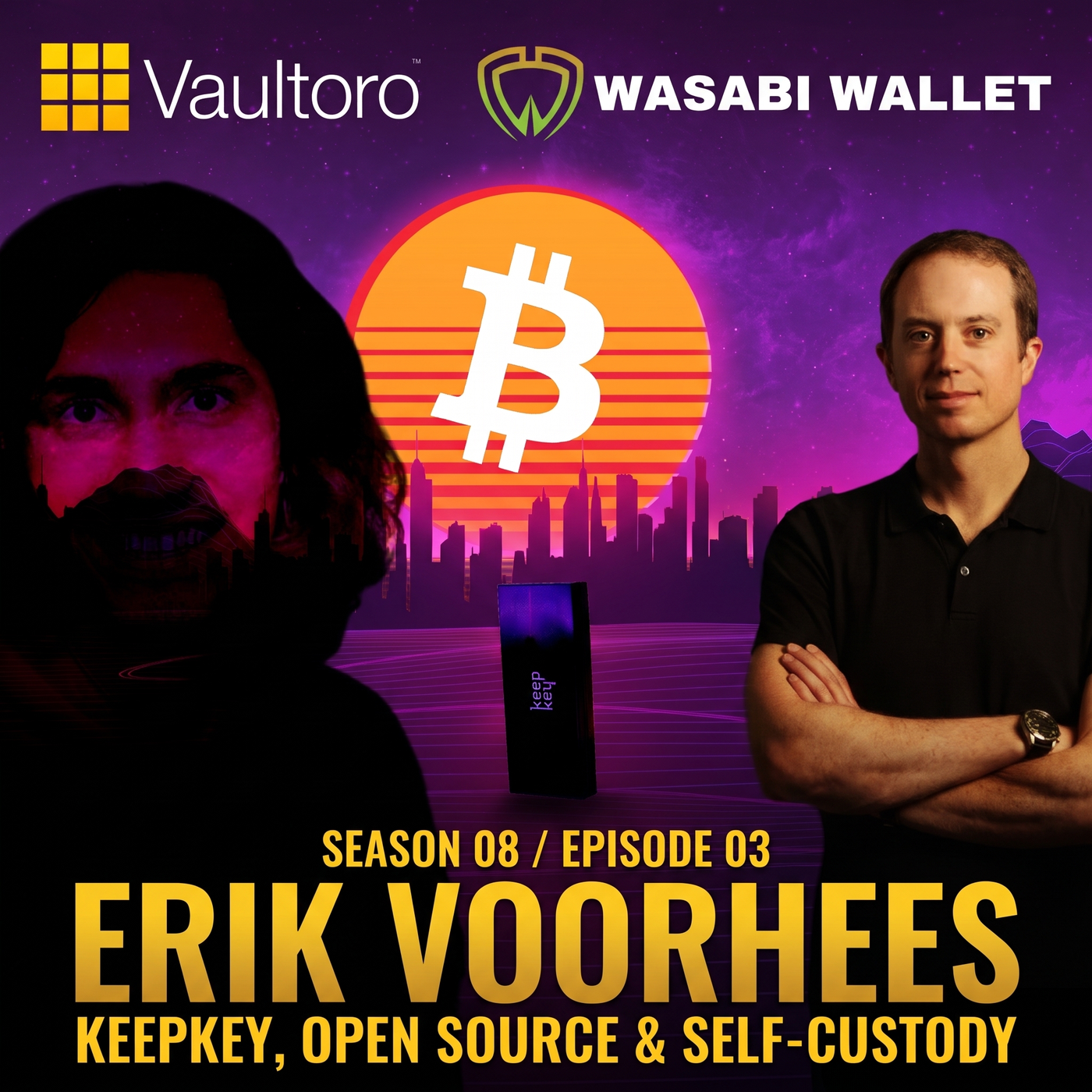
S8 E3: Erik Voorhees on KeepKey, Open Source & Self Custody
from Bitcoin Takeover Podcast Hosted by Vlad Costea
In this episode, ShapeShift CEO Erik Voorhees talks about the KeepKey hardware wallet, the power of open source software, and the importance of self-custody. As a Bitcoin veteran, Voorhees also reminiscences about the most popular wallets from the 2010s. This episode is sponsored by Vaultoro and Wasabi Wallet. ––––––––––––––––––––––––––––––––––––– Timestamps 00:00 – 03:05 – Introduction 03:06 – When did Erik Voorhees use the first hardware wallet? 06:49 – KeepKey’s design 07:38 – What were the most popular wallets that OGs were using in the early 2010s? 10:28 – Start9 Labs 13:53 – Mt. Gox, exchange hacks, and the importance of self-custody 17:05 – Do exchanges really insure your bitcoins? 23:18 – Michael Saylor, Elon Musk, Stock to Flow & Lending Services Like BlockFi & Celsius 28:07 – The financialization of Bitcoin (ETFs, derivatives, synthetic 32:29 – Why verification matters 35:20 – Mt. Gox YubiKeys influenced the creation of hardware wallets? 36:07 – Using your hardware wallet for U2F/2FA 36:30 – Resetting a KeepKey 37:30 – Dealing with fake KeepKey apps 41:55 – Why Shapeshift acquired the KeepKey 43:07 – What does Erik Voorhees think about the Trezor One and the Trezor Model T? 45:06 – What hardware wallets should do 46:20 – Ledger and why open source matters 47:20 – Is open source socialist? 49:12 – Did Erik Voorhees try the Coldcard, BitBox02 or Jade? 49:30 – Ballet Real vs Pro 50:40 – Mike Caldwell’s extra security steps with the Casascius coins 52:38 – Multisig setups 54:30 – Shamir Secret Sharing 56:40 – Why open source helps software outlive the company that created it 57:30 – What kind of Bitcoin custody advice would Erik Voorhees give his younger self? 1:00:25 – Why should anyone buy a KeepKey hardware wallet instead of something else? 1:01:30 – Does KeepKey work with Electrum and Wasabi?
Embed this episode
What this episode covers
In this episode, ShapeShift CEO Erik Voorhees talks about the KeepKey hardware wallet, the power of open source software, and the importance of self-custody. As a Bitcoin veteran, Voorhees also reminiscences about the most popular wallets from the 2010s.
Chapters
- 0:00 03:05 – Introduction
- 3:06 When did Erik Voorhees use the first hardware wallet?
- 6:49 KeepKey’s design
- 7:38 What were the most popular wallets that OGs were using in the early 2010s?
- 10:28 Start9 Labs
- 13:53 Mt. Gox, exchange hacks, and the importance of self-custody
- 17:05 Do exchanges really insure your bitcoins?
- 23:18 Michael Saylor, Elon Musk, Stock to Flow (S2F) & Lending Services Like BlockFi & Celsius
- 28:07 The financialization of Bitcoin (ETFs, derivatives)
- 32:29 Why verification matters
- 35:20 Mt. Gox YubiKeys influenced the creation of hardware wallets?
- 36:07 Using your hardware wallet for U2F/2FA
- 36:30 Resetting a KeepKey
- 37:30 Dealing with fake KeepKey apps
- 41:55 Why Shapeshift acquired the KeepKey
- 43:07 What does Erik Voorhees think about the Trezor One and the Trezor Model T?
- 45:06 What hardware wallets should do
- 46:20 Ledger and why open source matters
- 47:20 Is open source socialist?
- 49:12 Did Erik Voorhees try the Coldcard, BitBox02 or Jade?
- 49:30 Ballet Real vs Pro
- 50:40 Mike Caldwell’s extra security steps with the Casascius coins
- 52:38 Multisig setups
- 54:30 Shamir Secret Sharing
- 56:40 Why open source helps software outlive the company that created it
- 57:30 What kind of Bitcoin custody advice would Erik Voorhees give his younger self?
- 1:00:25 Why should anyone buy a KeepKey hardware wallet instead of something else?
- 1:01:30 Does KeepKey work with Electrum and Wasabi?
No transcript yet.