
EPISODE · Jan 27, 2023 · 1H 42M
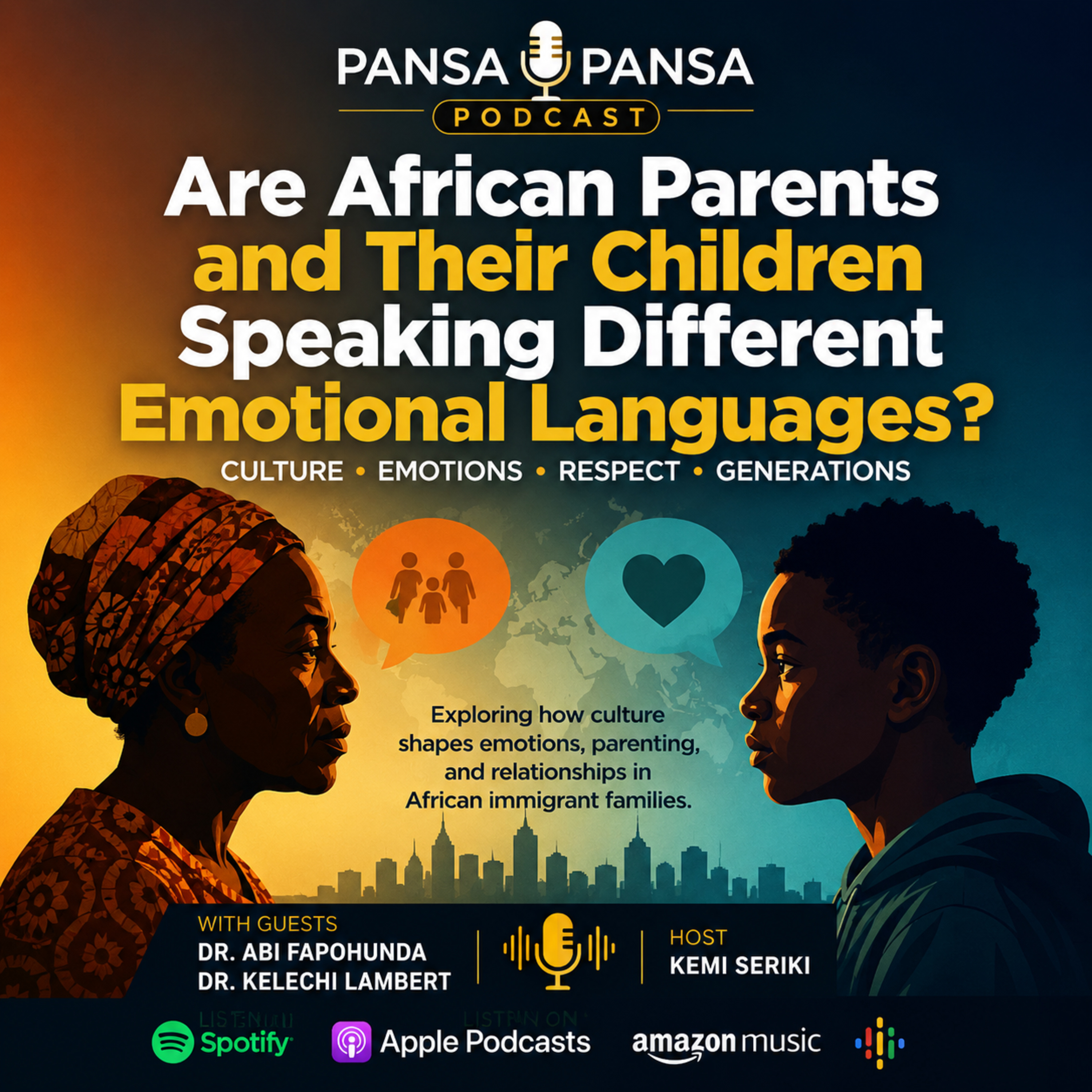
SE4/EP 34: Are African Parents and Their Children Speaking Different Emotional Languages?
from Pánsá Pánsá Podcast · host Ms Kemi Seriki
Recently, I was listening to one of my favorite podcasts, Hidden Brain, hosted by Shankar Vedantam. The podcast explores the complexities of human behaviors and the psychology behind them in our changing world. This particular episode on the Hidden Brain was called Decoding Emotions, and the title caught my attention. I found the episode very interesting. Batja Mesquita was the guest and the author of Between Us – How culture creates emotion. As the author described the book, “We may think of emotions as universal responses, felt inside, but in Between Us.” The acclaimed psychologist Batja Mesquita asks us to view emotions through what they do in our relationships, one-on-one, and within more prominent social networks. She argues that "acknowledging differences in emotions allows us to find common ground, humanizing and humbling us all for the better.” Mesquita was a native of Amsterdam who migrated to the US for a Phd. program, and she compared the emotional expression of both worlds. After listening to this topic, I thought that our community could benefit from this discussion, and we could expand on how our cultural background and emotional expression may be part of the answer to the difficulties in creating intergenerational relationships within our African immigrant community. I thought of having this conversation and inviting at least two guests who can broaden the conversation thoughtfully and present it in a way the community would understand. Dr. Abi Fapohunda and Dr. Kelechi Lambert graciously accepted to participate in the conversation. Both guests are in academia in public health and have done published research on topics focusing on the African immigrant community. Dr. Fapohunda and Dr. Ibe Lamberts extensively reviewed the podcast and how some of its content applies to African immigrants. In this conversation, we discussed how culture and emotional expression presented by African immigrant parents affect intergenerational relationships within the community. As Mesquita stated, “In each cultural group, parents shape their children’s emotions to fit the culture’s normative relationships.” During our discussion, there was an acknowledgment that emotional expression is different across cultures. We further understood that cultural background dictates or predicts how emotions are felt and expressed. It shapes how individuals think in a specific situation or how they react to it. During our conversation, there is an understanding that it may be challenging to relearn new emotional expressions when the original culture and emotions are interrelated. Can we relearn how we express our primary emotions, such as anger, fear, surprises, sadness, disgust, and happiness? Then there is secondary emotion such as shame, pride, and guilt which, according to studies, also varies in their expression depending on age, gender, and cultural background. We further talked extensively about the shared beliefs in African society relating to respect for parents and towards elders of the community. We talked about the positive aspect of this practice. If we have to improve intergenerational relationships within African immigrant communities, there must be mutual respect between the two groups. Most importantly, when we treat elders of our community with care and respect, we are setting examples to the outside group that we value our elders. In conclusion, we must relearn new ways of expressing some emotional expression to fit our new home. But the question is, do we have to relearn different emotional expressions, and what challenges could pose difficulties in relearning unique emotional expressions that fit the new world? Especially in a country with a diverse cultural group and racial diversity, how do we relearn the standard of new emotional expression? I am grateful to Dr. Abi Fapohunda and Dr. Kelechi Lambert for joining me in this meaningful conversation and sharing their wisdom.
Embed this episode
Ready to play
SE4/EP 34: Are African Parents and Their Children Speaking Different Emotional Languages?
No transcript for this episode yet
Similar Episodes
No similar episodes found.
Similar Podcasts
No similar podcasts found.