
EPISODE · Dec 21, 2025 · 20 MIN
Season 02: E04 | TRUTH: The Neuroscience of Truth-Telling for Burned-Out Leaders
from Love & Light Leadership Podcast · host Dr. Phenessa A. Gray
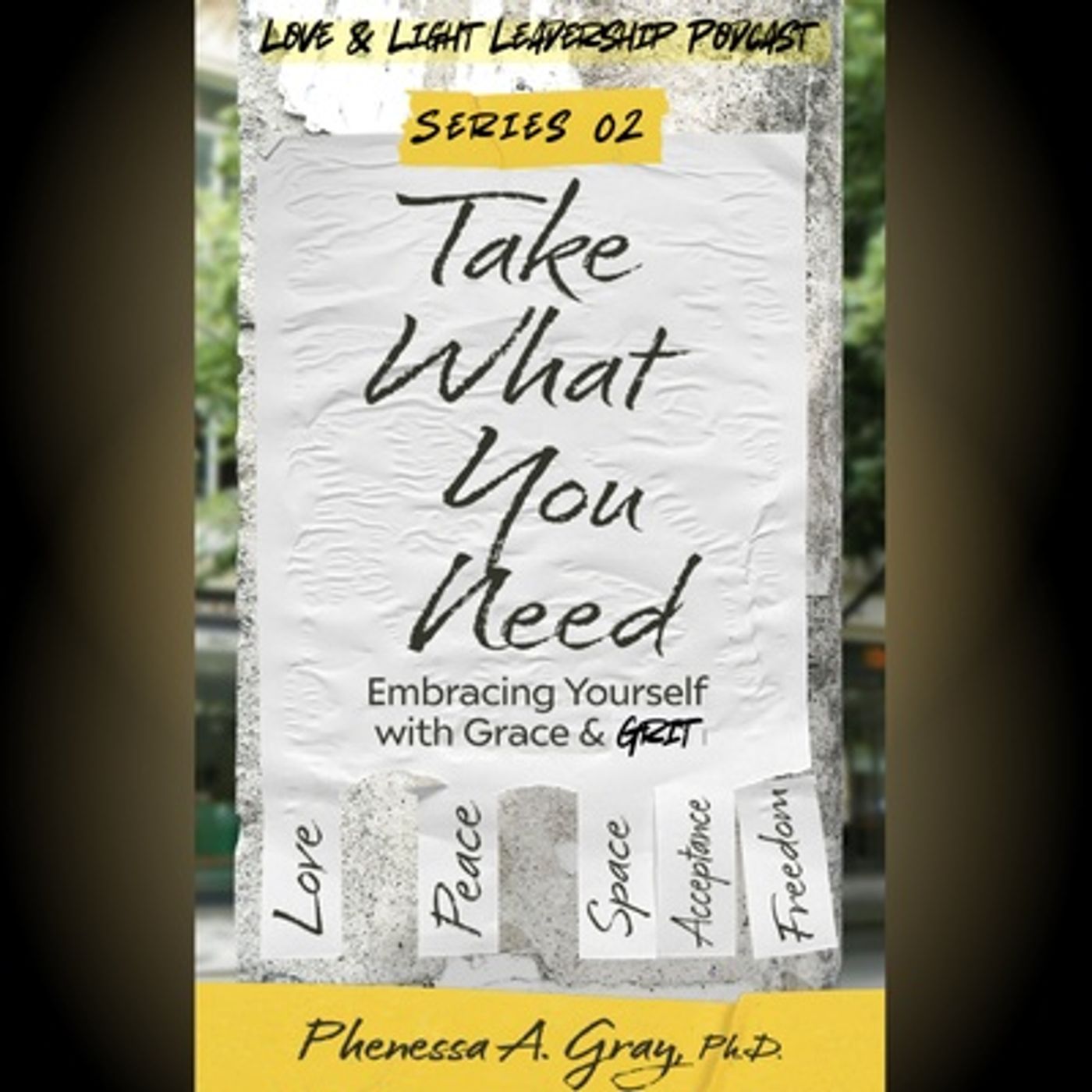
You can be incredibly competent and emotionally exhausted at the same time. You can be crushing your goals while quietly suffocating under the weight of what you won't say out loud. Many leaders have built impressive résumés while quietly ignoring the truth their bodies have been screaming—confusing professionalism with pretending, strength with silence.In Episode 4 of the Take What You Need 100-day series, Dr. Phenessa Gray dismantles the dangerous narrative that honesty threatens leadership stability. Drawing from John 8:32, Psalm 51:6, and Psalm 42:11, this episode reveals what biblical truth actually looks like: alignment that liberates your nervous system and clarifies your leadership instead of collapsing it.You'll discover:- The Greek word ginōskō (to know experientially) and what it means for embodied truth- Why cognitive dissonance creates full-system stress responses in your brain- The F.I.N.E. framework: Frustrated, Insecure, Neurotic, Emotional—or Feelings In Need of Expression- How code-switching and emotional labor drain leaders who navigate multiple cultural contexts- The neuroscience of behavioral integrity and what happens when your words don't match your actions- How chronic misalignment compromises your prefrontal cortex and hyperactivates your amygdala- 4-4-6 breathwork practice to activate parasympathetic regulation- The practice of "energetic integrity"—one micro-move to restore nervous system relief- Why expressive writing about difficult truths creates neural pathways for healingPerfect for: Leaders who are tired of performing instead of processing—library directors, educators, nonprofit founders, ministry leaders, corporate managers, women in leadership, and anyone who's been saying "I'm fine" while their body screams otherwise.Scripture Tools (Free)- Bible Gateway. (n.d.). Free Bible reading and study tools. https://www.biblegateway.com/- Bible Hub. (n.d.). Interlinear and lexicon tools. https://biblehub.com/- Blue Letter Bible. (n.d.). Lexicon and word study resources. https://www.blueletterbible.org/Hebrew & Greek Word Studies- Blue Letter Bible. (n.d.). Strong's G1097 - ginōskō (to know, experientially). https://www.blueletterbible.org/lexicon/g1097/kjv/tr/0-1/- Blue Letter Bible. (n.d.). Strong's H571 - emet (truth, reliability, faithfulness). https://www.blueletterbible.org/lexicon/h571/kjv/wlc/0-1/- Blue Letter Bible. (n.d.). Strong's H2910 - tuchoth (inward parts, hidden places). https://www.blueletterbible.org/lexicon/h2910/kjv/wlc/0-1/- Blue Letter Bible. (n.d.). Strong's G1659 - eleutheroō (to set free, liberate). https://www.blueletterbible.org/lexicon/g1659/kjv/tr/0-1/Biblical Reference Works- Brown, F., Driver, S. R., & Briggs, C. A. (1906). The Brown-Driver-Briggs Hebrew and English Lexicon. Hendrickson Publishers.- Kittel, G., & Friedrich, G. (Eds.). (1964). Theological dictionary of the New Testament (Vol. 1).- Eerdmans. Strong, J. (1890). Strong's exhaustive concordance of the Bible. Abingdon Press.Cognitive Dissonance & Psychological Alignment- Festinger, L. (1957). A theory of cognitive dissonance. Stanford University Press.- Harmon-Jones, E., & Mills, J. (2019). An introduction to cognitive dissonance theory and an overview of current perspectives on the theory. In E. Harmon-Jones (Ed.), Cognitive dissonance: Reexamining a pivotal theory in psychology (2nd ed., pp. 3–24). American Psychological Association. https://doi.org/10.1037/0000135-001Neuroscience: Stress, Trauma & Integration- Damasio, A. R. (1994). Descartes' error: Emotion, reason, and the human brain. Putnam.- Sapolsky, R. M. (2004). Why zebras don't get ulcers (3rd ed.). Henry Holt and Company.- Siegel, D. J. (2012). The developing mind: How relationships and the brain interact to shape who we are (2nd ed.). Guilford Press.- Van der Kolk, B. (2014). The body keeps the score: Brain, mind, and body in the healing of trauma. Viking.- McEwen, B. S. (1998). Protective and damaging effects of stress mediators. New England Journal of Medicine, 338(3), 171–179. https://doi.org/10.1056/NEJM199801153380307- Lupien, S. J., McEwen, B. S., Gunnar, M. R., & Heim, C. (2009). Effects of stress throughout the lifespan on the brain, behaviour and cognition. Nature Reviews Neuroscience, 10(6), 434–445. https://doi.org/10.1038/nrn2639Emotional Labor & Code-Switching- Hochschild, A. R. (1983). The managed heart: Commercialization of human feeling. University of California Press.- Grandey, A. A. (2000). Emotion regulation in the workplace: A new way to conceptualize emotional labor. Journal of Occupational Health Psychology, 5(1), 95–110. https://doi.org/10.1037/1076-8998.5.1.95- Brotheridge, C. M., & Grandey, A. A. (2002). Emotional labor and burnout: Comparing two perspectives of "people work." Journal of Vocational Behavior, 60(1), 17–39. https://doi.org/10.1006/jvbe.2001.1815- McCluney, C. L., Robotham, K., Lee, S., Smith, R., & Durkee, M. (2019). The costs of code-switching. Harvard Business Review. https://hbr.org/2019/11/the-costs-of-codeswitchingLeadership & Behavioral Integrity- George, B. (2003). Authentic leadership: Rediscovering the secrets to creating lasting value. Jossey-Bass.- Simons, T. L. (2002). Behavioral integrity: The perceived alignment between managers' words and deeds as a research focus. Organization Science, 13(1), 18–35. https://doi.org/10.1287/orsc.13.1.18.543- Brown, B. (2012). Daring greatly: How the courage to be vulnerable transforms the way we live, love, parent, and lead. Gotham Books.Self-Regulation & Decision Fatigue- Baumeister, R. F., & Vohs, K. D. (2007). Self-regulation, ego depletion, and motivation. Social and Personality Psychology Compass, 1(1), 115–128. https://doi.org/10.1111/j.1751-9004.2007.00001.x- Baumeister, R. F., Vohs, K. D., & Tice, D. M. (2007). The strength model of self-control. Current Directions in Psychological Science, 16(6), 351–355. https://doi.org/10.1111/j.1467-8721.2007.00534.xBreathwork & Parasympathetic Regulation- Jerath, R., Crawford, M. W., Barnes, V. A., & Harden, K. (2015). Self-regulation of breathing as a primary treatment for anxiety. Applied Psychophysiology and Biofeedback, 40(2), 107–115. https://doi.org/10.1007/s10484-015-9279-8- Zaccaro, A., Piarulli, A., Laurino, M., Garbella, E., Menicucci, D., Neri, B., & Gemignani, A. (2018). How breath-control can change your life: A systematic review on psycho-physiological correlates of slow breathing. Frontiers in Human Neuroscience, 12, 353. https://doi.org/10.3389/fnhum.2018.00353Expressive Writing & Psychological Health- Pennebaker, J. W., & Chung, C. K. (2011). Expressive writing: Connections to physical and mental health. In H. S. Friedman (Ed.), The Oxford handbook of health psychology (pp. 417–437). Oxford University Press.- Pennebaker, J. W., & Beall, S. K. (1986). Confronting a traumatic event: Toward an understanding of inhibition and disease. Journal of Abnormal Psychology, 95(3), 274–281. https://doi.org/10.1037/0021-843X.95.3.274Narrative Therapy & Externalization- White, M., & Epston, D. (1990). Narrative means to therapeutic ends. W. W. Norton & Company.- White, M. (2007). Maps of narrative practice. W. W. Norton & Company.Burnout & Occupational HealthMaslach, C., & Leiter, M. P. (2016). Understanding the burnout experience: Recent research and its implications for psychiatry. World Psychiatry, 15(2), 103–111.Become a supporter of this podcast: https://www.spreaker.com/podcast/love-light-leadership-podcast--6730707/support.
Embed this episode
What this episode covers
You can be incredibly competent and emotionally exhausted at the same time. You can be crushing your goals while quietly suffocating under the weight of what you won't say out loud. Many leaders have built impressive résumés while quietly ignoring the truth their bodies have been screaming—confusing professionalism with pretending, strength with silence. In Episode 4 of the Take What You Need 100-day series, Dr. Phenessa Gray dismantles the dangerous narrative that honesty threatens leadership stability. Drawing from John 8:32, Psalm 51:6, and Psalm 42:11, this episode reveals what biblical truth actually looks like: alignment that liberates your nervous system and clarifies your leadership instead of collapsing it. You'll discover: - The Greek word ginōskō (to know experientially) and what it means for embodied truth - Why cognitive dissonance creates full-system stress responses in your brain - The F.I.N.E. framework: Frustrated, Insecure, Neurotic, Emotional—or Feelings In Need of Expression - How code-switching and emotional labor drain leaders who navigate multiple cultural contexts - The neuroscience of behavioral integrity and what happens when your words don't match your actions - How chronic misalignment compromises your prefrontal cortex and hyperactivates your amygdala - 4-4-6 breathwork practice to activate parasympathetic regulation - The practice of "energetic integrity"—one micro-move to restore nervous system relief - Why expressive writing about difficult truths creates neural pathways for healing Perfect for: Leaders who are tired of performing instead of processing—library directors, educators, nonprofit founders, ministry leaders, corporate managers, women in leadership, and anyone who's been saying "I'm fine" while their body screams otherwise. Scripture Tools (Free) - Bible Gateway. (n.d.). Free Bible reading and study tools. https://www.biblegateway.com/ - Bible Hub. (n.d.). Interlinear and lexicon tools. https://biblehub.com/ - Blue Letter Bible. (n.d.). Lexicon and word study resources. https://www.blueletterbible.org/ Hebrew & Greek Word Studies - Blue Letter Bible. (n.d.). Strong's G1097 - ginōskō (to know, experientially). https://www.blueletterbible.org/lexicon/g1097/kjv/tr/0-1/ - Blue Letter Bible. (n.d.). Strong's H571 - emet (truth, reliability, faithfulness). https://www.blueletterbible.org/lexicon/h571/kjv/wlc/0-1/ - Blue Letter Bible. (n.d.). Strong's H2910 - tuchoth (inward parts, hidden places). https://www.blueletterbible.org/lexicon/h2910/kjv/wlc/0-1/ - Blue Letter Bible. (n.d.). Strong's G1659 - eleutheroō (to set free, liberate). https://www.blueletterbible.org/lexicon/g1659/kjv/tr/0-1/ Biblical Reference Works - Brown, F., Driver, S. R., & Briggs, C. A. (1906). The Brown-Driver-Briggs Hebrew and English Lexicon. Hendrickson Publishers. - Kittel, G., & Friedrich, G. (Eds.). (1964). Theological dictionary of the New Testament (Vol. 1). - Eerdmans. Strong, J. (1890). Strong's exhaustive concordance of the Bible. Abingdon Press. Cognitive Dissonance & Psychological Alignment - Festinger, L. (1957). A theory of cognitive dissonance. Stanford University Press. - Harmon-Jones, E., & Mills, J. (2019). An introduction to cognitive dissonance theory and an overview of current perspectives on the theory. In E. Harmon-Jones (Ed.), Cognitive dissonance: Reexamining a pivotal theory in psychology (2nd ed., pp. 3–24). American Psychological Association. https://doi.org/10.1037/0000135-001 Neuroscience: Stress, Trauma & Integration - Damasio, A. R. (1994). Descartes' error: Emotion, reason, and the human brain. Putnam. - Sapolsky, R. M. (2004). Why zebras don't get ulcers (3rd ed.). Henry Holt and Company. - Siegel, D. J. (2012). The developing mind: How...
Ready to play
Season 02: E04 | TRUTH: The Neuroscience of Truth-Telling for Burned-Out Leaders
No transcript for this episode yet
Similar Episodes
No similar episodes found.