
EPISODE · Jun 10, 2026 · 18 MIN
Seizure Aftercare for Nurses: What to Do When the Shaking Stops
from Healthy Skin Life · host Brooke Wallace
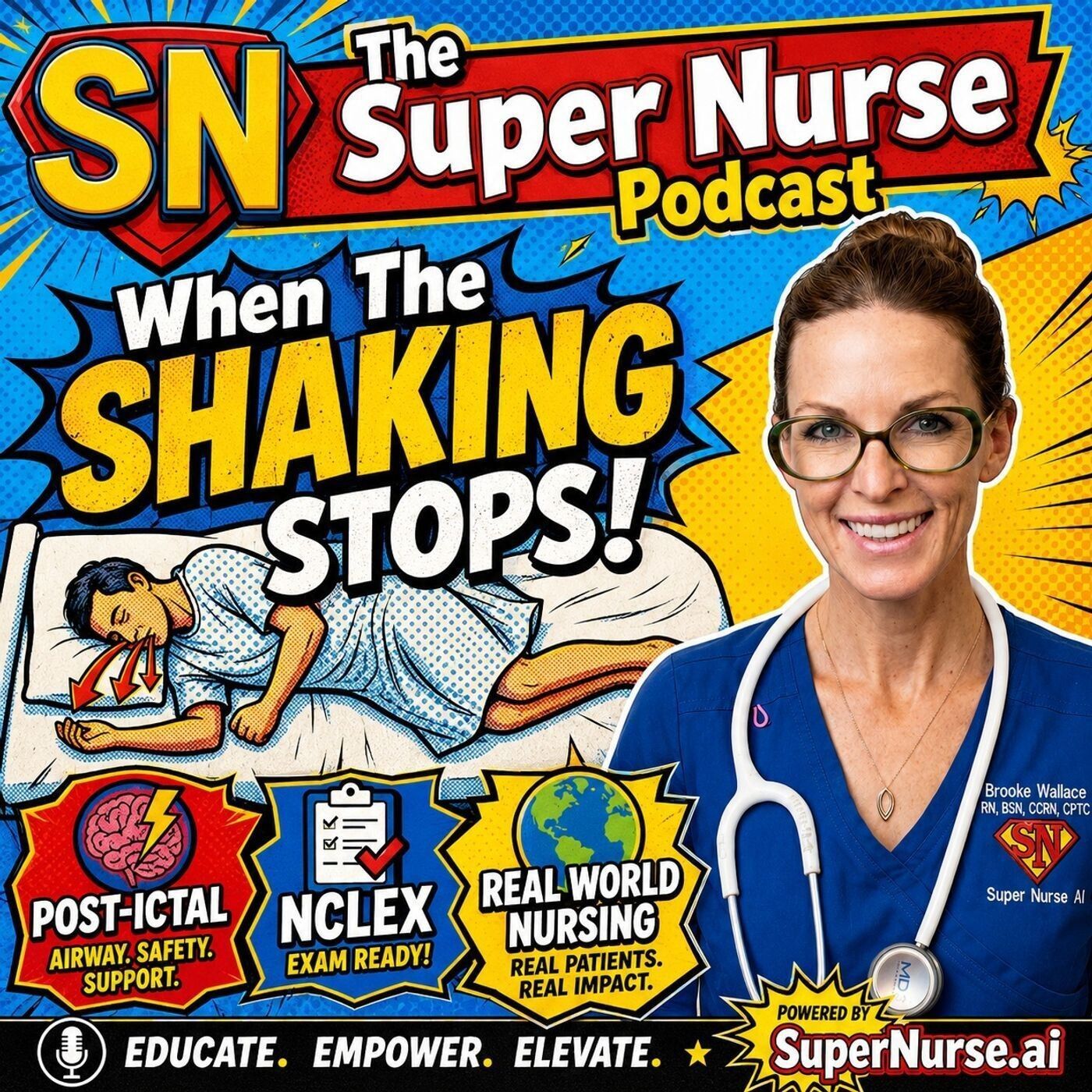
👉 Watch the video @SuperNurseAI This episode focuses on the postictal phase, the period after the active seizure ends. While the convulsions may have stopped, the patient’s brain and body are still recovering from a massive electrical storm. The brain has burned through oxygen, glucose, neurotransmitters, and ATP, leaving the patient exhausted, confused, sleepy, agitated, or temporarily unable to protect themselves. A major nursing priority after a seizure is airway protection. The patient may be sedated from benzodiazepines such as lorazepam or midazolam, metabolically exhausted from the seizure, and unable to maintain normal protective reflexes. This is why nurses must closely monitor respiratory rate, oxygen saturation, airway patency, and level of consciousness. The safest immediate position after a seizure is the side-lying recovery position. This helps secretions, saliva, blood, or vomit drain out of the mouth instead of pooling near the airway. If the patient remains flat on their back, the tongue can obstruct the airway and secretions can be aspirated into the lungs. This episode also emphasizes the importance of having suction and oxygen ready before a seizure happens. Seizure precautions are proactive, not reactive. Nurses should not be scrambling for suction tubing or oxygen equipment while the patient is choking, desaturating, or unable to clear secretions. After a seizure, nurses should assess for oral trauma, including tongue biting, cheek injuries, broken teeth, blood, and foamy secretions. They should also assess for incontinence, injury from the seizure, skin breakdown, fall risk, and whether the patient has returned to their neurologic baseline. One of the biggest NCLEX and real-world nursing priorities is this: do not leave the patient alone after a seizure. A postictal patient may be confused, weak, restless, combative, or impulsive. They can fall, aspirate, vomit, pull lines, or decline quickly if the nurse leaves the bedside. The nurse should call for help without abandoning the patient. Use the emergency call bell, staff assist button, wall cord, or shout into the hallway. The team should come to the nurse and patient — the nurse should not leave the patient to go find the team. Documentation is also a major part of seizure aftercare. Nurses should document the start and stop time, duration, body parts involved, type of movements, eye deviation, aura, triggers, medications given, oxygen needs, suctioning, injuries, incontinence, postictal behavior, recovery time, and when the patient returns to baseline. The episode also explains why timing matters for status epilepticus. A seizure lasting longer than 5 minutes, or repeated seizures without the patient regaining consciousness, is a medical emergency. Accurate nursing documentation helps trigger the right interventions and gives neurology the clues needed to understand where the seizure may have started. The key takeaway: when the shaking stops, the nurse’s job is not over. That is when airway, breathing, aspiration prevention, safety, dignity, and documentation become the center of care. Timestamps for 18:47 Podcast 00:00 – When the shaking stops Why the most dangerous phase may begin after the visible seizure ends. 01:05 – The postictal phase is not simple recovery What the patient’s brain is going through after a massive electrical storm. 02:10 – Why the brain is exhausted Oxygen, glucose, ATP, neurotransmitters, and metabolic waste after seizure activity. 03:15 – Sleepy, confused, or agitated? Why postictal patients may look profoundly drowsy or wake up terrified and combative. 04:20 – Do not aggressively wake them up Why forcing stimulation can worsen agitation or increase risk for another seizure. 05:25 – ABCs become the priority Shift your focus from cognitive testing to airway, breathing, circulation, and safety. 06:30 – Benzodiazepines and respiratory depression Why lorazepam or midazolam can stop the seizure but suppress respiratory drive. 07:35 – Side-lying recovery position How turning the patient on their side protects the airway from saliva, blood, and vomit. 08:40 – Suction and oxygen must be ready Why seizure precautions should be set up before the emergency happens. 09:45 – Assess the mouth and airway Look for tongue biting, cheek trauma, cracked teeth, blood, foam, and pooled secretions. 10:50 – Incontinence and patient dignity How nurses protect privacy and dignity after loss of bladder or bowel control. 11:55 – Never leave the patient alone Why a confused postictal patient can fall, aspirate, vomit, or arrest in seconds. 13:00 – Call for help without leaving Use the call bell, staff assist, wall cord, or shout for help while staying at the bedside. 14:05 – What nurses must document Start time, stop time, movements, eye deviation, triggers, aura, meds, injuries, and recovery. 15:15 – Why seizure details matter How body movements and eye deviation help neurology localize seizure activity. 16:15 – Status epilepticus warning signs Why seizures longer than 5 minutes or repeated seizures without recovery are emergencies. 17:15 – Long-term care planning How seizure patterns, nutrition, family involvement, and palliative needs shape the care plan. 18:20 – Final nursing takeaway After the seizure stops, protect airway, prevent injury, stay with the patient, and document everything. Want to reach out? Send an email to [email protected] or visit SuperNurse.ai The content presented in The Super Nurse Podcast is for educational purposes only and should not be considered medical advice. The host and creators are not responsible for any clinical decisions made based on this content. Always adhere to your institution’s policies and consult appropriate healthcare professionals when making patient care decisions. The content presented in The Super Nurse Podcast is for educational purposes only and should not be considered medical advice. The host and creators are not responsible for any clinical decisions made based on this content. Always adhere to your institution’s policies and consult appropriate healthcare professionals when making patient care decisions.
Embed this episode
What this episode covers
👉 Watch the video @SuperNurseAI This episode focuses on the postictal phase, the period after the active seizure ends. While the convulsions may have stopped, the patient’s brain and body are still recovering from a massive electrical storm. The brain ...
NOW PLAYING
Seizure Aftercare for Nurses: What to Do When the Shaking Stops
No transcript for this episode yet
Similar Episodes
No similar episodes found.
Similar Podcasts
No similar podcasts found.