
EPISODE · Jan 11, 2025 · 25 MIN
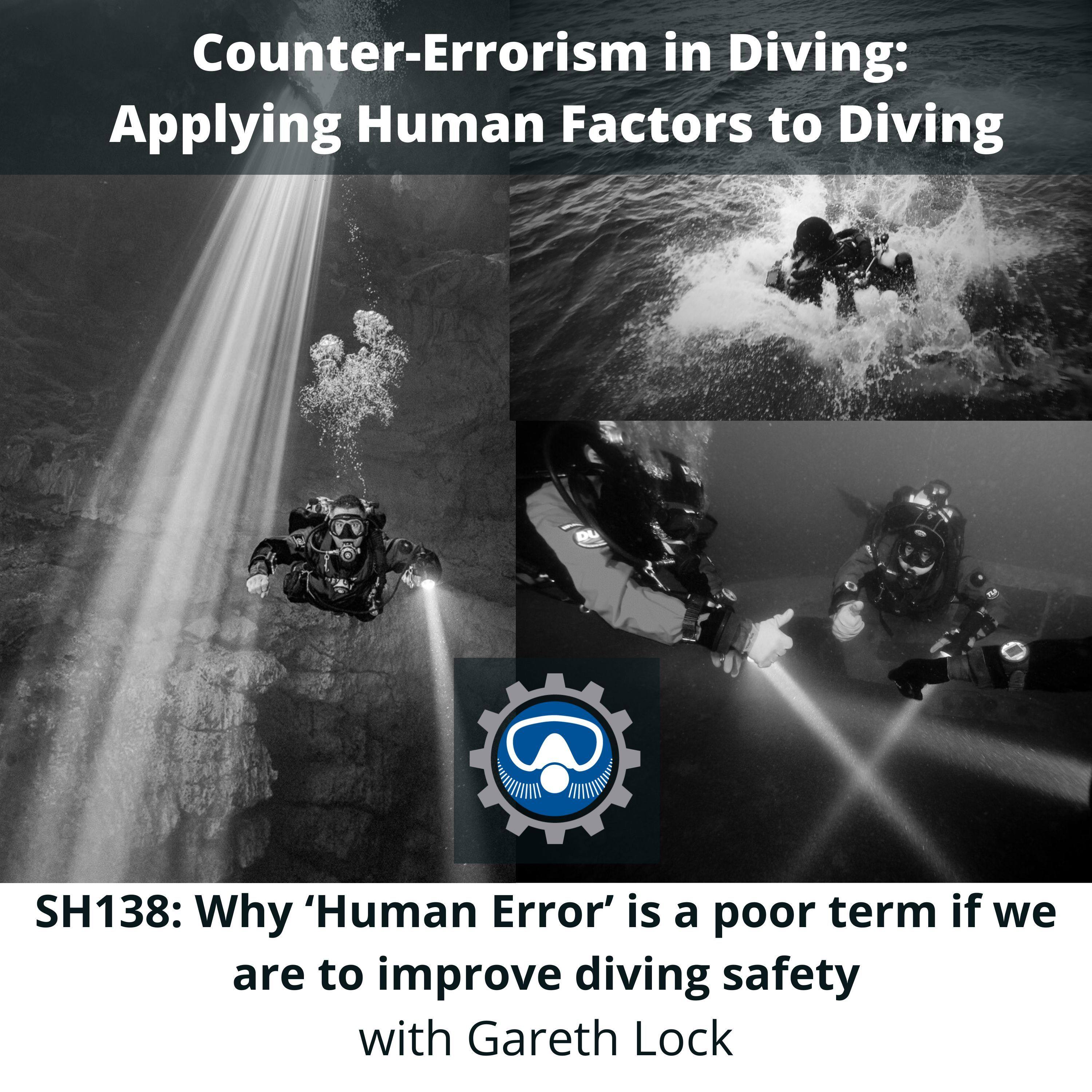
SH138: Why ‘Human Error’ is a poor term if we are to improve diving safety
from Counter-Errorism in Diving: Applying Human Factors to Diving
This podcast explores the limitations of attributing diving accidents to "human error," a reductionist explanation that fails to address the complexities of real-world decision-making and system failures. By examining a case study involving oxygen toxicity during a rebreather dive, the episode delves into how biases, situational awareness, and flawed mental models contribute to adverse events. It highlights the importance of understanding the context behind decisions, recognizing that divers rarely intend to put themselves or others at risk. Drawing parallels with aviation and other industries, the podcast advocates for systemic changes, better training, and a culture of learning to enhance safety, rather than placing blame. Original blog: https://www.thehumandiver.com/blog/why-human-error-is-a-poor-term Links: Animated Swiss cheese model: https://vimeo.com/249087556 References:1. Bierens, J. Handbook on drowning: Prevention, rescue, treatment. 50, (2006). 2. Denoble, P. J. Medical Examination of Diving Fatalities Symposium: Investigation of Diving Fatalities for Medical Examiners and Diving. (2014). 3. Denoble, PJ, Caruso, JL, de Dear, GL, Pieper, CF & Vann, RD. Common causes of open-circuit recreational diving fatalities. Undersea Hyperb Med 35, 393–406 (2008). 4. Parry, G. W. Human reliability analysis—context and control By Erik Hollnagel, Academic Press, 1993, ISBN 0-12-352658-2. Reliability Engineering & System Safety 99–101 (1996). doi:10.1016/0951-8320(96)00023-3 5. Reason, J. T. Human Error. (Cambridge University Press, 1990). 6. Phipps, D. L. et al. Identifying violation-provoking conditions in a healthcare setting. Ergonomics 51, 1625–1642 (2008). 7. Dekker, S. The Field Guide to Understanding Human Error. 205–214 (2013). doi:10.1201/9781315239675-20 8. Endsley, MR. Toward a theory of situation awareness in dynamic systems. Human Factors: The Journal of the Human Factors and Ergonomics Society 37, 32–64 (1995). 9. Klein, GA. Streetlights and shadows: Searching for the keys to adaptive decision making. (2011). 10. Amalberti, R, Vincent, C, Auroy, Y & de Maurice, S. G. Violations and migrations in health care: a framework for understanding and management. Quality & safety in health care 15 Suppl 1, i66–71 (2006). 11. Cook, R & Rasmussen, J. ‘Going solid’: a model of system dynamics and consequences for patient safety. Quality & safety in health care 14, 130–134 (2005). 12. Woods, DD & Cook, RI. Mistaking Error. Patient Safety Handbook 1–14 (2003). Tags: English, Gareth Lock, Human Error
Embed this episode
NOW PLAYING
SH138: Why ‘Human Error’ is a poor term if we are to improve diving safety
No transcript for this episode yet
Similar Episodes
No similar episodes found.
Similar Podcasts
No similar podcasts found.