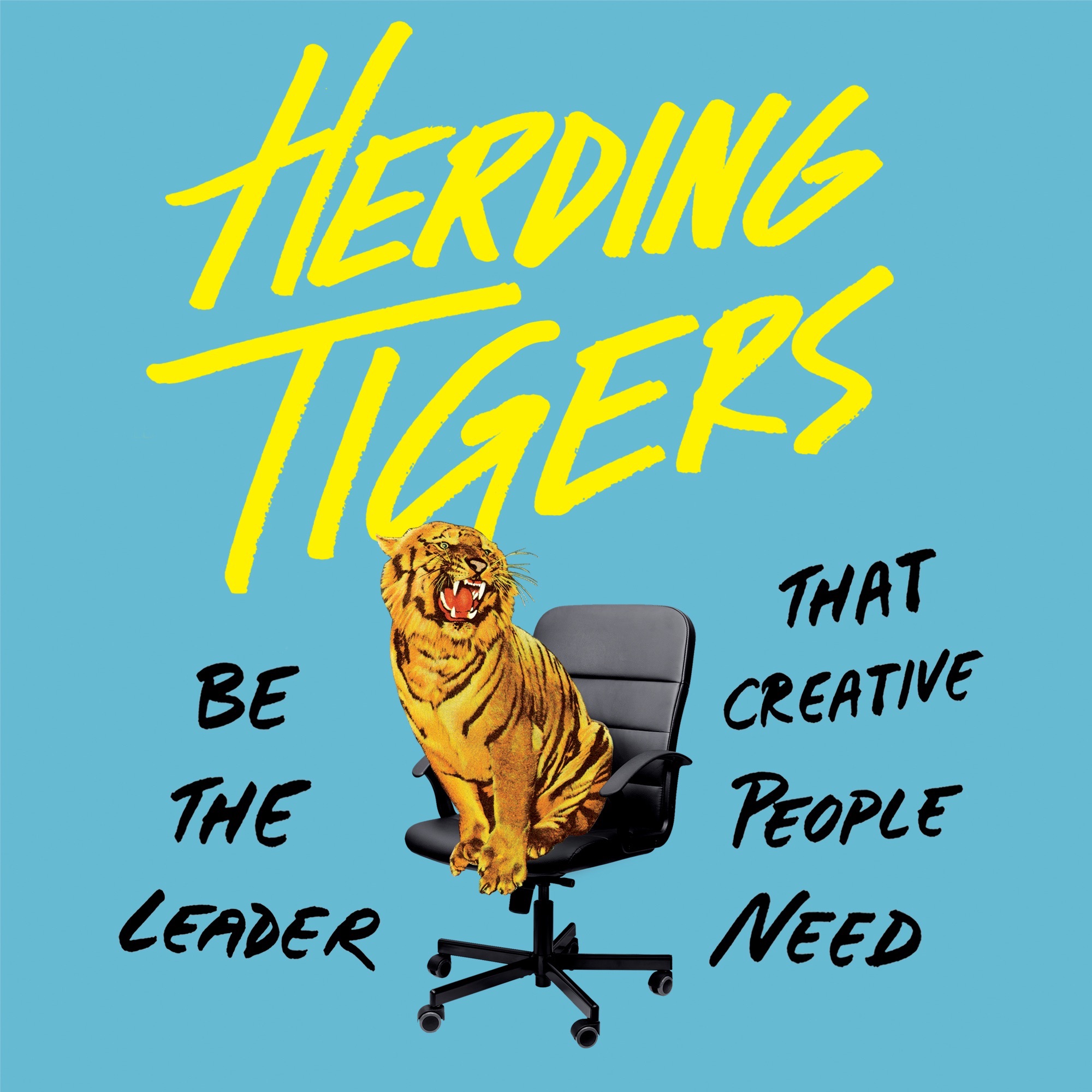
Hey everyone, welcome to the Hurting Tigers Podcast. My name is Todd Dendry. I'm the author of The Book Hurting Tigers, Be the Leader that Creative People Need. Here on the show we talk about what it is that creative people, people who have to solve problems every day under pressure, need from you as a leader in order to do their most effective work.
Listen, if you were just managing people who are cranking out widgets all day, it's really easy to get into the details, optimize the process and make sure that you're cranking out as many widgets as possible. But when every problem that you solve is unique, when it requires something different, a new touch, a new approach, something creative, then it requires a special kind of leadership, a special kind of management. So here on the show we talk about what those dynamics are, specifically from my book, Hurting Tigers. And today we're gonna talk about the importance of a principle that I call Stop Doing the Work.
This is from chapter two of The Book Hurting Tigers. It's called Stop Doing the Work, The Shift from Maker to Managers. We're gonna talk about that transition from Maker to Manager. A couple of resources I wanna point you to.
Number one, if you'd like to get a weekly email from me with a leadership tip principle idea, just visit ToddHenry.com. There you can jump on the leader list again, it's just one email every week with an essay about leadership for 52 weeks, that's all it is. So check it out at ToddHenry.com. Also, there is a companion course to Hurting Tigers.
If you go to accidentalcreative.com.com. Or ToddHenry.com.com. Then you can check out the Hurting Tigers Creative Leader Course, which is course filmed over the course of a couple of days with a live audience, a live workshop that we filmed. Again, it's the Hurting Tigers Creative Leader course you can check it out as well.
Okay, let's talk about why we need to stop doing the work. Now am I saying stop working? No, of course not. It's just that everything about your career as a creative professional is a giant setup.
The reason I say that is because early in your career, as a creative pro, you are rewarded for controlling the work. The better you control the work, the more you get into the details and you shape the work and you make it what it needs to be, the more you are likely to be recognized and rewarded for your unique aptitudes, your unique skills. However, as you get promoted to managing other people, if you step into the details, if you are actually doing the work for your team, the capacity of your team never expands beyond your personal purview. Instead of leading by control, you have to lead by influence.
But in order to do that, you must first stop doing the work and start leading the work. You have to make the shift from maker to manager. And the first shift that you make is a shift of mindset. As a manager of creative professionals, as a leader of creative professionals, you are not responsible for doing the work.
You are responsible for leading the work. So the entire book, Hurting Tigers, centers around the two things that creative people need from their leader's stability and challenge. They need a stable playing field on which to do their work. They need to know that the rules are gonna change, you know, mid-process, they need to know that the process is going to be relatively stable so that they can throw themselves into without worrying about whether things are gonna be shifted and they're gonna waste their time and energy doing work that's not gonna matter.
So they need stability, they also need challenge. They need to be doing work that is pushing them to try new things, to experiment, to take risks, that feels exciting to them, okay? These two things exist in tension with one another, which is why it's so difficult often for managers to get the right mix for each person because stability and challenge tend to exist in tension when you increase the stability within an organization, you tend to decrease the level of challenge people feel because things are more predictable, right? They're more processes.
You have a longer horizon for the work. So things tend to become less challenging as you increase the level of challenge, you tend to destabilize the organization. So when we talk about shifting from maker to manager, you have to shift your mindset from doing the work to leading the work. And this is a critical concept.
It's more about everything really that we talk about here on the show and that I write about in Herding Tigers hinges on this concept of leading the work, not doing the work. So I wanna talk about a couple of the reasons we fail to do this. Number one is that we tend to obsess about whether the work is good enough now rather than great later. See often when we get into the work to the degree that we began controlling it and actually doing the work and we're telling people not just how to do the work but what to do often is because we're afraid it's not gonna be good enough right now.
So we're more concerned about getting it good enough now then building into our team the capacity to do great work later. We're not willing to endure a temporary season of pain where we have to let people figure it out. Instead we wanna make sure that it's good enough now. We wanna make sure that there's never even a momentary lapse in quality and this is painful but it's also one of the reasons why we never get to a position where we can trust our team to do the work without our direct involvement 24-7.
Okay, so we have to be very careful not to allow that to happen. That's one of the reasons that tensions that we live in good enough now versus great later that we have to identify. So is there any place in your leadership where you are sacrificing potential future value your team could be creating in order to get it just good enough now, right? Because if you do this right, you can build into your team the capacity to do great work even when you're not directly involved because you're not just teaching them what to do moment by moment but you're teaching them how to think about the work.
This is a very fundamentally different way of leading creative people. Okay, the second tension that we live in is pressure down which is maker pressure versus pressure up which is manager pressure, right? So we're gonna get a lot of pressure down from our own manager and our manager is the state within resource constraints and to hit certain marks with a project but also we're gonna get a lot of pressure up, right? From our team, when am I gonna get an opportunity?
When am I gonna get to try something new? When you're gonna go with my idea? We have to manage that tension and all of us tend to defer to one group or the other. We have to be careful not to do that.
We have to be able to weigh, stand in the middle and weigh the pressure down and the pressure up and make brave decisions in the midst of that tension. So we have to balance the practical need to say it's good enough with the team's desire to push the limits of what's possible. Every single thing you do cannot be the greatest thing that's ever been done in the history of humankind. It can't be.
You have to have some work that you say, listen, we are not gonna stretch the boundaries. So we're just gonna get it good enough for what it needs to be for right now so that we can focus our energy on the things we really need to knock out of the park. So as a manager, you have to balance that tension because often creative teams want to push it on every single project. You just can't do that.
You don't have enough resources to go around. So you need to make sure that you're walking that line and dealing with that tension effectively. A third tension that we live in in this maker versus manager world is career management, which is a maker problem versus team aspirations, which is a manager problem. Listen, you have to manage your own career as well.
So you want to be seen as effective, you want to be seen as somebody who can get the work done and do great work. The most visible way to do that is to actually do the work. When you step back and you allow other people to shine, when you allow other people to do things, when you run with other people's ideas, there's not a direct reflection necessarily on you and your competence. And so that's why I always encourage people is you have to think about whether you really want to lead people because if you want to lead people, it's not going to be about doing the work.
It's not going to be about getting the accolades for the tactical execution of something. It's going to be about developing an environment and building into a team who can accomplish those results. It's a very secondary way of thinking about recognition. So you have to be certain you're okay with that.
If you're not, you may want to second guess whether you are someone who should aspire to leading a team because the job of the leader is not to do the work, it's to lead the work. So the important principle here in this episode is this. Are you stepping in and controlling the work of your team? Are you stepping in and telling them what to do?
Or are you teaching them how to think about the work? Are you teaching them the why behind the methodology? Because if you're only teaching tactics, if you're stepping in and controlling the work and doing the work for them and looking over their shoulder the whole time, then they're going to copy those tactics, but they won't understand why those tactics work and they won't be able to apply those tactics in new situations. Which means you are always going to be tied directly to the results of meaning.
Your team will never be able to do work without you there to tell them what to do. However, if you teach them not just what to do, but how to think about the work, the why behind the what, then they can be flexible, they can transfer that understanding to new situations, new circumstances, new problems. And they will come up with ideas you never would have come up with because of their unique combination of passion skills experiences, they will bring to you ideas and you'll think, my goodness, where did that even come from? That's incredible.
Because you didn't tell them what to do, you taught them how to think about the work and then you gave them runway to do it. Okay, so we have to make the transition from maker to manager. Stop doing the work and start leading the work if we want to be effective as a manager of creative people. Is that easy?
Well, no, it's not that easy. It's not that easy. It's more simple than it is easy, but we have to do it if we want our team to be effective. Okay, hey, I would love to hear your thoughts, your feedback, your comments about this.
Interact at accidentalcreative.com. It is my email address. Also, again, jump on the leader list at ToddHenry.com.leader Or check out the Herding Tigers Creative Leader course at accidentalcreative.com.resources or at ToddHenry.com.resources. All right friends, go out there and make echoes and be the leader, your team, you.