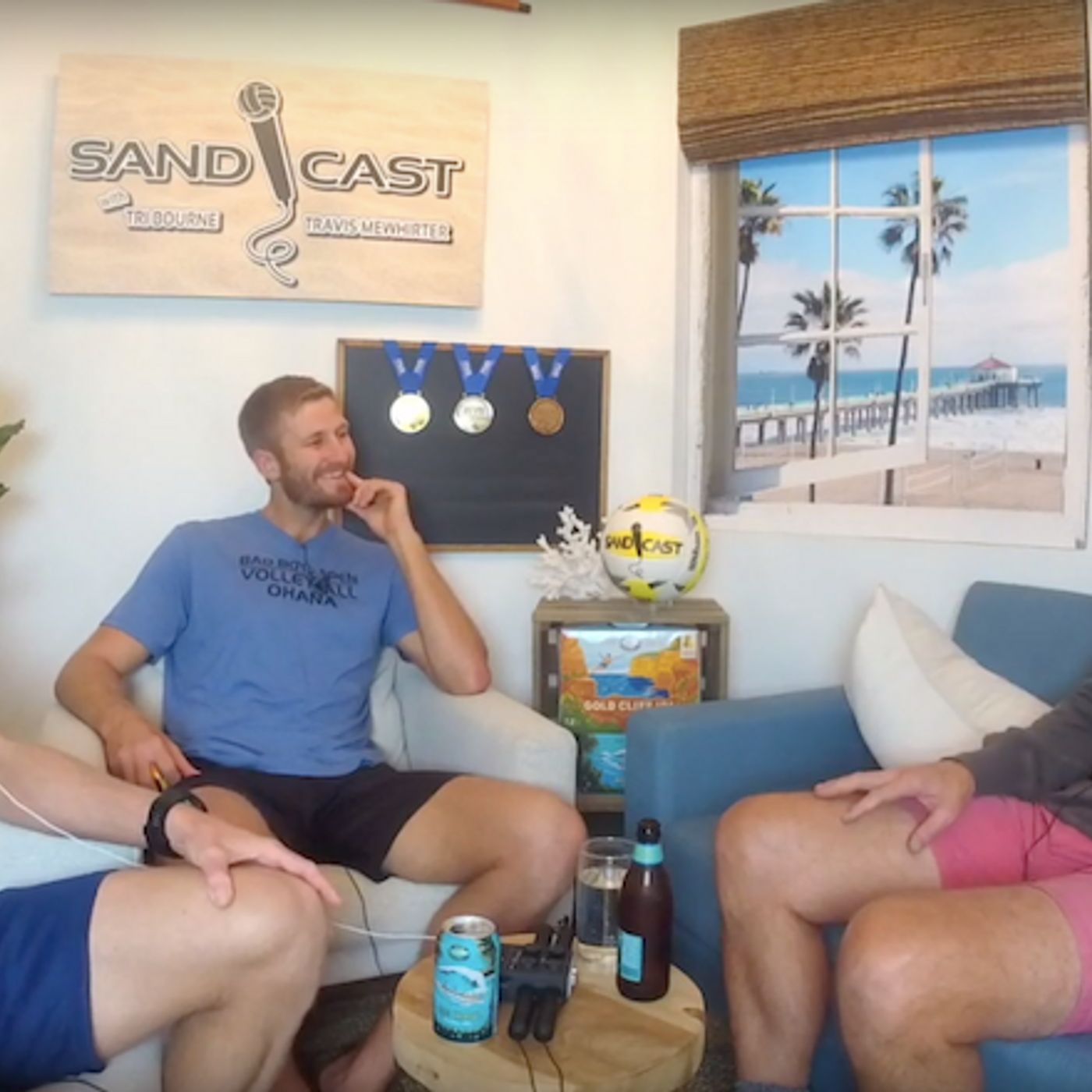
Sinjin Smith, part two: 'You'd compete all day long' episode artwork

EPISODE · Jan 8, 2020 · 50 MIN

Sinjin Smith, part two: 'You'd compete all day long'

from SANDCAST: Beach Volleyball with Tri Bourne and Travis Mewhirter · host Travis Mewhirter

Sinjin Smith knows the world is different now. That guys just can’t play volleyball for four hours, jump train for one, take a ride down to South Mission Beach and then play for another four. Jobs. Kids. Families and responsibilities and such. But he is curious. Curious as to why the beach volleyball culture has changed so much from his days. Days when he and the boys would put a ball down on center court and have at it for an entire day. No need for drills or simulated plays. You just played. And you never stopped playing. “You’d want to get on the No. 1 court, and you’d play all day,” Smith said on SANDCAST: Beach volleyball with Tri Bourne and Travis Mewhirter. “Eight hours! Imagine all those guys that set up matches, if they all went to Sorrento or Manhattan Beach. All of them. Or Santa Barbara. There’d be a group, and you’d be bummed out if you were third in line to get on center court. You wanted to be on the first court. You’d compete all day long.” And the guys who did that won. They won more than anybody in the history of beach volleyball has ever won. Mike Dodd, Karch Kiraly, Smith, Tim Hovland and Randy Stoklos – all members of the Hall of Fame, all of whom are proponents of the play all day ethos of training – combined to win 513 domestic tournaments in their careers. It might have been more difficult to get any of them to take a break from playing volleyball than it was to get them to lose. “If I won the tournament, I’d take Monday off. If I didn’t win, I’m going hard on Monday, all the way through,” Smith said. “We were winning quite a bit, and I’d feel bad sometimes. If it was an easy win, if I didn’t feel like I was totally torched, I’d go out on Monday anyway.” What Smith found was that the more he played, and the more he played, in particular, with Stoklos, the easier winning became. Why change? “He was a big 6-5,” Smith said of Stoklos, with whom he played 198 events and won nearly half. “He jumped so well for someone his size, and he played so much volleyball growing up that he had an incredible sense for the game. And of course, he had incredible hands, probably the best hands on the beach. He could set any ball from anywhere. We complemented each other very well. He was great at the net at a time when blocking was becoming more important for the game, and he could dig, but he was better as a blocker, and that freed me up to do in the backcourt to do what I do. We played to each other’s strengths. “Communication is so important, right? But it got to a point where we didn’t even have to talk. I knew what he was going to do in every situation, and he knew what I was going to do. When you play long enough together with somebody, that’s the beauty of it. You’re not running into each other. You know where he’s going to be, and you know where to go. And if he gets in trouble, I know exactly what to tell him and if I get in trouble he knows exactly what to do. “It didn’t seem like we had to do anything special or different. It was just natural for us to do what we did.” What they did was win more than any other partnership in American beach volleyball. When this point comes up, Smith shrugs. He doesn’t quite understand all the hype about the weight room, unless it’s to rehab an injury or work on a specific movement. He’s a proponent that you play on the beach, and the beach is therefore where you should train. He and Kiraly, with whom he played 14 events and also won a National Championship at UCLA, would put on weight belts when they played at South Mission. When Smith wanted to get a workout in, he’d just jump – jump with no approach, jump with a full approach, slide sideways for three shuffles, slide the other way for three, jump on one foot, jump on the other, then do it all over again.   “We’d do that every day,” he said. “We couldn’t get enough volleyball, indoor, outdoor, it didn’t matter. We just wanted to play.” Not drill or lift or do yoga. Just play. Hosted by Simplecast, an AdsWizz company. See pcm.adswizz.com for information about our collection and use of personal data for advertising.

Sinjin Smith knows the world is different now. That guys just can’t play volleyball for four hours, jump train for one, take a ride down to South Mission Beach and then play for another four. Jobs. Kids. Families and responsibilities and such. But he is curious. Curious as to why the beach volleyball culture has changed so much from his days. Days when he and the boys would put a ball down on center court and have at it for an entire day. No need for drills or simulated plays. You just played. And you never stopped playing. “You’d want to get on the No. 1 court, and you’d play all day,” Smith said on SANDCAST: Beach volleyball with Tri Bourne and Travis Mewhirter. “Eight hours! Imagine all those guys that set up matches, if they all went to Sorrento or Manhattan Beach. All of them. Or Santa Barbara. There’d be a group, and you’d be bummed out if you were third in line to get on center court. You wanted to be on the first court. You’d compete all day long.” And the guys who did that won. They won more than anybody in the history of beach volleyball has ever won. Mike Dodd, Karch Kiraly, Smith, Tim Hovland and Randy Stoklos – all members of the Hall of Fame, all of whom are proponents of the play all day ethos of training – combined to win 513 domestic tournaments in their careers. It might have been more difficult to get any of them to take a break from playing volleyball than it was to get them to lose. “If I won the tournament, I’d take Monday off. If I didn’t win, I’m going hard on Monday, all the way through,” Smith said. “We were winning quite a bit, and I’d feel bad sometimes. If it was an easy win, if I didn’t feel like I was totally torched, I’d go out on Monday anyway.” What Smith found was that the more he played, and the more he played, in particular, with Stoklos, the easier winning became. Why change? “He was a big 6-5,” Smith said of Stoklos, with whom he played 198 events and won nearly half. “He jumped so well for someone his size, and he played so much volleyball growing up that he had an incredible sense for the game. And of course, he had incredible hands, probably the best hands on the beach. He could set any ball from anywhere. We complemented each other very well. He was great at the net at a time when blocking was becoming more important for the game, and he could dig, but he was better as a blocker, and that freed me up to do in the backcourt to do what I do. We played to each other’s strengths. “Communication is so important, right? But it got to a point where we didn’t even have to talk. I knew what he was going to do in every situation, and he knew what I was going to do. When you play long enough together with somebody, that’s the beauty of it. You’re not running into each other. You know where he’s going to be, and you know where to go. And if he gets in trouble, I know exactly what to tell him and if I get in trouble he knows exactly what to do. “It didn’t seem like we had to do anything special or different. It was just natural for us to do what we did.” What they did was win more than any other partnership in American beach volleyball. When this point comes up, Smith shrugs. He doesn’t quite understand all the hype about the weight room, unless it’s to rehab an injury or work on a specific movement. He’s a proponent that you play on the beach, and the beach is therefore where you should train. He and Kiraly, with whom he played 14 events and also won a National Championship at UCLA, would put on weight belts when they played at South Mission. When Smith wanted to get a workout in, he’d just jump – jump with no approach, jump with a full approach, slide sideways for three shuffles, slide the other way for three, jump on one foot, jump on the other, then do it all over again.   “We’d do that every day,” he said. “We couldn’t get enough volleyball, indoor, outdoor, it didn’t matter. We just wanted to play.” Not drill or lift or do yoga. Just play.

NOW PLAYING

Sinjin Smith, part two: 'You'd compete all day long'

0:00 50:00

No transcript for this episode yet

We transcribe on demand. Request one and we'll notify you when it's ready — usually under 10 minutes.

MG Show MG Show The MG Show, hosted by Jeffrey Pedersen and Shannon Townsend, is a leading alternative media platform dedicated to uncovering the truth behind today’s most pressing political issues. Launched in 2019, the show has grown exponentially, offering unfiltered insights, comprehensive research, and real-time analysis. With a commitment to independent journalism and factual integrity, the MG Show empowers its audience with knowledge and encourages active participation in the political discourse. Breaking News Show | eTurboNews Juergen Thomas Steinmetz News is relevant to the global travel and tourism industry, human rights and global issues.Breaking news when it happens and only from the source. Eat to Live Jenna Fuhrman, Dr. Fuhrman Our health is our most precious gift and smart nutrition can change your life. Each month, join Dr. Fuhrman and his daughter, Jenna Fuhrman as they discuss important topics in the world of nutrition. Eat to Live will change the way you eat and think about food. French Your Way Jessica: Native French teacher founder of French Your Way Boost your French listening skills and test your comprehension with this one of a kind series of podcasts. Get the chance to listen to a real conversation between native speakers talking at normal speed AND customise your learning experience through carefully designed sets of questions (2 levels of difficulty) available for download at www.frenchvoicespodcast.com. All interviews also come with the transcript. French teacher Jessica interviews native speakers of French from around the world who share a bit of their life and passion. Where else would you meet in one same place a French yoga teacher based in Melbourne, a soap manufacturer from Provence, or a couple cycling around the world?

Frequently Asked Questions

How long is this episode of SANDCAST: Beach Volleyball with Tri Bourne and Travis Mewhirter?

This episode is 50 minutes long.

When was this SANDCAST: Beach Volleyball with Tri Bourne and Travis Mewhirter episode published?

This episode was published on January 8, 2020.

What is this episode about?

Sinjin Smith knows the world is different now. That guys just can’t play volleyball for four hours, jump train for one, take a ride down to South Mission Beach and then play for another four. Jobs. Kids. Families and responsibilities and such. But...

Can I download this SANDCAST: Beach Volleyball with Tri Bourne and Travis Mewhirter episode?

Yes, you can download this episode by clicking the download button on the episode player, or subscribe to the podcast in your preferred podcast app for automatic downloads.
URL copied to clipboard!