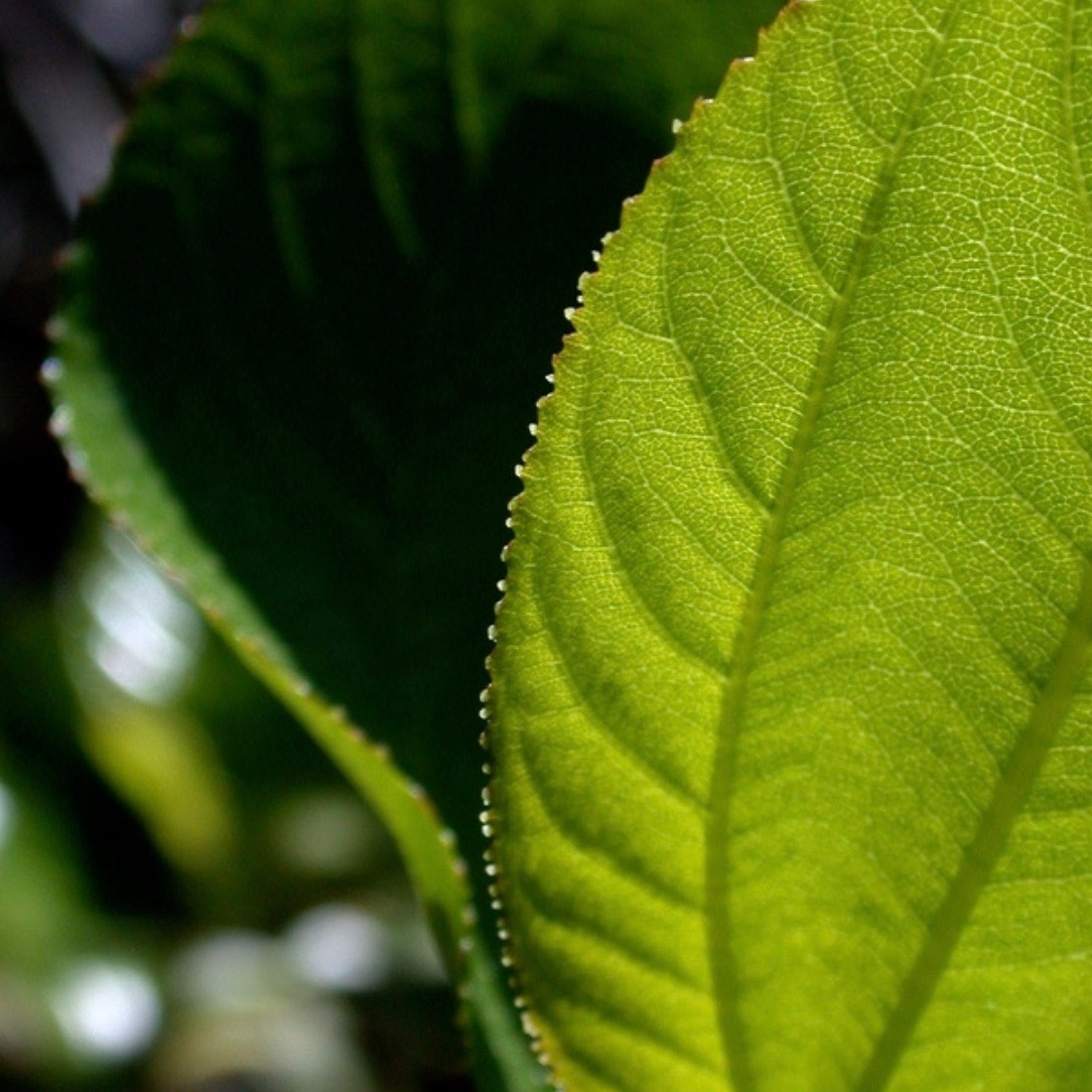
SIX METAPHYSICAL MINIATURES: “The Spring” episode artwork

EPISODE · Jul 3, 2026 · 4 MIN

SIX METAPHYSICAL MINIATURES: “The Spring”

from Cliff Crego · host Cliff Crego

IMAGE: Snowbrush leaf (Ceanothus velutinus) Form emerging out of movement. Six Metaphysical Miniatures (0) The spring gives freely of its water, but only in freedom can we drink. (1) Dialogue is a journey made together on foot through unknown terrain. Where we do not move as one, we simply stop and start over again. It is the quality of the movement of the journey itself which is primary, and not any particular content, or predetermined destination or goal. (2) In Art as well as Nature, there is a necessary complementarity between the conservative tradition which embodies and safeguards the knowledge of the past and the revolutionary insight which reveals the new. One is mechanical in a subtle way, the other is creative. The dynamic balance between the two is crucial. Too much stubborn repetition and the source of fresh meaning goes dry. Too much of the new and we lose all the skill needed to make the new manifest. A creative tradition is then at once both constant and changing, like the solid bed of rock which allows the river to flow free. (3) A potential danger of poetry is that we may develop the habit of giving too much significance to words, to language, to thought. The poem which has its source in words and not in deeply lived experience is much like the water of any large city; it may seem perfectly clear, but we somehow sense the drop of poison added to keep us from getting sick. (4) We shape the world and the world shapes us. To degrade the world is to degrade ourselves.After destroying the river and building the dam, we quickly lose the sensitivity of ear that once heard the music which is now no longer there. Children who grow up in a world of straightened and muted rivers will themselves never know that no one ever taught them how to sing. (5) The most insidious of all degradations is the loss of something vitally important for which we do not yet have a name. (6) Sometimes the shift in the usage of but a single word reveals a deeper, unseen, yet potentially radical transformation of the way we perceive the world.New words in this sense are not invented, but rather emerge out of a need -- sometimes an urgent one -- to manifest in clear form new meaning. The practice of metaphysics is in this sense by no means merely an intellectual exercise, but is, like a yoga we do every day, a space both public and private in which we can step back from the pressures of the present moment and look at life as a living, moving whole. That is why poetry, when we come to see it as the energy of insight --or of new meaning or essence -- made manifest in the singing, speaking voice, stands at the very center of this endeavor like a mountain of pure light.

Episode metadata supplied by the publisher feed · Published Jul 3, 2026

IMAGE: Snowbrush leaf (Ceanothus velutinus) Form emerging out of movement. Six Metaphysical Miniatures (0) The spring gives freely of its water, but only in freedom can we drink. (1) Dialogue is a journey made together on foot through unknown terrain. Where we do not move as one, we simply stop and start over again. It is the quality of the movement of the journey itself which is primary, and not any particular content, or predetermined destination or goal. (2) In Art as well as Nature, there is a necessary complementarity between the conservative tradition which embodies and safeguards the knowledge of the past and the revolutionary insight which reveals the new. One is mechanical in a subtle way, the other is creative. The dynamic balance between the two is crucial. Too much stubborn repetition and the source of fresh meaning goes dry. Too much of the new and we lose all the skill needed to make the new manifest. A creative tradition is then at once both constant and changing, like the solid bed of rock which allows the river to flow free. (3) A potential danger of poetry is that we may develop the habit of giving too much significance to words, to language, to thought. The poem which has its source in words and not in deeply lived experience is much like the water of any large city; it may seem perfectly clear, but we somehow sense the drop of poison added to keep us from getting sick. (4) We shape the world and the world shapes us. To degrade the world is to degrade ourselves.After destroying the river and building the dam, we quickly lose the sensitivity of ear that once heard the music which is now no longer there. Children who grow up in a world of straightened and muted rivers will themselves never know that no one ever taught them how to sing. (5) The most insidious of all degradations is the loss of something vitally important for which we do not yet have a name. (6) Sometimes the shift in the usage of but a single word reveals a deeper, unseen, yet potentially radical transformation of the way we perceive the world.New words in this sense are not invented, but rather emerge out of a need -- sometimes an urgent one -- to manifest in clear form new meaning. The practice of metaphysics is in this sense by no means merely an intellectual exercise, but is, like a yoga we do every day, a space both public and private in which we can step back from the pressures of the present moment and look at life as a living, moving whole. That is why poetry, when we come to see it as the energy of insight --or of new meaning or essence -- made manifest in the singing, speaking voice, stands at the very center of this endeavor like a mountain of pure light.

PodParley-generated summary based on available episode metadata and transcript content.

NOW PLAYING

SIX METAPHYSICAL MINIATURES: “The Spring”

0:00 4:27

No transcript for this episode yet

We transcribe on demand. Request one and we'll notify you when it's ready — usually under 10 minutes.

ear reading liuliangjian adventure:Charlie to the Rescue By: Robert Michael Ballantyne (1825-1894)Cliff Climbers By: Thomas Mayne Reid (1818-1883)Courage of Marge O'Doone By: James Oliver Curwood (1878-1927)Covered Wagon By: Emerson Hough (1857-1923)Dave Dashaway and His Hydroplane By: Roy RockwoodDavy and the Goblin By: Charles E. Carryl (1841-1920)Fall of the Nibelungs By: UnknownFlowing Gold By: Rex Beach (1877-1949)Happy Jack By: Thornton W. Burgess (1874-1965)Treasury of Heroes and Heroines By: Clayton EdwardsHunted Woman By: James Oliver Curwood (1878-1927)Hunters of the Hills By: Joseph Alexander Altsheler (1862-1919)More Tish By: Mary Roberts Rinehart (1876-1958)Mrs. Skagg's Husbands and Other Stories By: Bret Harte (1836-1902)Nomads of the North By: James Oliver Curwood (1878-1927)Sintram and His Companions By: Friedrich de la Motte Fouqué (1777-1843)Smugglers' Reef By: Harold L. Goodwin (1914-1990 ADHD Friendly Lifestyle Moira Maybin Moira Maybin is opening up about life with late-diagnosed ADHD, a mom of children with ADHD, and her knowledge gained as an educator and advocate for people with ADHD. Life was completely overwhelming until learned she had ADHD, she kept trying harder, with increasing problems in her self-care, physical and mental health. She’s re-shaped her life completely for a better fit, based on current research—and necessity, after falling off a cliff in 2018. On the ADHD Friendly Lifestyle, you can expect humor, stories, information, and support to help you to do the same. Have a question or topic you’d like answered on a future podcast? Email [email protected] Cliff Somers Podcast Channel Cliff Somers These are compilations of Cliff Somers' poetry. It was printed in a magazine published by Global Summit House, which is now called "The Regency Publishers."Additionally, the author intends to compile all of these poetry and make them freely accessible on various social networking sites. Blood Cancer Talks Rajshekhar Chakraborty, Ashwin Kishtagari, and Edward Cliff This is a podcast on latest advances in the understanding and management of blood cancers. Here, we will bring a wide range of experts within hematologic malignancies to discuss various topics in depth. Host: Raj Chakraborty, MD from Columbia University, New York, Ashwin Kishtagari, MD, from Vanderbilt University, Nashville, and Edward Cliff, MD, from Harvard University, BostonTweet your suggestions and feedback to @rajshekharucms @AshKishtagari @Eddie_Cliff @BloodCancerTalk

Frequently Asked Questions

How long is this episode of Cliff Crego?

This episode is 4 minutes long.

When was this Cliff Crego episode published?

This episode was published on July 3, 2026.

What is this episode about?

IMAGE: Snowbrush leaf (Ceanothus velutinus) Form emerging out of movement. Six Metaphysical Miniatures (0) The spring gives freely of its water, but only in freedom can we drink. (1) Dialogue is a journey made together on foot through...

Can I download this Cliff Crego episode?

Yes, you can download this episode by clicking the download button on the episode player, or subscribe to the podcast in your preferred podcast app for automatic downloads.
URL copied to clipboard!