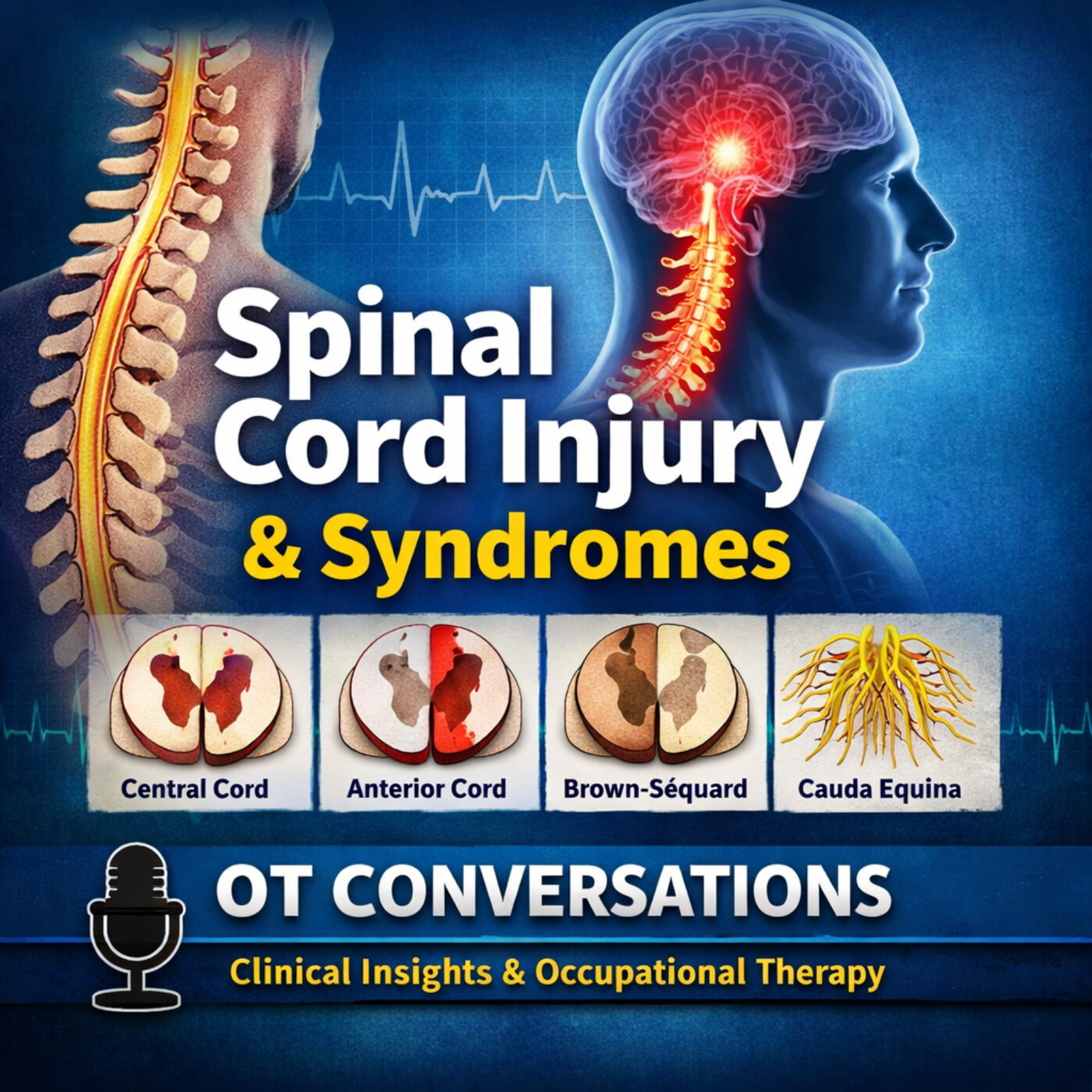
Spinal cord injury: a short talk
from OT conversations
Got something to say to this podcast? Send a voicemail, and you might hear yourself on the next episode! Spinal Cord Injury & Spinal Cord Syndromes — An OT-Led Clinical Guide Spinal cord injury isn’t just about paralysis — it’s about disrupted movement, sensation, autonomic control, identity, and occupation. In this episode of OT Conversations, we break down spinal cord injury in a clear, clinically practical way. We explore injury levels, complete vs incomplete lesions, and the classic spinal cord syndromes you must recognise in acute care, rehab, and critical care settings. You’ll learn: How spinal cord injuries are classified The difference between upper and lower motor neuron patterns Key spinal cord syndromes (Central Cord, Anterior Cord, Brown-Séquard, Conus Medullaris, Cauda Equina) Why hand function is often the biggest functional bottleneck What spinal cord injury really means for activities of daily living, independence, and recovery This episode is grounded in occupational therapy reasoning, linking anatomy and neurology directly to function, participation, and real-world rehabilitation. Whether you’re a student, newly qualified therapist, or experienced clinician, this episode will help you see spinal cord injury through a functional, occupational lens — not just a neurological one. 🎙️ Listen. Learn. Apply. Because understanding the cord means understanding the person.
Embed this episode
No transcript yet.