
EPISODE · Feb 2, 2026 · 10 MIN
St. Brigid's Day
from Notes For Meeting · host David Brunton
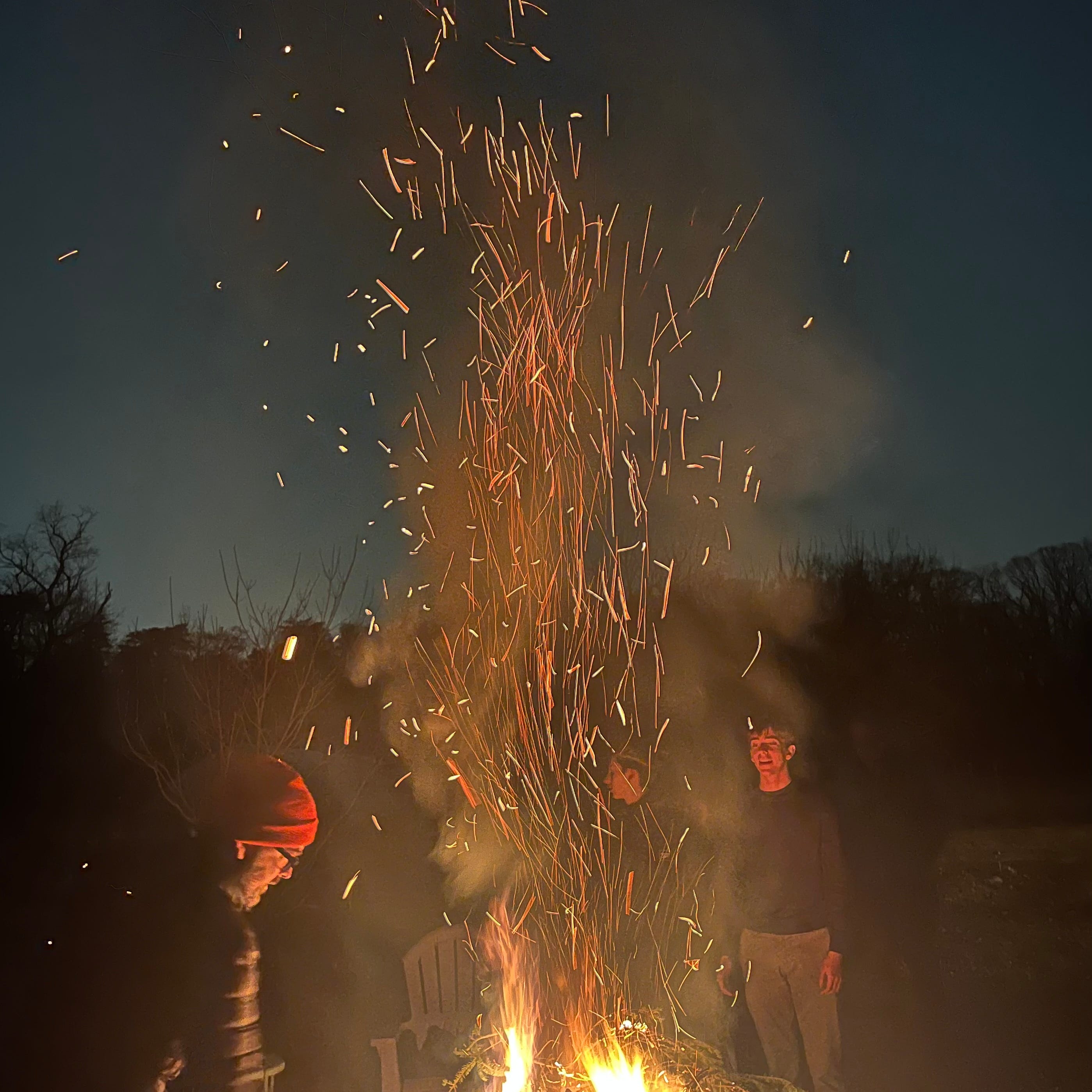
It’s kind of hard for me to think about spring right now. It was fourteen degrees this morning when I got up, and that was the warmest morning we’ve had in a week. The ice on top of the snow is especially crazy, it feels like walking on a glacier on Mt. Adams. But it’s February first, and that means it’s Imbolc, or St. Brigid’s day, which has been a national holiday in Ireland since, checks watch, twenty-twenty-three. That doesn’t mean that people have only observed it since then, but it does mean some renewed interest, I guess. It’s basically the halfway point between the winter solstice and the spring equinox, and it’s associated with the coming of spring. We’re going to talk about Brigid a little more in a minute, but I’ll also point out that tomorrow is Groundhog’s Day, which is our own kinda midwinter thing. Groundhog’s day, the holiest day of Marmotology, also lines up with this idea of spring coming along, although I can only imagine this year that the groundhog will predict six more weeks of winter, because literally will it ever stop being cold? In addition to St. Brigid’s Day, Imbolc, and Groundhog Day, apparently it’s actually singular Groundhog, singular day, in addition to these auspicious days, tomorrow is also Candlemas, when we can take our candles to the church to be blessed, and it’s something something I don’t even know what, about the presentation or purification or holy encounter or some other such thing. Forty days since Christmas, if you can believe it, and if you haven’t already taken down your Christmas decorations, I guess today’s the day. So, burrowing a little deeper on this cluster of days, I thought we’d talk a little bit about syncretism today, and about what it means to Christians around the world. Here we are with this religion where the main idea is, we follow the teachings of this Rabbi from Galilee, and for various reasons, it’s a religion that has spread all over the world. At some point, when it spread to Ireland. And already in Ireland, there was this figure Brigid who people already know about. She’s either in three aspects, or she’s three sisters, and she’s associated with poetry and wisdom and farm animals and other things, can you see why I like her? Anyway, this Brigid is a Tuatha Dé Dannan, and since today’s Meeting isn’t about the history of Irish folklore, and I’m also not a folklorist, we’ll just leave that there as a breadcrumb for anyone who wants to follow, but for now it’s worth noting that this Brigid is associated with the beginning of spring, of Imbolc. A funny thing about humans is that most of us live on earth, and earth has this twenty-three-and-a-half degree tilt, and this roughly three-hundred-sixty-five-and-a-quarter day circumlocution around our star, which still affects our lives pretty substantially, but you can imagine if you didn’t have that context, say you didn’t think of yourself as living on a planet in a solar system, that you might wonder why spring comes every year, earlier some years and later in others. The beginning of February seems as good a time as any to hope to the dickens that it still works this year, I’m definitely doing it right now. If you happened to already listen to Dear Hank and John this week, one of their topics was the Division I Saints. I think I told you all already that it inspired me to write my first letter into Hank and John, mostly to “well actually” a mistake they made about St. Joseph of Arimathea, the patron saint of undertakers, apparently, but I also asked them if miracles are real. I wasn’t really wondering, though, I’m just hoping for the miracle that will melt all this ice that we’ve got covering everything right now. Of course, such a miracle was extremely unlikely, as it would have required the very formation of our solar system to occur in such a way that this planet achieved a reasonably stable orbit around a reasonably stable star at precisely the right tilt for spring to come. And yet, the miracle, despite its unlikeliness, happened already. As is always the way of getting ready for our meeting, I’ve had a few different threads coming together in my head, and I always wonder when to bring in another thread and when to start plying them all together. So here’s one more for you. Our family cow came from a dairy on the Eastern Shore called St. Brigid’s Farm, and they describe St. Brigid as the patron saint of dairy maids and scholars. I think they’d know. But wait just a minute, how did we get from talking about a pre-Christian Tuatha Dé Dannan goddess named Brigid to a Christian Saint with the same name? Well, Brigid of Kildaire, aka Saint Brigid, was born in Ireland. We don’t know a lot about her, but the tradition is that she died on February 1st, which is today, and that’s the day we celebrate her for her many good works. So to recap, this Division I Saint, Brigid, has the same name and the same day as a predecessor of hers whose name is also Brigid, but who is decidedly not Christian. We used to venerate the previous Brigid for the coming of spring and the milking of cows and poetry and wisdom on February first, but now we venerate the new Brigid, who is just like the old Brigid, except she’s not a Tuatha Dé Dannan, she’s a saint, which is completely different, and we venerate her on February 1st as well, for the coming of spring and the milking of cows and poetry and wisdom and whatnot. So the old Brigid is pagan and bad, but the new Brigid is Christian and good, and otherwise they’re exactly the same. What a weird coincidence. It turns out there are actually quite a few times and places in Christianity that it’s come to a new place and that it’s had the flexibility to adapt to local customs a bit. There have, of course, been lots of times in the history of our religion that any sort of pagan connection or the suggestion of celebrating pagan traditions was automatically bad. But suffice it to say that none of Yule logs and Christmas trees and Easter eggs are in the Bible, and neither is the Groundhog or Brigid or the importance of February first or February second. In fact, in the Roman empire around the same time as Christianity was getting its start, there was a competing festival on December 25th that was called Dies Natalis Solis Invicti, the birth of the invincible sun, that’s s-u-n sun, not s-o-n son, like the Son of God, and wouldn’t you know, just by sheer coincidence, we’ve got a holiday for that day, too! Right around the solstice, wouldn’t you know? Okay, before we light our candles, because remember, it’s also Candlemas, and what’s Candlemas without candle lighting, let’s think together about what this all means, and whether it matters very much. Humans have been being humans and celebrating and contemplating our trip around the sun for a long time, certainly long before Jesus was born and we got our religion. For my money, bringing a tree inside, hunting for eggs, lighting candles in the darkness, they aren’t things that should keep us apart, they’re things that should bring us together. To me, the whole point of being a Christian is that we try to follow the teachings of Christ, which is hard enough all by itself. Finding ways it fits into the rhythm of our lives, and ways that it fits into our culture and history and family and animal friends feels beautiful and poetic to me. The syncretism of it is really an important feature, not an accident. So tonight, let’s light our candles in the dark, let’s consider Brigid of Kildaire, and poets, and domesticated animals, this one’s for all of you. I love you all so much, and I’m personally hoping the groundhog does us right tomorrow and spring comes sooner than later. This is a public episode. If you would like to discuss this with other subscribers or get access to bonus episodes, visit notesformeeting.substack.com
Embed this episode
Ready to play
St. Brigid's Day
No transcript for this episode yet
Similar Episodes
No similar episodes found.
Similar Podcasts
No similar podcasts found.