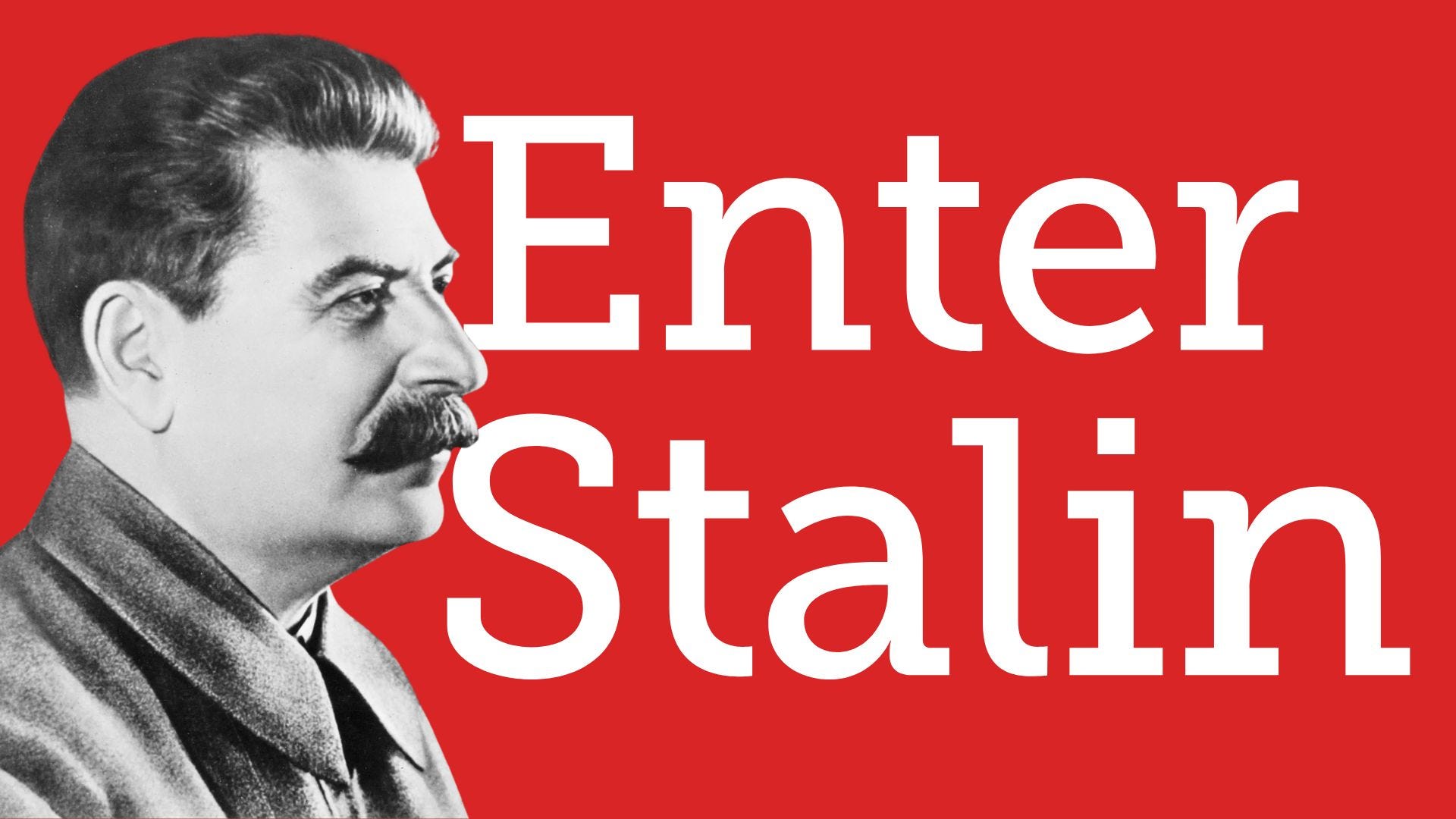
Stalin's Economic Nightmare | Part 2 | Rise & Fall of the Soviet Economy episode artwork

EPISODE · Jul 23, 2025 · 42 MIN

Stalin's Economic Nightmare | Part 2 | Rise & Fall of the Soviet Economy

from IEA Podcast · host Institute of Economic Affairs

In this Institute of Economic Affairs podcast, Managing Editor Dan Freeman interviews Aymen Aulaiwi, DPhil student at Lincoln College, Oxford, in the second part of a three-part series examining the Soviet economy's rise, peak and downfall. The conversation explores how Stalin transformed the Soviet Union's economy starting in 1928, synthesising earlier Bolshevik policies into a brutal command system. They discuss Stalin's collectivisation drive that forced peasants to "socialise their cows" and surrender private plots to collective farms, leading to the liquidation of the kulaks - the most productive farmers - and the devastating Holodomor famine that killed an estimated 8.5 million people by 1932.The discussion examines the mechanics of Stalin's command economy through the Five-Year Plans, where Gosplan set production targets for heavy industry while ignoring consumer demand. Aulaiwi explains the three fundamental problems with command economies: information asymmetries that made central planning impossible, soft budget constraints that eliminated efficiency incentives, and principal-agent problems that led to widespread lying and shirking. He illustrates these concepts through relatable examples, from why you can't buy sheets of steel at a catalogue to how the fictional hero Stakhanov was used to manipulate workers, and explains why Stalin paradoxically became "history's most brutal capitalist" by suppressing consumption to fund industrial investment.The episode concludes with an assessment of Stalin's economic legacy, challenging the common defence that industrialisation was necessary to defeat Nazi Germany. Aulaiwi presents evidence showing that agricultural output actually declined during collectivisation, with Soviet children growing at only 6% the rate of American children by the mid-1930s. He describes Stalin's economy as "an empire of rusting steel and rotting corpses," exemplified by projects like the Belomor Canal where 25,000 prisoners died building a waterway too shallow for real shipping. The conversation demonstrates how Stalin's command economy prioritized impressive-sounding output figures over actual human welfare, producing goods nobody wanted while imposing enormous human costs. This is a public episode. If you'd like to discuss this with other subscribers or get access to bonus episodes, visit insider.iea.org.uk/subscribe

NOW PLAYING

Stalin's Economic Nightmare | Part 2 | Rise & Fall of the Soviet Economy

0:00 42:58

No transcript for this episode yet

We transcribe on demand. Request one and we'll notify you when it's ready — usually under 10 minutes.

That Hoarder: Overcome Compulsive Hoarding That Hoarder Hoarding disorder is stigmatised and people who hoard feel vast amounts of shame. This podcast began life as an audio diary, an anonymous outlet for somebody with this weird condition. That Hoarder speaks about her experiences living with compulsive hoarding, she interviews therapists, academics, researchers, children of hoarders, professional organisers and influencers, and she shares insight and tips for others with the problem. Listened to by people who hoard as well as those who love them and those who work with them, Overcome Compulsive Hoarding with That Hoarder aims to shatter the stigma, share the truth and speak openly and honestly to improve lives. The Small Business Startup School – Business Notes | Financial Literacy | Retail Psychology – For Professionals & Entrepreneurs The Small Business Startup School Inc. Starting or buying a small business? While personal circumstances may vary, business patterns remain timeless. On The Small Business Startup School, we explore strategies, insights, and practical solutions to help entrepreneurs confidently navigate their journey.Hosted by Ola Williams—a retail entrepreneur, fintech founder, and financial coach with over two decades of experience—this podcast marries financial awareness and retail psychology with optimism to deliver actionable takeaways.Join us to learn, grow, and connect as we uncover the keys to business success.Let’s continue to learn together and be encouraged to keep on connecting! DIOSA. Carolina Sanper This podcast is a sacred space created by Carolina Sanper where you connect with your inner wisdom and embody your magnetic feminine power.It is the realization that the mystical realm is where you plant the seeds of your desired reality.It is a portal to your true essence: awareness, presence, and receiving with ease. Welcome home, DIOSA. 🖤 XXX Tech by SOVRYN Dr. Brian Sovryn The crossroads between technology, sensuality, and metaphysics - and the longest running anarchist podcast in the world! Brought to you by Dr. Brian Sovryn.

Frequently Asked Questions

How long is this episode of IEA Podcast?

This episode is 42 minutes long.

When was this IEA Podcast episode published?

This episode was published on July 23, 2025.

What is this episode about?

In this Institute of Economic Affairs podcast, Managing Editor Dan Freeman interviews Aymen Aulaiwi, DPhil student at Lincoln College, Oxford, in the second part of a three-part series examining the Soviet economy's rise, peak and downfall. The...

Can I download this IEA Podcast episode?

Yes, you can download this episode by clicking the download button on the episode player, or subscribe to the podcast in your preferred podcast app for automatic downloads.
URL copied to clipboard!