
EPISODE · Aug 9, 2025 · 1H 45M
Starts With A Bang #120 - Exoplanet biosignatures
from Starts With A Bang podcast · host Ethan Siegel
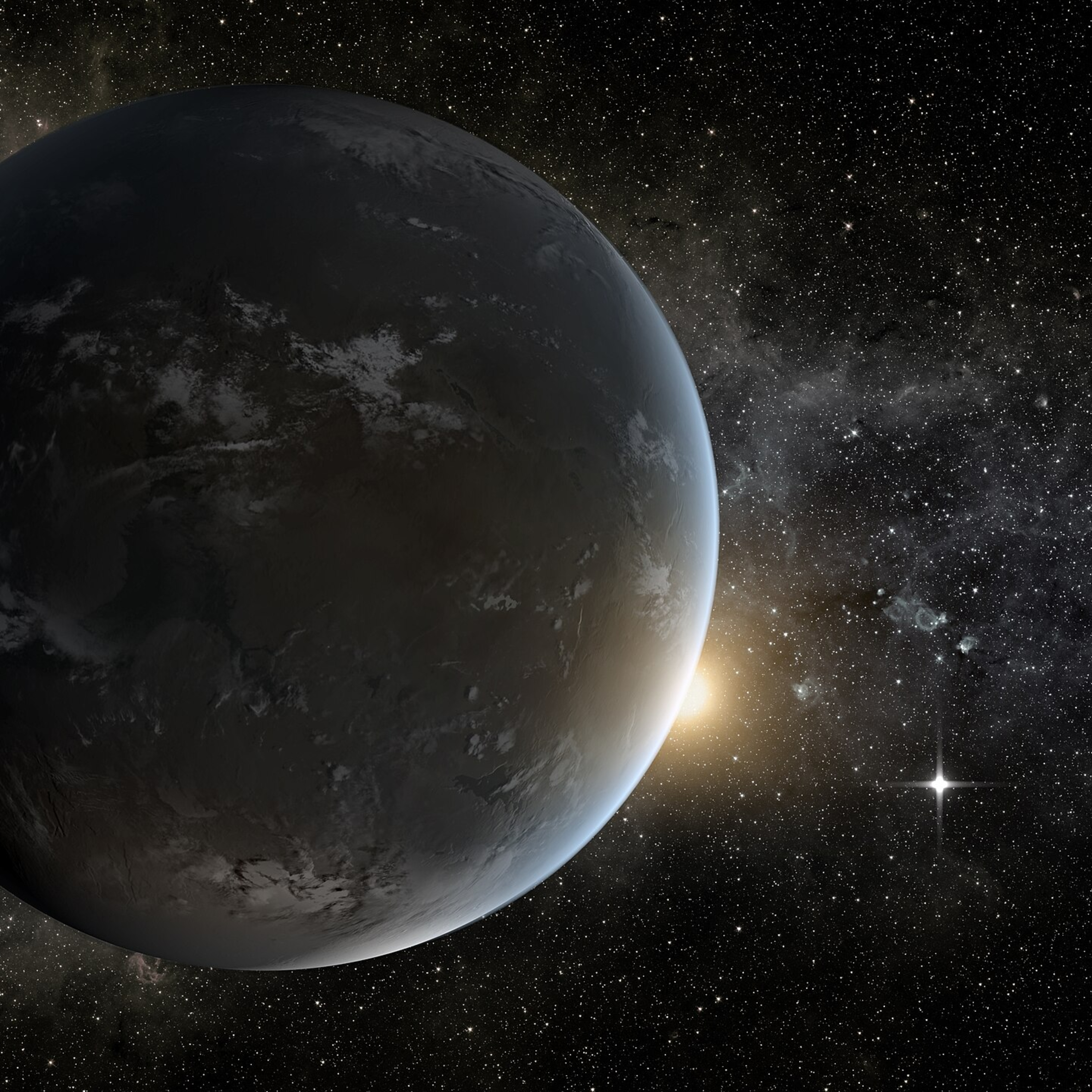
Out there in the Universe, somewhere, a second example of an inhabit world or planet likely awaits us. It could be some other planet or moon within our own Solar System; it could be a spacefaring, interstellar civilization, or it could be an exoplanet around a different parent star. Although the search for life beyond Earth generally focuses on worlds that have similar conditions to Earth, like rocky planets with thin atmospheres and liquid water on their surfaces, that's not necessarily the only possibility. The truth is that we don't know what else is going to be out there, not until we look for ourselves and determine the answers.And yet, if you've been paying attention to the news, you might think that super-Earth or mini-Neptune type worlds, such as the now-famous exoplanet K2-18b, might be excellent candidate planets for life. Some have even gone as far as to claim that this planet has surefire biosignatures on it, and that the evidence overwhelmingly favors the presence of life within this planet's atmosphere. But the science backing up that claim has been challenged by many, including our two podcast guests for this episode: Dr. Luis Welbanks and Dr. Matthew Nixon.Beyond the breathless and sensational claims, what does the actual science concerning K2-18b in particular, and of biosignatures on exoplanets in general, actually teach us? What does the evidence indicate, and if we are going to find inhabited exoplanets, what will it take for us to actually announce a positive detection with confidence and less ambiguity? That's what this episode of the Starts With A Bang podcast is all about; I hope you enjoy it!(When an exoplanet passes in front of its parent star, a portion of that starlight will filter through the exoplanet’s atmosphere, allowing us to break up that light into its constituent wavelengths and to characterize the atomic and molecular composition of the atmosphere. If the planet is inhabited, we may reveal unique biosignatures, but if the planet has either a thick, gas-rich envelope of volatile material around it, or alternatively no atmosphere at all, the prospects for habitability will be very low. Credit: NASA Ames/JPL-Caltech)
What this episode covers
Out there in the Universe, somewhere, a second example of an inhabit world or planet likely awaits us. It could be some other planet or moon within our own Solar System; it could be a spacefaring, interstellar civilization, or it could be an exoplanet around a different parent star. Although the search for life beyond Earth generally focuses on worlds that have similar conditions to Earth, like rocky planets with thin atmospheres and liquid water on their surfaces, that's not necessarily the only possibility. The truth is that we don't know what else is going to be out there, not until we look for ourselves and determine the answers.And yet, if you've been paying attention to the news, you might think that super-Earth or mini-Neptune type worlds, such as the now-famous exoplanet K2-18b, might be excellent candidate planets for life. Some have even gone as far as to claim that this planet has surefire biosignatures on it, and that the evidence overwhelmingly favors the presence of life within this planet's atmosphere. But the science backing up that claim has been challenged by many, including our two podcast guests for this episode: Dr. Luis Welbanks and Dr. Matthew Nixon.Beyond the breathless and sensational claims, what does the actual science concerning K2-18b in particular, and of biosignatures on exoplanets in general, actually teach us? What does the evidence indicate, and if we are going to find inhabited exoplanets, what will it take for us to actually announce a positive detection with confidence and less ambiguity? That's what this episode of the Starts With A Bang podcast is all about; I hope you enjoy it!(When an exoplanet passes in front of its parent star, a portion of that starlight will filter through the exoplanet’s atmosphere, allowing us to break up that light into its constituent wavelengths and to characterize the atomic and molecular composition of the atmosphere. If the planet is inhabited, we may reveal unique biosignatures, but if the planet has either a thick, gas-rich envelope of volatile material around it, or alternatively no atmosphere at all, the prospects for habitability will be very low. Credit: NASA Ames/JPL-Caltech)
NOW PLAYING
Starts With A Bang #120 - Exoplanet biosignatures
No transcript for this episode yet
Similar Episodes
Mar 26, 2026 ·1m
Jan 2, 2026 ·47m
Dec 21, 2025 ·46m