
EPISODE · Sep 6, 2025 · 1H 35M
Starts With A Bang #121 - Direct exoplanet imaging
from Starts With A Bang podcast · host Ethan Siegel
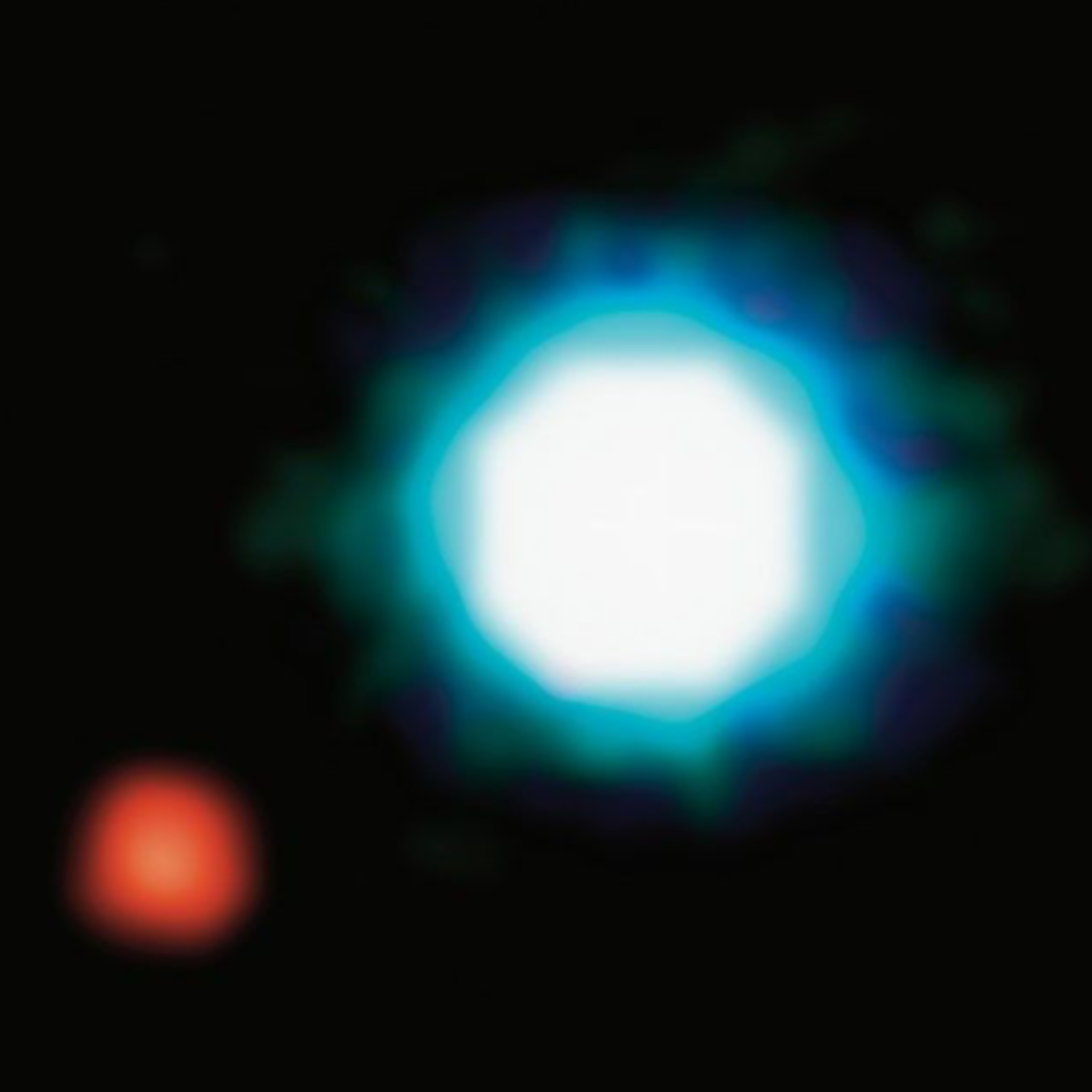
It's hard to believe, but it was only back in the early 1990s that we discovered the very first planet orbiting a star other than our own Sun. Fast forward to the present day, here in 2025, and we're closing in on 6000 confirmed exoplanets, found and measured through multiple techinques: the transit method, the stellar wobble method, and even direct imaging. That last one is so profoundly exciting because it gives us hope that, someday soon, we might be able to take direct images of Earth-like worlds, some of which may even be inhabited.Although it may be a long time before we can get an exoplanet image as high-resolution as even the ultra-distant "pale blue dot" photo that Voyager took of Earth so many decades ago, the fact remains that science is advancing rapidly, and things that seemed impossible mere decades ago now reflect today's reality. And the people driving this fascinating field forward the most are the mostly unheralded workhorses of the fields of physics and astronomy: the early-career researchers, like grad students and postdocs, who are just beginning to establish themselves as scientists.In this fascinating conversation with Dr. Kielan Hoch of Space Telescope Science Institute, we take a long walk at the current frontiers of science and peek over the horizon: looking at the good, the bad, and the ugly of what we're facing here in 2025. It's a conversation that might make you hopeful, angry, and optimistic all at the same time. After all, it's your Universe too; don't you want to know what comes next?(This composite image shows a brown dwarf star, center, with the first directly imaged exoplanet, 2M1207 b, in red alongside it. This image was acquired in 2004 by the Very Large Telescope in Chile, operated by the European Southern Observatory. In the years and decades since, dozens of more exoplanets have been directly imaged, with hundreds more expected in the next decade. Credit: ESO/VLT.)
What this episode covers
It's hard to believe, but it was only back in the early 1990s that we discovered the very first planet orbiting a star other than our own Sun. Fast forward to the present day, here in 2025, and we're closing in on 6000 confirmed exoplanets, found and measured through multiple techinques: the transit method, the stellar wobble method, and even direct imaging. That last one is so profoundly exciting because it gives us hope that, someday soon, we might be able to take direct images of Earth-like worlds, some of which may even be inhabited.Although it may be a long time before we can get an exoplanet image as high-resolution as even the ultra-distant "pale blue dot" photo that Voyager took of Earth so many decades ago, the fact remains that science is advancing rapidly, and things that seemed impossible mere decades ago now reflect today's reality. And the people driving this fascinating field forward the most are the mostly unheralded workhorses of the fields of physics and astronomy: the early-career researchers, like grad students and postdocs, who are just beginning to establish themselves as scientists.In this fascinating conversation with Dr. Kielan Hoch of Space Telescope Science Institute, we take a long walk at the current frontiers of science and peek over the horizon: looking at the good, the bad, and the ugly of what we're facing here in 2025. It's a conversation that might make you hopeful, angry, and optimistic all at the same time. After all, it's your Universe too; don't you want to know what comes next?(This composite image shows a brown dwarf star, center, with the first directly imaged exoplanet, 2M1207 b, in red alongside it. This image was acquired in 2004 by the Very Large Telescope in Chile, operated by the European Southern Observatory. In the years and decades since, dozens of more exoplanets have been directly imaged, with hundreds more expected in the next decade. Credit: ESO/VLT.)
NOW PLAYING
Starts With A Bang #121 - Direct exoplanet imaging
No transcript for this episode yet
Similar Episodes
Mar 26, 2026 ·1m
Jan 2, 2026 ·47m
Dec 21, 2025 ·46m