
EPISODE · Dec 13, 2025 · 1H 33M
Starts With A Bang #124 - Astrochemistry
from Starts With A Bang podcast · host Ethan Siegel
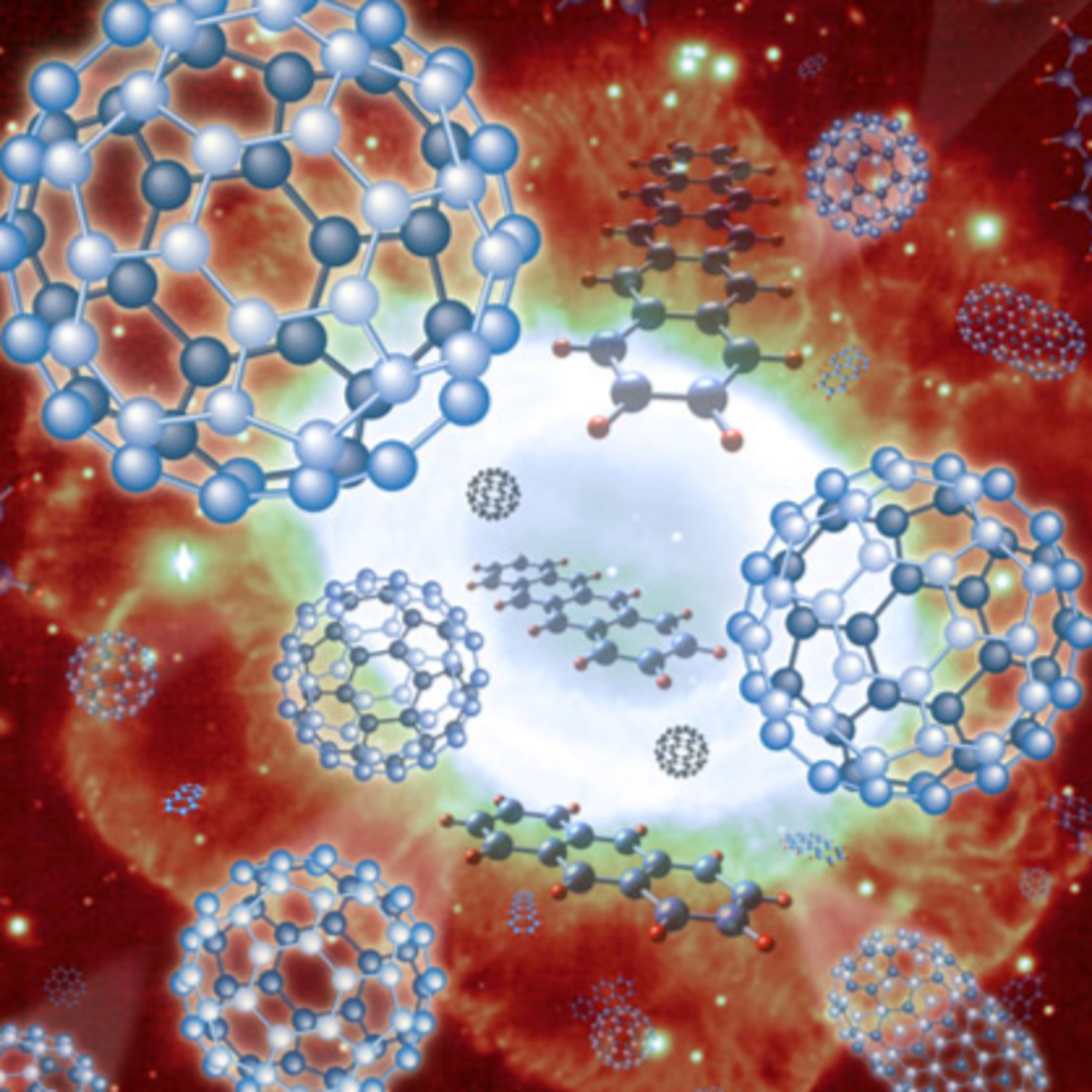
All across the Universe, stars are dying through a variety of means. They can directly collapse to a black hole, they can become core-collapse supernovae, they can be torn apart by tidal cataclysms, they can be subsumed by other, larger stars, or they can die gently, as our Sun will, by blowing off their outer layers in a planetary nebula while their cores contract down to form a degenerate white dwarf. All of the forms of stellar death help enrich the Universe, adding new atoms, isotopes, and even molecules to the interstellar medium: ingredients that will participate in subsequent generations of star-formation.For a long time, however, we'd made assumptions about where certain species of particles will and won't form, and what types of environments they could and couldn't exist in. Those assumptions were way ahead of where the observations were, however, and as our telescopic and technological capabilities catch up, sometimes what we find surprises us. Sometimes, we find elements in places that we didn't anticipate, leading us to question our theoretical models for how those elements can be made. Other times, we find molecules in environments that we think shouldn't be able to support them, causing us to go back to the drawing board to account for their existence.Where our expectations and observations don't match is one of the most exciting places of all, and that's where astrochemist and PhD candidate Kate Gold takes us on this exciting episode of the Starts With A Bang podcast! Have a listen, and I hope you enjoy it as much as I enjoyed having this one-of-a-kind conversation!(This image shows the fullerene molecules C60 and C70 as detected in the young planetary nebula M1-11. This 2013 discovery was the first such detection of this molecule in this class of environment. Credit: NAOJ)
What this episode covers
All across the Universe, stars are dying through a variety of means. They can directly collapse to a black hole, they can become core-collapse supernovae, they can be torn apart by tidal cataclysms, they can be subsumed by other, larger stars, or they can die gently, as our Sun will, by blowing off their outer layers in a planetary nebula while their cores contract down to form a degenerate white dwarf. All of the forms of stellar death help enrich the Universe, adding new atoms, isotopes, and even molecules to the interstellar medium: ingredients that will participate in subsequent generations of star-formation.For a long time, however, we'd made assumptions about where certain species of particles will and won't form, and what types of environments they could and couldn't exist in. Those assumptions were way ahead of where the observations were, however, and as our telescopic and technological capabilities catch up, sometimes what we find surprises us. Sometimes, we find elements in places that we didn't anticipate, leading us to question our theoretical models for how those elements can be made. Other times, we find molecules in environments that we think shouldn't be able to support them, causing us to go back to the drawing board to account for their existence.Where our expectations and observations don't match is one of the most exciting places of all, and that's where astrochemist and PhD candidate Kate Gold takes us on this exciting episode of the Starts With A Bang podcast! Have a listen, and I hope you enjoy it as much as I enjoyed having this one-of-a-kind conversation!(This image shows the fullerene molecules C60 and C70 as detected in the young planetary nebula M1-11. This 2013 discovery was the first such detection of this molecule in this class of environment. Credit: NAOJ)
NOW PLAYING
Starts With A Bang #124 - Astrochemistry
No transcript for this episode yet
Similar Episodes
Mar 26, 2026 ·1m
Jan 2, 2026 ·47m
Dec 21, 2025 ·46m