
EPISODE · Feb 7, 2026 · 1H 39M
Starts With A Bang #126 - The origin of dust
from Starts With A Bang podcast · host Ethan Siegel
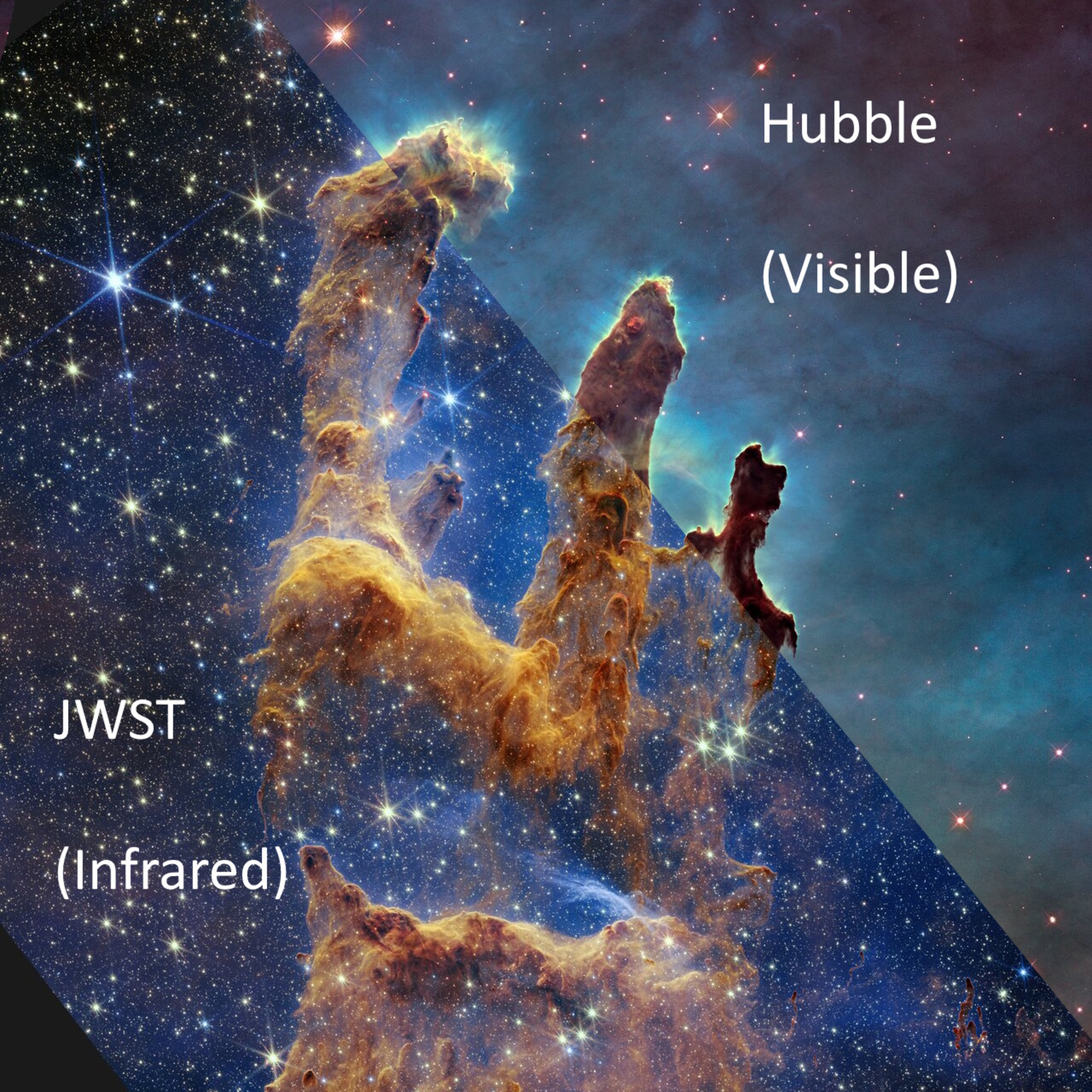
Out there in the Universe, we're most aware of what we see: of all the forms of light that arrive in our eyes, instruments, telescopes, and detectors. Much more difficult to see, as well as understand and make sense of, is the wide array of "stuff" that's present, but that isn't readily apparent to the apparatuses we normally use to reveal the Universe. From the dark bands of the Milky Way to the light-blocking materials in nebulae and clouds, all the way to lining the arms of spiral galaxies and the heavy, long-chained molecules found in protoplanetary disks, cosmic dust is perhaps our most enduring mystery.Sure, it gives absorption signatures that we can leverage, and at long enough infrared wavelengths, dust that gets heated has its own emission signatures, but we can generally only observe it in detail up close: within our own galaxy or in the nearest galaxies of all. That poses a huge challenge, because the origin of dust, including from a cosmic perspective, remains only very poorly understood. We may have identified many dust-producing sources in the Universe, and we may understand that the young Universe was a lot less dusty than our modern cosmos, but we still lack an understanding of how this has come to be the case. Thankfully, we have scientists on the case, like this month's guest: Dr. Elizabeth Tarantino of the Space Telescope Science Institute.In this fascinating interview, she takes us on a journey spanning gently dying stars, the formation of new stellar systems, the outskirts of our cosmic backyard, and to the farthest reaches of JWST as we try and piece this mysterious cosmic story together. Buckle up for an exciting and informative ride; you'll be glad you tuned in!(This image shows the Pillars of Creation within the Eagle Nebula, as assembled by two entirely different data sets. On the upper-right, a visible light view showcases how this dusty region obscures the stars behind it. On the lower-left, an infrared view showcases the stars, although reddened, that can be seen behind the dusty cloud. At still longer wavelengths, the dust would glow due to the heat inside of this region. Credit: NASA, ESA, CSA, STScI, J. DePasquale, A. Koekemoer, A. Pagan (STScI), ESA/Hubble and the Hubble Heritage Team)
What this episode covers
Out there in the Universe, we're most aware of what we see: of all the forms of light that arrive in our eyes, instruments, telescopes, and detectors. Much more difficult to see, as well as understand and make sense of, is the wide array of "stuff" that's present, but that isn't readily apparent to the apparatuses we normally use to reveal the Universe. From the dark bands of the Milky Way to the light-blocking materials in nebulae and clouds, all the way to lining the arms of spiral galaxies and the heavy, long-chained molecules found in protoplanetary disks, cosmic dust is perhaps our most enduring mystery.Sure, it gives absorption signatures that we can leverage, and at long enough infrared wavelengths, dust that gets heated has its own emission signatures, but we can generally only observe it in detail up close: within our own galaxy or in the nearest galaxies of all. That poses a huge challenge, because the origin of dust, including from a cosmic perspective, remains only very poorly understood. We may have identified many dust-producing sources in the Universe, and we may understand that the young Universe was a lot less dusty than our modern cosmos, but we still lack an understanding of how this has come to be the case. Thankfully, we have scientists on the case, like this month's guest: Dr. Elizabeth Tarantino of the Space Telescope Science Institute.In this fascinating interview, she takes us on a journey spanning gently dying stars, the formation of new stellar systems, the outskirts of our cosmic backyard, and to the farthest reaches of JWST as we try and piece this mysterious cosmic story together. Buckle up for an exciting and informative ride; you'll be glad you tuned in!(This image shows the Pillars of Creation within the Eagle Nebula, as assembled by two entirely different data sets. On the upper-right, a visible light view showcases how this dusty region obscures the stars behind it. On the lower-left, an infrared view showcases the stars, although reddened, that can be seen behind the dusty cloud. At still longer wavelengths, the dust would glow due to the heat inside of this region. Credit: NASA, ESA, CSA, STScI, J. DePasquale, A. Koekemoer, A. Pagan (STScI), ESA/Hubble and the Hubble Heritage Team)
NOW PLAYING
Starts With A Bang #126 - The origin of dust
No transcript for this episode yet
Similar Episodes
Mar 26, 2026 ·1m
Jan 2, 2026 ·47m
Dec 21, 2025 ·46m