
EPISODE · Jun 6, 2026 · 1H 44M
Starts With A Bang #130 - the initial mass function of stars
from Starts With A Bang podcast · host Ethan Siegel
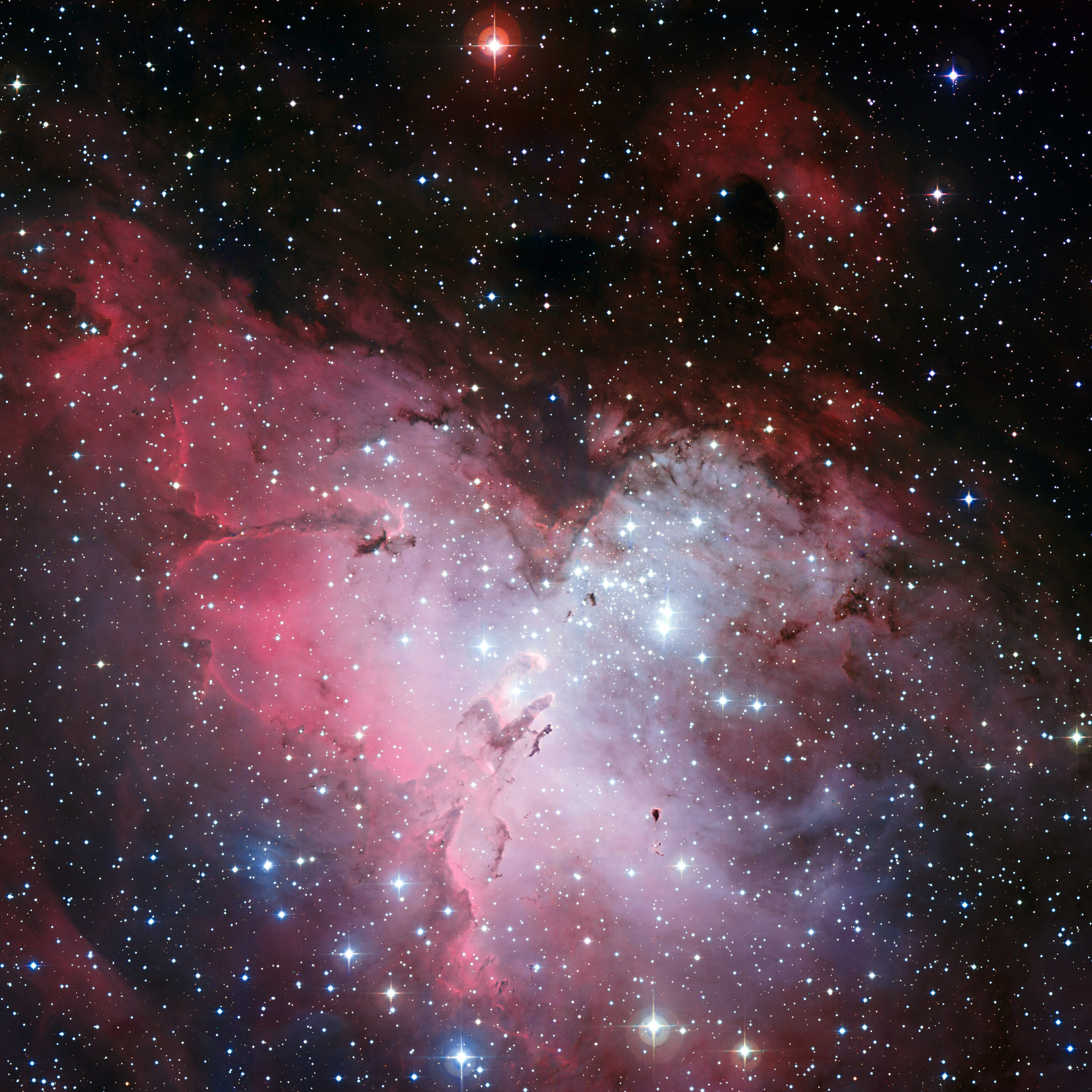
One of the most foundational questions we know how to ask in astronomy is simply this: given a cloud of gas of a given mass, what types of stars will form? How many stars of a given mass will you wind up with, and what factors does that depend on? The answer to this question, if we can give an answer, is known as the "initial mass function," and is generally very difficult to measure except in the most nearby of places: within our own Milky Way.It's possible that every time we form stars, we have a different initial mass function to reckon with. It's possible that in a different environment, perhaps with less dust, fewer heavy elements, or earlier in the Universe (when the background temperature was hotter), things behaved very differently from how they do in the here-and-now. Yet because of the extreme difference in brightness between high-mass and low-mass stars, we can only measure both high and low mass stars together nearby. It's as though we're only measuring the tip of the cosmic iceberg as far as stars go, where we're compelled to use what we know to draw conclusions about the rest of the Universe.In a very exciting new development, University of Missouri professor Charles Steinhardt, along with his undergraduate students Carter Meyerhoff and Alexander Luening, just put out a paper (link here: arxiv.org/abs/2603.23594) that could wind up revolutionizing what we think about star-formation across the Universe. Astronomers have long considered a top-heavy mass function as a possibility, but early on, perhaps "bottom-light" is a better answer. Have a listen and a good think for yourself in this truly remarkable episode of the Starts With A Bang podcast!(This image shows the Eagle Nebula, Messier 16, in a three-color composite that closely approximates the colors a very sensitive human eye would be able to see. Although the gas and dust makes prominent features, those are transient; they will be blown away in only a few million years. Although the new stars inside have formed across all different masses, the majority of the new starlight is dominated by massive, bright, blue, short-lived stars. Credit: ESO.)
What this episode covers
One of the most foundational questions we know how to ask in astronomy is simply this: given a cloud of gas of a given mass, what types of stars will form? How many stars of a given mass will you wind up with, and what factors does that depend on? The answer to this question, if we can give an answer, is known as the "initial mass function," and is generally very difficult to measure except in the most nearby of places: within our own Milky Way.It's possible that every time we form stars, we have a different initial mass function to reckon with. It's possible that in a different environment, perhaps with less dust, fewer heavy elements, or earlier in the Universe (when the background temperature was hotter), things behaved very differently from how they do in the here-and-now. Yet because of the extreme difference in brightness between high-mass and low-mass stars, we can only measure both high and low mass stars together nearby. It's as though we're only measuring the tip of the cosmic iceberg as far as stars go, where we're compelled to use what we know to draw conclusions about the rest of the Universe.In a very exciting new development, University of Missouri professor Charles Steinhardt, along with his undergraduate students Carter Meyerhoff and Alexander Luening, just put out a paper (link here: arxiv.org/abs/2603.23594) that could wind up revolutionizing what we think about star-formation across the Universe. Astronomers have long considered a top-heavy mass function as a possibility, but early on, perhaps "bottom-light" is a better answer. Have a listen and a good think for yourself in this truly remarkable episode of the Starts With A Bang podcast!(This image shows the Eagle Nebula, Messier 16, in a three-color composite that closely approximates the colors a very sensitive human eye would be able to see. Although the gas and dust makes prominent features, those are transient; they will be blown away in only a few million years. Although the new stars inside have formed across all different masses, the majority of the new starlight is dominated by massive, bright, blue, short-lived stars. Credit: ESO.)
NOW PLAYING
Starts With A Bang #130 - the initial mass function of stars
No transcript for this episode yet
Similar Episodes
Mar 26, 2026 ·1m
Jan 2, 2026 ·47m
Dec 21, 2025 ·46m