
EPISODE · Sep 5, 2025 · 54 MIN
STEMI ischemic and reciprocal change patterns
from Emergency Medicine Mnemonics · host Aaron Tjomsland
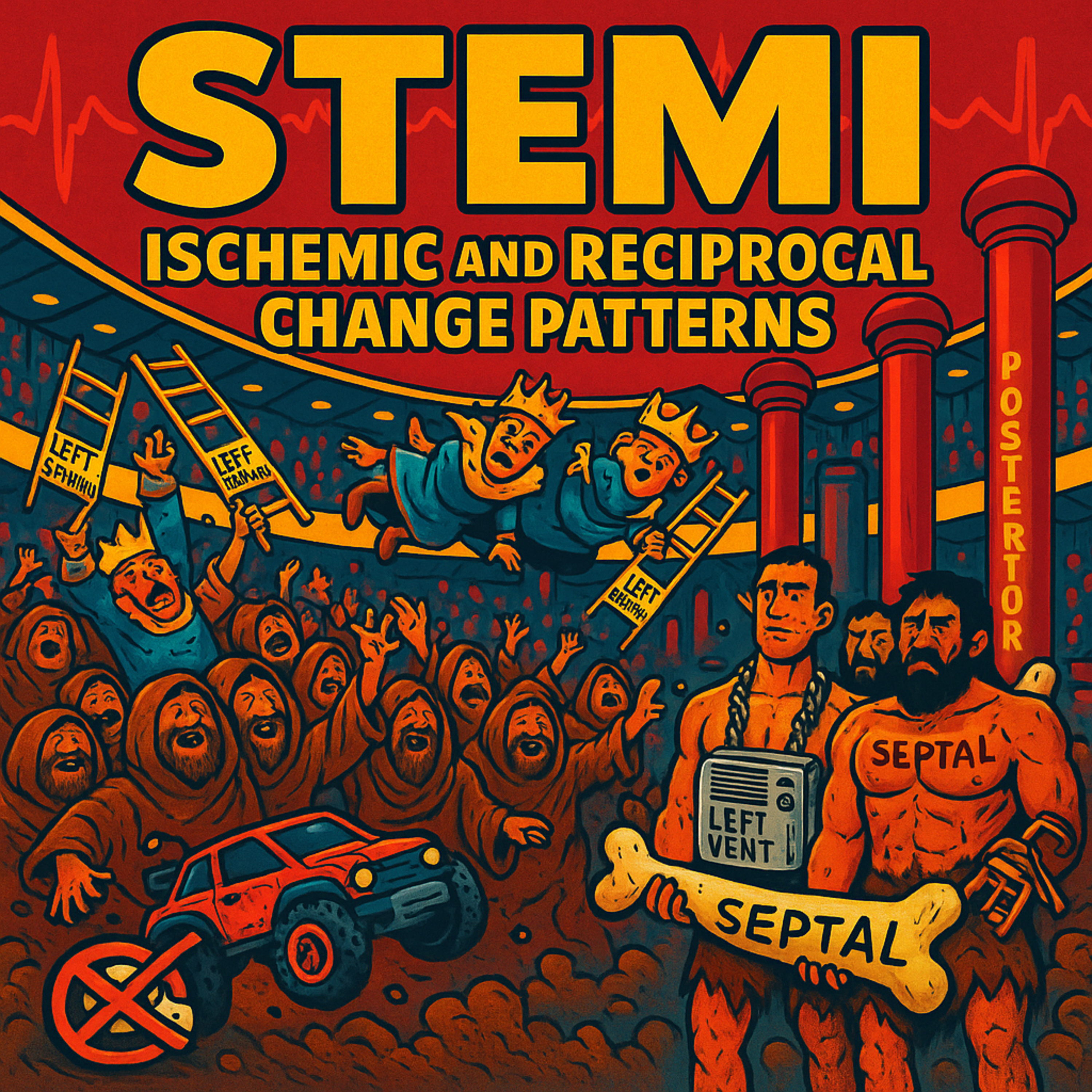
In a cardiac emergency, pattern recognition saves lives. The ability to rapidly identify ST-elevation myocardial infarctions (STEMIs) — and recognize their reciprocal changes — is one of the most high-yield clinical skills you can master. But memorizing lead groupings, artery territories, and reciprocal zones can feel abstract… until now.This podcast brings EKGs to life inside a colorful, stadium-themed world where each ECG lead is a character in the crowd — making it dramatically easier to remember the key patterns of ischemia and their reciprocals. Whether you’re a student, clinician, or educator, this episode transforms clinical EKG interpretation into vivid, unforgettable storytelling.🧠 Characters You’ll Meet: • Inferior Peasants (II, III, aVF) — Dirty, disheveled townsfolk crowd-surfing with broken RC cars (Right Coronary Artery), holding crossed-out nitro packs to remind us: No nitro in RCA infarcts! • Royal Ladder Holders (I, aVL, V5, V6) — Crowned kings and queens dropping through trapdoors as reciprocal ST depression hits the lateral leads, each holding golden ladders labeled Left Circumflex. • Cavemen with Septal Bones (V1–V2) — Giant-nosed, primitive figures gripping a huge bone marked SEPTAL, standing just in front of… • Shirtless Musclemen (V3–V4) — Tattooed with the word Anterior, these strongmen are chained to a floating AC unit labeled Left Ventricle — representing the LAD (Widowmaker). • Posterior Posts (V7–V9) — Hydraulic pylons rising behind the wall, symbolizing posterior MI that’s often missed without reciprocal signs.🎯 Quick Reference Patterns Covered in the Episode:⸻✅ Inferior MI (II, III, aVF)• ST elevation: Inferior leads• Reciprocal depression: I, aVL (high lateral)→ “When the peasants rise, the royals fall.”✅ High Lateral MI (I, aVL)• ST elevation: High lateral leads• Reciprocal depression: III, aVF→ Works both ways: “The balcony royals rise, the peasants fall.”✅ Posterior MI (V7–V9)• ST elevation: Posterior wall (not on standard 12-lead!)• Reciprocal depression: V1–V3→ “When posterior posts rise, septal cavemen drop.”✅ Anterior MI (V2–V4)• ST elevation: Anterior leads• Possible reciprocal depression: II, III, aVF→ Sometimes: “When the chest heroes rise, peasants tremble.”✅ Low Lateral MI (V5–V6)• ST elevation: Low lateral leads• Reciprocal depression: V1–V2 (septal)→ “Kings and queens rise, cavemen fall.”⸻🔥 Bonus Insights: • Why reciprocal changes matter: They can confirm a true STEMI, suggest a larger infarct area, and sometimes reveal hidden infarctions (like posterior MIs). • LBBB & Reciprocal Thinking: LBBB distorts ST segments, but understanding the mirror logic behind “William” (LBBB) and “Marrow” (RBBB) helps clarify expected patterns. ST depression in V1–V2? May just be part of LBBB — unless it’s concordant…📌 Use this episode as your visual and verbal anchor. Once you’ve seen the peasants, the royalty, the cavemen, and the Left Vent AC unit, you’ll never look at a 12-lead the same way again.
Embed this episode
NOW PLAYING
STEMI ischemic and reciprocal change patterns
No transcript for this episode yet
Similar Episodes
No similar episodes found.
Similar Podcasts
No similar podcasts found.