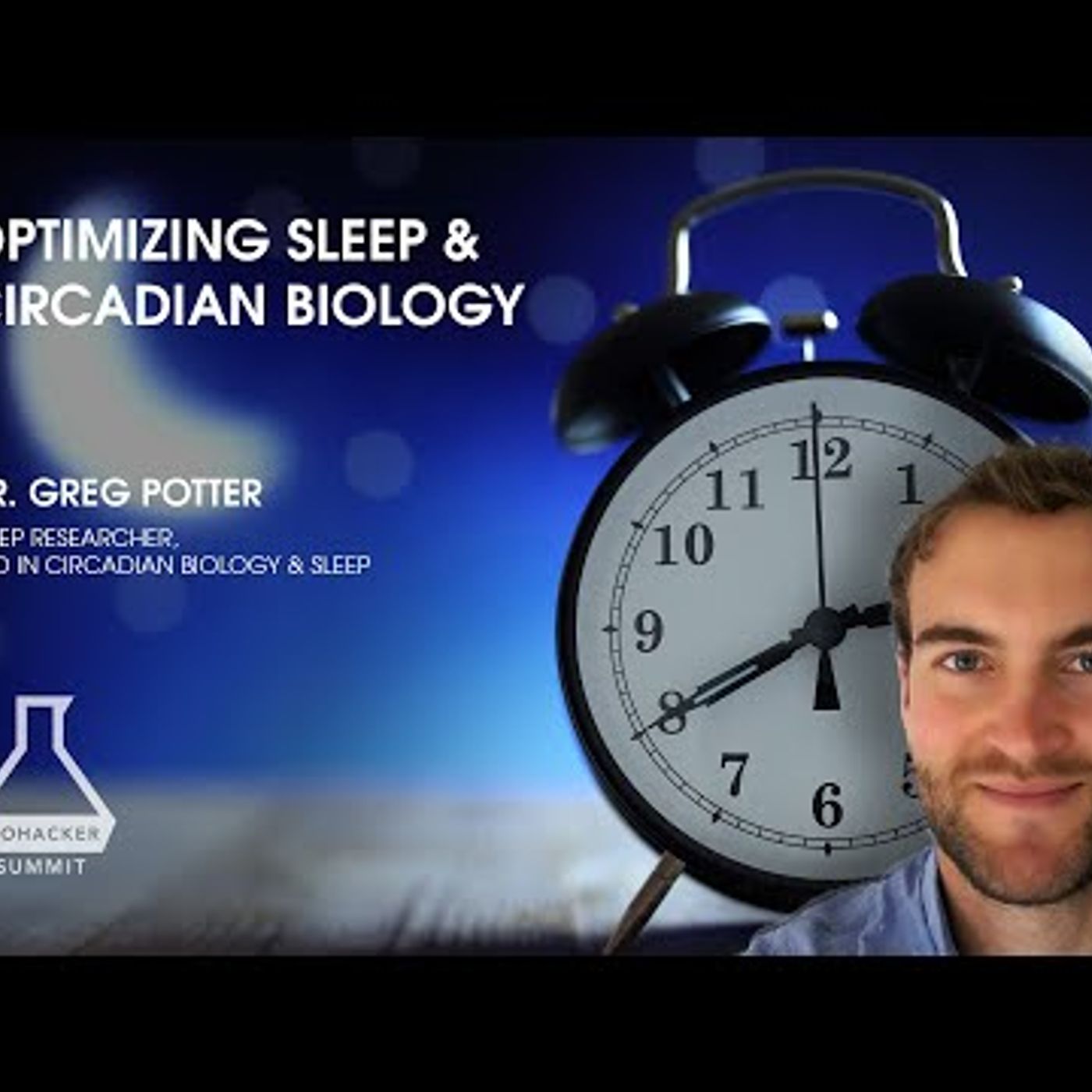
Sync Your Sleep to Light: Chronotype Hacks for Better Rest (Dr. Greg Potter)
from HOLOLIFE Summit (Biohacker Summit) Hosted by WAS
More information: https://www.hololifesummit.com Join HOLOLIFE Academy: https://www.skool.com/hololife-academy/about In this interview Greg Potter discusses how to optimize sleep by aligning wake‑up and bedtime with individual chronotypes and natural light cues. He emphasizes the importance of morning daylight exposure, minimizing artificial light at night, and using alarm clocks sparingly. The conversation also examines the current limits of consumer wearables for sleep staging and highlights heart‑rate variability as a more reliable metric for sleep quality. - Sleep timing should match personal chronotype and natural light cues rather than a universal schedule - Morning daylight exposure and reduced artificial light at night help synchronize the circadian clock - Avoiding or delaying alarm clocks improves sleep continuity and reduces cycle disruption - Temporal isolation studies reveal body clocks can be longer or shorter than 24 hours, influencing night‑owl or morning‑person tendencies - Spending time outdoors in daylight reduces variability in sleep patterns across populations - Consumer wearables can estimate total sleep duration but lack accuracy in detecting specific sleep stages - Accurate sleep staging requires sensitive measurements such as EEG or eye‑movement detection, which most wearables lack - Overnight heart‑rate variability (HRV) is a more reliable indicator of sleep quality than reported deep or REM sleep percentages - Meal timing, evening exercise, and stressors impact HRV and overall sleep recovery - Tracking trends in HRV and resting heart rate over time provides actionable insight into sleep health
Embed this episode
No transcript yet.