
EPISODE · Apr 2, 2026 · 1H 15M
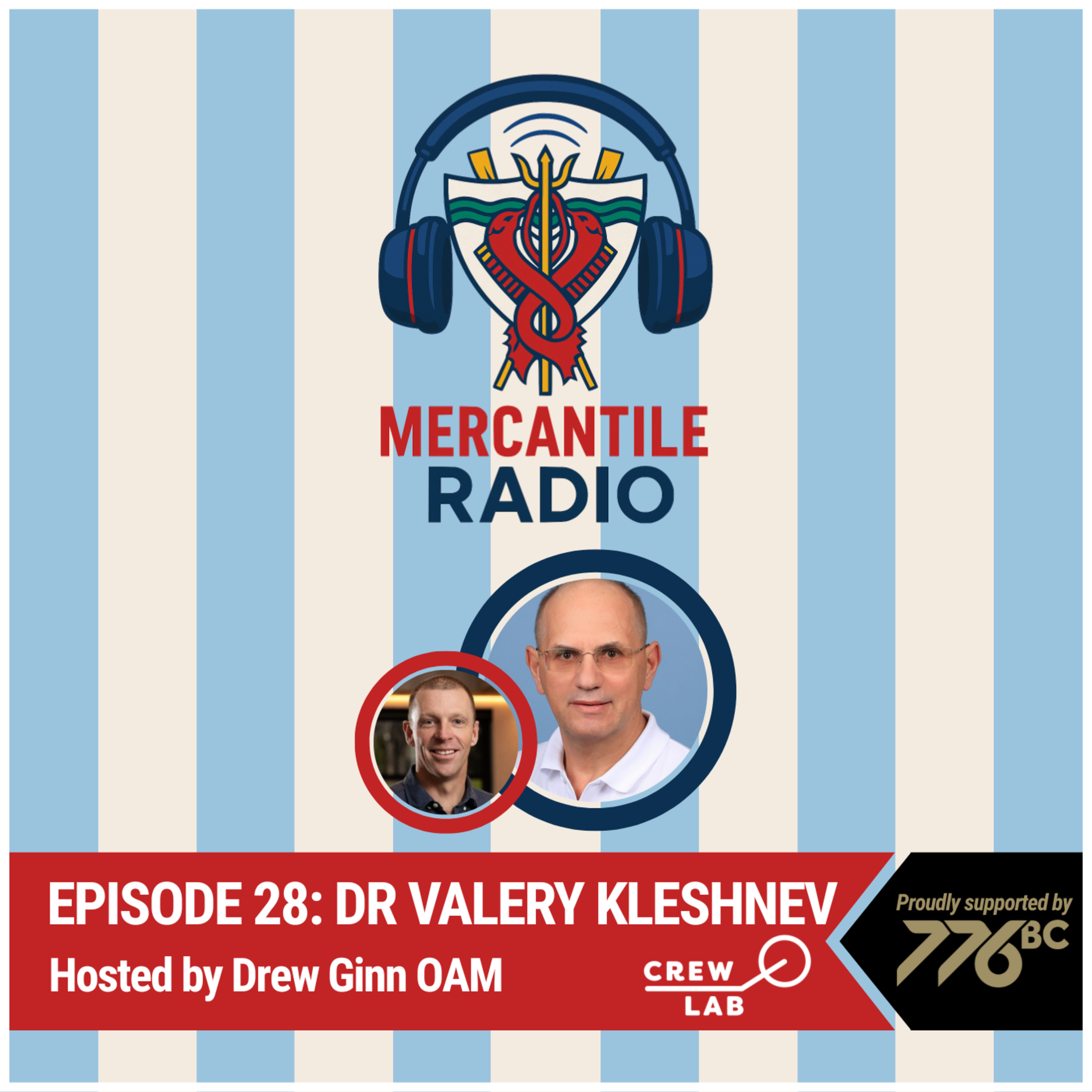
The Architect of the Stroke: Dr. Valery Kleshnev & Drew Ginn on the Science of Speed - Episode 28
from Mercantile Radio · host Mercantile Rowing Club
What happens when the world’s most renowned biomechanist sits down with one of the greatest technical rowers of all time? In this episode of Mercantile Radio, we bridge the gap between the laboratory and the water as we welcome Dr. Valery Kleshnev, Crewlab Founder Simon Hoadley and Drew Ginn OAM OLY. From their formative days at the AIS to the secrets behind the "Oarsome Foursome," this conversation dives deep into the "signature" of a champion. We explore why a 123 degree stroke length is legendary, how telemetry can actually change an athlete’s mindset, and why the human body, that "smart machine", is always looking for the path of least resistance. Whether you are a coach obsessed with the force curve or a rower searching for that elusive "boat feel," this masterclass in the art and science of rowing is an essential listen.Who is Dr Valery Kleshnev?Dr. Valery Kleshnev is arguably the most influential biomechanist in the sport of rowing over the last two decades. A former elite athlete who earned an Olympic silver medal for the USSR, Kleshnev successfully transitioned from the boat to the laboratory, spending a transformative period at the Australian Institute of Sport (AIS) during the 1990s. As the founder of BioRow and the author of the widely respected Rowing Biomechanics Newsletter, he has revolutionized the technical analysis of the sport through his development of unique metrics like the "Catch Factor" and "Rowing Style Factor," which quantify the precise transitions within a stroke. His expertise has been instrumental in the success of legendary crews, including Australia’s "Oarsome Foursome," as well as multiple generations of British and Australian rowers who have utilized his precise measurements to achieve peak technical efficiency.Why is this conversation important?This dialogue bridges the gap between the art and science of elite rowing. It features a rare intersection between one of the world’s leading biomechanists and one of the most decorated Olympic rowers, Drew Ginn OAM OLY. The discussion highlights how data-driven insights (telemetry and measurement) don't just provide numbers, but actually instil confidence and clarity in athletes. It explores the psychological impact of being watched, the difficulty of changing "force profiles," and the delicate balance between a coach’s intuition and biological reality.The "Psychological Boost" of Science: Drew recalls how simply having telemetry on the boat in 1995 made the crew row more intently—the "Hawthorne Effect" in action.The Conflict of Coaching: A fascinating look at when a coach’s verbal cues (e.g., "spin the hands") conflict with an athlete's "feel" and the resulting boat speed.The Force Curve: Discussion on why most coaches struggle to change an athlete's force curve and why it requires more than just "trying harder."Data vs. Feeling: Valery explains that the human body is a "smart machine" that naturally tries to find the easiest path, often leading to shorter, less efficient strokes over time without data to correct it.You can quote us on that"Your profile is your signature and it's very hard to change." — Drew Ginn"The spot of knowledge increases... but the border to the unknown increases as well." — Dr. Valery KleshnevThis podcast is a great learning opportunity for athletes, coaches, scientists and historians, who are interested in the sport of rowing. Co-Hosted by Drew Ginn OAM and Simon HoadleyGuest Dr Valery KleshnevProduced by Nicholas FinsterSponsored by 776BC
Embed this episode
Ready to play
The Architect of the Stroke: Dr. Valery Kleshnev & Drew Ginn on the Science of Speed - Episode 28
No transcript for this episode yet
Similar Episodes
No similar episodes found.
Similar Podcasts
No similar podcasts found.