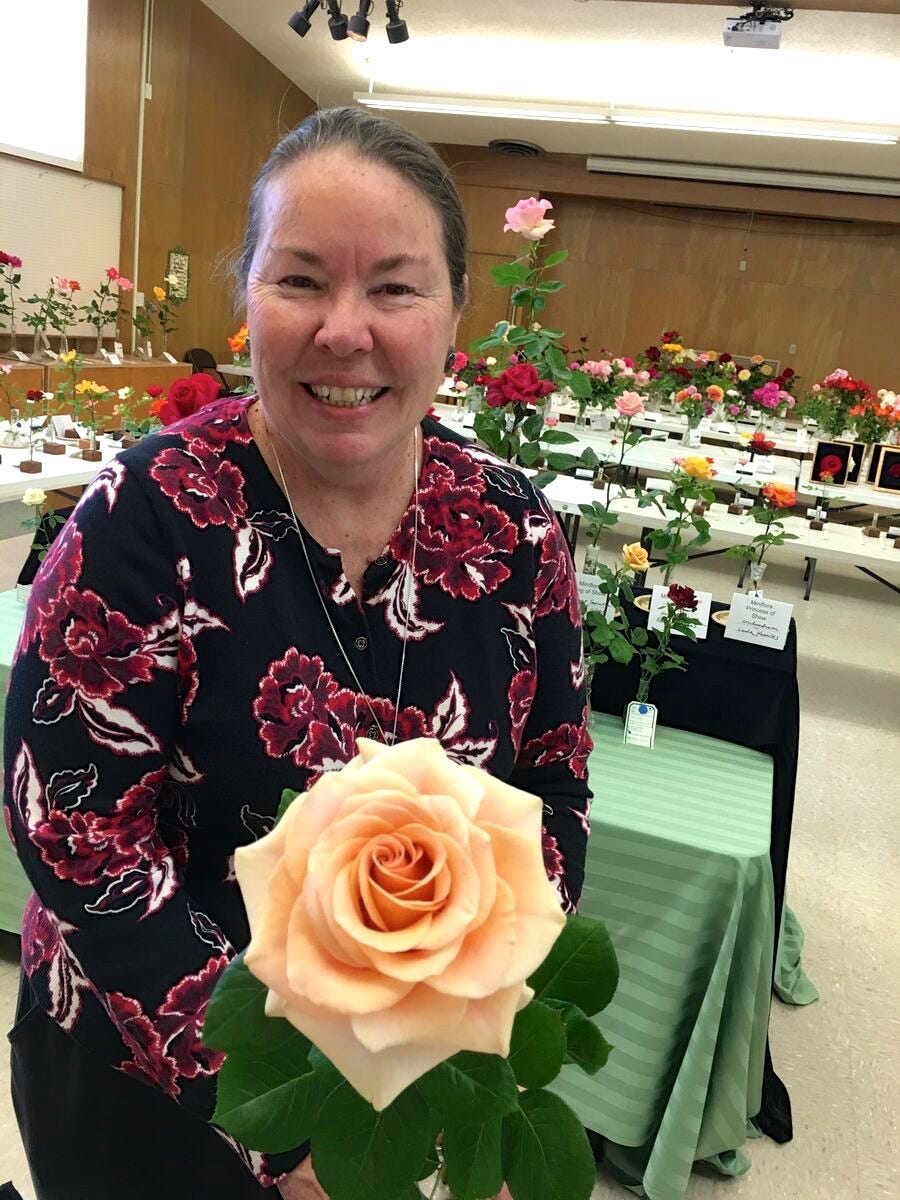
The Best Roses For Cut Flowers
from Beyond the Garden Basics Hosted by Fred Hoffman
Bullet Points from the Podcast, “The Best Roses for Cut Flowers” * Always cut long stems, not just the spent bloom. Snipping only 1-2 inches when deadheading causes the plant to push out short, crooked replacement growth; cutting deep into the cane produces another long stem. * Make cuts just above a five-leaflet leaf (not a three-leaflet one), and choose a node pointing outward from the bush’s center. This improves air circulation and keeps stems growing straight. * Recut stems underwater every couple of days, trimming about an inch off the bottom to remove air bubbles and keep water moving up the stem so buds continue to open. * Strip off any foliage that will sit below the waterline submerged leaves decay and foul the water. * Use flower food, or a sugar-water substitute like regular (non-diet) Sprite or 7Up, to keep water cleaner and nourish cut stems; tap water is otherwise fine. * For low-thorn, long-stemmed cutting roses, favor hybrid teas and grandifloras like Ring of Fire, Hot Princess, Olympiad, Veteran’s Honor, Gold Medal, and Strike It Rich. Many grandifloras have notably fewer prickles. * For reliably long-lasting vase life (opening slowly over about a week), pick Olympiad or Veteran’s Honor rather than Mr. Lincoln, which opens quickly once cut. * For fragrance, choose Mr. Lincoln, Double Delight, or Olivia (an Austin/English shrub rose). But note high-petal-count “cabbage” roses like Olivia and Tamora can shatter petals suddenly (”explode”) on the table. * For multi-bloom stems that fill a vase in one cut, use sprays/floribundas such as Sally Holmes, Julia Child, Betty Boop, and Daybreaker, or miniatures like Joy and Rainbow Sunblaze. * Build arrangements with the “thrill, fill, spill” formula: big roses as the focal thrill, small polyanthus/miniature blooms as fill, and trailing foliage (ferns, ivy, nandina) as the spill to soften the vase edge. * Add a sprig of citrus leaf or rose geranium to boost scent in bouquets from lower-fragrance roses. * To time blooms for a specific event (wedding, show), prune roses about 6-8 weeks in advance. That’s the typical bloom cycle after a hard cut. * Fertilize roughly monthly, especially after a deadheading push, and mulch to help with drought tolerance; if cutting back on water, cut back on fertilizer to avoid burning the plant. * Deadhead regularly and thoroughly; leaving spent blooms on the plant signals it to stop flowering and start forming rose hips instead. * Roses generally suit USDA zones 6-9, with best performance in low-humidity, low-rain, full-sun-but-not-scorching conditions (east-facing exposure helps colors last longer in hot climates). Beyond The Garden Basics is a reader-supported publication. To receive exclusive, new posts and support my work, consider becoming a paid subscriber. Thank You! This is a public episode. If you'd like to discuss this with other subscribers or get access to bonus episodes, visit gardenbasics.substack.com/subscribe
Embed this episode
No transcript yet.