
EPISODE · Sep 10, 2026 · 56 MIN
The Betrayal of American Prosperity — When Cheap Becomes Expensive
from Crisis in Perception · host Crisis in Perception
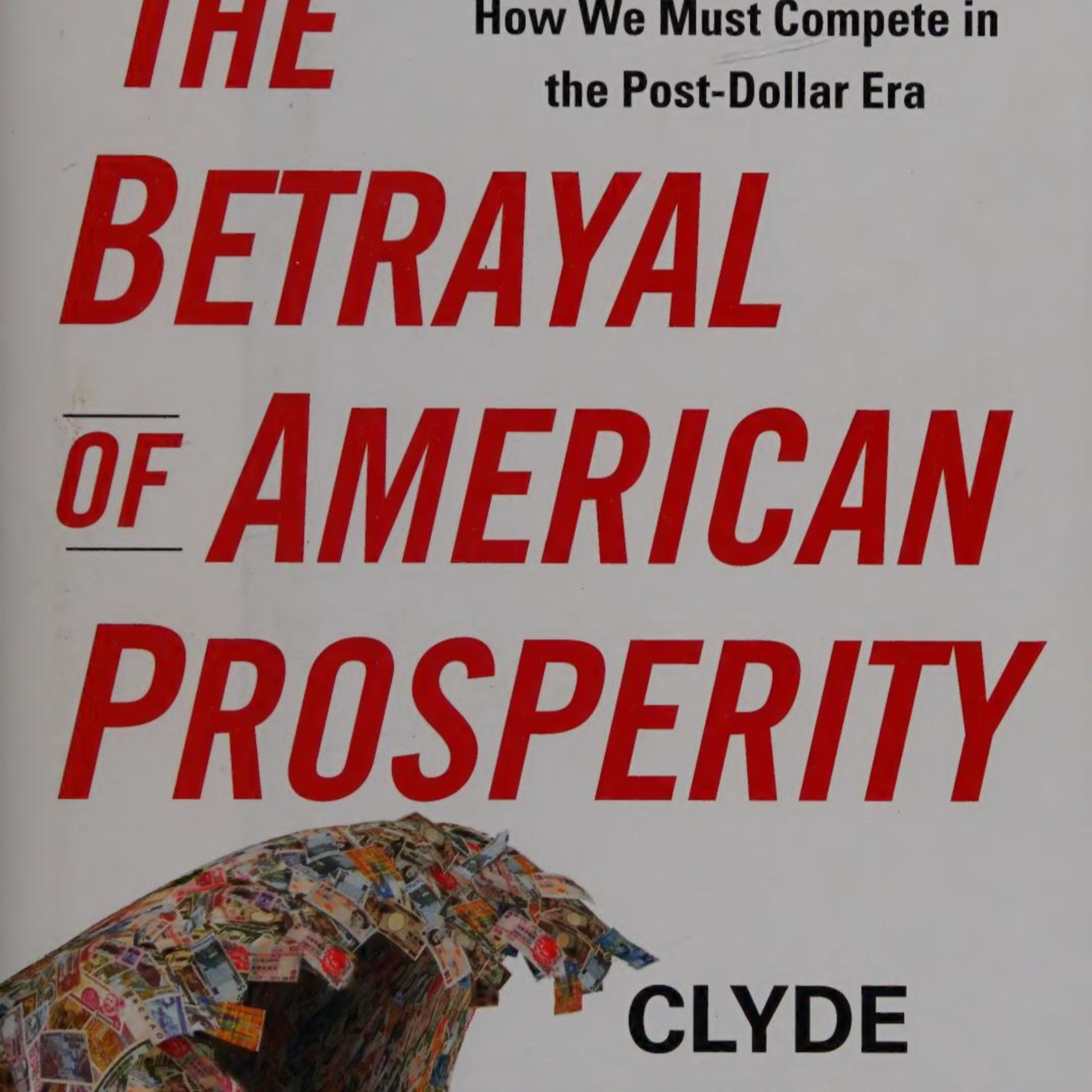
What if an economy can become richer at the checkout counter while becoming weaker underneath?Welcome to Crisis in Perception, where we examine the systems shaping our world.Using The Betrayal of American Prosperity: Free Market Delusions, America’s Decline, and How We Must Compete in the Post-Dollar Era by Clyde Prestowitz as our lens, this Deep Dive investigates whether cheap consumption can conceal the erosion of the productive systems that support long-term prosperity.Writing in 2010, Prestowitz argues that the United States gradually moved away from an economic model centered on production, investment, infrastructure, industrial development, and technological capability toward one increasingly organized around consumption, finance, open markets, and multinational corporations.His argument becomes particularly vivid at the Port of Long Beach. Using 2008 trade figures, Prestowitz contrasts roughly $46 billion in Chinese computer-equipment exports to the United States with about $7.6 billion in American exports of waste paper and scrap metal to China. For him, the imbalance raises a deeper question: not simply how much a country trades, but what kinds of productive capability are accumulating on either side of that trade.At a systems level, manufacturing connects to supplier networks, skilled labor, engineering, research and development, infrastructure, investment, and economies of scale. Prestowitz argues that when production migrates, portions of this broader innovation ecosystem may migrate with it.The structural tension is between immediate efficiency and long-term capability. Lower-cost imports can produce real gains for consumers, while possible costs to wages, domestic investment, technological capacity, resilience, and strategic independence emerge more slowly and may be distributed throughout the economy.The investigation also traces Prestowitz’s historical contrast between modern laissez-faire assumptions and the earlier American System associated with Alexander Hamilton, where infrastructure, patents, tariffs, procurement, and industrial development were deliberately used to build national productive capacity.The central systems include industrial ecosystems, trade incentives, economies of scale, multinational corporate behavior, infrastructure, foreign borrowing, and the relationship between economic capacity and geopolitical power.📺 Watch on YouTube:https://youtu.be/U9_zYWQgLlc❤️ Support / Episode Post on Patreon:https://www.patreon.com/CrisisinPerception/posts/betrayal-of-when-169182670?utm_medium=clipboard_copy&utm_source=copyLink&utm_campaign=postshare_creator&utm_content=join_linkIf these ideas resonate, consider reading the work yourself or borrowing it from your local library. Supporting authors and libraries helps keep critical inquiry accessible.If you value systems-level analysis like this, please follow, rate, and share the project.This content was created using AI-assisted tools for research synthesis, structuring, and narration support. All analysis, framing, and editorial decisions are guided by human judgment as part of the Crisis in Perception project.
Embed this episode
Ready to play
The Betrayal of American Prosperity — When Cheap Becomes Expensive
No transcript for this episode yet
Similar Episodes
No similar episodes found.
Similar Podcasts
No similar podcasts found.