
EPISODE · Apr 23, 2026 · 42 MIN
The Cheapest, Fastest Energy Future
from Reframe · host Pilotlight
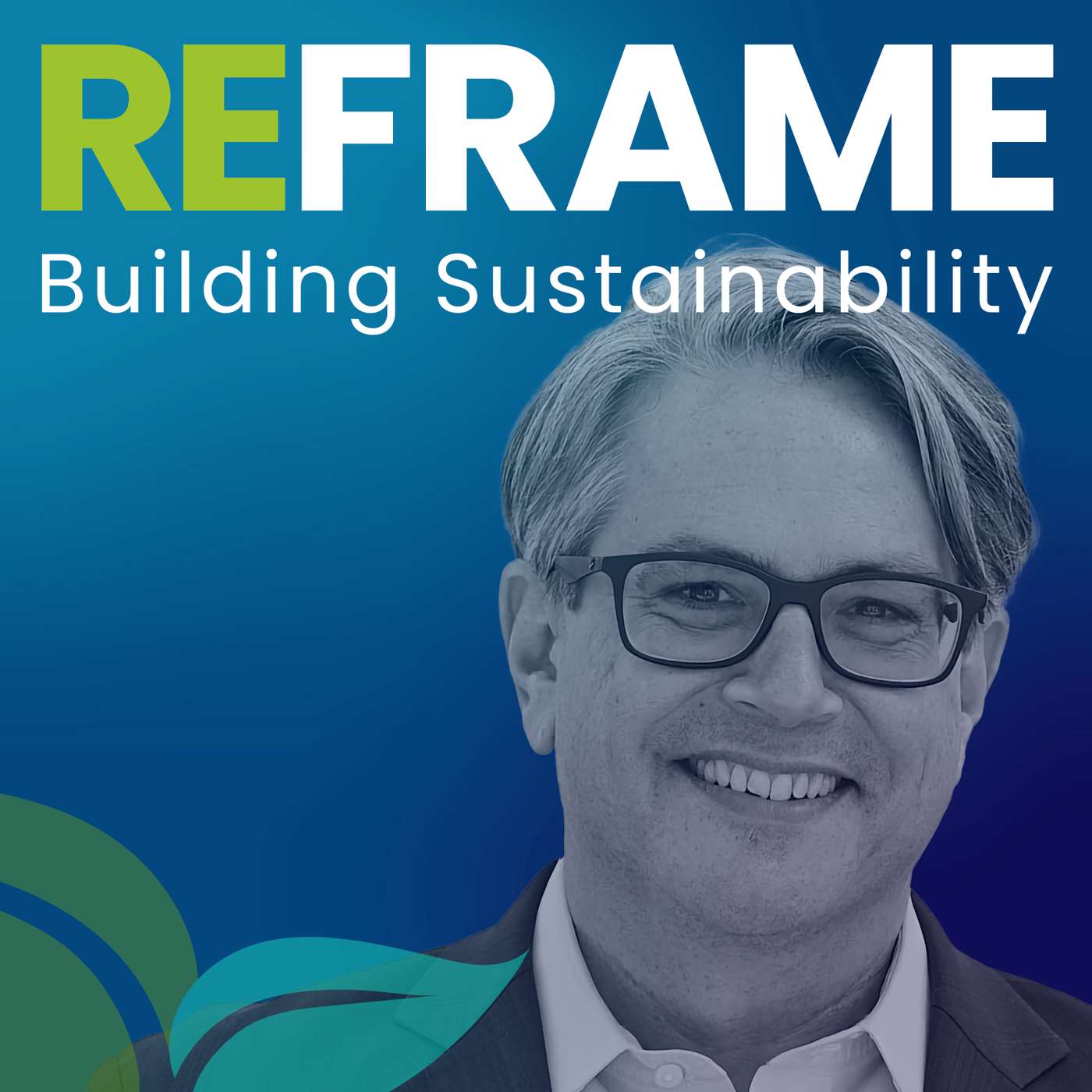
with Ben Evans In this Earth Day episode of Reframe, show host Jeff Nichols sits down with Ben Evans, Federal Legislative Director at the U.S. Green Building Council (USGBC), for a wide-ranging conversation about green building policy, the shifting political landscape, and where advocates of efficiency find hope amid significant headwinds. Ben's path to sustainability advocacy is anything but conventional. Starting as a local government reporter in North Carolina, he eventually landed in Washington covering energy policy for Congressional Quarterly, and the last 5 years at USGBC. A central theme of the discussion is the underappreciated power of energy efficiency. Ben highlights a striking reality: massive gains in energy savings are often invisible, quietly embedded into how systems operate. Unlike large-scale generation projects, efficiency doesn’t announce itself—it compounds over time.He points to programs like ENERGY STAR, which is perhaps the episode's most staggering highlight—ENERGY STAR costs roughly $35 million per year to operate, yet saves consumers an estimated $42 billion annually while reducing U.S. electricity demand by 520 billion kilowatt hours per year—nearly equivalent to the entire U.S. coal industry's output. Ben concedes that its impact is largely invisible, making it chronically undervalued politically.Another key insight is the concept of decoupling growth from consumption. Technological innovation—whether through better software, smarter devices, or improved design has enabled economies to grow without proportional increases in energy use. This challenges the long-standing assumption that economic expansion must come with rising resource demand.The conversation also explores the role of technology as an enabler of efficiency at scale. From data analytics to automation, modern tools allow for optimization across buildings, grids, and entire industries. However, he cautions that technology alone isn’t enough. Real progress requires alignment between policy, incentives, and human behavior.Ben underscores a recurring tension in climate and energy discussions: the tendency to focus on big, visible solutions—like renewable energy infrastructure, while overlooking the quieter, distributed gains from efficiency. He reframes this imbalance, suggesting that the energy transition is not a single breakthrough moment, but a series of incremental, compounding improvements.However, Ben doesn’t downplay the challenges. Scaling efficiency requires coordination across industries, regulatory frameworks that reward long-term outcomes, and a cultural shift in how we value resource use. Yet, his outlook remains pragmatic and optimistic.Ben leaves us with a hopeful but grounded perspective: that efficiency is a hidden powerhouse. The tools to drive meaningful change already exist—we simply need to recognize and scale them. The future of energy sustainability won’t be defined by a single breakthrough, but by millions of smarter decisions layered over time.The Reframe podcast is hosted by Jeff Nichols and presented by Pilotlight. If you have questions or feedback for the Reframe team, please email us: [email protected]
What this episode covers
with Ben Evans In this Earth Day episode of Reframe, show host Jeff Nichols sits down with Ben Evans, Federal Legislative Director at the U.S. Green Building Council (USGBC), for a wide-ranging conversation about green building policy, the shifting political landscape, and where advocates of efficiency find hope amid significant headwinds. Ben's path to sustainability advocacy is anything but conventional. Starting as a local government reporter in North Carolina, he eventually landed in Washington covering energy policy for Congressional Quarterly, and the last 5 years at USGBC. A central theme of the discussion is the underappreciated power of energy efficiency. Ben highlights a striking reality: massive gains in energy savings are often invisible, quietly embedded into how systems operate. Unlike large-scale generation projects, efficiency doesn’t announce itself—it compounds over time.He points to programs like ENERGY STAR, which is perhaps the episode's most staggering highlight—ENERGY STAR costs roughly $35 million per year to operate, yet saves consumers an estimated $42 billion annually while reducing U.S. electricity demand by 520 billion kilowatt hours per year—nearly equivalent to the entire U.S. coal industry's output. Ben concedes that its impact is largely invisible, making it chronically undervalued politically.Another key insight is the concept of decoupling growth from consumption. Technological innovation—whether through better software, smarter devices, or improved design has enabled economies to grow without proportional increases in energy use. This challenges the long-standing assumption that economic expansion must come with rising resource demand.The conversation also explores the role of technology as an enabler of efficiency at scale. From data analytics to automation, modern tools allow for optimization across buildings, grids, and entire industries. However, he cautions that technology alone isn’t enough. Real progress requires alignment between policy, incentives, and human behavior.Ben underscores a recurring tension in climate and energy discussions: the tendency to focus on big, visible solutions—like renewable energy infrastructure, while overlooking the quieter, distributed gains from efficiency. He reframes this imbalance, suggesting that the energy transition is not a single breakthrough moment, but a series of incremental, compounding improvements.However, Ben doesn’t downplay the challenges. Scaling efficiency requires coordination across industries, regulatory frameworks that reward long-term outcomes, and a cultural shift in how we value resource use. Yet, his outlook remains pragmatic and optimistic.Ben leaves us with a hopeful but grounded perspective: that efficiency is a hidden powerhouse. The tools to drive meaningful change already exist—we simply need to recognize and scale them. The future of energy sustainability won’t be defined by a single breakthrough, but by millions of smarter decisions layered over time.The Reframe podcast is hosted by Jeff Nichols and presented by Pilotlight. If you have questions or feedback for the Reframe team, please email us: [email protected]
NOW PLAYING
The Cheapest, Fastest Energy Future
No transcript for this episode yet