
EPISODE · Sep 1, 2026 · 1H 27M
The Danger of “Moving On” : Judith Helfand on Disenfranchised Grief in a Post-Pandemic World | Ep21
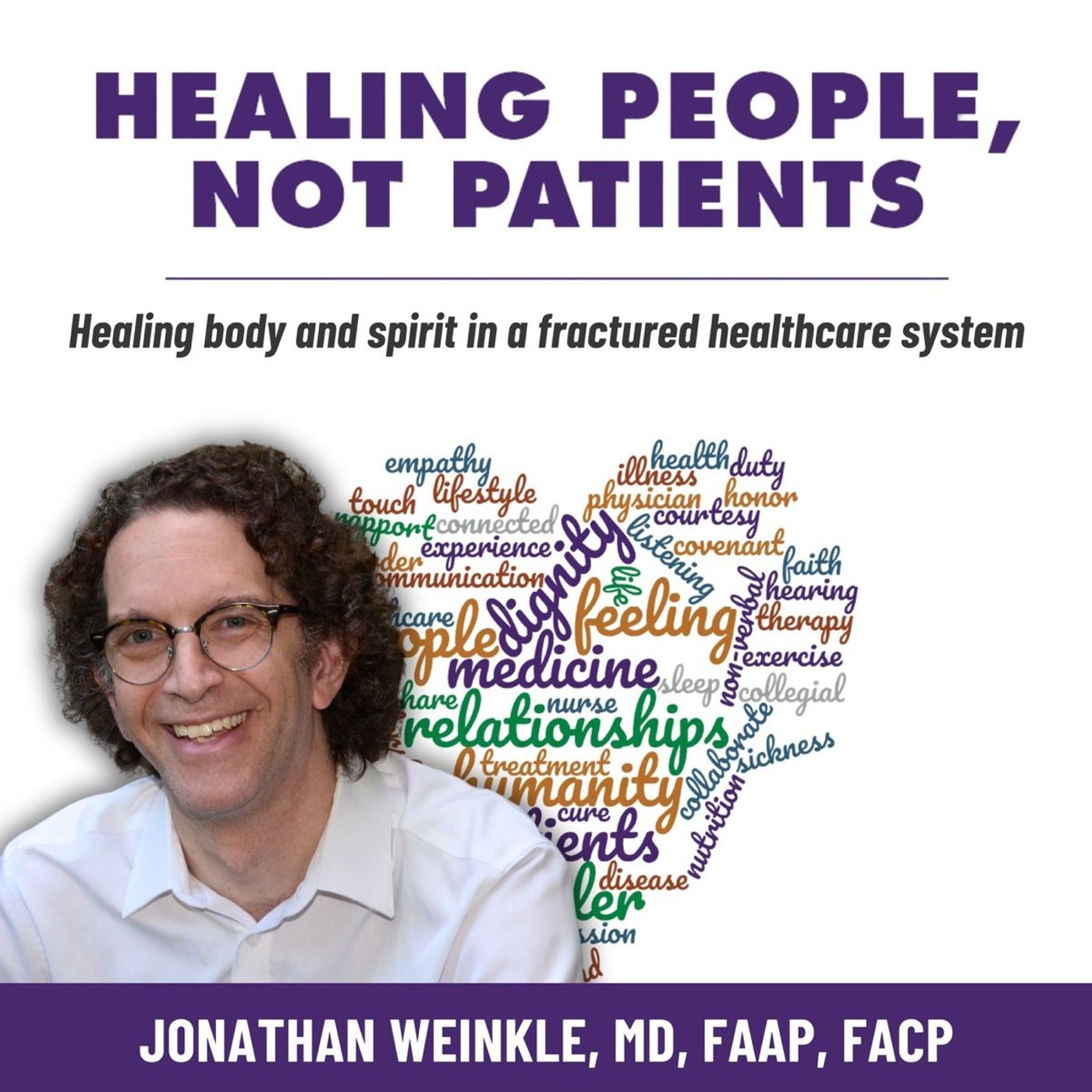
from Healing People, Not Patients · host Dr. Jonathan Weinkle, Judith Helfand
This episode is sponsored by NURP NURP helps busy physicians grow their wealth through AI-powered algorithmic trading designed for demanding careers. No day trading, no guesswork, and no constant market watching required. Ready to put your money to work? Visit start.nurp.com/doctors to learn more. Trading involves risk, and results may vary. This is not financial advice. —-------------------------- What happens when a young woman discovers she is a “DES daughter,” develops a rare cancer, loses the ability to carry a biological child, and decides to put her own life and family under the camera? And what does it mean when, decades later, a hidden photograph and a COVID-era Zoom shiva unlock a century-old family silence around a 12-year-old girl who died in the 1918 influenza pandemic? In this episode of Healing People, Not Patients, Dr. Jonathan Weinkle sits down with Judith (“Judy”) Helfand, the filmmaker behind the Peabody Award-winning A Healthy Baby Girl, the “toxic comedy” Blue Vinyl, Love & Stuff, and the in-progress multiformat project Good Mourning Ethel. Helfand traces how her mother’s use of diethylstilbestrol (DES), the subsequent diagnosis of clear cell adenocarcinoma, radical surgery, and the fraught mother-daughter relationship became both a personal crisis and the foundation of her documentary practice. She describes volunteering for a DES film only to become its subject, the decision to film her own recovery and family dynamics, and the rituals (kaddish, mikvah, invented grief ceremonies) she created when conventional mourning structures did not fit the loss of fertility and “unborn children.” The conversation then pivots to her current work: recovering the almost-erased memory of her aunt Ethel, who died at age 12 in the 1918 flu epidemic in their New York tenement. Helfand explores how quarantine, the absence of shiva, wartime and later historical silences, and a grandmother’s protective isolation turned private catastrophe into “Bubbe’s meshugas.” She connects that unresolved grief to patterns still visible in families after COVID, and argues that personal, intimate storytelling is one of the few ways humans can hold large-scale historical trauma without reducing it to statistics. Throughout, Helfand and Weinkle discuss the ethics of the camera in the sickroom, the difference between being “visited with” and being processed, the power of a clinician simply allowing themselves to be sad with a patient, and the Reconstructionist Jewish insight that every ritual was once new. The episode offers clinicians a vivid model of how personal narrative, ritual creativity, and the refusal to let grief be minimized can deepen presence and care. Top 3 Takeaways Presence Before Protocols (and Permission to Be Sad): Patients remember the clinician who can look at loss (empty pelvis, missing organs, erased family members) and say “this is not normal; I’m angry and sad with you” rather than offering the language of “normal tissue.” Small acts of shared emotion and attentiveness make medical care more potent. Personal Story as Antidote to Statistical Forgetting: One death is a tragedy; a million is a statistic. The only way to reclaim the millions (whether DES-exposed daughters, 1918 flu victims, or COVID losses) is for individuals to remember and tell one specific story fully. Intimate documentary and family storytelling keep the human scale alive. It’s Never Too Late to Turn a Bad Mourning Good: Unresolved grief does not have an expiration date. Creating new or adapted rituals, recovering erased names and photographs, and giving public voice to private silences can still transform isolation into blessing, even a century later, and offers a model for families still navigating COVID-era incomplete mourning. About the Show Healing People, Not Patients explores ways to enhance medical practice by infusing it with compassion, humanity, and a deeper sense of purpose, aiming to help healthcare professionals rediscover the "soul" of their work. Framed around the four questions of the Passover Seder, it probes how to transform medicine for the better, promoting an empathetic and supportive approach that empowers patients to create meaningful, sober lives, while drawing on Jewish teachings about community and friendship. "Our theme song, 'Room for the Soul,' is available on Bandcamp at https://jonathanweinkle.bandcamp.com/track/room-for-the-soul." About the Guest Judith Helfand is a Peabody Award-winning documentary filmmaker, organizer, and educator known for her open hearted, radically transparent approach to nonfiction storytelling. Her films include the autobiographical A Healthy Baby Girl (1997, POV/Sundance) about her DES exposure, clear-cell adenocarcinoma, hysterectomy, and family dynamics; the Sundance Award-winning “toxic comedy” Blue Vinyl (2002, HBO) on polyvinyl chloride; Love & Stuff (2022, POV); and the forthcoming multiformat project Good Mourning Ethel, which recovers the story of her aunt who died in the 1918 influenza pandemic and the multigenerational silence that followed. She co-founded Working Films and Chicken & Egg Pictures and is a member of the Academy of Motion Picture Arts and Sciences. Connect with Judith https://www.documentaries.org/films/good-mourning-ethel/ to see the trailer and contribute to making the film https://www.bluevinyl.org/ https://chickeneggfilms.org/ https://workingfilms.org/ https://www.pbs.org/pov/films/ahealthybabygirl/ About the Host Dr. Jonathan Weinkle is an internist and pediatrician who practices primary care at a community health center in Pittsburgh. He strives to be a "nice Jewish doctor" focused on patient-centered healthcare, emphasizing effective communication and holistic well-being. He teaches the courses, “Death and the Healthcare Professions” and “Healing and Humanity” at the University of Pittsburgh, authored the books Healing People, Not Patients and Illness to Exodus, and runs ‘Healers Who Listen’, where he blogs on healing and Jewish tradition. Once an aspiring rabbi, he now integrates faith and medicine to support other physicians and his own patients. 🌐 Website: healerswholisten.com 🔗 LinkedIn: linkedin.com/in/jonathan-weinkle-3440032a 📸 Instagram: @HealersWhoListen 📘 Facebook: @JonathanWeinkle The Healing People, Not Patients Podcast is for informational and educational purposes only and does not constitute medical, legal, or professional advice. Always consult qualified professionals regarding your personal or organizational decisions. Hosted by Simplecast, an AdsWizz company. See pcm.adswizz.com for information about our collection and use of personal data for advertising.
Embed this episode
What this episode covers
Dr. Jonathan Weinkle talks with Peabody Award-winning documentary filmmaker Judith Helfand about turning personal illness (DES-related clear cell adenocarcinoma), family secrets, and intergenerational trauma from the 1918 flu pandemic into powerful stories. They explore illness narratives, the ethics of filming intimate moments, the cost of unprocessed grief, and concrete lessons for clinicians on presence, sadness, and reclaiming memory.
NOW PLAYING
The Danger of “Moving On” : Judith Helfand on Disenfranchised Grief in a Post-Pandemic World | Ep21
No transcript for this episode yet
Similar Episodes
No similar episodes found.
Similar Podcasts
No similar podcasts found.