
PODCAST · health
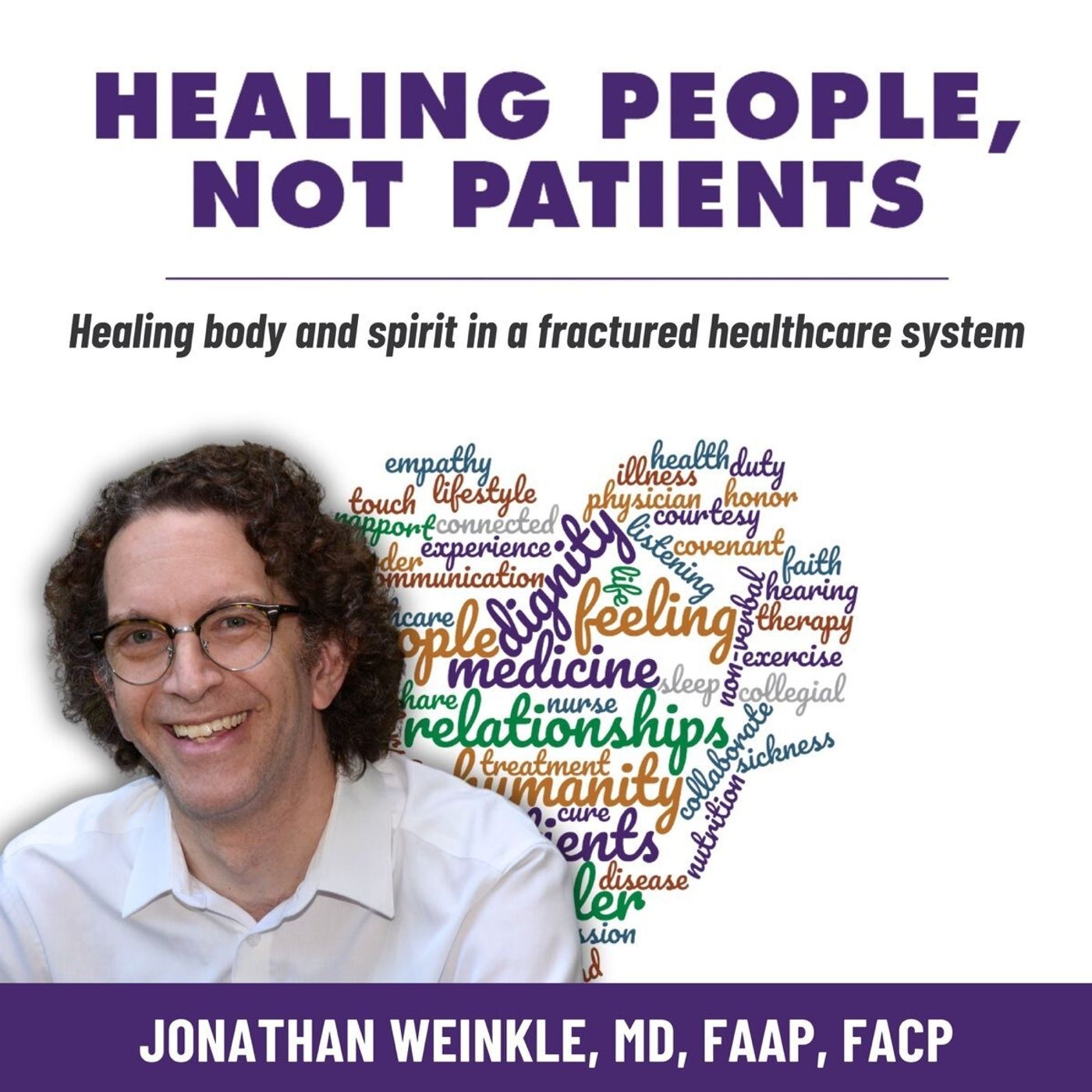
Healing People, Not Patients
by Dr. Jonathan Weinkle, Doctor Podcast Network
Welcome to Healing People, Not Patients, hosted by Dr. Jonathan Weinkle, MD, FAAP, FACP. A primary care physician and teacher deeply grounded in Jewish wisdom, Dr. Weinkle invites listeners to explore medicine not as a business transaction but as a sacred calling.This show shines a light on the fractured healthcare system and offers stories, reflections, and conversations that reconnect doctors with the heart of healing—body, mind, and spirit. Through solo episodes, expert interviews, and even original music, you’ll gain inspiration and practical guidance to navigate burnout, rediscover joy, and reclaim purpose in medicine.Whether you’re a physician, healthcare professional, chaplain, or simply someone who longs for a more compassionate and humane approach to care, this podcast will help you find meaning in the practice of healing.
-
16
The Danger of “Moving On” : Judith Helfand on Disenfranchised Grief in a Post-Pandemic World | Ep21
This episode is sponsored by NURP NURP helps busy physicians grow their wealth through AI-powered algorithmic trading designed for demanding careers. No day trading, no guesswork, and no constant market watching required. Ready to put your money to work? Visit start.nurp.com/doctors to learn more. Trading involves risk, and results may vary. This is not financial advice. —-------------------------- What happens when a young woman discovers she is a “DES daughter,” develops a rare cancer, loses the ability to carry a biological child, and decides to put her own life and family under the camera? And what does it mean when, decades later, a hidden photograph and a COVID-era Zoom shiva unlock a century-old family silence around a 12-year-old girl who died in the 1918 influenza pandemic? In this episode of Healing People, Not Patients, Dr. Jonathan Weinkle sits down with Judith (“Judy”) Helfand, the filmmaker behind the Peabody Award-winning A Healthy Baby Girl, the “toxic comedy” Blue Vinyl, Love & Stuff, and the in-progress multiformat project Good Mourning Ethel. Helfand traces how her mother’s use of diethylstilbestrol (DES), the subsequent diagnosis of clear cell adenocarcinoma, radical surgery, and the fraught mother-daughter relationship became both a personal crisis and the foundation of her documentary practice. She describes volunteering for a DES film only to become its subject, the decision to film her own recovery and family dynamics, and the rituals (kaddish, mikvah, invented grief ceremonies) she created when conventional mourning structures did not fit the loss of fertility and “unborn children.” The conversation then pivots to her current work: recovering the almost-erased memory of her aunt Ethel, who died at age 12 in the 1918 flu epidemic in their New York tenement. Helfand explores how quarantine, the absence of shiva, wartime and later historical silences, and a grandmother’s protective isolation turned private catastrophe into “Bubbe’s meshugas.” She connects that unresolved grief to patterns still visible in families after COVID, and argues that personal, intimate storytelling is one of the few ways humans can hold large-scale historical trauma without reducing it to statistics. Throughout, Helfand and Weinkle discuss the ethics of the camera in the sickroom, the difference between being “visited with” and being processed, the power of a clinician simply allowing themselves to be sad with a patient, and the Reconstructionist Jewish insight that every ritual was once new. The episode offers clinicians a vivid model of how personal narrative, ritual creativity, and the refusal to let grief be minimized can deepen presence and care. Top 3 Takeaways Presence Before Protocols (and Permission to Be Sad): Patients remember the clinician who can look at loss (empty pelvis, missing organs, erased family members) and say “this is not normal; I’m angry and sad with you” rather than offering the language of “normal tissue.” Small acts of shared emotion and attentiveness make medical care more potent. Personal Story as Antidote to Statistical Forgetting: One death is a tragedy; a million is a statistic. The only way to reclaim the millions (whether DES-exposed daughters, 1918 flu victims, or COVID losses) is for individuals to remember and tell one specific story fully. Intimate documentary and family storytelling keep the human scale alive. It’s Never Too Late to Turn a Bad Mourning Good: Unresolved grief does not have an expiration date. Creating new or adapted rituals, recovering erased names and photographs, and giving public voice to private silences can still transform isolation into blessing, even a century later, and offers a model for families still navigating COVID-era incomplete mourning. About the Show Healing People, Not Patients explores ways to enhance medical practice by infusing it with compassion, humanity, and a deeper sense of purpose, aiming to help healthcare professionals rediscover the "soul" of their work. Framed around the four questions of the Passover Seder, it probes how to transform medicine for the better, promoting an empathetic and supportive approach that empowers patients to create meaningful, sober lives, while drawing on Jewish teachings about community and friendship. "Our theme song, 'Room for the Soul,' is available on Bandcamp at https://jonathanweinkle.bandcamp.com/track/room-for-the-soul." About the Guest Judith Helfand is a Peabody Award-winning documentary filmmaker, organizer, and educator known for her open hearted, radically transparent approach to nonfiction storytelling. Her films include the autobiographical A Healthy Baby Girl (1997, POV/Sundance) about her DES exposure, clear-cell adenocarcinoma, hysterectomy, and family dynamics; the Sundance Award-winning “toxic comedy” Blue Vinyl (2002, HBO) on polyvinyl chloride; Love & Stuff (2022, POV); and the forthcoming multiformat project Good Mourning Ethel, which recovers the story of her aunt who died in the 1918 influenza pandemic and the multigenerational silence that followed. She co-founded Working Films and Chicken & Egg Pictures and is a member of the Academy of Motion Picture Arts and Sciences. Connect with Judith https://www.documentaries.org/films/good-mourning-ethel/ to see the trailer and contribute to making the film https://www.bluevinyl.org/ https://chickeneggfilms.org/ https://workingfilms.org/ https://www.pbs.org/pov/films/ahealthybabygirl/ About the Host Dr. Jonathan Weinkle is an internist and pediatrician who practices primary care at a community health center in Pittsburgh. He strives to be a "nice Jewish doctor" focused on patient-centered healthcare, emphasizing effective communication and holistic well-being. He teaches the courses, “Death and the Healthcare Professions” and “Healing and Humanity” at the University of Pittsburgh, authored the books Healing People, Not Patients and Illness to Exodus, and runs ‘Healers Who Listen’, where he blogs on healing and Jewish tradition. Once an aspiring rabbi, he now integrates faith and medicine to support other physicians and his own patients. 🌐 Website: healerswholisten.com 🔗 LinkedIn: linkedin.com/in/jonathan-weinkle-3440032a 📸 Instagram: @HealersWhoListen 📘 Facebook: @JonathanWeinkle The Healing People, Not Patients Podcast is for informational and educational purposes only and does not constitute medical, legal, or professional advice. Always consult qualified professionals regarding your personal or organizational decisions. Hosted by Simplecast, an AdsWizz company. See pcm.adswizz.com for information about our collection and use of personal data for advertising.
-
15
Whole Person Care in Rheumatology: Listening Beyond the Labs | Ep20
This episode is sponsored by NURP NURP helps busy physicians grow their wealth through AI-powered algorithmic trading designed for demanding careers. No day trading, no guesswork, and no constant market watching required. Ready to put your money to work? Visit start.nurp.com/doctors to learn more. Trading involves risk, and results may vary. This is not financial advice. _______________________________ In this episode of Healing People, Not Patients, Dr. Jonathan Weinkle interviews board-certified rheumatologist Dr. Brittany Panico about shifting from “survival mode” and checklist-driven care to a more patient-centered approach. Brittany shares how listening deeply, observing body language, and building relationships transformed her practice. They discuss rheumatology’s diagnostic challenges, including patients who don’t fit formal criteria, gout with normal uric acid, the value of serial labs, and collaboration across specialties. Brittany also explains how osteopathic training and systems thinking shaped her approach to medicine and leadership. Top 3 Takeaways Believe the narrative first. Objective findings matter, but patients who have been disbelieved often hide or minimize symptoms. Slowing down, asking “tell me more,” and decoding their language (pain vs. stiffness, flare vs. sleep deprivation) builds trust and often reveals the real problem. Criteria are research tools, not bedside walls. Many patients fall into diagnostic gaps. Persistence, serial testing, early empiric treatment within safe limits, and coaching patients to advocate for themselves can close those gaps without waiting for textbook presentations. Relationship and follow-through scale. Whether in a 15-minute check-in or leading a team, the habits of presence, clear communication of goals, and rapid feedback loops (“call them in two weeks, not three months”) turn isolated visits into ongoing care. About the Show Healing People, Not Patients explores ways to enhance medical practice by infusing it with compassion, humanity, and a deeper sense of purpose, aiming to help healthcare professionals rediscover the "soul" of their work. Framed around the four questions of the Passover Seder, it probes how to transform medicine for the better, promoting an empathetic and supportive approach that empowers patients to create meaningful, sober lives, while drawing on Jewish teachings about community and friendship. "Our theme song, 'Room for the Soul,' is available on Bandcamp at https://jonathanweinkle.bandcamp.com/track/room-for-the-soul." About the Guest Dr. Brittany Panico is a board-certified rheumatologist. She completed residency and fellowship in Chicago and has practiced academic and private-practice rheumatology in Phoenix, caring for the full spectrum of inpatient and outpatient autoimmune and musculoskeletal disease. She is a DO whose training emphasized problem based learning, osteopathic manipulative medicine, and systems thinking. She is active on social media advocating for whole-person, narrative-centered care. Connect with the Guest Website: drbrittanypenico.com About the Host Dr. Jonathan Weinkle is an internist and pediatrician who practices primary care at a community health center in Pittsburgh. He strives to be a "nice Jewish doctor" focused on patient-centered healthcare, emphasizing effective communication and holistic well-being. He teaches the courses, “Death and the Healthcare Professions” and “Healing and Humanity” at the University of Pittsburgh, authored the books Healing People, Not Patients and Illness to Exodus, and runs ‘Healers Who Listen’, where he blogs on healing and Jewish tradition. Once an aspiring rabbi, he now integrates faith and medicine to support other physicians and his own patients. 🌐 Website: healerswholisten.com 🔗 LinkedIn: linkedin.com/in/jonathan-weinkle-3440032a 📸 Instagram: @HealersWhoListen 📘 Facebook: @JonathanWeinkle The Healing People, Not Patients Podcast is for informational and educational purposes only and does not constitute medical, legal, or professional advice. Always consult qualified professionals regarding your personal or organizational decisions. Hosted by Simplecast, an AdsWizz company. See pcm.adswizz.com for information about our collection and use of personal data for advertising.
-
14
Bikur Cholim: Visiting the Sick, Community Care & Patient-Centered Support | EP19
This episode is sponsored by NURP NURP helps busy physicians grow their wealth through AI-powered algorithmic trading designed for demanding careers. No day trading, no guesswork, and no constant market watching required. Ready to put your money to work? Visit start.nurp.com/doctors to learn more. Trading involves risk, and results may vary. This is not financial advice. —-------------------------- What does true bikur cholim, visiting the sick, look like beyond a quick hospital drop-in, and how can ordinary people (and clinicians) turn personal hardship into structured, compassionate support? In this episode of Healing People, Not Patients, Dr. Jonathan Weinkle welcomes Dr. Nina Butler, holder of doctorates in special education and educational administration/policy, former school principal, nonprofit veteran, and the driving force behind Bikur Cholim of Pittsburgh (also known as Friends of Jewish Patients). Nina shares how her family’s multi-generational tradition of hosting transplant patients, combined with two decades of intensive hospital experience with her late son Mikey (who lived with cystic fibrosis and later received a double lung transplant), led her to formalize a 501(c)(3) volunteer network that now supports hundreds of patients from around the block and around the world. They discuss pre-arrival Zoom intakes that turn terror into the feeling of having family nearby; coordinating meals, grocery runs, “Person of the Day” helpers, Shabbat cabinets, accommodations, and highly individualized needs (down to white vs. dark meat or gluten-free preferences) via tools like Lots of Helping Hands and WhatsApp; advocacy with hospital systems on kosher (and now interfaith) dietary and spiritual needs; collaboration with the Muslim community at Children’s Hospital; and the transferable model of grassroots community infrastructure. Nina also offers concrete, low-tech practices clinicians can use to build trust and presence before any clinical agenda, language access, team transparency, primary nursing continuity, open-ended attentiveness to what this patient actually needs, and partnership with community support systems that extend far beyond the hospital stay. The conversation highlights patient-centered care in its fullest sense: ordinary people acting in extraordinary ways, and the power of connection against isolation and loneliness. Top 3 Takeaways: Presence Before Protocols: Clinicians can create a sense of being “visited with” rather than processed by starting with connection, clear language access, explaining the care team, asking what the patient actually needs (not just delivering a list), and recognizing that small acts of presence (or coordinating community presence) make medical care more potent. Coordinated, Patient-Directed Support Beats Generic Kindness: Well-meaning offers of “anything you need,” flowers, and duplicate soups often miss the mark. Structured systems (Person of the Day, detailed meal coordination, pre-arrival orientation) let loved ones and volunteers meet real, nuanced needs while preserving privacy and dignity. Community Infrastructure Is Transferable: Geographic and religious cohesion helps, but the model, WhatsApp/listserv coordination, one clear intake point, shared tools like Lots of Helping Hands, and willingness to partner across communities, can grow from a single congregation or neighborhood outward. Nina actively offers to help other groups start. About the Show: Healing People, Not Patients explores ways to enhance medical practice by infusing it with compassion, humanity, and a deeper sense of purpose, aiming to help healthcare professionals rediscover the "soul" of their work. Framed around the four questions of the Passover Seder, it probes how to transform medicine for the better, promoting an empathetic and supportive approach that empowers patients to create meaningful, sober lives, while drawing on Jewish teachings about community and friendship. "Our theme song, 'Room for the Soul,' is available on Bandcamp at https://jonathanweinkle.bandcamp.com/track/room-for-the-soul." About the Guest: Dr. Nina Butler holds doctorates in special education and educational administration/education policy. A former school principal and longtime nonprofit leader, she is the face and organizer of Bikur Cholim of Pittsburgh / Friends of Jewish Patients, a 501(c)(3) volunteer network that provides material, logistical, and spiritual support to patients and families receiving medical care in Pittsburgh, whether they live nearby or travel from across the country or the world. She draws on personal experience navigating prolonged illness and hospitalization with her late son Mikey, as well as a multi-generational family tradition of hospitality and care. Connect with the Guest / Organization Website: https://www.bikurcholimofpittsburgh.org/ About the Host: Dr. Jonathan Weinkle is an internist and pediatrician who practices primary care at a community health center in Pittsburgh. He strives to be a "nice Jewish doctor" focused on patient-centered healthcare, emphasizing effective communication and holistic well-being. He teaches the courses, “Death and the Healthcare Professions” and “Healing and Humanity” at the University of Pittsburgh, authored the books Healing People, Not Patients and Illness to Exodus, and runs ‘Healers Who Listen’, where he blogs on healing and Jewish tradition. Once an aspiring rabbi, he now integrates faith and medicine to support other physicians and his own patients. 🌐 Website: healerswholisten.com 🔗 LinkedIn: linkedin.com/in/jonathan-weinkle-3440032a 📸 Instagram: @HealersWhoListen 📘 Facebook: @JonathanWeinkle The Healing People, Not Patients Podcast is for informational and educational purposes only and does not constitute medical, legal, or professional advice. Always consult qualified professionals regarding your personal or organizational decisions. Hosted by Simplecast, an AdsWizz company. See pcm.adswizz.com for information about our collection and use of personal data for advertising.
-
13
Lament as Narrative Medicine: Listening to Wounds, Grief & Healing | EP18
This episode is sponsored by NURP NURP helps busy physicians grow their wealth through AI-powered algorithmic trading designed for demanding careers. No day trading, no guesswork, and no constant market watching required. Ready to put your money to work? Visit start.nurp.com/doctors to learn more. Trading involves risk, and results may vary. This is not financial advice. —-------------------------- In this episode of Healing People, Not Patients, Dr. Jonathan Weinkle welcomes Reverend Dr. Anastasia Holman, Director of Spiritual Care Education at Indiana University Health and faculty at IU School of Medicine. Released just before Tisha B’Av, the conversation centers on lament the ancient practice of voicing deep pain, brokenness, and protest and its relevance to modern medical practice. Drawing from Jewish, Christian, Islamic, and Black Church traditions, they discuss how laments are prayers that burst from wounds, why medical professionals hear them daily (often subtly), and how slowing down to truly listen, see, and notice patients’ existential distress can open pathways to deeper healing. Reverend Holman shares insights on the role of memory and the senses in connecting across differences, practical ways clinicians can show they’ve heard a patient’s cry (including the power of 40 seconds of compassion), and the integration of chaplaincy with medical care. The discussion weaves personal stories from the COVID era, references to The Chaplain and the Doctor, and reflections on Tisha B’Av and the Book of Lamentations, emphasizing that lament is the beginning of healing and transformation, for individuals, communities, and the practice of medicine itself. Top 3 Takeaways Laments Are Prayers from Wounds: They are soul cries of pain, “why me?”, grief, and existential questioning that patients bring into clinical encounters. Recognizing them as such allows clinicians to address the full person, body, emotion, and spirit. Listening Creates Healing Space: Slowing down, active listening, repeating back what you hear, and simply making space for the patient’s story (even for ~40 seconds) helps people feel seen and heard, which improves trust, adherence, and clinical outcomes. All Humanity Has Suffered: Tapping into our own experiences of grief enables deeper connection across faith, culture, and background. Lament can unite rather than divide and is a foundational step toward individual and communal transformation. Resource Mentioned: The Unimaginable Trauma and Resillence of the People of Gaza https://time.com/article/2026/07/14/trauma-resilience-gaza-james-gordon-essay Song Lyrics: Hebrew Version: אין מילים, כי אין אבל באבל אין בקיאות בבכי, לשכול אין שכל בדמעון אין לחפש שום הגיון באובדן אין מה לשאול אין לפקפק בסבל בשום שפה אין אבל באבל בבור אין מים, מתים מצמאון תחת השיח בלב הישימון נעקד על ראש ההר, הביאו אש ומאכלת אשה ושפחתה בוכות בקול אחד לילד בלב האם אין אבל באבל English Translation: There are no words; there is no “but” in bereavement No expertise in weeping, no wisdom in mourning In tears we don’t seek sense In loss we don’t ask, we don’t pick apart suffering There is no “but” in bereavement – in any language In the pit, there is no water, only thirst Under the bush, in the heart of the desert Bound on the mountain top, they brought the fire, and the knife A woman and her maidservant weep in one voice for the boy In the mother’s heart, there is no “but” in bereavement About the Show: Healing People, Not Patients explores ways to enhance medical practice by infusing it with compassion, humanity, and a deeper sense of purpose, aiming to help healthcare professionals rediscover the "soul" of their work. Framed around the four questions of the Passover Seder, it probes how to transform medicine for the better, promoting an empathetic and supportive approach that empowers patients to create meaningful, sober lives, while drawing on Jewish teachings about community and friendship. "Our theme song, 'Room for the Soul,' is available on Bandcamp at https://jonathanweinkle.bandcamp.com/track/room-for-the-soul." About the Guest Reverend Dr. Anastasia Holman is the Director of Spiritual Care Education at Indiana University Health and faculty at Indiana University School of Medicine. She co-leads programs integrating spirituality and medicine, including Clinical Pastoral Education (CPE) and scholarly concentrations for medical students. With a womanist lens and deep experience in interfaith collaboration, she trains chaplains and helps medical professionals incorporate lament and spiritual care into patient encounters. About the Host: Dr. Jonathan Weinkle is an internist and pediatrician who practices primary care at a community health center in Pittsburgh. He strives to be a "nice Jewish doctor" focused on patient-centered healthcare, emphasizing effective communication and holistic well-being. He teaches the courses, “Death and the Healthcare Professions” and “Healing and Humanity” at the University of Pittsburgh, authored the books Healing People, Not Patients and Illness to Exodus, and runs ‘Healers Who Listen’, where he blogs on healing and Jewish tradition. Once an aspiring rabbi, he now integrates faith and medicine to support other physicians and his own patients. 🌐 Website: healerswholisten.com 🔗 LinkedIn: linkedin.com/in/jonathan-weinkle-3440032a 📸 Instagram: @HealersWhoListen 📘 Facebook: @JonathanWeinkle The Healing People, Not Patients Podcast is for informational and educational purposes only and does not constitute medical, legal, or professional advice. Always consult qualified professionals regarding your personal or organizational decisions. Hosted by Simplecast, an AdsWizz company. See pcm.adswizz.com for information about our collection and use of personal data for advertising.
-
12
How Financial Freedom Protects Against Moral Injury
This episode is sponsored by NURP NURP helps busy physicians grow their wealth through AI-powered algorithmic trading designed for demanding careers. No day trading, no guesswork, and no constant market watching required. Ready to put your money to work? Visit start.nurp.com/doctors to learn more. Trading involves risk, and results may vary. This is not financial advice. —-------------------------- What does financial freedom mean for physicians, especially those in lower-paying fields like primary care, and how can it protect against burnout and moral injury? In this sponsored episode of Healing People, Not Patients, Dr. Jonathan Winkle welcomes Jeff Seckinger, founder of NURP (and previously Zero Percent and Orca Capital). They explore why many doctors feel trapped by financial pressures, the limitations of traditional financial advice for high-earning professionals, and how algorithmic trading tools can offer autonomy, diversification, and supplemental income without handing over custody of capital. Jeff explains the differences between investing and trading, the power of institutional-grade algorithms (inspired by funds like the Medallion Fund), capital preservation, verified performance through third-party platforms like MyFXBook, and practical risk management tools such as equity monitors and adjustable position sizing. The conversation addresses concentration risk, liquidity, alternatives investing, and why autonomy over one’s finances supports the ability to practice medicine with integrity. Complete with full disclaimers, a demo account option for testing, and transparent discussion of drawdowns, this episode invites physicians to thoughtfully explore tools that can create margin for their mission. Top 3 Takeaways Financial Autonomy Reduces Burnout: Physicians who are financially precarious may feel forced into high-volume, misaligned care. Building diversified income streams and liquidity outside traditional retirement accounts can provide the freedom to say no to the wrong job or unethical pressures. Algorithmic Trading Offers Autonomy & Diversification: Unlike funds, NURP licenses software that runs in your own brokerage account. It enables trading (profiting in up, down, or sideways markets) with verified track records, positive expectancy strategies, and user-controlled settings, while keeping full custody and liquidity. Risk & Due Diligence Matter: All investments carry risk, including drawdowns (e.g., ~26% max on the Midas gold strategy vs. gold’s higher drawdown but far lower returns). Use demo accounts, third-party verified performance (MyFXBook + broker statements), adjustable risk settings, and equity monitors to align with personal tolerance. About the Show Healing People, Not Patients explores ways to enhance medical practice by infusing it with compassion, humanity, and a deeper sense of purpose, aiming to help healthcare professionals rediscover the "soul" of their work. Framed around the four questions of the Passover Seder, it probes how to transform medicine for the better, promoting an empathetic and supportive approach that empowers patients to create meaningful, sober lives, while drawing on Jewish teachings about community and friendship. "Our theme song, 'Room for the Soul,' is available on Bandcamp at https://jonathanweinkle.bandcamp.com/track/room-for-the-soul." About the Guest Jeff Seckinger is the founder of NURP, a company that licenses algorithmic trading strategies to individual investors. He previously founded Zero Percent (financial education) and Orca Capital (digital asset hedge fund). His mission is to democratize access to advanced trading technology, helping individuals, especially those not yet accredited, achieve greater financial freedom and autonomy without surrendering custody of their capital. Visit start.nurp.com/doctors for the demo account and more information. About the Host: Dr. Jonathan Weinkle is an internist and pediatrician who practices primary care at a community health center in Pittsburgh. He strives to be a "nice Jewish doctor" focused on patient-centered healthcare, emphasizing effective communication and holistic well-being. He teaches the courses, “Death and the Healthcare Professions” and “Healing and Humanity” at the University of Pittsburgh, authored the books Healing People, Not Patients and Illness to Exodus, and runs ‘Healers Who Listen’, where he blogs on healing and Jewish tradition. Once an aspiring rabbi, he now integrates faith and medicine to support other physicians and his own patients. 🌐 Website: healerswholisten.com 🔗 LinkedIn: linkedin.com/in/jonathan-weinkle-3440032a 📸 Instagram: @HealersWhoListen 📘 Facebook: @JonathanWeinkle The Healing People, Not Patients Podcast is for informational and educational purposes only and does not constitute medical, legal, or professional advice. Always consult qualified professionals regarding your personal or organizational decisions. Hosted by Simplecast, an AdsWizz company. See pcm.adswizz.com for information about our collection and use of personal data for advertising.
-
11
Grief, Shiva, and the Jewish Wisdom of Mourning | Ep16
This episode is sponsored by NURP NURP helps busy physicians grow their wealth through AI-powered algorithmic trading designed for demanding careers. No day trading, no guesswork, and no constant market watching required. Ready to put your money to work? Visit start.nurp.com/doctors to learn more. Trading involves risk, and results may vary. This is not financial advice. ----------------------------------------- What does it mean to truly sit with grief, and how can ancient traditions help us do it well? In Episode 16 of Healing People, Not Patients, Dr. Jonathan Weinkle sits down with Nancy Zionts in a warm, intimate conversation (complete with a schnauzer guest appearance) about Jewish practices of mourning, the superpower of “ruling shiva,” and why structured rituals matter for healing. Nancy shares her journey, from becoming a kaddish for a young widow at age 18 to supporting countless families through loss, while reflecting on her own experiences as a daughter, widow, and mother. The discussion covers the structure and purpose of shiva (the seven-day mourning period), the importance of community, food, storytelling, and music in mourning, saying Kaddish, the value of “new to me” memories, and why grief is ultimately an expression of love. They also connect these themes to broader work on end-of-life conversations, the Closure project, and how healthcare professionals can better support patients and families facing serious illness and death. A rich, heartfelt exploration of ritual, resilience, and what it means to honor the dead while continuing to live. Top 3 Takeaways Shiva as Structured Healing: The Jewish tradition of sitting shiva for seven days removes daily obligations and creates space for grief. Giving yourself over to the process, supported by community, stories, and practical care, helps the body and soul begin to heal rather than rushing back to “normal.” Grief Is an Outlet for Love: True grief stems from deep love. Traditions like annual yahrzeits, memorial prayers during holidays, sharing stories, and asking for “new to me” photos keep the person’s memory alive and give grief healthy outlets instead of letting it build up or be trivialized. Support Mourners Actively: Don’t just say “I’m sorry.” Visit, bring food, lead or attend services, listen to stories, and avoid burdening mourners with thanks or tasks. Healthcare providers especially should practice radical honesty, prepare families for trajectories, and remember that presence and clear communication are among the greatest gifts. Episode Mentioned: Episode 1: high-priests-of-medicine-has-healthcare-become-its-own-religion-ep1 Episode 7: healing-and-humanity-ideas-for-the-next-generation-of-medicine-ep7 Blog Post(2020) : https://healerswholisten.com/listen-self/ About the Show Healing People, Not Patients explores ways to enhance medical practice by infusing it with compassion, humanity, and a deeper sense of purpose, aiming to help healthcare professionals rediscover the "soul" of their work. Framed around the four questions of the Passover Seder, it probes how to transform medicine for the better, promoting an empathetic and supportive approach that empowers patients to create meaningful, sober lives, while drawing on Jewish teachings about community and friendship. "Our theme song, "Room for the Soul," is available on Bandcamp at https://jonathanweinkle.bandcamp.com/track/room-for-the-soul." About the Guest Nancy Zionts is a longtime community leader in Pittsburgh’s Jewish community, known for her deep knowledge and practice of Jewish mourning rituals. A chemist by training and strategic planner by profession, she has been instrumental in initiatives like the Closure project focused on improving end-of-life conversations. Nancy has supported countless families through shiva and mourning and continues to lead services and build community support for mourners. She is also a mother, grandmother, and widow who draws on personal loss to help others. About the Host: Dr. Jonathan Weinkle is an internist and pediatrician who practices primary care at a community health center in Pittsburgh. He strives to be a "nice Jewish doctor" focused on patient-centered healthcare, emphasizing effective communication and holistic well-being. He teaches the courses, “Death and the Healthcare Professions” and “Healing and Humanity” at the University of Pittsburgh, authored the books Healing People, Not Patients and Illness to Exodus, and runs ‘Healers Who Listen’, where he blogs on healing and Jewish tradition. Once an aspiring rabbi, he now integrates faith and medicine to support other physicians and his own patients. 🌐 Website: healerswholisten.com 🔗 LinkedIn: linkedin.com/in/jonathan-weinkle-3440032a 📸 Instagram: @HealersWhoListen 📘 Facebook: @JonathanWeinkle The Healing People, Not Patients Podcast is for informational and educational purposes only and does not constitute medical, legal, or professional advice. Always consult qualified professionals regarding your personal or organizational decisions. Hosted by Simplecast, an AdsWizz company. See pcm.adswizz.com for information about our collection and use of personal data for advertising.
-
10
Beyond the Prescription : A Relational Approach to Psychopharmacology | Ep15
What if prescribing medication meant more than following an algorithm, it meant walking alongside patients in their stories? In Episode 15 of Healing People, Not Patients, Dr. Warren Kinghorn and Dr. Abraham Nussbaum discuss their co-authored book Prescribing Together: A Relational Guide to Psychopharmacology. Drawing on the Hasidic story of the Turkey Prince, they challenge the dominant “vending machine” model of psychiatry and emphasize meeting patients where they are, understanding the personal and narrative meaning of symptoms like hallucinations, depression, or emotional dysregulation. The conversation covers collaborative prescribing for conditions including schizophrenia/psychosis, depression (and SSRIs), eating disorders, bipolar, and borderline personality disorder. They highlight the importance of diagnosis as a provisional tool that should open helpful pathways forward, the value of social prescribing and therapeutic relationships, de-prescribing when appropriate, and reclaiming psychiatry as a deeply human, meaning-centered practice. Top 3 Takeaways: Relational Prescribing Over Dispensing: Move beyond symptom checklists and quick prescriptions to build trusting alliances, understand patients’ life stories, and collaborate on what will help them regain meaning and function even if the illness isn’t fully “cured.” Engage the Meaning of Symptoms: Hallucinations, delusions, or emotional states are not just targets to eliminate; their personal significance to the patient, and potential overlap with trauma/PTSD matters. Questions like “What do these voices mean to you?” or “Do you want them to go away?” restore agency and open richer treatment possibilities. Good Diagnosis Leads to Helpful Pathways: Labels should guide effective care rather than lock patients into unhelpful medication-heavy paths. Combine medications thoughtfully with social connections, presence, and when needed, de-prescribing. About the Show Healing People, Not Patients explores ways to enhance medical practice by infusing it with compassion, humanity, and a deeper sense of purpose, aiming to help healthcare professionals rediscover the "soul" of their work. Framed around the four questions of the Passover Seder, it probes how to transform medicine for the better, promoting an empathetic and supportive approach that empowers patients to create meaningful, sober lives, while drawing on Jewish teachings about community and friendship. "Our theme song, "Room for the Soul," is available on Bandcamp at https://jonathanweinkle.bandcamp.com/track/room-for-the-soul." About the Guests Dr. Warren Kinghorn is a psychiatrist and theologian, and co-director of the Theology, Medicine, and Culture Initiative at Duke Divinity School. He is passionate about psychiatry as a relational practice rooted in practical wisdom and human connection. Dr. Abraham Nussbaum is a psychiatrist at the University of Colorado School of Medicine and Denver Health, where he serves as Chief Education Officer. He is a writer and educator who emphasizes narrative approaches in medicine and the importance of restoring patients’ stories. Together, they are the authors of Prescribing Together: A Relational Guide to Psychopharmacology. Connect with the Guests Dr. Warren Kinghorn: [email protected] | Duke Faculty Page Dr. Abraham Nussbaum: [email protected] | abrahamnussbaum.com/contact About the Host Dr. Jonathan Weinkle is an internist and pediatrician who practices primary care at a community health center in Pittsburgh. He strives to be a "nice Jewish doctor" focused on patient-centered healthcare, emphasizing effective communication and holistic well-being. He teaches the courses, “Death and the Healthcare Professions” and “Healing and Humanity” at the University of Pittsburgh, authored the books Healing People, Not Patients and Illness to Exodus, and runs ‘Healers Who Listen’, where he blogs on healing and Jewish tradition. Once an aspiring rabbi, he now integrates faith and medicine to support other physicians and his own patients. 🌐 Website: healerswholisten.com 🔗 LinkedIn: linkedin.com/in/jonathan-weinkle-3440032a 📸 Instagram: @HealersWhoListen 📘 Facebook: @JonathanWeinkle The Healing People, Not Patients Podcast is for informational and educational purposes only and does not constitute medical, legal, or professional advice. Always consult qualified professionals regarding your personal or organizational decisions. Hosted by Simplecast, an AdsWizz company. See pcm.adswizz.com for information about our collection and use of personal data for advertising.
-
9
Five Keys to Sustaining Your Career in the Helping Profession with Dr. Brian C. Miller | Ep14
Can healthcare professionals remain compassionate while working inside systems that often undermine compassion itself? In Part 2 of this powerful conversation, Dr. Jonathan Weinkle continues his discussion with therapist, researcher, and author Dr. Brian C. Miller about sustaining meaning and emotional wellbeing in the helping professions. Together, they tackle the difficult reality many clinicians face: systems overloaded with bureaucracy, time pressure, documentation demands, and emotional exhaustion. Rather than ignoring those systemic failures, Brian argues that clinicians must learn how to remain active participants in their work instead of passive victims of broken institutions. Through concepts like “un-gloving” instead of “armoring up,” cultivating ease rather than constant fight-or-flight, and shifting from earned compassion to radical compassion, Brian reframes resilience as an ongoing practice of emotional regulation, connection, and meaning-making. The episode also explores Brian’s CE-CERT model, practical strategies for reducing emotional labor, and the importance of narrative in sustaining a career in healthcare. Blending psychology, spirituality, medicine, and personal reflection, this conversation offers clinicians a hopeful but realistic framework for staying human in environments that often feel dehumanizing. Top 3 Takeaways: Burnout Is Fueled More by Systems Than by Patients: Dr. Brian Miller explains that the greatest sources of emotional exhaustion are often not traumatic patient encounters, but systemic failures like excessive documentation, bureaucracy, and broken healthcare structures. Sustainable healing work begins by acknowledging those realities while still finding meaningful moments of human connection within them. Compassion Requires Ease, Not Constant Self-Protection: Clinicians cannot experience true compassion while stuck in fight-or-flight mode. Brian emphasizes the importance of creating moments of emotional ease and nervous system regulation throughout the workday, even through small practices like conscious breathing, body awareness, or brief pauses between patient encounters. Radical Compassion Means Caring Before Patients Earn It: Some patients naturally elicit empathy, while others trigger frustration, defensiveness, or emotional distance. Brian argues that true healing work involves cultivating compassion even for the most difficult patients by becoming curious about their suffering rather than reacting to their behavior. About the Guest: Dr. Brian C. Miller is a therapist, researcher, and author specializing in secondary traumatic stress, emotional resilience, and sustainability in the helping professions. He holds a PhD in social science research from Case Western Reserve University and has worked extensively in behavioral health with both adults and children. Brian is the author of Reducing Secondary Traumatic Stress: Skills for Sustaining a Career in the Helping Professions, where he challenges conventional burnout narratives and offers practical approaches for cultivating empathy, emotional boundaries, and resilience in caregiving professions. 🔗 Connect with Dr. Brian C. Miller: Website: https://www.cecertmodel.com 📚 Book: Reducing Secondary Traumatic Stress: Skills for Sustaining a Career in the Helping Professions About the Show: Healing People, Not Patients explores ways to enhance medical practice by infusing it with compassion, humanity, and a deeper sense of purpose, aiming to help healthcare professionals rediscover the "soul" of their work. Framed around the four questions of the Passover Seder, it probes how to transform medicine for the better, promoting an empathetic and supportive approach that empowers patients to create meaningful, sober lives, while drawing on Jewish teachings about community and friendship. "Our theme song, "Room for the Soul," is available on Bandcamp at https://jonathanweinkle.bandcamp.com/track/room-for-the-soul." About the Host: Dr. Jonathan Weinkle is an internist and pediatrician who practices primary care at a community health center in Pittsburgh. He strives to be a "nice Jewish doctor" focused on patient-centered healthcare, emphasizing effective communication and holistic well-being. He teaches the courses, “Death and the Healthcare Professions” and “Healing and Humanity” at the University of Pittsburgh, authored the books Healing People, Not Patients and Illness to Exodus, and runs ‘Healers Who Listen’, where he blogs on healing and Jewish tradition. Once an aspiring rabbi, he now integrates faith and medicine to support other physicians and his own patients. 🌐 Website: healerswholisten.com 🔗 LinkedIn: linkedin.com/in/jonathan-weinkle-3440032a 📸 Instagram: @HealersWhoListen 📘 Facebook: @JonathanWeinkle The Healing People, Not Patients Podcast is for informational and educational purposes only and does not constitute medical, legal, or professional advice. Always consult qualified professionals regarding your personal or organizational decisions. Hosted by Simplecast, an AdsWizz company. See pcm.adswizz.com for information about our collection and use of personal data for advertising.
-
8
We're Thinking About Burnout All Wrong with Dr. Brian C. Miller | Ep13
Is burnout really caused by caring too much? In part one of this two-part episode of Healing People, Not Patients, Dr. Jonathan Weinkle welcomes Dr. Brian C. Miller for a powerful conversation that challenges conventional wisdom around burnout, compassion fatigue, and emotional exhaustion in healthcare. Drawing from his book Reducing Secondary Traumatic Stress: Skills for Sustaining a Career in the Helping Professions, Brian argues that compassion itself is not draining, rather, genuine compassion can become a source of energy and resilience. Together, they explore the difference between empathy and emotional over-identification, the role of humility in patient care, and why emotional boundaries are essential for sustaining meaningful work. Brian shares insights from his experiences as a therapist and from the devastating loss of his son to leukemia, reflecting on how healthcare professionals can remain emotionally open without becoming overwhelmed. Through stories, psychology, and spiritual narrative, the episode reframes burnout not as a failure of resilience, but as a challenge of meaning, boundaries, and connection. Top 3 Takeaways: Compassion Is Not the Cause of Burnout: Dr. Brian Miller challenges the popular idea of “compassion fatigue,” arguing that compassion itself is energizing rather than depleting. What exhausts clinicians is emotional labor rooted in ego, defensiveness, and poor boundaries. Genuine empathy combined with healthy self-other distinction allows healthcare professionals to care deeply without absorbing patients’ suffering as their own. Humility Creates Better Patient Connections: Through stories from therapy and medicine, Brian explains how setting aside ego helps clinicians truly hear what patients are saying beneath anger, fear, or criticism. Rather than reacting defensively, providers can ask, “Where does it hurt?” This shift toward humility transforms difficult interactions into opportunities for authentic connection and healing. Sustainable Healing Requires Both Caring and Letting Go: The conversation explores the “twin dynamics” of caring and not caring. Clinicians must remain emotionally open while also maintaining boundaries that protect their own emotional wellbeing. By cultivating emotional agility and a meaningful narrative around their work, helping professionals can stay engaged without becoming consumed by the suffering they witness.. About the Guest: Dr. Brian C. Miller is a therapist, researcher, and author specializing in secondary traumatic stress, emotional resilience, and sustainability in the helping professions. He holds a PhD in social science research from Case Western Reserve University and has worked extensively in behavioral health with both adults and children. Brian is the author of Reducing Secondary Traumatic Stress: Skills for Sustaining a Career in the Helping Professions, where he challenges conventional burnout narratives and offers practical approaches for cultivating empathy, emotional boundaries, and resilience in caregiving professions. 🔗 Connect with Dr. Brian C. Miller: Website: https://www.cecertmodel.com 📚 Book: Reducing Secondary Traumatic Stress: Skills for Sustaining a Career in the Helping Professions About the Show: Healing People, Not Patients explores ways to enhance medical practice by infusing it with compassion, humanity, and a deeper sense of purpose, aiming to help healthcare professionals rediscover the "soul" of their work. Framed around the four questions of the Passover Seder, it probes how to transform medicine for the better, promoting an empathetic and supportive approach that empowers patients to create meaningful, sober lives, while drawing on Jewish teachings about community and friendship. "Our theme song, "Room for the Soul," is available on Bandcamp at https://jonathanweinkle.bandcamp.com/track/room-for-the-soul." About the Host: Dr. Jonathan Weinkle is an internist and pediatrician who practices primary care at a community health center in Pittsburgh. He strives to be a "nice Jewish doctor" focused on patient-centered healthcare, emphasizing effective communication and holistic well-being. He teaches the courses, “Death and the Healthcare Professions” and “Healing and Humanity” at the University of Pittsburgh, authored the books Healing People, Not Patients and Illness to Exodus, and runs ‘Healers Who Listen’, where he blogs on healing and Jewish tradition. Once an aspiring rabbi, he now integrates faith and medicine to support other physicians and his own patients. 🌐 Website: healerswholisten.com 🔗 LinkedIn: linkedin.com/in/jonathan-weinkle-3440032a 📸 Instagram: @HealersWhoListen 📘 Facebook: @JonathanWeinkle The Healing People, Not Patients Podcast is for informational and educational purposes only and does not constitute medical, legal, or professional advice. Always consult qualified professionals regarding your personal or organizational decisions. Hosted by Simplecast, an AdsWizz company. See pcm.adswizz.com for information about our collection and use of personal data for advertising.
-
7
Singing in Exile: Music, Hope, and the Passover Seder | Ep 12
Can we sing songs of joy when our world feels broken? In this special pre-Passover episode, Dr. Jonathan Weinkle delivers a powerful live session from the Conference on Medicine and Religion. Starting with Psalm 137 (“By the rivers of Babylon”), he weaves together biblical texts, Jewish history, the trauma of the Tree of Life synagogue shooting, and live musical performances to show how music becomes medicine for the soul in exile. Through original songs, traditional melodies, and wordless niggunim, Dr. Weinkle demonstrates how we hold both grief and hope. He explores the four levels of Jewish interpretation (PaRDeS) and ends with the core message of the Exodus: because we were once slaves, we are called to empathy and to ease the suffering of others. Top 3 Takeaways: Singing in the Strange Land: Even when we feel exiled by illness, grief, displacement, or trauma, we can still create and share music that carries memory, praise, and hope. Music as Soul Medicine: Songs help us process pain while reminding us of wholeness, human dignity, and the divine spark vital for both patients and healthcare professionals. Empathy from the Exodus: The Passover story transforms our suffering into compassion. Because we were strangers and oppressed, we must work to stop the suffering of others. About the Show: Healing People, Not Patients explores ways to enhance medical practice by infusing it with compassion, humanity, and a deeper sense of purpose, aiming to help healthcare professionals rediscover the "soul" of their work. Framed around the four questions of the Passover Seder, it probes how to transform medicine for the better, promoting an empathetic and supportive approach that empowers patients to create meaningful, sober lives, while drawing on Jewish teachings about community and friendship. "Our theme song, "Room for the Soul," is available on Bandcamp at https://jonathanweinkle.bandcamp.com/track/room-for-the-soul." About the Host: Dr. Jonathan Weinkle is an internist and pediatrician who practices primary care at a community health center in Pittsburgh. He strives to be a "nice Jewish doctor" focused on patient-centered healthcare, emphasizing effective communication and holistic well-being. He teaches the courses, “Death and the Healthcare Professions” and “Healing and Humanity” at the University of Pittsburgh, authored the books Healing People, Not Patients and Illness to Exodus, and runs ‘Healers Who Listen’, where he blogs on healing and Jewish tradition. Once an aspiring rabbi, he now integrates faith and medicine to support other physicians and his own patients. 🌐 Website: healerswholisten.com 🔗 LinkedIn: linkedin.com/in/jonathan-weinkle-3440032a 📸 Instagram: @HealersWhoListen 📘 Facebook: @JonathanWeinkle The Healing People, Not Patients Podcast is for informational and educational purposes only and does not constitute medical, legal, or professional advice. Always consult qualified professionals regarding your personal or organizational decisions. Hosted by Simplecast, an AdsWizz company. See pcm.adswizz.com for information about our collection and use of personal data for advertising.
-
6
Dwelling in the 'Who Knows' - Chaplaincy in Crisis | Ep11
What happens when medicine says "I don't know" and chaplains step in to hold the unknown? In Episode 11 of Healing People, Not Patients, Rabbi Kara Tav shares her experience starting as a palliative care chaplain at NYU Langone Brooklyn just weeks before the world recognized COVID-19 as a pandemic. She describes transforming hospital units, supporting weeping doctors who couldn't admit uncertainty, ministering to isolated dying patients, and navigating moral injury amid refrigerated trucks, empty trains, and public gratitude that didn't fully grasp the horror. Drawing on Jewish teachings, she explores chaplaincy as presence in the "who knows," helping access inner spiritual resources for healing, and emerging from trauma with hope that survival itself is a miracle. Top 3 Takeaways: Chaplaincy's Unique Role: Chaplains minister to the spirit alongside medical teams, helping patients and staff access inner resources and meaning especially vital when doctors face the limits of knowledge and say "I don't know." Dwelling in Uncertainty During Crisis: In the early pandemic chaos, chaplains were comfortable in the unknown, providing quiet support to frustrated clinicians, creating prayer cards for unaccompanied deaths, and holding space for moral distress and isolation. Healing Through Presence and Survival: True healing involves mutual noticing of suffering; chaplains model being present without fixing. Survival amid unimaginable loss reminds us people are meant for freedom, health, and rejoicing not endless suffering. About the Guest: Rabbi Kara Tav, MA, BCC, is a rabbi, board-certified chaplain, educator, and spiritual counselor based in Pittsburgh. With extensive experience in hospital chaplaincy including as manager of spiritual care and palliative care chaplain at NYU Langone Brooklyn during the height of the early COVID-19 pandemic she now offers consulting, counseling, teaching, and community education. She specializes in supporting spiritual needs in times of illness, crisis, and uncertainty, drawing on Jewish tradition to help individuals and professionals find meaning and resilience. 🔗 Connect with Rabbi Kara Tav: 🔗 LinkedIn: https://www.linkedin.com/in/rabbikaratav About the Show Healing People, Not Patients explores ways to enhance medical practice by infusing it with compassion, humanity, and a deeper sense of purpose, aiming to help healthcare professionals rediscover the "soul" of their work. Framed around the four questions of the Passover Seder, it probes how to transform medicine for the better, promoting an empathetic and supportive approach that empowers patients to create meaningful, sober lives, while drawing on Jewish teachings about community and friendship. "Our theme song, "Room for the Soul," is available on Bandcamp at https://jonathanweinkle.bandcamp.com/track/room-for-the-soul." About the Host: Dr. Jonathan Weinkle is an internist and pediatrician who practices primary care at a community health center in Pittsburgh. He strives to be a "nice Jewish doctor" focused on patient-centered healthcare, emphasizing effective communication and holistic well-being. He teaches the courses, “Death and the Healthcare Professions” and “Healing and Humanity” at the University of Pittsburgh, authored the books Healing People, Not Patients and Illness to Exodus, and runs ‘Healers Who Listen’, where he blogs on healing and Jewish tradition. Once an aspiring rabbi, he now integrates faith and medicine to support other physicians and his own patients. 🌐 Website: healerswholisten.com 🔗 LinkedIn: linkedin.com/in/jonathan-weinkle-3440032a 📸 Instagram: @HealersWhoListen 📘 Facebook: @JonathanWeinkle The Healing People, Not Patients Podcast is for informational and educational purposes only and does not constitute medical, legal, or professional advice. Always consult qualified professionals regarding your personal or organizational decisions. Hosted by Simplecast, an AdsWizz company. See pcm.adswizz.com for information about our collection and use of personal data for advertising.
-
5
Bonus Days: Purim, Persistence, and the Power of Patient Advocacy | Ep10
Can patient advocacy and persistence lead to "bonus days" in chronic illness? In Episode 10 of Healing People, Not Patients, Abbe Feitelberg, a healthcare leader and Crohn's disease advocate, discusses her 10-year path to diagnosis, the loneliness of navigating healthcare alone, and her work with the Crohn's & Colitis Foundation. Drawing from her professional role training clinicians in leadership and her personal "bonus days" after a life-threatening flare, she explores building team-based care, listening actively to patients, and seeing them as whole people. Abbe connects her story to Purim, emphasizing hidden strengths, self-advocacy, and honest partnerships for better outcomes. Top 3 Takeaways: Misdiagnosis Barriers: Abbe's experience highlights how chronic conditions like Crohn's can be overlooked in young, active individuals, leading to years of misunderstanding and the need for persistence in seeking answers. Self-Advocacy and Partnership: Patients should maintain agency, advocate with providers, speak up about their desired life, and recognize that honest communication is key to effective care, while providers must listen without ego or assumption. Bonus Days and Leadership: After a severe 28-day hospitalization, Abbe views extra time as "bonus days" to make count; she trains healthcare leaders to create supportive teams, reduce stress, and focus on patient values for compassionate, outcome-driven care. About the Guest: Abbe Feitelberg is the Chief People Officer for a multi-site healthcare company focused on interventional psychiatry, based in Colorado. A former public defender with a law degree, she has transitioned into healthcare leadership, training physicians and teams to improve patient experiences and outcomes. Diagnosed with Crohn's disease after a decade of misdiagnosis, she has 30+ years of personal experience managing chronic illness. Abbe is deeply involved with the Crohn's & Colitis Foundation, raising funds through endurance events like half marathons, cycling, and hiking Machu Picchu, while advocating for legislative reforms on step therapy and prior authorizations. She is also an avid cyclist, photographer, traveler, and longtime friend of the host. About the Show: Healing People, Not Patients explores ways to enhance medical practice by infusing it with compassion, humanity, and a deeper sense of purpose, aiming to help healthcare professionals rediscover the "soul" of their work. Framed around the four questions of the Passover Seder, it probes how to transform medicine for the better, promoting an empathetic and supportive approach that empowers patients to create meaningful, sober lives, while drawing on Jewish teachings about community and friendship. "Our theme song, "Room for the Soul," is available on Bandcamp at https://jonathanweinkle.bandcamp.com/track/room-for-the-soul." About the Host: Dr. Jonathan Weinkle is an internist and pediatrician who practices primary care at a community health center in Pittsburgh. He strives to be a "nice Jewish doctor" focused on patient-centered healthcare, emphasizing effective communication and holistic well-being. He teaches the courses, “Death and the Healthcare Professions” and “Healing and Humanity” at the University of Pittsburgh, authored the books Healing People, Not Patients and Illness to Exodus, and runs ‘Healers Who Listen’, where he blogs on healing and Jewish tradition. Once an aspiring rabbi, he now integrates faith and medicine to support other physicians and his own patients. 🌐 Website: healerswholisten.com 🔗 LinkedIn: linkedin.com/in/jonathan-weinkle-3440032a 📸 Instagram: @HealersWhoListen 📘 Facebook: @JonathanWeinkle The Healing People, Not Patients Podcast is for informational and educational purposes only and does not constitute medical, legal, or professional advice. Always consult qualified professionals regarding your personal or organizational decisions. Hosted by Simplecast, an AdsWizz company. See pcm.adswizz.com for information about our collection and use of personal data for advertising.
-
4
Making a Living is Killing Us | Ep9
What happens when work breaks the body and spirit?In Episode 9 of Healing People, Not Patients, Jonathan Clemens, a PA specializing in occupational medicine, shares insights from his work with long-term injured workers. With over 20 years of experience transitioning from IT to medicine, he discusses the challenges of balancing patient care with insurance, employers, and ethical dilemmas like malingering. Drawing from biblical texts and personal stories, they examine the loss of income, social connections, and self-worth due to injuries, the moral injuries faced by healers, and strategies for recovery and reintegration. Clemens emphasizes the role of faith in sustaining purpose and treating patients with dignity.Top 3 Takeaways:Barriers in Occupational Medicine: Clinicians must navigate multiple stakeholders, patients, insurers, employers, while detecting fraud without punitive care, treating all with respect despite a 5% malingering rate.Impact of Injuries on Identity: Workers lose income (replaced at only 60%), social ties, and self-actualization; disability fixation can lead to despair, especially for immigrants or older workers, but retraining and community support offer paths to recovery.Dangers to Healers: Healthcare professionals face physical and moral injuries from violence, burnout, and systemic pressures; faith and patient-centered approaches, like allocating time for stories, help mitigate these risks and restore purpose.About the Guest:Jonathan Clemens is a Physician Assistant specializing in occupational medicine in Olympia, Washington, with a background in family medicine, sleep medicine, pain medicine, and eating disorders. He holds a PA degree from Pacific University and a Doctor of Medical Sciences from A.T. Still University in Arizona. After a successful career in IT security, he transitioned to medicine at age 40, focusing on long-term injured workers in Washington's industrial insurance program. He met host Dr. Weinkle at the Conference on Medicine and Religion and shares a passion for integrating faith, ethics, and patient care.About the Show:Healing People, Not Patients explores ways to enhance medical practice by infusing it with compassion, humanity, and a deeper sense of purpose, aiming to help healthcare professionals rediscover the "soul" of their work. Framed around the four questions of the Passover Seder, it probes how to transform medicine for the better, promoting an empathetic and supportive approach that empowers patients to create meaningful, sober lives, while drawing on Jewish teachings about community and friendship."Our theme song, "Room for the Soul," is available on Bandcamp at https://jonathanweinkle.bandcamp.com/track/room-for-the-soul."About the Host:Dr. Jonathan Weinkle is an internist and pediatrician who practices primary care at a community health center in Pittsburgh. He strives to be a "nice Jewish doctor" focused on patient-centered healthcare, emphasizing effective communication and holistic well-being.He teaches the courses, “Death and the Healthcare Professions” and “Healing and Humanity” at the University of Pittsburgh, authored the books Healing People, Not Patients and Illness to Exodus, and runs ‘Healers Who Listen’, where he blogs on healing and Jewish tradition. Once an aspiring rabbi, he now integrates faith and medicine to support other physicians and his own patients.🌐 Website: healerswholisten.com🔗 LinkedIn: linkedin.com/in/jonathan-weinkle-3440032a📸 Instagram: @HealersWhoListen📘 Facebook: @JonathanWeinkle The Healing People, Not Patients Podcast is for informational and educational purposes only and does not constitute medical, legal, or professional advice. Always consult qualified professionals regarding your personal or organizational decisions. Hosted by Simplecast, an AdsWizz company. See pcm.adswizz.com for information about our collection and use of personal data for advertising.
-
3
From Illness to Exodus - Stories from our Journeys | Ep8
How can ancient storytelling techniques illuminate modern illness experiences?In Episode 8 of Healing People, Not Patients, Aviva Rosenberg, CEO of the Gaucher Community Alliance, and Caryn, an occupational therapist living with Gaucher, share powerful narratives inspired by the Exodus story. Using the "First Fruits Declaration" as a framework, a four-line summary of enslavement to freedom. They unpack personal journeys with Gaucher disease, from childhood pain and experimental treatments to adult transitions, emotional isolation, and advocacy. Caryn recounts her pioneering role in early drug trials, while Aviva emphasizes the need for stories to bridge gaps in medical understanding, address inequities in newborn screening, and empower patients, especially in neuropathic types where treatments are limited. The discussion highlights common challenges like dismissed pain, clinician humility, and the push for policy changes, offering lessons for all chronic illnesses on listening deeply and fostering equitable care.Top 3 Takeaways:Storytelling as Advocacy: Using concise narratives like the Exodus summary helps patients articulate complex experiences, making unmet needs (e.g., pain, fatigue) visible to clinicians and policymakers who might otherwise rely on normal lab results.Transitions in Chronic Illness: Gaucher patients often face physical, logistical, and emotional shifts, from childhood dependence to adult independence, requiring proactive management of care, insurance, and mental health to combat loneliness and burnout.Pushing for Equity and Recognition: Newborn screening for Gaucher varies by state, leading to inequities; advocacy through stories and community support is crucial to expand access, fund research, and ensure all patients, including those in rural areas, connect with expert providers.About the Guest:Aviva Rosenberg:Aviva Rosenberg, JD, is CEO and co-founder of the Gaucher Community Alliance (GCA), a patient-led advocacy group for Gaucher disease. As a Type 1 patient and healthcare attorney with 25+ years' experience, she focuses on education, storytelling, policy advocacy like newborn screening, and addressing unmet needs like pain and fatigue in both Type 1 and neuropathic communities.Connect with Aviva:Website: www.gauchercommunity.orgFacebook: https://www.facebook.com/GaucherCommunity/Instagram: @gauchercommunityallianceCaryn:Caryn, an occupational therapist from DC with Type 1 Gaucher, was among the first pediatric participants in 1988 NIH enzyme replacement trials at age 8, averting life-threatening crises. Now in her 40s with five children, she manages chronic pain, fatigue, and emotional transitions, drawing on Jewish faith and resilience to share her Exodus-like journey of independence.About the Show:Healing People, Not Patients explores ways to enhance medical practice by infusing it with compassion, humanity, and a deeper sense of purpose, aiming to help healthcare professionals rediscover the "soul" of their work. Framed around the four questions of the Passover Seder, it probes how to transform medicine for the better, promoting an empathetic and supportive approach that empowers patients to create meaningful, sober lives, while drawing on Jewish teachings about community and friendship."Our theme song, "Room for the Soul," is available on Bandcamp at https://jonathanweinkle.bandcamp.com/track/room-for-the-soul."About the Host:Dr. Jonathan Weinkle is an internist and pediatrician who practices primary care at a community health center in Pittsburgh. He strives to be a "nice Jewish doctor" focused on patient-centered healthcare, emphasizing effective communication and holistic well-being.He teaches the courses, “Death and the Healthcare Professions” and “Healing and Humanity” at the University of Pittsburgh, authored the books Healing People, Not Patients and Illness to Exodus, and runs ‘Healers Who Listen’, where he blogs on healing and Jewish tradition. Once an aspiring rabbi, he now integrates faith and medicine to support other physicians and his own patients.🌐 Website: healerswholisten.com🔗 LinkedIn: linkedin.com/in/jonathan-weinkle-3440032a📸 Instagram: @HealersWhoListen📘 Facebook: @JonathanWeinkle The Healing People, Not Patients Podcast is for informational and educational purposes only and does not constitute medical, legal, or professional advice. Always consult qualified professionals regarding your personal or organizational decisions. Hosted by Simplecast, an AdsWizz company. See pcm.adswizz.com for information about our collection and use of personal data for advertising.
-
2
Healing and Humanity: Ideas for the Next Generation of Medicine | Ep7
How can healthcare become more human, more responsive, and more compassionate?In Episode 7 of Healing People, Not Patients, Dr. Jonathan Weinkle speaks with six University of Pittsburgh students about creative, patient-centered projects they developed to address real gaps in medical care.Sophia Smallwood and Thai-Hy Lam, propose an AI-driven support platform to help patients with iron deficiency anemia feel heard and connected, especially when their symptoms are dismissed. Ryan Ross and Trevor Staab introduce the idea of “narrative pain consults,” giving young patients uninterrupted time to tell their stories. Finally, Shruti Chandrashekar and Guillermo Cruz explore how using pediatric simulated patients in medical training can improve communication with children and teens.Across all three conversations, a powerful theme emerges: technology and training matter, but listening matters more.Top 3 TakeawaysLived Experience Must Be Valued: Patients, especially women and young people, are often dismissed when lab numbers don’t fully explain their symptoms. Listening to lived experience can reveal critical information that tests alone miss.Storytelling Improves Care: Giving patients even a few uninterrupted minutes to share their story can strengthen trust, reduce frustration, and improve clinical outcomes. Narrative pain consults offer a practical way to do this.Kids Deserve a Voice Too: Children and adolescents communicate differently than adults. Training medical students with pediatric simulated patients helps future clinicians develop empathy, age-appropriate language, and better listening skills.About the Guests:Sophia Smallwood: A sophomore neuroscience major at the University of Pittsburgh with minors in chemistry and religious studies. Sophia is passionate about patient advocacy and drew on her mother’s experience with iron deficiency anemia to help design an AI-based patient support model.Thai-Hy Lam: A sophomore at the University of Pittsburgh on a pre-PA track, majoring in natural sciences. Tahi is involved in the Vietnamese Student Association and pre-PA club and is interested in how technology can strengthen patient advocacy.Ryan Ross: A senior neuroscience major at Pitt planning to apply to medical school. Ryan helped design the concept of narrative pain consults after interviewing a friend whose chronic pain was repeatedly dismissed.Trevor Staab: Also a senior neuroscience major at Pitt and aspiring physician. Trevor co-developed the narrative pain consult model to bridge gaps between patient experience and clinical decision-making.Shruti Chandrashekar: A freshman molecular biology major on the pre-med track. Shruti co-authored a project exploring how pediatric simulated patients can improve medical education and help children feel more respected and heard.Guillermo Cruz: A public health major on the pre-med track from Allentown, PA. Guillermo helped develop a practical budget and implementation plan for integrating pediatric simulated patients into medical training programs.About the ShowHealing People, Not Patients explores ways to enhance medical practice by infusing it with compassion, humanity, and a deeper sense of purpose, aiming to help healthcare professionals rediscover the "soul" of their work. Framed around the four questions of the Passover Seder, it probes how to transform medicine for the better, promoting an empathetic and supportive approach that empowers patients to create meaningful, sober lives, while drawing on Jewish teachings about community and friendship."Our theme song, "Room for the Soul," is available on Bandcamp at https://jonathanweinkle.bandcamp.com/track/room-for-the-soul."About the HostDr. Jonathan Weinkle is an internist and pediatrician who practices primary care at a community health center in Pittsburgh. He strives to be a "nice Jewish doctor" focused on patient-centered healthcare, emphasizing effective communication and holistic well-being.He teaches the courses, “Death and the Healthcare Professions” and “Healing and Humanity” at the University of Pittsburgh, authored the books Healing People, Not Patients and Illness to Exodus, and runs ‘Healers Who Listen’, where he blogs on healing and Jewish tradition. Once an aspiring rabbi, he now integrates faith and medicine to support other physicians and his own patients.🌐 Website: healerswholisten.com🔗 LinkedIn: linkedin.com/in/jonathan-weinkle-3440032a📸 Instagram: @HealersWhoListen📘 Facebook: @JonathanWeinkle The Healing People, Not Patients Podcast is for informational and educational purposes only and does not constitute medical, legal, or professional advice. Always consult qualified professionals regarding your personal or organizational decisions. Hosted by Simplecast, an AdsWizz company. See pcm.adswizz.com for information about our collection and use of personal data for advertising.
-
1
“And You Shall Live By Them” - Patient-Centered Religion | Ep6
How can religious obligations adapt to illness without compromising faith or well-being?In Episode 6 of Healing People, Not Patients, Rabbanit Miriam Fenster, a Halacha advisor, discusses navigating Jewish observance amid mental and physical health challenges. Drawing from her work with the Maaglei Nefesh program and decades of advising, she addresses conflicts like fasting during Yom Kippur for those with diabetes or eating disorders, Shabbat observance in mental health crises, and tailoring guidance to personal stories. Miriam emphasizes empathy, flexibility within Halacha's "four walls," and empowering individuals to find their path, offering insights for religious practitioners and healthcare providers alike.Top 3 Takeaways: Flexibility in Halacha: Jewish law provides a structured framework but allows vast adaptability for individual health needs, viewing deviations not as "cheating" but as valid alternative paths.Person-Centered Guidance: Effective advice requires listening to the "question behind the question," understanding personal context, and sometimes consulting experts or deferring to the individual's self-knowledge.Lessons for Medicine: Healthcare professionals can learn from Halacha's nuanced approach—balancing evidence-based guidelines with empathy, avoiding premature closure, and recognizing social or emotional factors influencing patient needs.About the Guest:Rabbanit Miriam Fenster is a Halachic advisor and long-time student and teacher at Matan HaSharon in Ra'anana, Israel, specializing in advanced Halacha for women. She advises individuals aged 15 to 85 on family life, life cycles, Shabbat, and Kosher laws. Through the Maaglei Nefesh program, she supports those with mental illnesses in aligning Jewish observance with their health needs, drawing from personal experiences and a compassionate, individualized approach.🔗 Connect with Rabbanit Miriam Fenster:https://mnefesh.org/ Maaglei Nefeshhttps://www.matan.org.il/en/ MatanAbout the Show:Healing People, Not Patients explores ways to enhance medical practice by infusing it with compassion, humanity, and a deeper sense of purpose, aiming to help healthcare professionals rediscover the "soul" of their work. Framed around the four questions of the Passover Seder, it probes how to transform medicine for the better, promoting an empathetic and supportive approach that empowers patients to create meaningful, sober lives, while drawing on Jewish teachings about community and friendship."Our theme song, "Room for the Soul," is available on Bandcamp at https://jonathanweinkle.bandcamp.com/track/room-for-the-soul."About the Host:Dr. Jonathan Weinkle is an internist and pediatrician who practices primary care at a community health center in Pittsburgh. He strives to be a "nice Jewish doctor" focused on patient-centered healthcare, emphasizing effective communication and holistic well-being.He teaches the courses, “Death and the Healthcare Professions” and “Healing and Humanity” at the University of Pittsburgh, authored the books Healing People, Not Patients and Illness to Exodus, and runs ‘Healers Who Listen’, where he blogs on healing and Jewish tradition. Once an aspiring rabbi, he now integrates faith and medicine to support other physicians and his own patients.🌐 Website: healerswholisten.com🔗 LinkedIn: linkedin.com/in/jonathan-weinkle-3440032a📸 Instagram: @HealersWhoListen📘 Facebook: @JonathanWeinkle The Healing People, Not Patients Podcast is for informational and educational purposes only and does not constitute medical, legal, or professional advice. Always consult qualified professionals regarding your personal or organizational decisions. Hosted by Simplecast, an AdsWizz company. See pcm.adswizz.com for information about our collection and use of personal data for advertising.
-
0
Because You Were Strangers: Caring for the Refugee Population | Ep5
How do we welcome the stranger in today’s clinics?In Episode 5 of Healing People, Not Patients, Dr. Naghmeh Rowhani, and Ashok Gurung, join Dr. Jonathan Weinkle to discuss refugee and immigrant health. Dr. Rowhani, building a new pediatric immigrant clinic in San Diego, shares barriers like language gaps and fear of ICE. Ashok, a Bhutanese refugee now in medical school, recounts surviving refugee camps, community suicides, and translating mental health concepts across cultures. Together they explore cultural humility, somatic symptoms of trauma, and community resilience amid political turmoil—urging clinicians to advocate beyond medicine and foster trust through genuine care.Top 3 Takeaways:Cultural Humility Over Competency: No clinician can master every culture; success lies in humility, curiosity, and building trust over time—especially when language or worldview gaps persist.Trauma Hides in the Body: Refugees often present with unexplained pain (headaches, abdominal pain) rooted in stress and displacement; ruling out physical causes while gently addressing psychological roots requires patience and cultural sensitivity.Community as Medicine: Tight-knit immigrant networks provide food, support, and hope during crises (e.g., food stamp cuts); clinicians succeed by connecting patients to these lifelines and advocating for housing, education, and safety.About the Guests:Dr. Naghmeh Rowhani, is an academic faculty in Pediatrics at UC San Diego, developing an immigrant/refugee health clinic with a federally qualified health center. With an MPH from Harvard focused on child protection, she previously worked with global orphans and near-border Mexican communities.LinkedIn : linkedin.com/in/naghmeh-rowhani-md-mphAshok Gurung, a Bhutanese refugee orphaned young, survived refugee camps and now pursues his MD at AdventHealth/University of Chicago. A community leader addressing Bhutanese mental health crises and suicides, he bridges cultural concepts of trauma for better care.About the ShowHealing People, Not Patients explores ways to enhance medical practice by infusing it with compassion, humanity, and a deeper sense of purpose, aiming to help healthcare professionals rediscover the "soul" of their work. Framed around the four questions of the Passover Seder, it probes how to transform medicine for the better, promoting an empathetic and supportive approach that empowers patients to create meaningful, sober lives, while drawing on Jewish teachings about community and friendship."Our theme song, "Room for the Soul," is available on Bandcamp at https://jonathanweinkle.bandcamp.com/track/room-for-the-soul."About the HostDr. Jonathan Weinkle is an internist and pediatrician who practices primary care at a community health center in Pittsburgh. He strives to be a "nice Jewish doctor" focused on patient-centered healthcare, emphasizing effective communication and holistic well-being.He teaches the courses, “Death and the Healthcare Professions” and “Healing and Humanity” at the University of Pittsburgh, authored the books Healing People, Not Patients and Illness to Exodus, and runs ‘Healers Who Listen’, where he blogs on healing and Jewish tradition. Once an aspiring rabbi, he now integrates faith and medicine to support other physicians and his own patients.🌐 Website: healerswholisten.com🔗 LinkedIn: linkedin.com/in/jonathan-weinkle-3440032a📸 Instagram: @HealersWhoListen📘 Facebook: @JonathanWeinkle The Healing People, Not Patients Podcast is for informational and educational purposes only and does not constitute medical, legal, or professional advice. Always consult qualified professionals regarding your personal or organizational decisions. Hosted by Simplecast, an AdsWizz company. See pcm.adswizz.com for information about our collection and use of personal data for advertising.
-
-1
“And You Shall Tell Your Child on That Day” - Putting the Soul Back Into Medical Education | Ep4
What happened to the soul of medical education, and can we reclaim it?In Episode 4 of Healing People, Not Patients, Dr. Jeremy Golding, a family medicine professor at UMass Chan Medical School, reflects on the shift from hierarchical, patient-centered training to today's high-pressure environment. Drawing from his career and the Five Minute Clinical Consult, he shares insights on fostering humanism, gratitude, and balance in education. Dr. Golding offers practical advice for educators to model joy, set boundaries, and prioritize relationships, inspiring trainees to see medicine as a privilege.Top 3 Takeaways:Evolution of Medical Education: Traditional training emphasized hierarchy and patient-first altruism but often led to burnout; modern approaches like simulation and work-hour limits aim to foster humanism and balance.Finding Joy in Medicine: Cultivate gratitude for patient interactions, set boundaries, and pursue non-clinical activities to sustain a fulfilling career and model this for trainees.Gratitude and Closure: End visits with thanks and clear guidance, viewing patient care as a privilege to build meaningful connections and prevent burnout.About the Guest:Dr. Jeremy Golding is a professor of family medicine at UMass Chan Medical School and practices at Clark University’s student health center in Worcester, Massachusetts. A dedicated medical educator, he has shaped generations of physicians through his teaching and as an associate editor of the Five Minute Clinical Consult (5MCC). Trained at Case Western Reserve University, Dr. Golding emphasizes humanism, gratitude, and work-life balance in medicine, drawing from his experiences in obstetrics, pediatrics, and primary care to inspire joy and purpose in clinical practice.🔗 Connect with Dr. Jeremy Golding:🌐 UMass Chan Medical School📘 Five Minute Clinical Consult About the ShowHealing People, Not Patients explores ways to enhance medical practice by infusing it with compassion, humanity, and a deeper sense of purpose, aiming to help healthcare professionals rediscover the "soul" of their work. Framed around the four questions of the Passover Seder, it probes how to transform medicine for the better, promoting an empathetic and supportive approach that empowers patients to create meaningful, sober lives, while drawing on Jewish teachings about community and friendship."Our theme song, "Room for the Soul," is available on Bandcamp at https://jonathanweinkle.bandcamp.com/track/room-for-the-soul."About the HostDr. Jonathan Weinkle is an internist and pediatrician who practices primary care at a community health center in Pittsburgh. He strives to be a "nice Jewish doctor" focused on patient-centered healthcare, emphasizing effective communication and holistic well-being.He teaches the courses, “Death and the Healthcare Professions” and “Healing and Humanity” at the University of Pittsburgh, authored the books Healing People, Not Patients and Illness to Exodus, and runs ‘Healers Who Listen’, where he blogs on healing and Jewish tradition. Once an aspiring rabbi, he now integrates faith and medicine to support other physicians and his own patients.🌐 Website: healerswholisten.com🔗 LinkedIn: linkedin.com/in/jonathan-weinkle-3440032a📸 Instagram: @HealersWhoListen📘 Facebook: @JonathanWeinkle The Healing People, Not Patients Podcast is for informational and educational purposes only and does not constitute medical, legal, or professional advice. Always consult qualified professionals regarding your personal or organizational decisions. Hosted by Simplecast, an AdsWizz company. See pcm.adswizz.com for information about our collection and use of personal data for advertising.
-
-2
It Builds Character - Mussar and Medicine | Ep3
Can spirituality bring the soul back to mental healthcare?In Episode 3 of Healing People, Not Patients, Shelley Karrel, discusses integrating spirituality into mental health practice. Drawing from her doctoral research and 20 years of Mussar practice, she explores barriers clinicians face—lack of training, fear of boundaries, and ethical concerns—and how Mussar’s focus on character traits like humility and patience can create meaningful patient connections. Shelley offers practical ways to see patients as “holy souls,” fostering healing through curiosity and compassion.Top 3 Takeaways:Barriers to Spirituality: Clinicians often lack training and personal spiritual awareness, fearing ethical or competency issues when addressing patients’ spiritual needs.Mussar in Practice: The Jewish practice of Mussar helps clinicians balance traits like humility and patience, transforming interactions by fostering curiosity over judgment.Healing Through Connection: Seeing patients as “holy souls” encourages clinicians to build authentic relationships, prioritizing patients’ values and meaning over technical fixes.About the Guest:Shelley Karrel is a registered clinical counselor in Vancouver, BC, with a Master’s in Counseling from City University of Seattle and a PhD candidate at Yorkville University, researching barriers to integrating spirituality in psychotherapy. With 30 years of counseling experience and 20 years practicing Mussar, she helps clients balance character traits to align with their soul’s purpose.🔗 Connect with Shelley Karrel:🌐 Website: Karrelcounselling.com📘 Blog: “Your Spiritual Curriculum is Calling” on Karrelcounselling.com📚 Recommended Reading: Everyday Holiness and With Heart in Mind by Alan MorinisAbout the ShowHealing People, Not Patients explores ways to enhance medical practice by infusing it with compassion, humanity, and a deeper sense of purpose, aiming to help healthcare professionals rediscover the "soul" of their work. Framed around the four questions of the Passover Seder, it probes how to transform medicine for the better, promoting an empathetic and supportive approach that empowers patients to create meaningful, sober lives, while drawing on Jewish teachings about community and friendship."Our theme song, "Room for the Soul," is available on Bandcamp at https://jonathanweinkle.bandcamp.com/track/room-for-the-soul."About the HostDr. Jonathan Weinkle is an internist and pediatrician who practices primary care at a community health center in Pittsburgh. He strives to be a "nice Jewish doctor" focused on patient-centered healthcare, emphasizing effective communication and holistic well-being.He teaches the courses, “Death and the Healthcare Professions” and “Healing and Humanity” at the University of Pittsburgh, authored the books Healing People, Not Patients and Illness to Exodus, and runs ‘Healers Who Listen’, where he blogs on healing and Jewish tradition. Once an aspiring rabbi, he now integrates faith and medicine to support other physicians and his own patients.🌐 Website: healerswholisten.com🔗 LinkedIn: linkedin.com/in/jonathan-weinkle-3440032a📸 Instagram: @HealersWhoListen📘 Facebook: @JonathanWeinkle The Healing People, Not Patients Podcast is for informational and educational purposes only and does not constitute medical, legal, or professional advice. Always consult qualified professionals regarding your personal or organizational decisions. Hosted by Simplecast, an AdsWizz company. See pcm.adswizz.com for information about our collection and use of personal data for advertising.
-
-3
Drowning our Sorrows: The Torah of Treating Substance Use Disorders | Ep2
How can healthcare providers become allies in addiction recovery?In this episode of Healing People, Not Patients, Rabbi Joshua Corber, explores addiction as a response to life’s unmanageable stresses, not just substance misuse. Drawing from his recovery journey and the 12-step program, he highlights the transformative role of a sponsor and the importance of addressing psychoemotional pain. Rabbi Corber offers healthcare providers practical ways to shift from focusing on stopping substance use to fostering a desire for a meaningful, sober life, inspired by Jewish teachings and community support.Top 3 Takeaways:Addiction as a Symptom: Addiction often stems from an unmanageable life, not just substance misuse. Rabbi Corber emphasizes that the 12 steps address life’s broader challenges, helping patients find purpose beyond sobriety.The Power of a Sponsor: A sponsor, having walked the recovery path, offers unique support that therapy alone may not provide, guiding patients through life’s stresses with shared experience.Reframing the Conversation: Healthcare providers can move beyond prescribing sobriety to cultivating a desire for a manageable, fulfilling life, reducing stigma and supporting lasting recovery.About the Guest:Rabbi Joshua Corber, a graduate of the Ziegler School of Rabbinical Studies, is the director of Jewish Addiction Community Services at Jewish Family Services in Vancouver, BC. A former congregational rabbi, he now supports individuals with substance use disorders, drawing on his recovery experience and the 12-step program to guide others toward a manageable, fulfilling life.🔗 Connect with Rabbi Joshua Corber:🌐 Website: jacsvancouver.com📸 Instagram: @alcoholic_rabbiAbout the ShowHealing People, Not Patients explores ways to enhance medical practice by infusing it with compassion, humanity, and a deeper sense of purpose, aiming to help healthcare professionals rediscover the "soul" of their work. Framed around the four questions of the Passover Seder, it probes how to transform medicine for the better, promoting an empathetic and supportive approach that empowers patients to create meaningful, sober lives, while drawing on Jewish teachings about community and friendship."Our theme song, "Room for the Soul," is available on Bandcamp at https://jonathanweinkle.bandcamp.com/track/room-for-the-soul."About the HostDr. Jonathan Weinkle is an internist and pediatrician who practices primary care at a community health center in Pittsburgh. He strives to be a "nice Jewish doctor" focused on patient-centered healthcare, emphasizing effective communication and holistic well-being.He teaches the courses, “Death and the Healthcare Professions” and “Healing and Humanity” at the University of Pittsburgh, authored the books Healing People, Not Patients and Illness to Exodus, and runs ‘Healers Who Listen’, where he blogs on healing and Jewish tradition. Once an aspiring rabbi, he now integrates faith and medicine to support other physicians and his own patients.🌐 Website: healerswholisten.com🔗 LinkedIn: linkedin.com/in/jonathan-weinkle-3440032a📸 Instagram: @HealersWhoListen📘 Facebook: @JonathanWeinkle The Healing People, Not Patients Podcast is for informational and educational purposes only and does not constitute medical, legal, or professional advice. Always consult qualified professionals regarding your personal or organizational decisions. Hosted by Simplecast, an AdsWizz company. See pcm.adswizz.com for information about our collection and use of personal data for advertising.
-
-4
High Priests of Medicine - Has Healthcare Become Its Own Religion? | Ep1
What if medicine has become a religion, and what does that mean for physicians and patients?In the premiere episode of Healing People, Not Patients, Dr. Elisha Waldman, joins Dr. Jonathan Weinkle to discuss how medicine mirrors religious systems with its temples, hierarchies, and rituals. Drawing from his book This Narrow Space and his diverse experiences in the US, Israel, and the UK, Dr. Waldman unpacks the values and pitfalls of this structure. He shares how rituals like handwashing or structured diagnoses can ground providers but also risk disconnecting them from patients’ deeper hopes, fears, and values. Through stories of his palliative care work, he offers a path to expand the “narrow space” of illness, fostering connection and meaning.This episode is a must-listen for physicians seeking to bring soul back into their practice.Top 3 Takeaways:Medicine as a Religious System: Dr. Waldman compares medicine’s hierarchies, sacred spaces, and rituals—like handwashing or differential diagnoses—to religious practices, offering security but sometimes limiting deeper patient connection.Expanding the Narrow Space: In palliative care, Dr. Waldman focuses on patients’ hopes, fears, and values, creating space for meaningful conversations that guide care, rather than rushing to fix or flee from discomfort.Spirituality in Healthcare: Through the Interprofessional Spiritual Care Education Curriculum, clinicians learn to engage with patients’ spiritual needs, moving beyond demographics to foster wholehearted practice.About the GuestDr. Elisha Waldman is a pediatric palliative care doctor and oncologist at Great Ormond Street Hospital, London. With a BA in religious studies, he sees medicine as a religion with rituals and hierarchies. Author of This Narrow Space (2019), he draws from experiences in the US, Israel, and UK to explore healthcare’s human side. As faculty for the George Washington Institute’s Interprofessional Spiritual Care Education Curriculum, he trains clinicians to engage patients’ hopes, fears, and values, fostering meaningful care.Connect with Dr. Elisha Waldman:Email: [email protected]@gmail.comAbout the ShowHealing People, Not Patients explores ways to enhance medical practice by infusing it with compassion, humanity, and a deeper sense of purpose, aiming to help healthcare professionals rediscover the "soul" of their work. Framed around the four questions of the Passover Seder, it probes how to transform medicine for the better, promoting an empathetic and supportive approach that empowers patients to create meaningful, sober lives, while drawing on Jewish teachings about community and friendship.Our theme song, "Room for the Soul," is available on Bandcamp at https://jonathanweinkle.bandcamp.com/track/room-for-the-soul.About the HostDr. Jonathan Weinkle is an internist and pediatrician who practices primary care at a community health center in Pittsburgh. He strives to be a "nice Jewish doctor" focused on patient-centered healthcare, emphasizing effective communication and holistic well-being.He teaches the courses, “Death and the Healthcare Professions” and “Healing and Humanity” at the University of Pittsburgh, authored the books Healing People, Not Patients and Illness to Exodus, and runs ‘Healers Who Listen’, where he blogs on healing and Jewish tradition. Once an aspiring rabbi, he now integrates faith and medicine to support other physicians and his own patients.🌐 Website: healerswholisten.com🔗 LinkedIn: linkedin.com/in/jonathan-weinkle-3440032a📸 Instagram: @HealersWhoListen📘 Facebook: @JonathanWeinkle The Healing People, Not Patients Podcast is for informational and educational purposes only and does not constitute medical, legal, or professional advice. Always consult qualified professionals regarding your personal or organizational decisions. Hosted by Simplecast, an AdsWizz company. See pcm.adswizz.com for information about our collection and use of personal data for advertising.
-
-5
Why Medicine Needs Its Soul Back | Ep0
Medicine was never supposed to be just about diagnoses, lab values, or billing codes. For Dr. Jonathan Weinkle, it began with a deep belief: every human being is created in the image of God.In this opening teaser, Dr. Weinkle shares his story—from the joy of healing relationships to the heartbreak of burnout—and why he created Healing People, Not Patients. He explains how the show will use the framework of the Passover Seder’s four questions to explore today’s most vexing problems in healthcare.With episodes dropping weekly, the show invites listeners to rethink medicine not as a system of transactions, but as a sacred calling to restore soul, purpose, and humanity.This teaser sets the stage: a journey from burnout to being on fire, from depersonalization to healing. Top 3 TakeawaysMedicine’s Soul is at Stake: Healthcare often treats both patients and professionals as commodities—leaving many burned out or disconnected.The Four Questions Framework: Each episode will echo the Passover Seder, asking: What makes this moment different? How can medicine be transformed?A Call to Change the Ending: Instead of watching colleagues leave medicine or lose their spark, we can create a new narrative—one where healing extends to patients and providers. About the ShowHealing People, Not Patients explores ways to enhance medical practice by infusing it with compassion, humanity, and a deeper sense of purpose, aiming to help healthcare professionals rediscover the "soul" of their work. Framed around the four questions of the Passover Seder, it probes how to transform medicine for the better, promoting an empathetic and supportive approach that empowers patients to create meaningful, sober lives, while drawing on Jewish teachings about community and friendship. About the HostDr. Jonathan Weinkle is an internist and pediatrician who practices primary care at a community health center in Pittsburgh. He strives to be a "nice Jewish doctor" focused on patient-centered healthcare, emphasizing effective communication and holistic well-being.He teaches the courses, “Death and the Healthcare Professions” and “Healing and Humanity” at the University of Pittsburgh, authored the books Healing People, Not Patients and Illness to Exodus, and runs ‘Healers Who Listen’, where he blogs on healing and Jewish tradition. Once an aspiring rabbi, he now integrates faith and medicine to support other physicians and his own patients.🌐 Website: healerswholisten.com🔗 LinkedIn: linkedin.com/in/jonathan-weinkle-3440032a📸 Instagram: @HealersWhoListen📘 Facebook: @JonathanWeinkle The Healing People, Not Patients Podcast is for informational and educational purposes only and does not constitute medical, legal, or professional advice. Always consult qualified professionals regarding your personal or organizational decisions. Hosted by Simplecast, an AdsWizz company. See pcm.adswizz.com for information about our collection and use of personal data for advertising.
We're indexing this podcast's transcripts for the first time — this can take a minute or two. We'll show results as soon as they're ready.
No matches for "" in this podcast's transcripts.
No topics indexed yet for this podcast.
Loading reviews...
ABOUT THIS SHOW
Welcome to Healing People, Not Patients, hosted by Dr. Jonathan Weinkle, MD, FAAP, FACP. A primary care physician and teacher deeply grounded in Jewish wisdom, Dr. Weinkle invites listeners to explore medicine not as a business transaction but as a sacred calling.This show shines a light on the fractured healthcare system and offers stories, reflections, and conversations that reconnect doctors with the heart of healing—body, mind, and spirit. Through solo episodes, expert interviews, and even original music, you’ll gain inspiration and practical guidance to navigate burnout, rediscover joy, and reclaim purpose in medicine.Whether you’re a physician, healthcare professional, chaplain, or simply someone who longs for a more compassionate and humane approach to care, this podcast will help you find meaning in the practice of healing.
HOSTED BY
Dr. Jonathan Weinkle, Doctor Podcast Network
CATEGORIES
Loading similar podcasts...
Frequently Asked Questions
How many episodes does Healing People, Not Patients have?
Healing People, Not Patients currently has 22 episodes available on PodParley. New episodes are automatically indexed when they're published to the podcast feed.
What is Healing People, Not Patients about?
Welcome to Healing People, Not Patients, hosted by Dr. Jonathan Weinkle, MD, FAAP, FACP. A primary care physician and teacher deeply grounded in Jewish wisdom, Dr. Weinkle invites listeners to explore medicine not as a business transaction but as a sacred calling.This show shines a light on the...
How often does Healing People, Not Patients release new episodes?
Healing People, Not Patients has 22 episodes. Check the episode list to see recent publication dates and frequency.
Where can I listen to Healing People, Not Patients?
You can listen to Healing People, Not Patients on PodParley by clicking any episode. We provide an embedded audio player for direct listening, and you can also subscribe via your preferred podcast app using the RSS feed.
Who hosts Healing People, Not Patients?
Healing People, Not Patients is created and hosted by Dr. Jonathan Weinkle, Doctor Podcast Network.
URL copied to clipboard!