
EPISODE · Sep 1, 2026 · 47 MIN
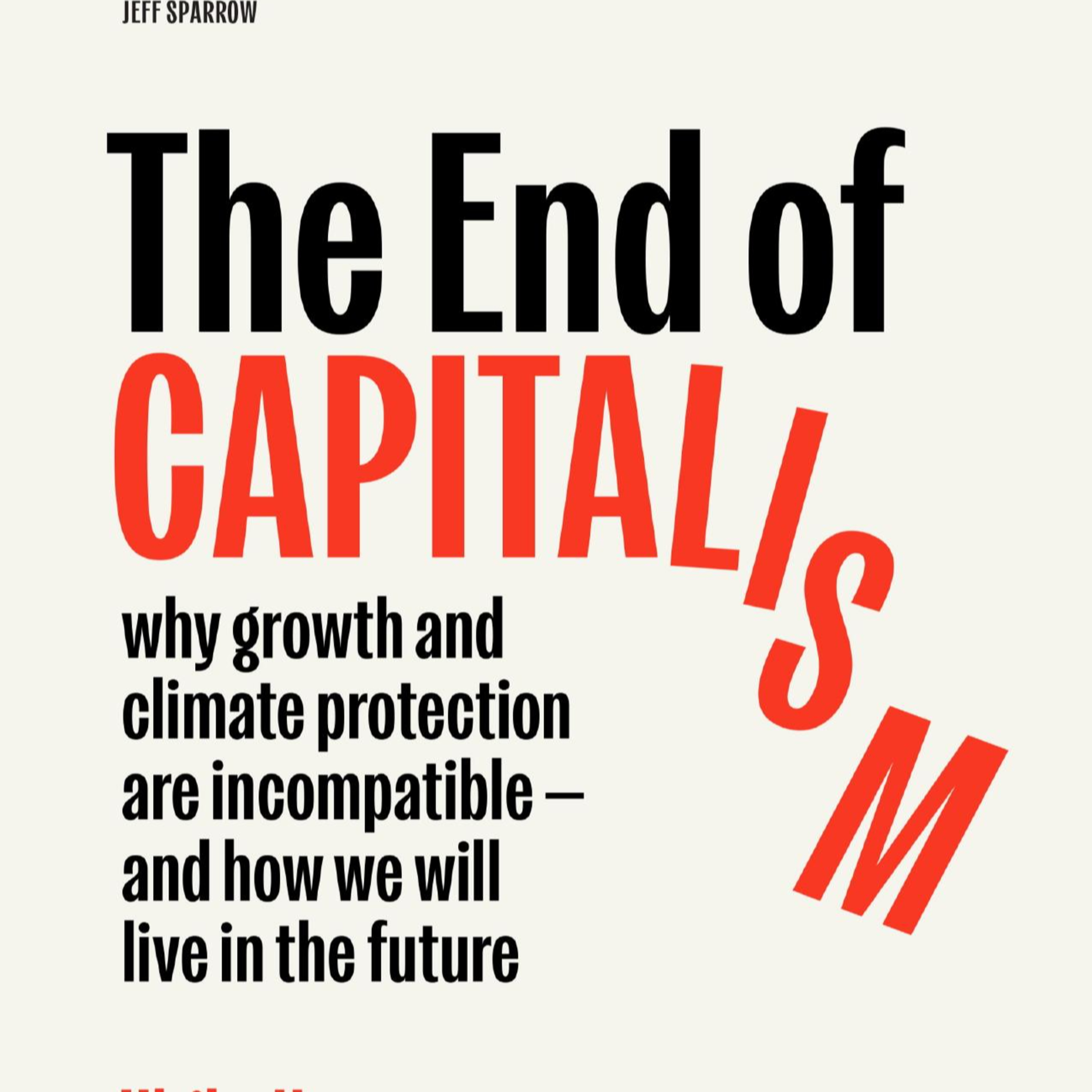
The End of Capitalism — Why Growth Collides With Climate Limits
from Crisis in Perception · host Crisis in Perception
What happens when an economic system must keep growing to remain stable, but the physical world can no longer sustain unlimited expansion?Welcome to Crisis in Perception, where we examine the systems shaping our world.Using The End of Capitalism: why growth and climate protection are incompatible — and how we will live in the future by Ulrike Herrmann as our lens, this Deep Dive investigates whether capitalism can remain economically stable while humanity reduces the energy and material consumption driving climate change.Herrmann begins from an important tension. Capitalism, in her account, was a revolutionary historical achievement: mechanization and industrial growth dramatically increased productivity, prosperity, life expectancy, education, and material security. But the same system became dependent on continuing expansion. Investment, credit, profits, employment, technological competition, and mass consumption now reinforce one another in ways that make prolonged stagnation or contraction economically destabilizing.That creates the central problem of the investigation. Climate policy is often framed as a technological substitution challenge: replace coal, oil, and gas with renewable energy while allowing economic growth to continue. Herrmann argues that this vision of “green growth” overlooks deeper constraints. Solar and wind power are intermittent, storage remains costly, and many proposed technological solutions—from carbon capture to nuclear expansion—face limits of scale, cost, infrastructure, or timing. Her conclusion is that a fully climate-neutral economy would have access to less usable energy than today’s fossil-fuel system and therefore could not sustain unlimited production.The alternative she proposes is “green shrinkage”: a deliberate reduction in economic output rather than contraction imposed chaotically by ecological breakdown. To explore how such a transition might work, Herrmann turns to Britain’s wartime economy, where private businesses remained privately owned while the state directed production, rationed scarce goods, and prioritized essential needs.The historical analogy is imperfect—Britain reduced civilian consumption while expanding total wartime production—but it exposes the deeper systems question at the center of the episode: if ecological limits eventually constrain how much societies can produce, can economic security be redesigned so that employment, income, investment, and political stability no longer depend on perpetual growth?Central systems and tensions include the growth imperative, fossil-energy dependence, credit and investment, renewable-energy constraints, economic contraction, democratic planning, scarcity, and the conflict between short-term economic stability and long-term ecological limits.📺 Watch on YouTube:https://youtu.be/4zZKQbFQrUM❤️ Support / Episode Post on Patreon:https://www.patreon.com/CrisisinPerception/posts/end-of-why-with-168266972?utm_medium=clipboard_copy&utm_source=copyLink&utm_campaign=postshare_creator&utm_content=join_linkIf these ideas resonate, consider reading the work yourself or borrowing it from your local library. Supporting authors and libraries helps keep critical inquiry accessible.If you value systems-level analysis like this, please follow, rate, and share the project.This content was created using AI-assisted tools for research synthesis, structuring, and narration support. All analysis, framing, and editorial decisions are guided by human judgment as part of the Crisis in Perception project.
Embed this episode
Ready to play
The End of Capitalism — Why Growth Collides With Climate Limits
No transcript for this episode yet
Similar Episodes
No similar episodes found.
Similar Podcasts
No similar podcasts found.