
EPISODE · Jun 15, 2026 · 19 MIN
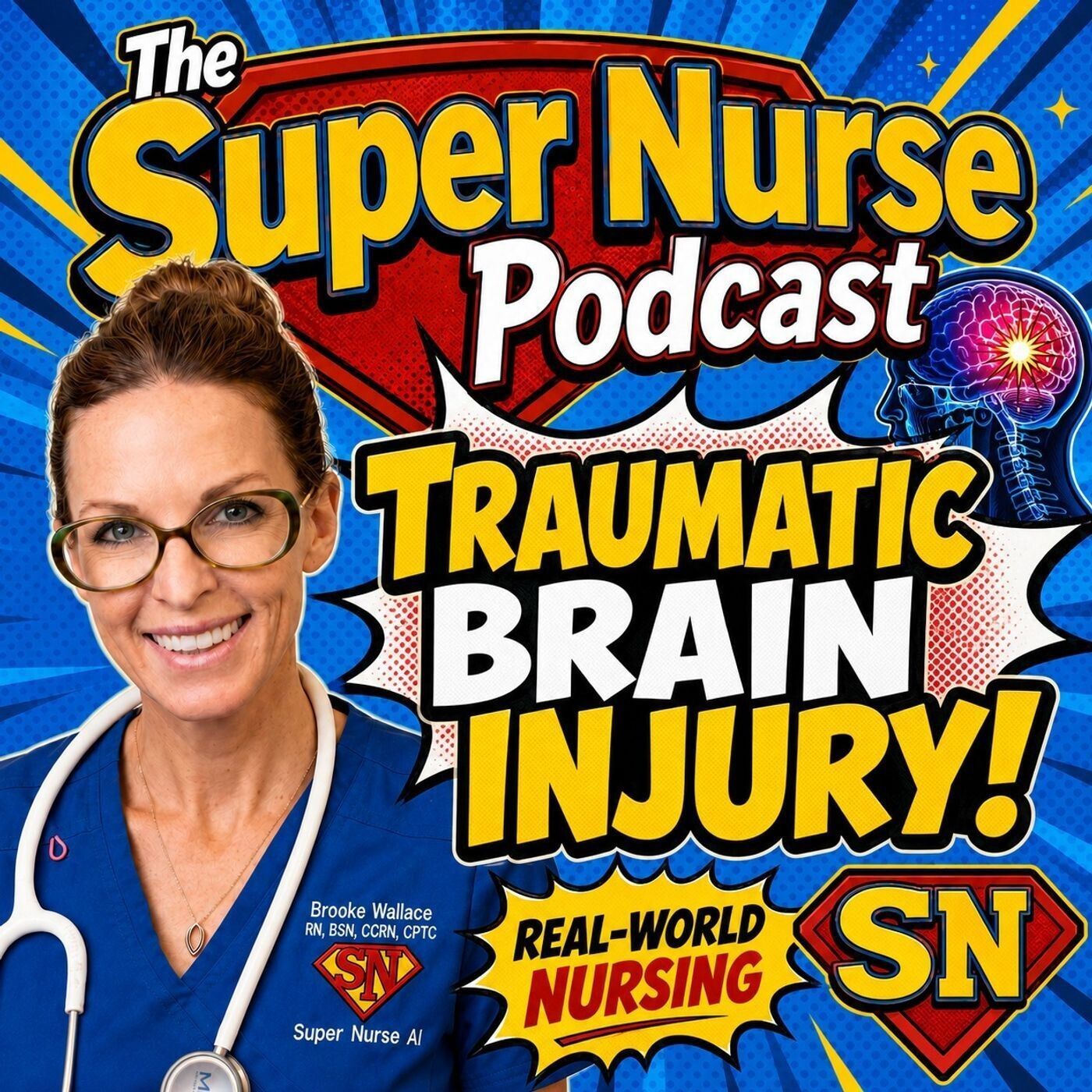
The Head Injury That Looks Fine: TBI, Increased ICP & Nursing Red Flags
from Healthy Skin Life · host Brooke Wallace
👉 Watch the video @SuperNurseAI This episode focuses on one of the most dangerous parts of traumatic brain injury: the patient may look stable before they suddenly deteriorate. A head-injury patient can be awake, talking, answering questions, and still have bleeding or swelling building inside the skull. The nurse’s job is to recognize the subtle signs before the crash. The episode explains the difference between primary injury and secondary injury. The primary injury is the initial impact, such as a fall, motor vehicle accident, blunt trauma, or penetrating injury. Nurses cannot reverse the initial trauma, but they can intervene in the secondary injury process, including hypoxia, hypotension, ischemia, cerebral edema, and increased intracranial pressure. A major concept in the episode is the Monroe-Kellie hypothesis. In simple terms, the skull is a rigid box that contains brain tissue, blood, and cerebrospinal fluid. If bleeding or swelling increases inside that fixed space, something else has to move out. When compensation fails, pressure rises quickly and the brain can lose blood flow, oxygen, and function. The episode compares epidural hematomas and subdural hematomas. Epidural hematomas are usually arterial bleeds and can cause a lucid interval, where the patient wakes up and seems fine before rapidly declining. Subdural hematomas are usually venous bleeds, often slower and more subtle, especially in older adults or patients with chronic alcohol use because brain atrophy creates extra space for blood to collect before symptoms become obvious. The episode also reviews brain contusions and why repeat CT scans matter. A small bleed or bruise on the brain can blossom over hours or days, so nurses cannot rely on one normal-looking early assessment or one initial scan if the patient’s condition changes. A key NCLEX and bedside nursing point is that early signs of increased ICP are often behavioral. Restlessness, agitation, irritability, confusion, subtle changes in level of consciousness, or sudden vomiting without nausea can be early warning signs that pressure is rising. These clues matter because late signs mean the patient is already in serious danger. The episode explains late signs of increased ICP, including blown pupils, abnormal posturing, positive Babinski in an adult, and Cushing’s triad. Cushing’s triad includes severe systolic hypertension with widening pulse pressure, bradycardia, and irregular respirations. The episode emphasizes that nurses should not wait for Cushing’s triad because it is a late sign of possible brain stem compression and herniation. The podcast reviews the Glasgow Coma Scale, especially motor response, and the ICU rule: less than 8, intubate. When a patient’s GCS drops to 8 or below, they may be losing the ability to protect their airway. Nurses should also assess pupils, look for signs of cranial nerve compression, and watch for signs of basilar skull fracture such as CSF rhinorrhea, otorrhea, halo sign, Battle sign, and raccoon eyes. The episode also reminds nurses to consider masking factors. Drugs, alcohol, eye exams, intoxication, or other conditions can affect pupils, blood pressure, and GCS. Nurses still treat the patient in front of them, but they also gather the full context so they do not misread the neuro assessment. Priority nursing interventions for TBI focus on protecting oxygenation and lowering ICP. Key actions include elevating the head of the bed to 30 degrees, keeping the neck midline, preventing straining, avoiding extreme hip and knee flexion, limiting suctioning to less than 10 seconds when needed, hyperoxygenating before suctioning, and anticipating a stat non-contrast CT scan. The episode also covers common provider orders, including mannitol, dexamethasone, and anticonvulsants such as levetiracetam. Mannitol helps pull fluid out of swollen brain tissue, dexamethasone can reduce inflammatory edema, and seizure precautions are critical because seizures increase the brain’s oxygen demand. Finally, the episode discusses TBI as an invisible disability. A patient may look physically fine after discharge but still struggle with mood swings, irritability, personality changes, slower processing, speech changes, impulse control issues, and caregiver strain. Nurses play a major role in teaching families that these changes are neurologic, not intentional behavior. The key takeaway: after a head injury, a patient who suddenly becomes cranky, restless, confused, sleepy, or vomits without nausea may not be “just acting different.” Nurses should think about pressure building inside a rigid skull and escalate early. Timestamps 00:00 – The head injury patient who looks fine 01:00 – Why TBI is a test of nursing clinical judgment 01:55 – TBI in plain English for bedside nurses 02:45 – Falls, older adults, and common causes of TBI 03:35 – Primary injury vs secondary injury 04:35 – The Monroe-Kellie hypothesis 05:35 – Why brain swelling is so dangerous 06:25 – Herniation and the rigid skull problem 07:05 – Epidural hematoma and the lucid interval 08:10 – Subdural hematoma and slow venous bleeding 09:15 – Why older adults and chronic alcohol use increase risk 10:05 – Brain contusions and repeat CT scans 10:55 – Early signs of increased ICP 11:45 – Sudden vomiting without nausea 12:30 – Blown pupils and cranial nerve compression 13:15 – Decorticate vs decerebrate posturing 14:00 – Cushing’s triad explained 15:00 – Glasgow Coma Scale and “less than 8, intubate” 16:00 – CSF leaks, Battle sign, and raccoon eyes 16:45 – Masking factors in the neuro assessment 17:20 – Nursing interventions to lower ICP 18:10 – Mannitol, dexamethasone, and seizure precautions 18:50 – TBI discharge teaching and invisible disability 19:25 – Final bedside takeaway Want to reach out? Send an email to [email protected] or visit SuperNurse.ai The content presented in The Super Nurse Podcast is for educational purposes only and should not be considered medical advice. The host and creators are not responsible for any clinical decisions made based on this content. Always adhere to your institution’s policies and consult appropriate healthcare professionals when making patient care decisions. The content presented in The Super Nurse Podcast is for educational purposes only and should not be considered medical advice. The host and creators are not responsible for any clinical decisions made based on this content. Always adhere to your institution’s policies and consult appropriate healthcare professionals when making patient care decisions.
Embed this episode
What this episode covers
👉 Watch the video @SuperNurseAI This episode focuses on one of the most dangerous parts of traumatic brain injury: the patient may look stable before they suddenly deteriorate. A head-injury patient can be awake, talking, answering questions, and still...
NOW PLAYING
The Head Injury That Looks Fine: TBI, Increased ICP & Nursing Red Flags
No transcript for this episode yet
Similar Episodes
No similar episodes found.
Similar Podcasts
No similar podcasts found.