
EPISODE · May 11, 2026 · 57 MIN
The Hidden Science Behind New Fruit Varieties | Ep. 132
from Lucentlands Podcast | Harvesting Agriculture Knowledge · host Lucentlands
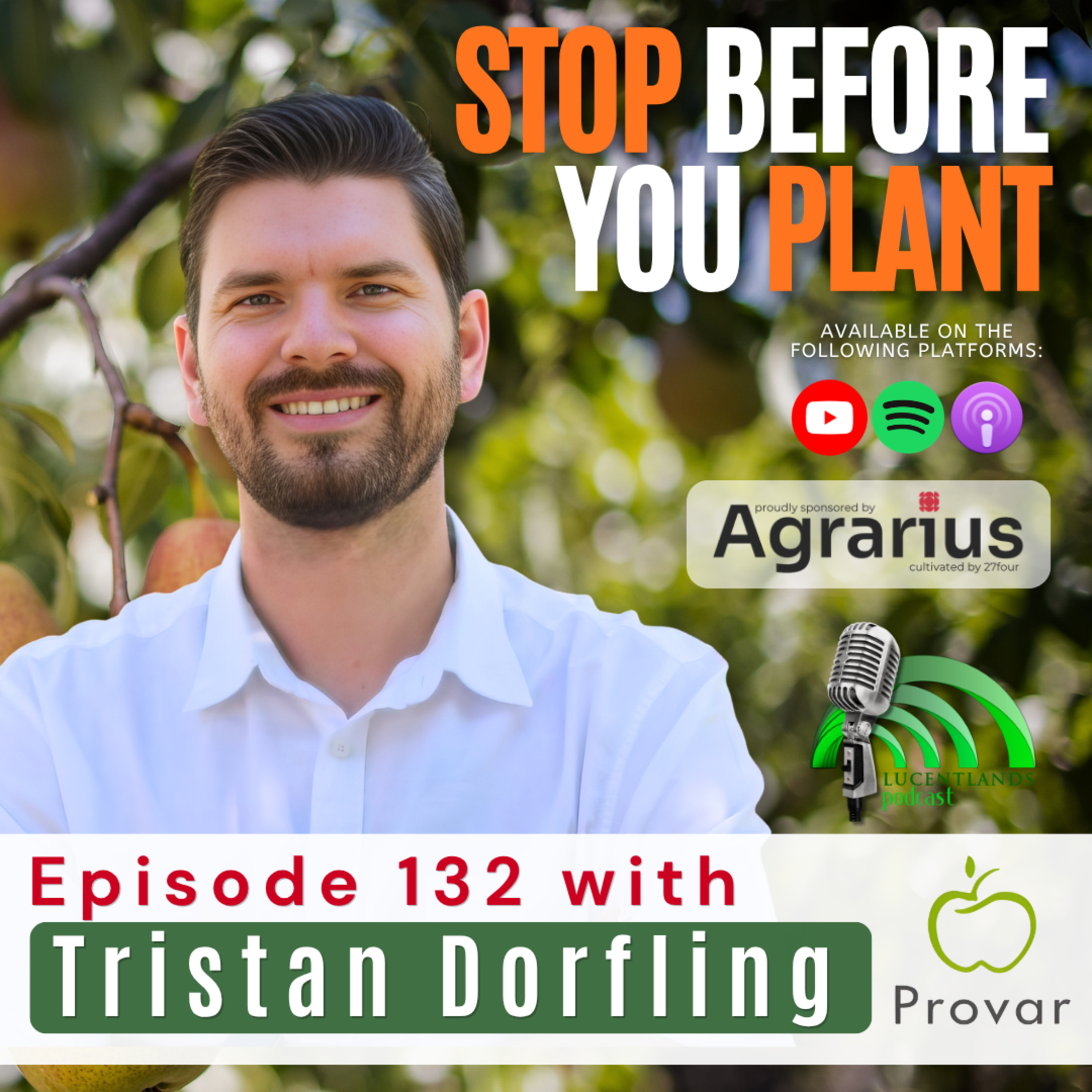
In this episode of the Lucentlands Podcast, hosts Dewald Kirsten and Louise Brodie speak to Tristan Dorfling, CEO and Pome Rootstock Researcher at Provar, about the highly specialised world of fruit cultivar and rootstock evaluation.New fruit varieties are constantly being developed and introduced around the world, but very few are suitable for South African growing conditions. For growers, planting a new cultivar is a major long-term investment, and the wrong decision can carry serious financial consequences. This is where Provar plays an important role.Tristan explains how Provar was established to reduce risk for growers by independently evaluating new cultivars before they are planted commercially at scale. The discussion covers the difference between promising genetics and proven performance, why South Africa’s climate creates unique evaluation challenges, and how independent data helps growers, IP managers and industry bodies make better decisions.The conversation also explores rootstock evaluation, replant disease, tree adaptability, fruit quality, the role of microclimates, and the long timelines involved in properly assessing new fruit material. Tristan explains why evaluating a cultivar is not simply about whether the fruit looks or tastes good, but whether the tree, the fruit, the rootstock and the production environment all work together.A key theme in this episode is the value of what does not make it through the system. Tristan explains that only a small percentage of evaluated cultivars eventually become commercial, and that much of Provar’s value lies in helping the industry avoid costly mistakes.The episode also looks at the growing role of data, digital tools and AI in horticultural evaluation. Tristan shares how Provar is developing systems to support evaluators, improve reporting, standardise knowledge and potentially contribute to international evaluation standards.This is a detailed and important conversation for anyone involved in deciduous fruit, cultivar development, rootstocks, nursery systems, apple and pear production, stone fruit, table grapes, agricultural research or long-term orchard investment.Key insights from this episode include:• Why Provar was created to reduce cultivar risk for growers• How independent evaluation supports better planting decisions• Why a successful variety in another country may fail in South Africa• The role of climate, chill units and microclimates in apple production• Why rootstock evaluation is more complex than it appears• How replant disease can reduce early orchard performance• Why cultivar evaluation takes years, not months• How data and digital tools are changing horticultural research• Why AI should support evaluators rather than replace them• How South Africa can contribute to international evaluation standards• Why the fruit industry depends on collaboration between multiple role playersTristan also shares his personal journey from sound engineering into horticulture, and reflects on the collaborative culture of the agricultural sector. His story adds a human layer to a technical discussion about science, risk, data and the future of fruit production.More about Provar: https://provar.co.za/Connect with Tristan: https://www.linkedin.com/in/tristan-dorfling-763541213/Connect with us:Website: https://lucentlands.co.za/Instagram: https://www.instagram.com/lucentlandsmedia/Facebook: https://www.facebook.com/lucentlandsmediaLinkedIn: https://www.linkedin.com/company/lucentlandsmedia/Podcast LinkedIn: https://www.linkedin.com/showcase/lucentlandspodcastSupport this podcast by buying us a coffee: https://buymeacoffee.com/lucentlands?new=1This podcast is proudly sponsored by Agrarius. Find out more: https://www.agrarius.co.za/?ref=recR9vP8u5CYfEOek&utm_source=lucentlands&utm_medium=referral&utm_campaign=LucentLandsPromoVisit our agricultural stock site: https://lucentlands.smugmug.com/
Embed this episode
NOW PLAYING
The Hidden Science Behind New Fruit Varieties | Ep. 132
No transcript for this episode yet
Similar Episodes
No similar episodes found.
Similar Podcasts
No similar podcasts found.