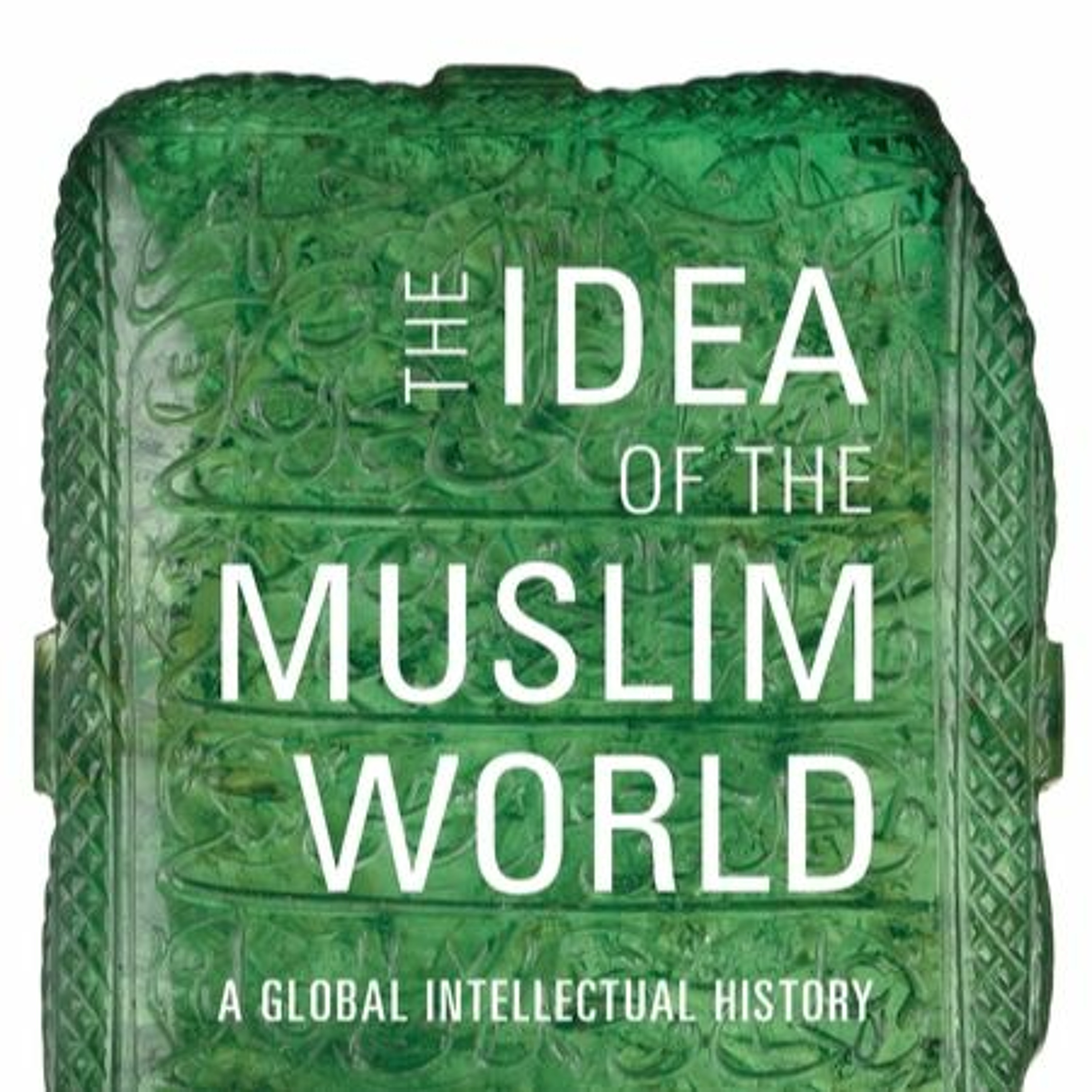
The Idea of the Muslim World: A Conversation with Cemil Aydin (S. 5, Ep. 38) episode artwork

EPISODE · Jun 26, 2017 · 23 MIN

The Idea of the Muslim World: A Conversation with Cemil Aydin (S. 5, Ep. 38)

from POMEPS Middle East Political Science Podcast · host Marc Lynch

How did the idea of a unified global Muslim community come about? That's the question Cemil Aydin and Marc Lynch tackle in this week's podcast. Aydin's new book explores the how the world's 1.5 billion Muslims have become seen as a single religious/political bloc. "In many ways, I wanted to engage with the contemporary discussions of Muslim unity, Muslim solidarity or Muslim exceptionalism by going back to the last 200 years to try to understand the genealogy and the roots of the idea of Muslims constituting a global community and a shared political project," says Aydin, an associate professor of history at the University of North Carolina at Chapel Hill. In his book, Aydin makes the argument that up until the 19th century, there really was no Muslim world. "That doesn't mean there were many different Muslims in different parts of the world. They have always had different global or regional imaginations— but it doesn't match with our current conceptions of a Muslim world extending from Senegal or Morocco to Indonesia. Different Muslim legal scholars may have categorizations about the 'land of Islam' versus the 'land of the land of non-Muslims,'" says Aydin. "But these are legal classifications. We need to ask, 'Who made them?' or 'Who read them and how they applied them.'The fact that there were such legal categories doesn't mean that these categories are almost like a party program or a doctrine that every Muslim child had to read.... and memorize it and imagine the world accordingly." "We have to account for the fact that Muslims lived in empires— and different empires and different empires of the world to work with. There were so many different Caliphates." Aydin sees the history he just wrote about reflected in current events. "Publishing this book after Donald Trump is also very ironic in the sense that Trump's Muslim ban— or a kind of 'new' Islamophobia, which actually originates from the 1980s onward, after Salman Rushdie appears— again created the kind of outer boundaries of the Muslim world. The new racism against Muslims actually creates a context for Muslims to defend themselves. So I have one message for Muslims: ask for your rights, whether in America or Europe or other places, without being trapped by poisonous, bad narratives. Sometimes they think that the old narrative of Muslim solidarity to preserve themselves, or to negotiate with the colonial powers, might actually not serve their interests, but further try to 'racialize' them." "There was an assumption that only Muslim solidarity could help Muslims, which created the counter-narrative that Muslims are almost isolated from the rest of humanity. So I try to think about these symbiotic relationship between racism against Muslims in the West and the Muslims or Muslim's own pan-Islamic thinking that their solidarity is needed to empower them." By showing how deconstruction this is, "We can think differently. We can imagine a different future. That doesn't mean that Muslims don't have a right to imagine a politics based on their religious values. As a Muslim, I also do that— some of my values come from the example of Prophet Mohammad and others. But that shouldn't be a trap. Some of my values also come from the examples of Martin Luther King Jr. or Nelson Mandela. So why am I only thinking that they will only come from a specified, narrow notion of religion?"

How did the idea of a unified global Muslim community come about? That's the question Cemil Aydin and Marc Lynch tackle in this week's podcast. Aydin's new book explores the how the world's 1.5 billion Muslims have become seen as a single religious/political bloc. "In many ways, I wanted to engage with the contemporary discussions of Muslim unity, Muslim solidarity or Muslim exceptionalism by going back to the last 200 years to try to understand the genealogy and the roots of the idea of Muslims constituting a global community and a shared political project," says Aydin, an associate professor of history at the University of North Carolina at Chapel Hill. In his book, Aydin makes the argument that up until the 19th century, there really was no Muslim world. "That doesn't mean there were many different Muslims in different parts of the world. They have always had different global or regional imaginations— but it doesn't match with our current conceptions of a Muslim world extending from Senegal or Morocco to Indonesia. Different Muslim legal scholars may have categorizations about the 'land of Islam' versus the 'land of the land of non-Muslims,'" says Aydin. "But these are legal classifications. We need to ask, 'Who made them?' or 'Who read them and how they applied them.'The fact that there were such legal categories doesn't mean that these categories are almost like a party program or a doctrine that every Muslim child had to read.... and memorize it and imagine the world accordingly." "We have to account for the fact that Muslims lived in empires— and different empires and different empires of the world to work with. There were so many different Caliphates." Aydin sees the history he just wrote about reflected in current events. "Publishing this book after Donald Trump is also very ironic in the sense that Trump's Muslim ban— or a kind of 'new' Islamophobia, which actually originates from the 1980s onward, after Salman Rushdie appears— again created the kind of outer boundaries of the Muslim world. The new racism against Muslims actually creates a context for Muslims to defend themselves. So I have one message for Muslims: ask for your rights, whether in America or Europe or other places, without being trapped by poisonous, bad narratives. Sometimes they think that the old narrative of Muslim solidarity to preserve themselves, or to negotiate with the colonial powers, might actually not serve their interests, but further try to 'racialize' them." "There was an assumption that only Muslim solidarity could help Muslims, which created the counter-narrative that Muslims are almost isolated from the rest of humanity. So I try to think about these symbiotic relationship between racism against Muslims in the West and the Muslims or Muslim's own pan-Islamic thinking that their solidarity is needed to empower them." By showing how deconstruction this is, "We can think differently. We can imagine a different future. That doesn't mean that Muslims don't have a right to imagine a politics based on their religious values. As a Muslim, I also do that— some of my values come from the example of Prophet Mohammad and others. But that shouldn't be a trap. Some of my values also come from the examples of Martin Luther King Jr. or Nelson Mandela. So why am I only thinking that they will only come from a specified, narrow notion of religion?"

NOW PLAYING

The Idea of the Muslim World: A Conversation with Cemil Aydin (S. 5, Ep. 38)

0:00 23:18

No transcript for this episode yet

We transcribe on demand. Request one and we'll notify you when it's ready — usually under 10 minutes.

MG Show MG Show The MG Show, hosted by Jeffrey Pedersen and Shannon Townsend, is a leading alternative media platform dedicated to uncovering the truth behind today’s most pressing political issues. Launched in 2019, the show has grown exponentially, offering unfiltered insights, comprehensive research, and real-time analysis. With a commitment to independent journalism and factual integrity, the MG Show empowers its audience with knowledge and encourages active participation in the political discourse. That Hoarder: Overcome Compulsive Hoarding That Hoarder Hoarding disorder is stigmatised and people who hoard feel vast amounts of shame. This podcast began life as an audio diary, an anonymous outlet for somebody with this weird condition. That Hoarder speaks about her experiences living with compulsive hoarding, she interviews therapists, academics, researchers, children of hoarders, professional organisers and influencers, and she shares insight and tips for others with the problem. Listened to by people who hoard as well as those who love them and those who work with them, Overcome Compulsive Hoarding with That Hoarder aims to shatter the stigma, share the truth and speak openly and honestly to improve lives. The Small Business Startup School – Business Notes | Financial Literacy | Retail Psychology – For Professionals & Entrepreneurs The Small Business Startup School Inc. Starting or buying a small business? While personal circumstances may vary, business patterns remain timeless. On The Small Business Startup School, we explore strategies, insights, and practical solutions to help entrepreneurs confidently navigate their journey.Hosted by Ola Williams—a retail entrepreneur, fintech founder, and financial coach with over two decades of experience—this podcast marries financial awareness and retail psychology with optimism to deliver actionable takeaways.Join us to learn, grow, and connect as we uncover the keys to business success.Let’s continue to learn together and be encouraged to keep on connecting! DIOSA. Carolina Sanper This podcast is a sacred space created by Carolina Sanper where you connect with your inner wisdom and embody your magnetic feminine power.It is the realization that the mystical realm is where you plant the seeds of your desired reality.It is a portal to your true essence: awareness, presence, and receiving with ease. Welcome home, DIOSA. 🖤

Frequently Asked Questions

How long is this episode of POMEPS Middle East Political Science Podcast?

This episode is 23 minutes long.

When was this POMEPS Middle East Political Science Podcast episode published?

This episode was published on June 26, 2017.

What is this episode about?

How did the idea of a unified global Muslim community come about? That's the question Cemil Aydin and Marc Lynch tackle in this week's podcast. Aydin's new book explores the how the world's 1.5 billion Muslims have become seen as a single...

Can I download this POMEPS Middle East Political Science Podcast episode?

Yes, you can download this episode by clicking the download button on the episode player, or subscribe to the podcast in your preferred podcast app for automatic downloads.
URL copied to clipboard!