
EPISODE · Apr 17, 2026 · 51 MIN
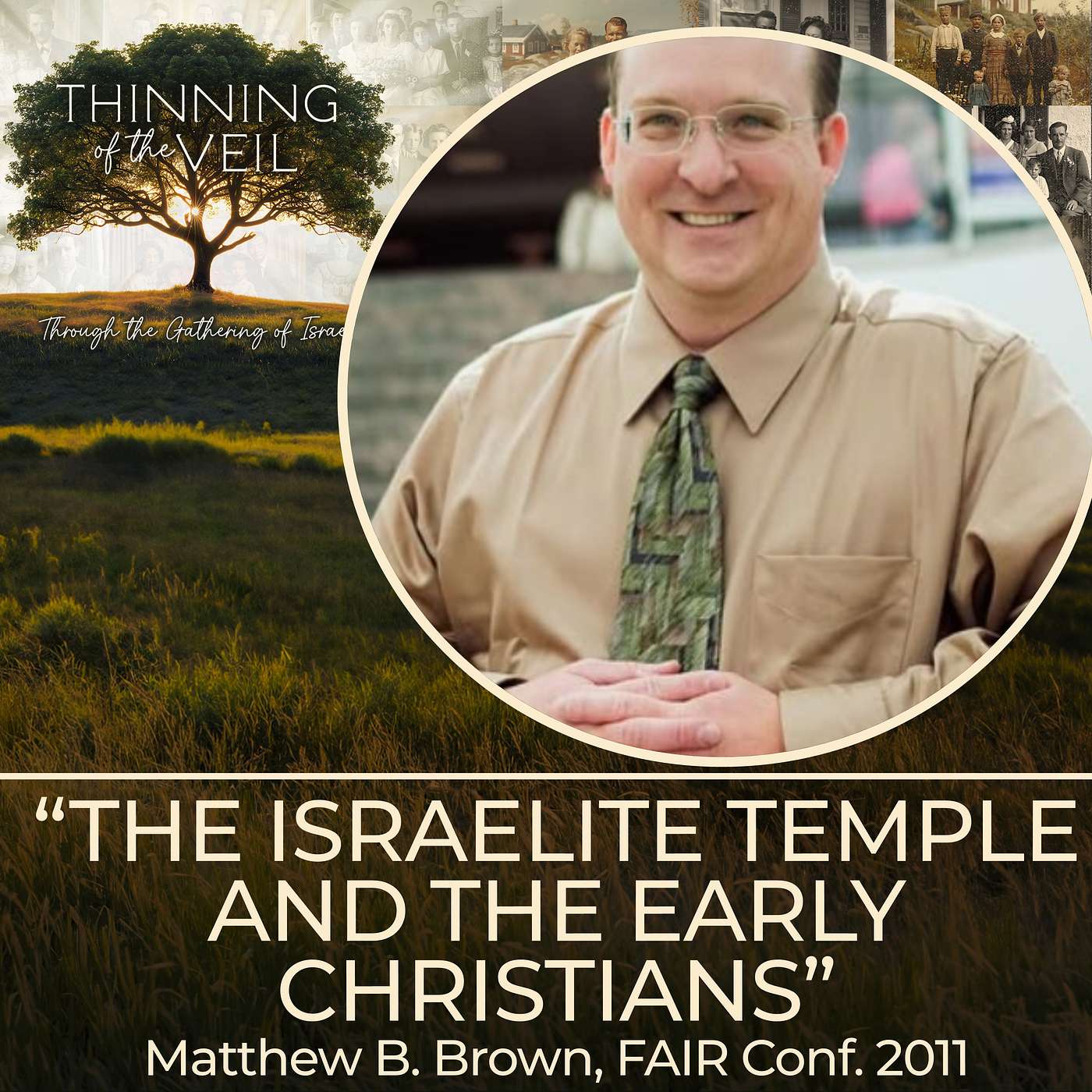
The Israelite Temple and the Early Christians | Did Christians Practice Temple Worship? — Matthew B. Brown, FAIR 2011 (LDS)
from THINNING OF THE VEIL · host Tia Smith
Send us Fan MailDid the early Christians practice temple worship — and is there evidence connecting the rituals of the Israelite temple with the ordinances of the first-century Church? In this FAIR conference talk (2011), the late Matthew B. Brown systematically examines two common claims: that the Atonement made temple worship obsolete, and that temple ceremonies were never part of the gospel of Jesus Christ. The biblical and historical evidence he presents calls both claims into question. Drawing from the books of Acts, Revelation, the Psalms, and the earliest Christian liturgical documents (compiled by Dr. Maxwell Johnson of Notre Dame), Brown traces twelve promises made in the book of Revelation to those who "overcome" — and shows that each one corresponds to an initiation rite of the Israelite kings and priests: eating of the tree of life (return to Eden), washing, anointing with olive oil, investiture with white linen, receiving a new name, adoption and inheritance, enthronement, the name of God written on the forehead, and entering the Holy of Holies. He then demonstrates that the early Christians practiced these same elements in their own initiation liturgy — including anointing of the body with consecrated olive oil, investiture with white garments specifically called "the glorious robe which Adam lost," the wearing of ceremonial aprons (documented in Egyptian Christian burials), right-hand clasps at a veiled entrance, renunciation of Satan by covenant, and an embrace between initiator and initiate. The talk closes with a remarkable parallel: the three-level architecture of Eastern Orthodox churches (nave = earth, vestibule = Garden of Eden, choir = Holy of Holies) mirrors the ascending pattern of Solomon's Temple — and the initiation rites of Greek Orthodox monks to this day include a new name, exchange of questions and answers at a veiled doorway, investiture with sacred clothing including an embroidered apron bearing symbols of Adam and paradise, and a concluding embrace.Q: Did early Christians practice temple worship after the Atonement of Jesus Christ?A: The New Testament shows they did. The apostles continued teaching in the temple daily (Acts 2:46), the Apostle Paul submitted to temple purification rites and received a vision of the resurrected Lord while praying there (Acts 22:17–18), and the book of Revelation describes white-robed kings and priests serving in the heavenly temple — all after the crucifixion. Matthew B. Brown argues that the tearing of the temple veil did not signal to the first-century Christians that the temple was obsolete.Q: What are the twelve promises in the book of Revelation, and what do they have to do with the temple?A: Brown identifies twelve promises made to "him that overcometh" in Revelation and shows each one corresponds to an initiation rite of the Israelite kings and priests: eating of the tree of life (return to paradise), not being hurt by the second death (priestly access to God's presence), receiving hidden manna, a new name, power over nations, the morning star, white raiment, name in the book of life, being made a pillar in God's temple, God's name on the forehead, sitting on Christ's throne, and divine adoption with inheritance.Q: Is there archaeological evidence that early Christians wore ceremonial temple clothing?A: Yes — Brown cites Christian burials in Egypt where monks were interred wearing leather aprons over white linen garments, some bearing symbolic markings. The earliest Christian liturgical documents (compiled by Dr. Maxwell Johnson of Notre Dame) describe initiates being invested with white vestments called "the glorious robe which Adam lost," receiving crowns, and wearing "garments of glory" — language directly paralleling the priestly vestments described in Exodus 28.Q: How does the architecture of Eastern Orthodox churches reflect the temple?A: Eastern Orthodox church buildings mirror Solomon's Temple in three ascending levels: the nave (representing earth), the vestibule (the Garden of Eden), and the choir or Holy of Holies (heaven), separated by a veiled barrier called the iconostasis. Only certain clergy may pass through the veil into the most holy place — the same pattern as the Israelite temple, where only the high priest entered the Holy of Holies. YouTube: The Israelite Temple and the Early Christians Video: https://youtu.be/tPgCjelLyNUYouTube Thinning of the Veil Channel: https://www.youtube.com/@thinningoftheveil SUPPORT THE SHOW: Website: Thinning of the Veil: https://www.thinningoftheveil.com/Venmo: https://account.venmo.com/u/thinningoftheveilPayPal: https://paypal.me/thinningoftheveil?country.x=US&locale.x=en_USBook: "Patterns of Revelation": https://www.amazon.com/Patterns-Revelation-Spiritual-Foundations-Hearing-ebook/dp/B0BWGLZ8VXEmail: [email protected]: https://www.instagram.com/thinning.of.the.veil/Facebook: https://www.facebook.com/thinning.of.the.veil/TikTok: https://www.tiktok.com/@thinning.of.the.veilCITATIONS: Matthew B. Brown, "The Israelite Temple and the Early Christians", FAIR Conf., 2012: https://www.fairlatterdaysaints.org/conference_home/august-2008/the-israelite-temple-and-the-early-christiansSupport the show
Embed this episode
What this episode covers
Send us Fan Mail Did the early Christians practice temple worship — and is there evidence connecting the rituals of the Israelite temple with the ordinances of the first-century Church? In this FAIR conference talk (2011), the late Matthew B. Brown systematically examines two common claims: that the Atonement made temple worship obsolete, and that temple ceremonies were never part of the gospel of Jesus Christ. The biblical and historical evidence he presents calls both claims into question. ...
NOW PLAYING
The Israelite Temple and the Early Christians | Did Christians Practice Temple Worship? — Matthew B. Brown, FAIR 2011 (LDS)
No transcript for this episode yet
Similar Episodes
No similar episodes found.
Similar Podcasts
No similar podcasts found.