THE LEAD Interviews: Make Your Best Work. Let It Open Doors.
from The Lead by Emily K Thomas Hosted by Emily K Thomas
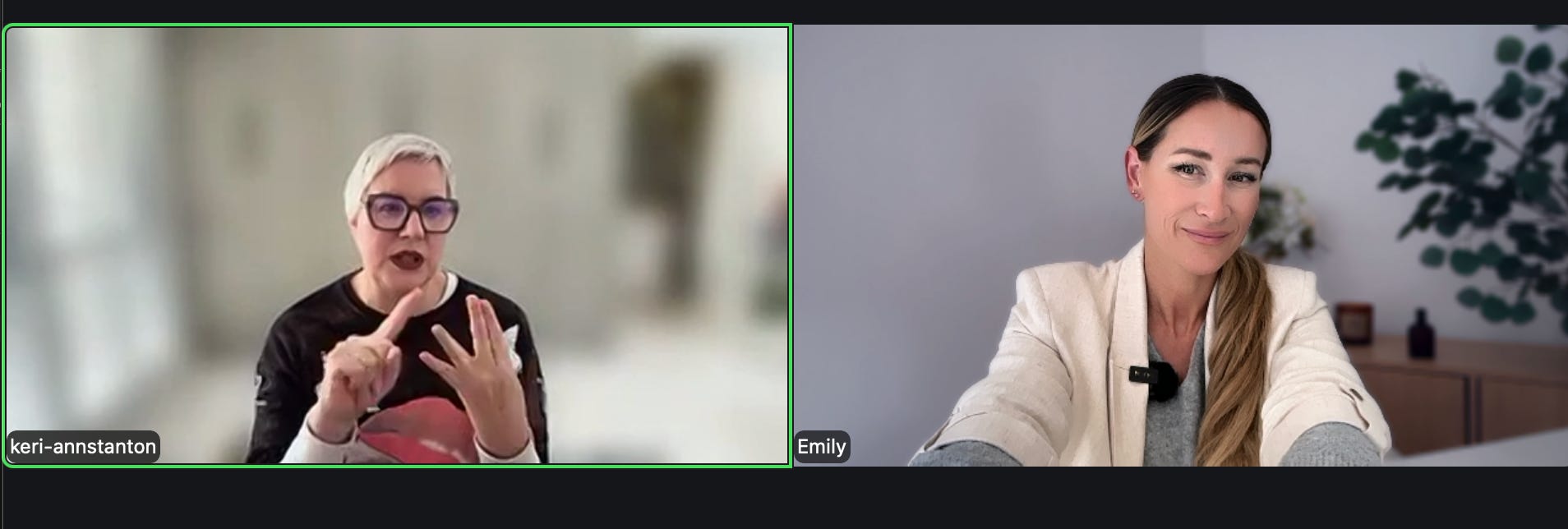
Why this conversation mattered Being fully booked is an easy thing to celebrate. It tells us the work is wanted. The calendar is filling. The business is moving. But I kept coming back to a different question during my conversation with Keri-Ann Stanton: what does all that work leave room for? Can you take the call that changes a client’s direction? Can you think beyond the immediate brief? Can you say yes to something meaningful that wasn’t in the plan? A business can be in demand and still become too crowded to deliver the judgment people hired it for. Keri-Ann Stanton brings more than two decades of experience to this question. The founder and chief strategist of KAMuses Consultancy Group has built and scaled Kezi Communications, Engage Joe Public, and Avatar PR. She served on the 2026 Cannes Lions PR Shortlisting Jury. Her Cannes biography credits KAMuses with more than 97 industry awards and notes her recognition as a Provoke Media Top 25 Innovator in EMEA. That is why her choices interest me. She has built agencies and judged creative work on an international stage. Her experience of learning excellence at Joe Public still shapes her standards. I wanted to understand how she protects those standards through capacity, scope, and the relationships she accepts. We talked about specialist roles, boundaries, creative room, and the pressure to keep getting bigger. Keri-Ann explained why her team has separate publicists, writers, and producers, and why growth has recently required more oversight. We also spent time on projects before retainers. She prefers to discover the real scope and working chemistry through a defined piece of work before making a longer commitment. Her current clients are now on retainers, she told me, but those relationships began as projects. And we explored what creates momentum: the work itself, the standards behind it, and knowing who you are well enough to make deliberate choices. The part I would take into your week is simple: examine the conditions behind your promises. If you promise thoughtful advice, where is the time to think? If you promise a close working relationship, how will both sides discover whether it fits? The exercises below give you somewhere to start, whether you run a company, lead a team, or choose the people you work with. Emily K Thomas Keri-Ann’s Chosen Five Five practices and ideas drawn from her account of how she works. 1. Reading widely Her childhood Saturday trips to the library became a lasting habit. She connects reading across different formats with learning how words work, what resonates, and where a story lives. 2. Learning excellence through the work At Joe Public, she experienced the effort that goes into fighting for and crafting an idea. She describes that environment as a turning point in her confidence and standards. 3. Starting with a project A defined engagement gives both parties experience of the real scope, the pushback, and the working relationship before moving into a retainer. 4. Protecting capacity Her model leaves room for client conversations and occasional projects chosen for meaning or enjoyment. Normal working boundaries have an exception for crises. 5. Knowing what she will tolerate Keri-Ann connects her judgment with years of learning who she is and what she stands for. Her operating model reflects those choices, even as she continues to adjust it. The LEAD signals from the conversation Opportunity Signal: An environment that changes your standard Keri-Ann described being headhunted by Joe Public as a consequential career moment. What stayed with her was learning excellence alongside people whose approach changed how she judged her own work. My takeaway: when weighing an opportunity, consider the standard you will learn to recognize there. Trust Signal: Experience before a bigger promise Her project-first approach lets a client and team discover how they work together. For me, that is the useful confidence mechanism: people can make a longer commitment with evidence from a real working relationship. Momentum Signal: Give the work your attention When I asked what separates creating momentum from chasing it, Keri-Ann returned to craft: “Just take your brief, put your head down, do the work, craft your art, make it so undeniable.” My interpretation is that visibility has more to carry when there is substantive work behind it. Her advice also raises a useful challenge: how much time are we spending describing our expertise, and how much are we protecting to practice it? Emily’s (My) favorite moment! There were actually many but I particularly loved when Keri-Ann explained that capacity capping makes room for a quick client call, I could picture exactly why it matters. A conversation can reveal the real problem or lead to an idea that never appears in the formal brief. That connected with how we work backward from client goals at GAL. You need enough attention to understand the destination before deciding what to do. The thought I kept was this: the calendar is part of the client experience. It determines how much of your judgment they can actually reach. The deeper record How does the way you organize your work affect the confidence someone can place in you? Keri-Ann’s experience gives us two practical ways to examine that question: protect the capacity your promise requires, and test a relationship before extending it. 1. The capacity audit: what does your calendar prevent? Keri-Ann describes a team that normally stops at five, avoids weekend work, and keeps Friday afternoons free of meetings. Crises are the exception. Those are her boundaries. The more useful question for your business is which conditions you need to deliver well. In her account, unallocated room makes several things possible: answering a client, following an idea, and occasionally taking on work because it matters to the team. She also connects the model with pricing. That is her experience, rather than a promise that reducing hours will increase everyone’s income. Here is the audit I would run before accepting the next commitment. Look at the next two weeks and identify: • Delivery time: when the actual work gets done. • Thinking time: when someone can question the brief, research, or improve the idea. • Response time: where an unexpected client need can fit. • Recovery time: what makes the pace sustainable. If delivery already occupies every available hour, the other three will be borrowed from somewhere. Often, they come from evenings, weekends, or the quality of your attention. Then examine the work that repeatedly spills over. Is the scope realistic? Are requests exceeding the agreement? Do you have the right resources? Keri-Ann names these as questions worth asking when overtime becomes routine. Finally, make ownership visible. Who is responsible for writing, relationships, delivery, and decisions? Her specialist lanes prompted me to ask whether a team is overloaded because there is too much work, or because each person is expected to carry too many different responsibilities. Before saying yes, finish this sentence: “To take this on and deliver it well, we would need to change ______.” That might mean the start date, scope, staffing, meetings, or another commitment. Naming the change gives you a decision to make. 2. Projects before retainers: let the relationship reveal itself A longer agreement can feel reassuring. Yet the work you agree to before starting may differ from the work the client actually needs. Keri-Ann’s approach is to begin with a project that has a clear start and finish. Both sides experience the delivery, the difficult conversations, and the scope. A retainer becomes an option once there is understanding and respect. The nuance matters: she is not describing a business that avoids retainers forever. She told me her current clients are on them. The sequence is what interests me. Here is how I would turn that into a useful test. Before the project, agree on: • One meaningful outcome that can be evaluated. • What is included, what is exc… This is a public episode. If you'd like to discuss this with other subscribers or get access to bonus episodes, visit emilykthomas.substack.com/subscribe
Embed this episode
No transcript yet.