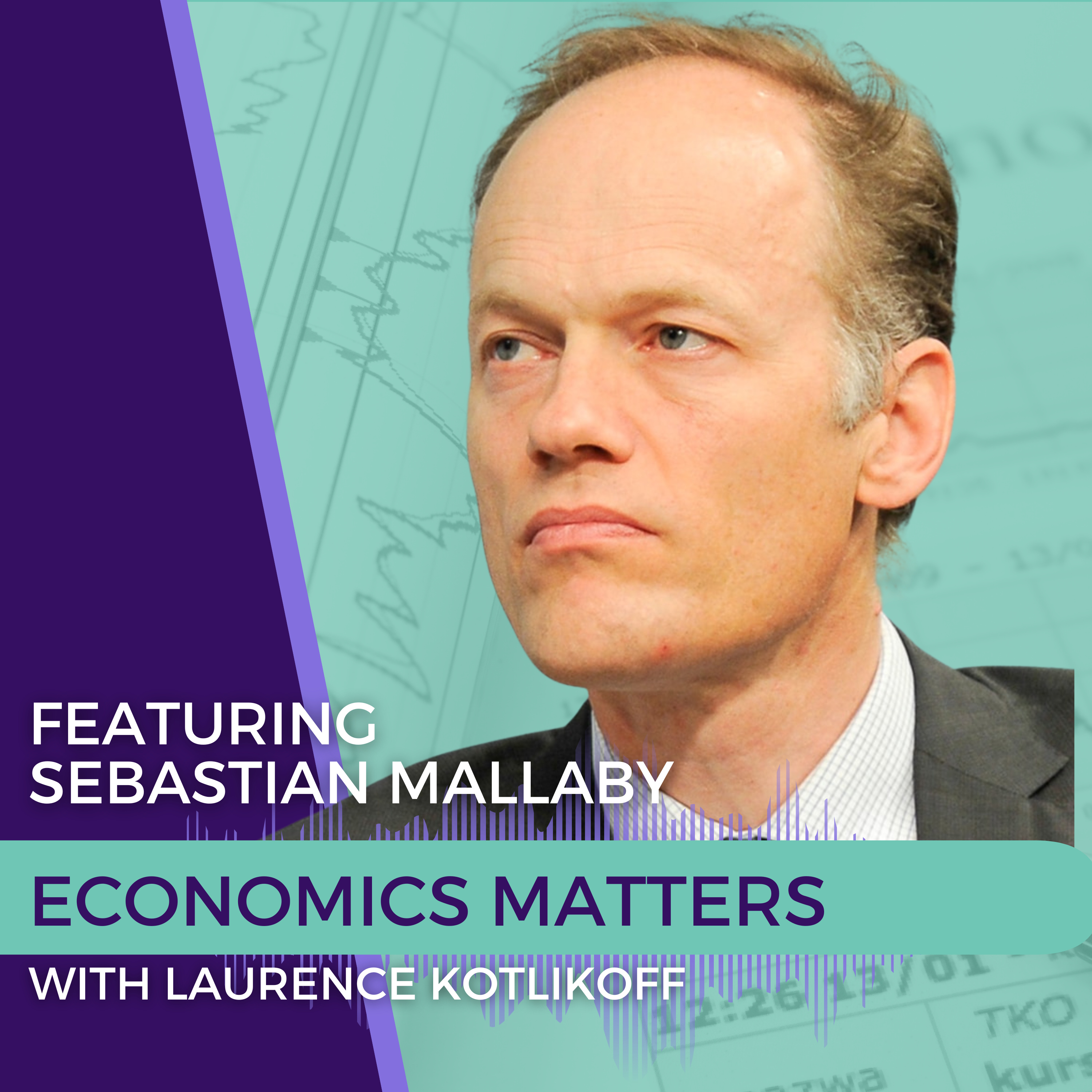
The Man Who Turned Down $1.3 Million to Stay in School — And Changed Medicine Forever episode artwork

EPISODE · Jun 25, 2026 · 1H 20M

The Man Who Turned Down $1.3 Million to Stay in School — And Changed Medicine Forever

from Economics Matters with Laurence Kotlikoff · host Economics Matters

What does it actually take to solve a scientific puzzle that stumped researchers for fifty years — and why are the same AI tools that cracked it still getting basic financial math catastrophically wrong?In 2024, Demis Hassabis won the Nobel Prize in Chemistry for something that sounds almost too ambitious to be real: teaching artificial intelligence to predict the three-dimensional shape of any protein, a problem that had resisted traditional science for half a century. The breakthrough, called AlphaFold, has already mapped over 200 million proteins, a feat with profound implications for how we understand and treat disease.In this episode, Larry Kotlikoff sits down with Sebastian Mallaby, the New York Times bestselling author and veteran journalist behind The Infinity Machine, his deeply reported new biography of Hassabis and the rise of DeepMind. Mallaby walks through the improbable arc of Hassabis's career - from chess prodigy to video game programmer to the architect of some of the most consequential AI breakthroughs of the last decade. Then turns to a sharper, more urgent question: what can AI actually be trusted to get right, and where does it quietly, confidently fail?What You'll Learn:[00:32:01] The $1.3 million check Demis Hassabis turned down — and why he chose to study computer science instead of cashing in on his teenage video game fortune[00:33:00] Why AI was considered a dead field as recently as 2012 — and how Hassabis convinced Peter Thiel to fund a company built on a technology that, at the time, couldn't do much of anything[00:34:05] What "agentic AI" actually means — and how DeepMind's early systems learned to master Atari games through pure trial and error, years before "agentic" became a buzzword[00:35:08] Reinforcement learning vs. deep learning, explained simply — the difference between an AI that learns from reading and one that learns from doing[00:43:56] How neural networks actually work — a plain-language breakdown of "weights," layers, and how a system tweaks itself toward a correct answer through millions of small adjustments[00:41:00] Why AI is fundamentally inductive, not deductive — and why that distinction explains both its remarkable strengths and its most dangerous blind spots[01:04:57] How AlphaFold's protein-folding breakthrough connects directly to disease research — including new frontiers in understanding conditions like Parkinson's[01:05:59] Inside Isomorphic Labs — Hassabis's newest venture, aimed at using AI to dramatically accelerate (not replace) the drug discovery pipeline[01:16:00] Why AI tools are getting deterministic financial questions wrong — Larry's own real-world tests show major AI models disagreeing wildly on life insurance needs, optimal savings, and Roth conversion strategy, even though these problems have one mathematically correct answer[01:12:43] What this means for the future of work — a candid exchange on AI adoption timelines, productivity's "jagged edge," and whether human labor markets have time to adjustSebastian Mallaby is an award-winning journalist and author of six books, including the New York Times bestseller The Infinity Machine: How an AI Pioneer Reshaped the Future, as well as The Power Law: Venture Capital and the Making of the New Future and More Money Than God. A former correspondent for The Economist and longtime member of the Washington Post editorial board. He co-hosts the podcast The Spillover with Rebecca Patterson of the Council on Foreign Relations.

What does it actually take to solve a scientific puzzle that stumped researchers for fifty years — and why are the same AI tools that cracked it still getting basic financial math catastrophically wrong?In 2024, Demis Hassabis won the Nobel Prize in Chemistry for something that sounds almost too ambitious to be real: teaching artificial intelligence to predict the three-dimensional shape of any protein, a problem that had resisted traditional science for half a century. The breakthrough, called AlphaFold, has already mapped over 200 million proteins, a feat with profound implications for how we understand and treat disease.In this episode, Larry Kotlikoff sits down with Sebastian Mallaby, the New York Times bestselling author and veteran journalist behind The Infinity Machine, his deeply reported new biography of Hassabis and the rise of DeepMind. Mallaby walks through the improbable arc of Hassabis's career - from chess prodigy to video game programmer to the architect of some of the most consequential AI breakthroughs of the last decade. Then turns to a sharper, more urgent question: what can AI actually be trusted to get right, and where does it quietly, confidently fail?What You'll Learn:[00:32:01] The $1.3 million check Demis Hassabis turned down — and why he chose to study computer science instead of cashing in on his teenage video game fortune[00:33:00] Why AI was considered a dead field as recently as 2012 — and how Hassabis convinced Peter Thiel to fund a company built on a technology that, at the time, couldn't do much of anything[00:34:05] What "agentic AI" actually means — and how DeepMind's early systems learned to master Atari games through pure trial and error, years before "agentic" became a buzzword[00:35:08] Reinforcement learning vs. deep learning, explained simply — the difference between an AI that learns from reading and one that learns from doing[00:43:56] How neural networks actually work — a plain-language breakdown of "weights," layers, and how a system tweaks itself toward a correct answer through millions of small adjustments[00:41:00] Why AI is fundamentally inductive, not deductive — and why that distinction explains both its remarkable strengths and its most dangerous blind spots[01:04:57] How AlphaFold's protein-folding breakthrough connects directly to disease research — including new frontiers in understanding conditions like Parkinson's[01:05:59] Inside Isomorphic Labs — Hassabis's newest venture, aimed at using AI to dramatically accelerate (not replace) the drug discovery pipeline[01:16:00] Why AI tools are getting deterministic financial questions wrong — Larry's own real-world tests show major AI models disagreeing wildly on life insurance needs, optimal savings, and Roth conversion strategy, even though these problems have one mathematically correct answer[01:12:43] What this means for the future of work — a candid exchange on AI adoption timelines, productivity's "jagged edge," and whether human labor markets have time to adjustSebastian Mallaby is an award-winning journalist and author of six books, including the New York Times bestseller The Infinity Machine: How an AI Pioneer Reshaped the Future, as well as The Power Law: Venture Capital and the Making of the New Future and More Money Than God. A former correspondent for The Economist and longtime member of the Washington Post editorial board. He co-hosts the podcast The Spillover with Rebecca Patterson of the Council on Foreign Relations.

NOW PLAYING

The Man Who Turned Down $1.3 Million to Stay in School — And Changed Medicine Forever

0:00 1:20:29

No transcript for this episode yet

We transcribe on demand. Request one and we'll notify you when it's ready — usually under 10 minutes.

MG Show MG Show The MG Show, hosted by Jeffrey Pedersen and Shannon Townsend, is a leading alternative media platform dedicated to uncovering the truth behind today’s most pressing political issues. Launched in 2019, the show has grown exponentially, offering unfiltered insights, comprehensive research, and real-time analysis. With a commitment to independent journalism and factual integrity, the MG Show empowers its audience with knowledge and encourages active participation in the political discourse. French Your Way Jessica: Native French teacher founder of French Your Way Boost your French listening skills and test your comprehension with this one of a kind series of podcasts. Get the chance to listen to a real conversation between native speakers talking at normal speed AND customise your learning experience through carefully designed sets of questions (2 levels of difficulty) available for download at www.frenchvoicespodcast.com. All interviews also come with the transcript. French teacher Jessica interviews native speakers of French from around the world who share a bit of their life and passion. Where else would you meet in one same place a French yoga teacher based in Melbourne, a soap manufacturer from Provence, or a couple cycling around the world? That Hoarder: Overcome Compulsive Hoarding That Hoarder Hoarding disorder is stigmatised and people who hoard feel vast amounts of shame. This podcast began life as an audio diary, an anonymous outlet for somebody with this weird condition. That Hoarder speaks about her experiences living with compulsive hoarding, she interviews therapists, academics, researchers, children of hoarders, professional organisers and influencers, and she shares insight and tips for others with the problem. Listened to by people who hoard as well as those who love them and those who work with them, Overcome Compulsive Hoarding with That Hoarder aims to shatter the stigma, share the truth and speak openly and honestly to improve lives. The Small Business Startup School – Business Notes | Financial Literacy | Retail Psychology – For Professionals & Entrepreneurs The Small Business Startup School Inc. Starting or buying a small business? While personal circumstances may vary, business patterns remain timeless. On The Small Business Startup School, we explore strategies, insights, and practical solutions to help entrepreneurs confidently navigate their journey.Hosted by Ola Williams—a retail entrepreneur, fintech founder, and financial coach with over two decades of experience—this podcast marries financial awareness and retail psychology with optimism to deliver actionable takeaways.Join us to learn, grow, and connect as we uncover the keys to business success.Let’s continue to learn together and be encouraged to keep on connecting!

Frequently Asked Questions

How long is this episode of Economics Matters with Laurence Kotlikoff?

This episode is 1 hour and 20 minutes long.

When was this Economics Matters with Laurence Kotlikoff episode published?

This episode was published on June 25, 2026.

What is this episode about?

What does it actually take to solve a scientific puzzle that stumped researchers for fifty years — and why are the same AI tools that cracked it still getting basic financial math catastrophically wrong?In 2024, Demis Hassabis won the Nobel Prize in...

Can I download this Economics Matters with Laurence Kotlikoff episode?

Yes, you can download this episode by clicking the download button on the episode player, or subscribe to the podcast in your preferred podcast app for automatic downloads.
URL copied to clipboard!