
EPISODE · Nov 23, 2025 · 59 MIN
The meanings of various Buddhist terms, practices & traditions. July 26, 1987
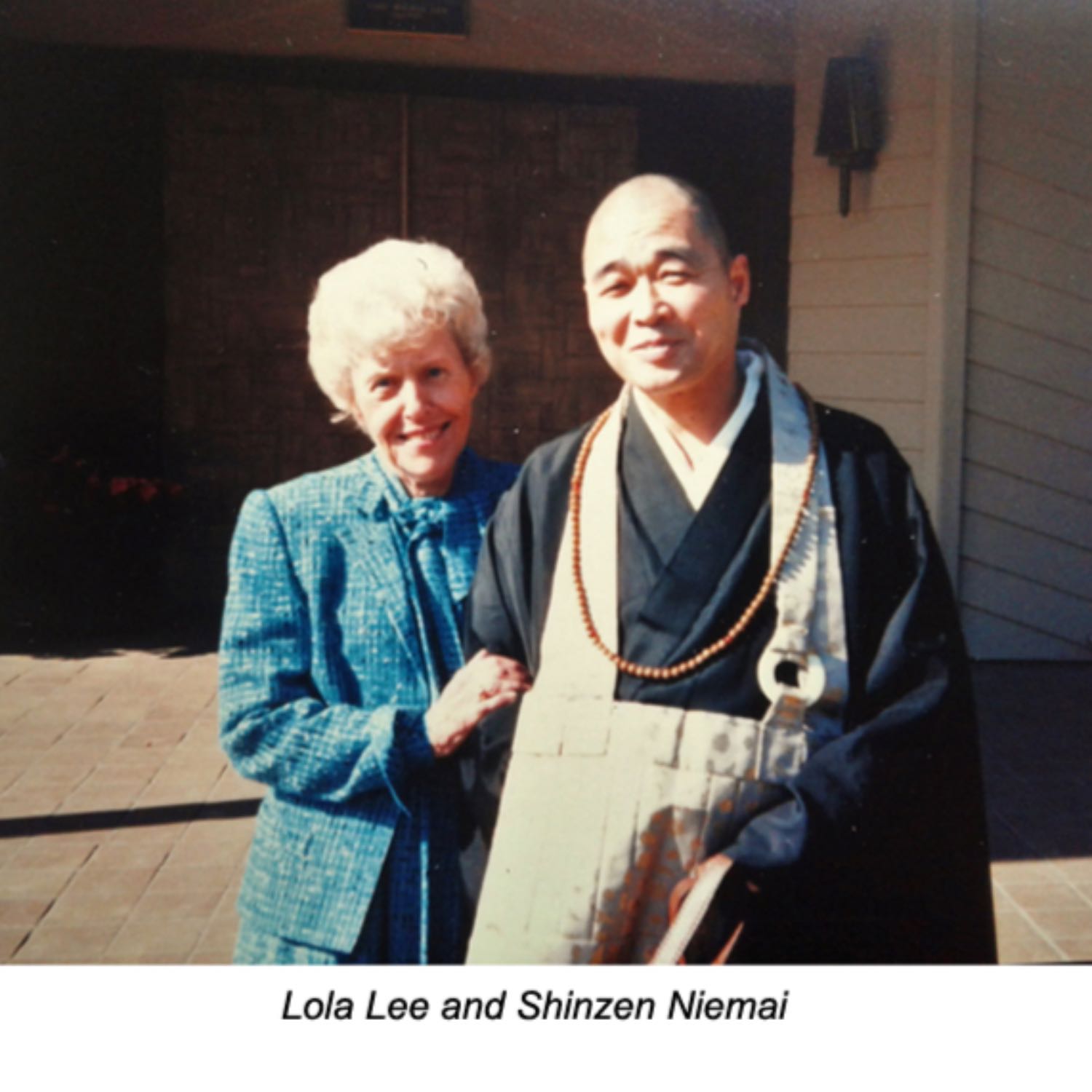
from Talks by Zen Roshi, Lola McDowell Lee
Zen Roshi, Lola McDowell Lee, explores the meaning of the Dhammapada -Twin Verses.She discusses the importance of thought and self-mastery in shaping one's experience. We are what we think. All that we are arises with our thoughts. With our thoughts we make the world.An impure, conditioned mind leads to suffering, while a pure, unconditioned mind leads to unshakable happiness. We have, over and over, a choice of conduct: the easy path of catering to personal ego desires, or the difficult path of conscious transformation.The negative path is effortless and offers temporary satisfaction. The positive path requires a great deal of effort and an active choice to go against one's conditioned nature.For instance those who showed up this morning for Lola’s talk. It would’ve been easier, she says, to sleep in and relax. Their attendance was a choice to take the more difficult path toward awakening.What is vital versus what is trivial? Using the metaphor of a poorly thatched roof, she warns that passion will seep through an untrained mind, while a well-trained mind remains impervious.Lola examines the various Buddhist traditions that emerged after the Buddha's death. She describes the division into the Hinayana (Small Vehicle) and the Mahayana (Great Vehicle).The practical method for self-transformation is Vipassana—the effortless effort meditation. This technique involves simply sitting and observing what rises in the mind and body without judgment. To enter this state, one must "stay out of the picture" of mental activity, serving purely as the witness.The central goal of Buddhism is the enlightenment experience (Bodhi), which means "to wake, to become aware of." This awakening is a shift from a life of relativity and conditioning to an unconditioned life defined by non-attachment, non-discrimination, and non-ego.Enlightenment is a personal experience. Value your own experiences and exert yourself. From the sutras: "By oneself is one purified."The story of Gautama's path to becoming the Buddha.The meanings of the term Dhamma (or Dharma), which is linked to Pada (the path). Dhamma means: Ultimate Reality. Pada is the path to this ultimate truth.We need to drop conceptual thinking. Like a seed: the outer seed rots away to leave the essence from which the entire tree grows, The ego and thoughts must disintegrate to reveal the truth within.Ultimately, the goal is to find the "space before the thought." Or the state of "no mind." July 26, 1987
Embed this episode
NOW PLAYING
The meanings of various Buddhist terms, practices & traditions. July 26, 1987
No transcript for this episode yet
Similar Episodes
No similar episodes found.
Similar Podcasts
No similar podcasts found.