
EPISODE · Jun 17, 2026 · 9 MIN
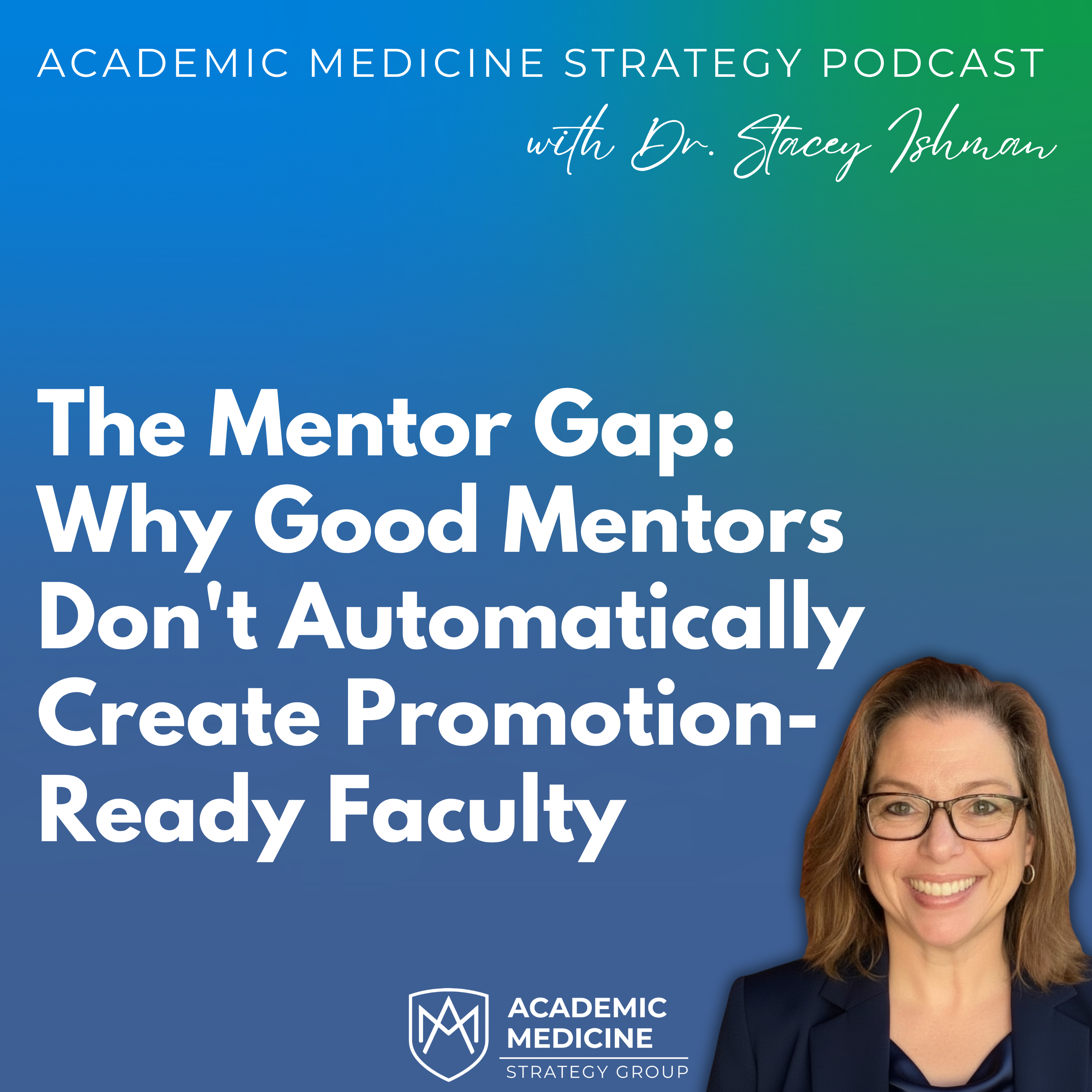
The Mentor Gap: Why Good Mentors Don't Automatically Create Promotion-Ready Faculty
from Medical Mentor Coaching Podcast · host Dr. Stacey Ishman
Mentorship is one of the most commonly recommended strategies for success in academic medicine, yet many early-career physicians still struggle to achieve promotion despite having excellent mentors. In this episode, Dr. Stacey Ishman explores the limitations of mentorship alone and explains why intentional career infrastructure is often the missing piece. She discusses how mentorship, sponsorship, and structured career development work together to create a clear path toward long-term academic success. No need to take notes—visit the blog for a full summary of key insights. If you’re interested in working with Academic Medicine Strategy Group, visit www.amedsg.com to learn more about our programs designed to help you build a clear, strategic path to promotion, research, and career advancement. Key Points: [00:00] Mentorship Matters—But It Isn't the Whole SolutionResearch consistently shows that mentorship supports career development and satisfaction, but the evidence linking mentorship alone to promotion outcomes is less clear. [01:30] What Mentors Can—and Cannot—ProvideMentors offer guidance, perspective, advocacy, and sponsorship. However, they cannot replace the systems and structures needed to execute a long-term career strategy. [02:15] The Questions Many Faculty Never AskDr. Ishman shares a personal example of withholding important career questions despite having an outstanding mentor, illustrating why some developmental needs go beyond the mentor relationship. [03:20] Why Career Development Requires More Than AdvicePromotion readiness depends on ongoing support, implementation, and revisiting career plans as faculty gain experience and understand their institutional environment. [04:00] The Structural Limitations of MentorshipEven excellent mentors face constraints including limited time, competing responsibilities, different career experiences, and evolving promotion criteria that may not match today's academic landscape. [05:00] How Career Infrastructure Strengthens MentorshipStructured career development provides promotion frameworks, accountability, organization systems, and consistency that make mentorship more effective and actionable. [05:45] Evidence That Structure Improves OutcomesStudies of formal faculty development and mentorship programs demonstrate significantly improved promotion and funding outcomes when mentorship is supported by intentional career development infrastructure. [06:30] Three Actions to Take Right NowIdentify your most important promotion questions, actively seek answers from institutional leaders and mentors, and honestly assess whether you need additional career development support beyond mentorship. Summary: Great mentors are invaluable, but mentorship alone is rarely enough to create promotion-ready faculty. The most successful early-career physicians combine strong mentorship and sponsorship with intentional career infrastructure that provides clarity, accountability, and a roadmap for advancement. Building that structure early can help accelerate promotion, reduce uncertainty, and create a more strategic academic career. Please RATE, REVIEW, and FOLLOW the Academic Medicine Strategy Group Podcast on your favorite platform. If you are interested in getting in touch with us or providing topic suggestions, please: ● DM me on Instagram at @sishmancoach● Email me at [email protected]● Contact me at the website at www.amedsg.com
NOW PLAYING
The Mentor Gap: Why Good Mentors Don't Automatically Create Promotion-Ready Faculty
No transcript for this episode yet
Similar Episodes
Mar 26, 2026 ·1m
Jan 2, 2026 ·47m
Dec 21, 2025 ·46m