
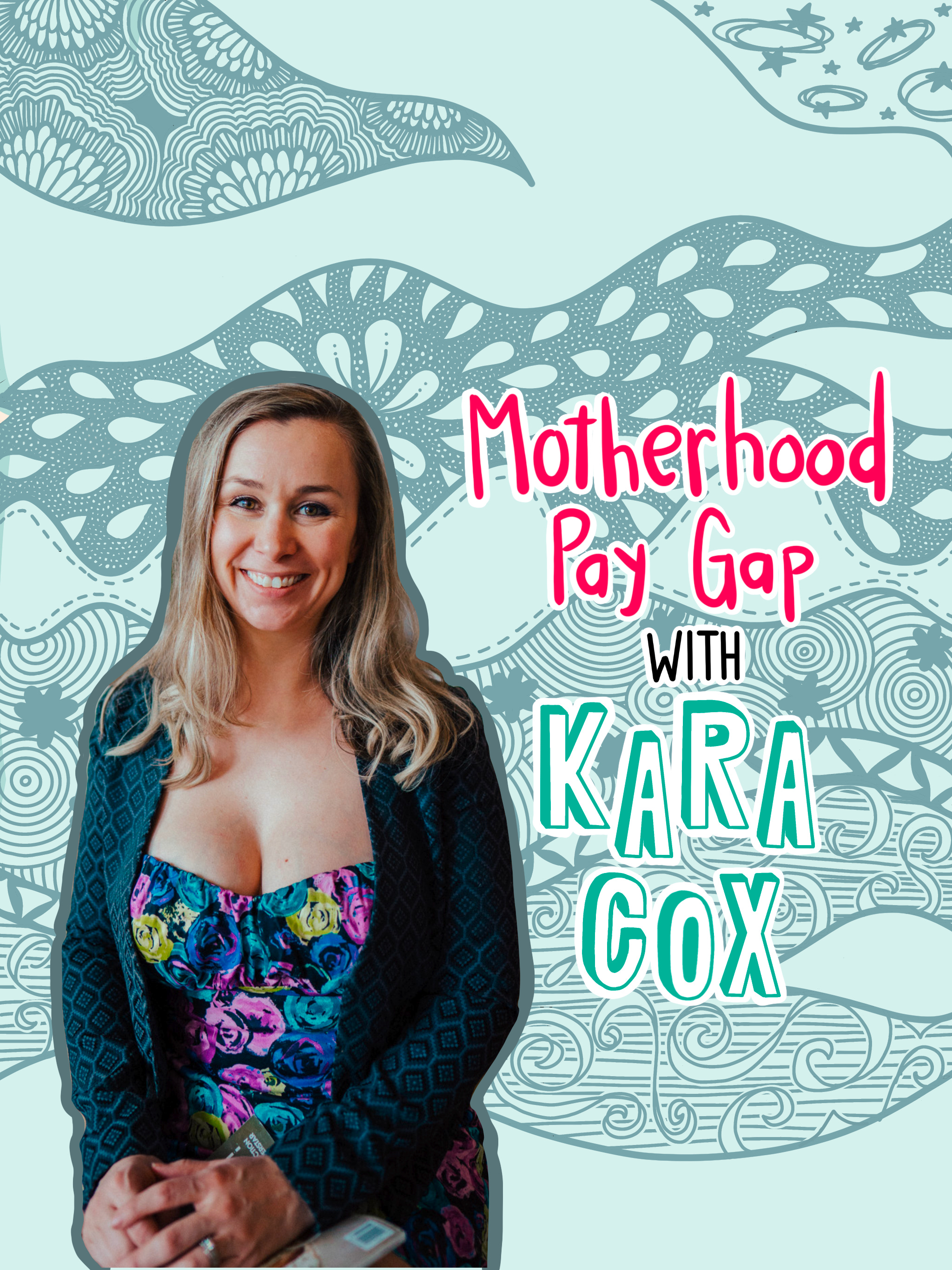
EPISODE · Jul 15, 2025 · 46 MIN
The Motherhood Pay Gap
from Fem & STEM Podcast · host JoCee
On average, women make 82 cents on the dollar a man makes. But this isn’t new news, quite the opposite. The gender pay gap has been hovering at 80 cents on the dollar since the late 1990s. There hasn’t really been progress decades, and there are actually been moments when the pay gap sharply widened, like during the pandemic when women were leaving the workforce.But while on average progress on the gender pay gap, individual groups of women have been able to catch up, specifically new grads. Currently, both men and women who graduate college with a bachelors degree in the same field getting the same job will be offered jobs with the same salary. There isn’t really a pay gap during the beginning of a career. This changes as they progress in their career.To paint this picture — when 2 hypothetical new grads, one male and one female, graduate with the same degree and start the same job, their starting pay will be the same. But by the time both these hypothetical people reach the age of 35, their pay gap will haven risen sharply, with the woman making just 83% of the man. When they reach the age of 55, her pay will be only 79% of his.Recent studies show that the pay gap is majority of the pay gap is attributed to motherhood.I know what the critics will say: “It’s not uncommon for a woman to put her career on pause when becoming a mother, and you can’t expect her to be paid if she isn’t in the workforce.” And this is true, some women do step out of the workforce once having kids. But most don’t. In 2022, 70% of mothers ages 25 to 34 had a job or were looking for one. Once women have children, even if they don’t put their career on hold - because after all 72% of mothers with children under 18 are still in the workforce — they will be passed up for promotions, and their pay will stall.A common troupe is that mothers aren’t as focused on their career, a viewpoint that isn’t shared with fathers. Once a man becomes a father, he won’t experience a pay penalty, but rather a pay increase, this is called the Fatherhood Pay Premium. This premium results in the gap that working mothers make only 68.9% of working fathers. Ouch.There is this often quoted statistic — that the largest pay gap is between women with children and women without children. This is where I thought I would start my research into the motherhood pay gap, but what I found shocked me.While it is true that there is a massive pay gap between women with kids and women without kids, this can be explained almost entirely by education. Fewer women with children pursue education. Of employed women between the ages of 25 and 34, over 61% of the childless women will have a bachelors degree, while only 37% of mothers in the workforce of the same age will have children. Once education is accounted for, this gap shrinks substantially.So it made me wonder, how does education and earnings play into the decision to have children? I had always understood that the higher educated a woman is, the fewer children she will have, and this is true, women without college degrees do have the most children. But this is only true up to a point, and that point is exactly at the bachelors degree. Once a woman is college educated with a bachelors degree, her fertility rate actually goes UP the more educated she is.In the United States, women with a bachelor’s degree average 1.284 children apiece, while those with a master’s degree average 1.405, and those with a doctorate or professional degree average 1.523.This is a new trend. In the 1960s up until the 1990s, this wasn’t true, the age old idea that the less educated a women was, the fewer kids she would have, remained.So what changed?Besides the obvious ones — contraception and abortions are more accessible, women are more educated representing over 52% of bachelors degrees, teenage pregnancy is at an all time low — essentially eliminated all together (thanks to the afore mentioned access to contraception and abortions), but also childcare costs have sky rocketed, individual style families are the norm, and cultural expectations now require more parental engagement in a Childs life — think Pinterest perfect birthday parties, planning play dates instead of just sending the kids outside, even volunteering at schools which takes up more time then it did just one generation ago. But also we had the war on the Welfare Queen where society yelled loudly at women “don’t have children you can’t afford”.While much has changed, there is something that hasn’t changed. The desire to have children. 90-92% of women want children, and most women do have children. But something more interesting is occurring — recent studies show that in places with below replacement fertility rates (the United States, Europe, even Nordic Countries, etc), most people want more children than they are currently having. To oversimplify a recent study looking at the history of childrearing desires in Europe, most people want two children. The problem is that having children is less and less accessible — that is, unless you have money. Which brings us back to the education conversation.While higher education doesn’t guarantee a higher income, it is a good proxy for income levels, and it might explain why the most highly educated are having the most children — they are the ones who can afford it. Children are a luxury item. Not just because childrearing is incredibly expensive, and there is not much community or government support (but lots of judgement), but also because those who make more money are the ones who have access to having children through IVF and surrogacy. An option not available to people who don’t have 15-30 thousand dollars lying around — a completely inaccessible cost for the majority of American’s who can’t even afford a $1000 emergency expense, let alone a $30,000 IVF cycle.As you’ll hear later, having children is an expensive endeavor — from the obvious and immediate medical expenses of childbirth which is an average of $18,000 in the US, to childcare which now exceeds the price of college tuition in 38 states, but also to the non immediate financial impact that is the financial hit on the mother’s career — either elective or not — an experience so common it has a name the Motherhood Pay Penalty.To dive deeper into the Motherhood Pay Penalty, I am excited to bring on the show my former podcast host, Kara, who herself is a mother of two and runs a new podcast where she interviews women leaving maternity leave, entering the workforce, and experiencing the motherhood pay penalty. This is the topic she studies, and someone who knows the ins and outs of the financial impacts of motherhood — so enjoy our conversation on the motherhood pay penalty.If you enjoyed this podcast episode, please consider subscribing to future episodes: This is a public episode. If you would like to discuss this with other subscribers or get access to bonus episodes, visit femstem.substack.com
NOW PLAYING
The Motherhood Pay Gap
No transcript for this episode yet
Similar Episodes
Mar 26, 2026 ·1m
Jan 2, 2026 ·47m
Dec 21, 2025 ·46m