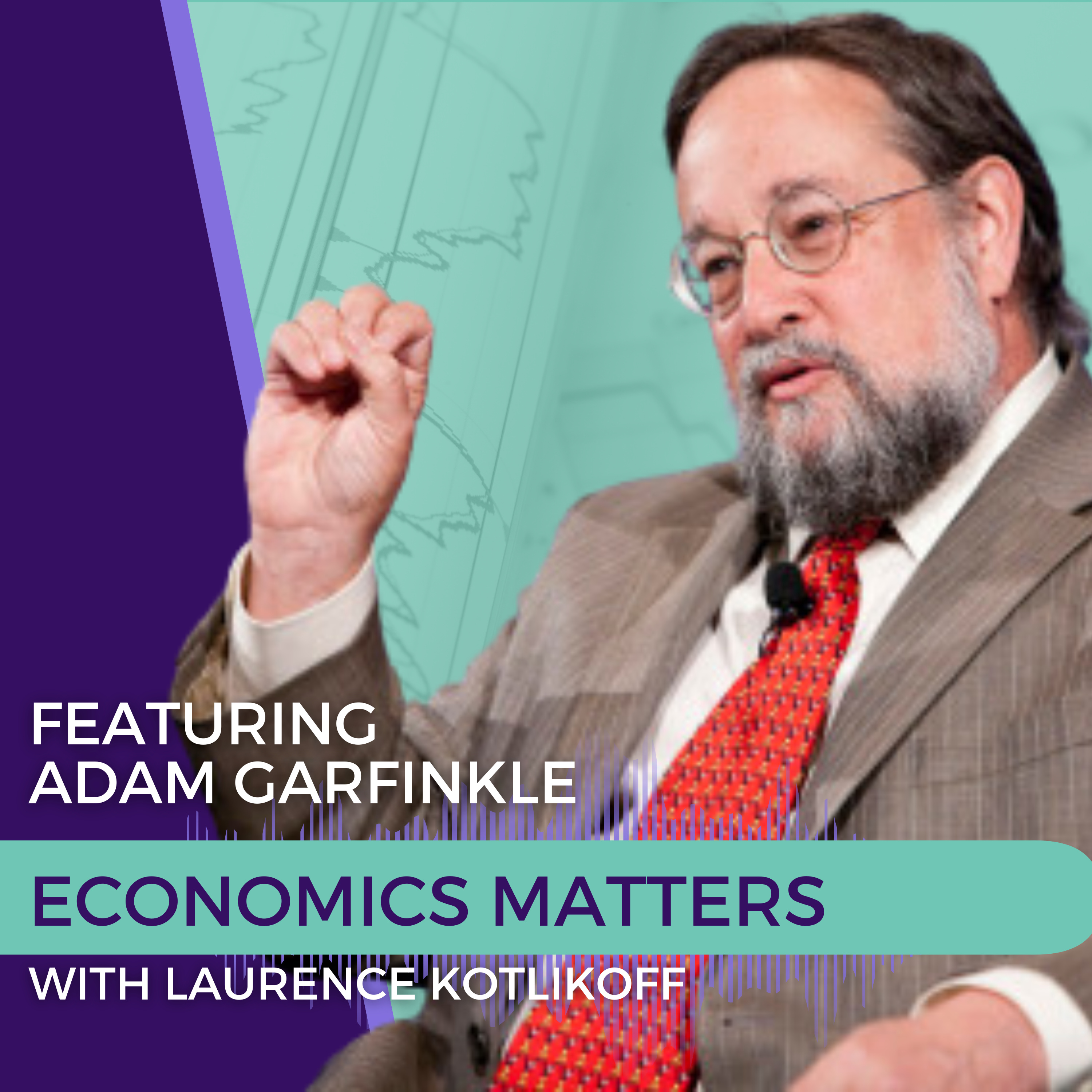
The Regime We Were Supposed to Topple Just Got Stronger episode artwork

EPISODE · Jun 25, 2026 · 1H 7M

The Regime We Were Supposed to Topple Just Got Stronger

from Economics Matters with Laurence Kotlikoff · host Economics Matters

What if everything you've been told about the new Iran deal — and what "winning" the war even meant — is built on a comparison that doesn't hold up, and a strategic outcome that's the opposite of what most commentators are claiming?A 14-point memorandum is about to be signed in Switzerland, and the headlines are already calling it weaker than the 2015 Obama-era nuclear deal that Trump once tore apart. But according to Adam Garfinkle - veteran foreign policy analyst, former editor of The American Interest, and author of the forthcoming book The Age of Spectacle - that comparison is fundamentally misleading. The real story is stranger, more consequential, and far more relevant to your daily life than a nuclear negotiation: it's about what happens to a society that has stopped reading, stopped distinguishing fantasy from fact, and is now heading into midterm elections where the rules themselves may not hold.In this episode, Alex Kotlikoff sits down with Garfinkle to unpack the actual strategic outcome of the Iran conflict, why the regime may have emerged stronger rather than weaker, and how a deeper cultural shift (one Garfinkle has spent a career studying) is reshaping American democracy itself.[00:02:22] Why comparing this new Iran deal to the 2015 JCPOA is misleading — the contexts are not remotely the same, and treating them as equivalent distorts the real picture[00:06:39] How the Iranian nuclear program was actually crippled — not in the recent skirmishes, but in the "12-day war" of June 2025[00:09:13] The unintended consequence of targeting Iran's senior leadership — how the strikes may have produced a more nationalistic, more competent, and more entrenched regime rather than a weaker one[00:10:39] The psychological effect on ordinary Iranians — why surviving a massive US-Israeli attack has pushed many toward resignation rather than rebellion, delaying any hope of internal regime change[00:13:01] The "balance of interests vs. balance of power" principle — why raw military superiority doesn't determine outcomes, and how this echoes a lesson from Vietnam[00:29:00] Introducing "The Age of Spectacle" — Garfinkle's framework for understanding how digital technology is replacing shared reality with personalized fantasy[00:34:01] The "first post-literate American war" — how declining literacy has fundamentally changed the way Americans understand conflict, politics, and the world around them[00:40:28] The literacy statistic that explains a lot more than you'd think — an estimated 50-60% of American adults read at a sixth-grade level or below[01:04:00] What could happen to the 2026 midterms — the scenarios Garfinkle considers most plausible, including legal challenges to majority-minority districts and pressure campaigns at the local level[01:05:05] A possible fix already proven at the state level — how California depoliticized redistricting, and why Garfinkle supports a constitutional amendment banning gerrymandering nationwideAdam Garfinkle is a veteran international affairs analyst and writer, formerly the founding editor of The American Interest and a longtime contributor to U.S. foreign policy discourse. He publishes regularly on Substack at The Raspberry Patch, where he has written extensively on the Iran conflict since its outset. His forthcoming book, The Age of Spectacle, examines how communications technology has reshaped American political consciousness from the Korean War to the present day.The Raspberry Patch — Adam Garfinkle's Substack, including his ongoing series of essays on the Iran warThe Age of Spectacle — Garfinkle's forthcoming book on media, technology, and the erosion of shared reality (publication details pending)"Why Elite College Students Can't Read Whole Books" — referenced Atlantic article by Rose Horowitch on declining literacy among university studentsWhat You'll Learn in This EpisodeFeatured GuestResources Mentioned

What if everything you've been told about the new Iran deal — and what "winning" the war even meant — is built on a comparison that doesn't hold up, and a strategic outcome that's the opposite of what most commentators are claiming?A 14-point memorandum is about to be signed in Switzerland, and the headlines are already calling it weaker than the 2015 Obama-era nuclear deal that Trump once tore apart. But according to Adam Garfinkle - veteran foreign policy analyst, former editor of The American Interest, and author of the forthcoming book The Age of Spectacle - that comparison is fundamentally misleading. The real story is stranger, more consequential, and far more relevant to your daily life than a nuclear negotiation: it's about what happens to a society that has stopped reading, stopped distinguishing fantasy from fact, and is now heading into midterm elections where the rules themselves may not hold.In this episode, Alex Kotlikoff sits down with Garfinkle to unpack the actual strategic outcome of the Iran conflict, why the regime may have emerged stronger rather than weaker, and how a deeper cultural shift (one Garfinkle has spent a career studying) is reshaping American democracy itself.[00:02:22] Why comparing this new Iran deal to the 2015 JCPOA is misleading — the contexts are not remotely the same, and treating them as equivalent distorts the real picture[00:06:39] How the Iranian nuclear program was actually crippled — not in the recent skirmishes, but in the "12-day war" of June 2025[00:09:13] The unintended consequence of targeting Iran's senior leadership — how the strikes may have produced a more nationalistic, more competent, and more entrenched regime rather than a weaker one[00:10:39] The psychological effect on ordinary Iranians — why surviving a massive US-Israeli attack has pushed many toward resignation rather than rebellion, delaying any hope of internal regime change[00:13:01] The "balance of interests vs. balance of power" principle — why raw military superiority doesn't determine outcomes, and how this echoes a lesson from Vietnam[00:29:00] Introducing "The Age of Spectacle" — Garfinkle's framework for understanding how digital technology is replacing shared reality with personalized fantasy[00:34:01] The "first post-literate American war" — how declining literacy has fundamentally changed the way Americans understand conflict, politics, and the world around them[00:40:28] The literacy statistic that explains a lot more than you'd think — an estimated 50-60% of American adults read at a sixth-grade level or below[01:04:00] What could happen to the 2026 midterms — the scenarios Garfinkle considers most plausible, including legal challenges to majority-minority districts and pressure campaigns at the local level[01:05:05] A possible fix already proven at the state level — how California depoliticized redistricting, and why Garfinkle supports a constitutional amendment banning gerrymandering nationwideAdam Garfinkle is a veteran international affairs analyst and writer, formerly the founding editor of The American Interest and a longtime contributor to U.S. foreign policy discourse. He publishes regularly on Substack at The Raspberry Patch, where he has written extensively on the Iran conflict since its outset. His forthcoming book, The Age of Spectacle, examines how communications technology has reshaped American political consciousness from the Korean War to the present day.The Raspberry Patch — Adam Garfinkle's Substack, including his ongoing series of essays on the Iran warThe Age of Spectacle — Garfinkle's forthcoming book on media, technology, and the erosion of shared reality (publication details pending)"Why Elite College Students Can't Read Whole Books" — referenced Atlantic article by Rose Horowitch on declining literacy among university studentsWhat You'll Learn in This EpisodeFeatured GuestResources Mentioned

NOW PLAYING

The Regime We Were Supposed to Topple Just Got Stronger

0:00 1:07:27

No transcript for this episode yet

We transcribe on demand. Request one and we'll notify you when it's ready — usually under 10 minutes.

MG Show MG Show The MG Show, hosted by Jeffrey Pedersen and Shannon Townsend, is a leading alternative media platform dedicated to uncovering the truth behind today’s most pressing political issues. Launched in 2019, the show has grown exponentially, offering unfiltered insights, comprehensive research, and real-time analysis. With a commitment to independent journalism and factual integrity, the MG Show empowers its audience with knowledge and encourages active participation in the political discourse. French Your Way Jessica: Native French teacher founder of French Your Way Boost your French listening skills and test your comprehension with this one of a kind series of podcasts. Get the chance to listen to a real conversation between native speakers talking at normal speed AND customise your learning experience through carefully designed sets of questions (2 levels of difficulty) available for download at www.frenchvoicespodcast.com. All interviews also come with the transcript. French teacher Jessica interviews native speakers of French from around the world who share a bit of their life and passion. Where else would you meet in one same place a French yoga teacher based in Melbourne, a soap manufacturer from Provence, or a couple cycling around the world? That Hoarder: Overcome Compulsive Hoarding That Hoarder Hoarding disorder is stigmatised and people who hoard feel vast amounts of shame. This podcast began life as an audio diary, an anonymous outlet for somebody with this weird condition. That Hoarder speaks about her experiences living with compulsive hoarding, she interviews therapists, academics, researchers, children of hoarders, professional organisers and influencers, and she shares insight and tips for others with the problem. Listened to by people who hoard as well as those who love them and those who work with them, Overcome Compulsive Hoarding with That Hoarder aims to shatter the stigma, share the truth and speak openly and honestly to improve lives. The Small Business Startup School – Business Notes | Financial Literacy | Retail Psychology – For Professionals & Entrepreneurs The Small Business Startup School Inc. Starting or buying a small business? While personal circumstances may vary, business patterns remain timeless. On The Small Business Startup School, we explore strategies, insights, and practical solutions to help entrepreneurs confidently navigate their journey.Hosted by Ola Williams—a retail entrepreneur, fintech founder, and financial coach with over two decades of experience—this podcast marries financial awareness and retail psychology with optimism to deliver actionable takeaways.Join us to learn, grow, and connect as we uncover the keys to business success.Let’s continue to learn together and be encouraged to keep on connecting!

Frequently Asked Questions

How long is this episode of Economics Matters with Laurence Kotlikoff?

This episode is 1 hour and 7 minutes long.

When was this Economics Matters with Laurence Kotlikoff episode published?

This episode was published on June 25, 2026.

What is this episode about?

What if everything you've been told about the new Iran deal — and what "winning" the war even meant — is built on a comparison that doesn't hold up, and a strategic outcome that's the opposite of what most commentators are claiming?A 14-point...

Can I download this Economics Matters with Laurence Kotlikoff episode?

Yes, you can download this episode by clicking the download button on the episode player, or subscribe to the podcast in your preferred podcast app for automatic downloads.
URL copied to clipboard!