
EPISODE · Nov 14, 2021 · 10 MIN
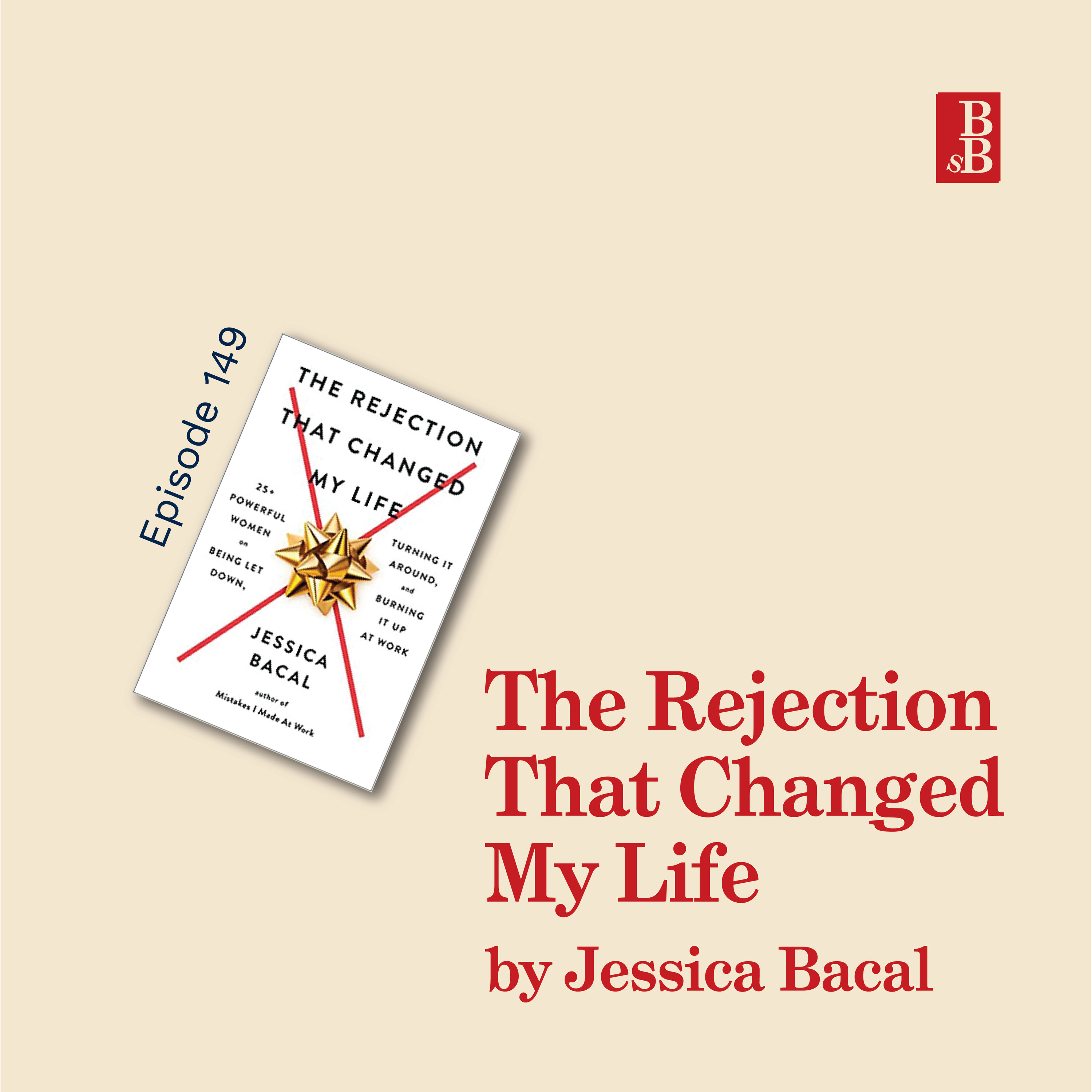
The Rejection That Changed My Life by Jessica Bacal: why we need to practice being rejected more
from Steph's Business Bookshelf Podcast · host Steph Clarke
About the book Rejections don’t go on your resume, but they are part of every successful person’s career. All of us will apply for jobs that we don’t get and have ambitions that aren’t fulfilled, because that is part of being a working person, part of pushing oneself to the next step professionally. While everyone deserves feel-better stories, women are more likely to ruminate, more likely to overthink rejection until it becomes even more painful-a situation that the women in this collection are determined to change, and in so doing, normalize rejection and encourage others to talk about it. Source: www.amazon.com About the author Jessica Bacal is director of Reflective and Integrative Practices and of the Narratives Project at Smith College. She leads programs to help students explore identity and find resilience in community. She also teaches a course called Designing Your Path, which guides students to consider questions like: What is your story? Where have you been and where are you going? What matters to you? What skills do you need to pursue what matters? Before her career in higher education, she was an elementary school teacher in New York City, and then a curriculum developer and consultant. She received a bachelor’s degree from Carleton College, an MFA in writing from Hunter College, and an EdD from the University of Pennsylvania. She lives in Northampton, Massachusetts, with her husband, two children, and two dogs. Source: https://www.jessbacal.com/bio Big idea #1 — Rejection is not the end Fundamentally, the underlying message of this book is that rejection is not the end of anything. It’s not the end of your career, an idea, a business, a project, a book, whatever it is that has been rejected. But so much weight is carried by that word. Even the word rejection, carries so much shame, embarrassment, and ego bruising. And women seem to currently experience this slightly differently to men. And that’s not our fault. There’s a quote in the book that says “rejection can reinforce a message that many of us are receiving all the time, in small ways, that you don’t belong”. Research done at London Business School showed that; “female executives are less likely than their male peers to reapply for jobs in leadership after being turned down. And this isn’t because women are less resilient or persistent, but because they’ve already experienced years of small rejections in work cultures that generally value maleness more. They’ve felt a lack of belonging that leads them to believe that it would be foolish to reapply. And for women of color, rejection at work is often compounded by racism”. So upfront it sets out that this is not a book for women about “fixing the women”. It’s about sharing the experience of rejection by women and what that means, feels like, and looks like for women. And that largely, this is systemic rather than the fault of us as women. There’s also a big piece in realizing that most things, and most people, get rejected at some point. From academic papers, course admissions, funding rounds, and book deals. And it’s not always a reflection of you or your work. Even more importantly, it’s realizing that everyone experiences it, but often it’s kept hidden, it’s our own little shame or embarrassment that we carry with us. Therefore, we all just end up thinking it’s just us experiencing rejection, and just us that isn’t good enough to be accepted for something. Big idea #2 — Go around it Pretty much every story in this book involves having to face and respond to some kind of rejection. It’s feeling the feelings, and using those feelings to still go and do the thing that needs to be done. It’s going around the rejection that results in sometimes a great piece of science, in the example from Angela Duckworth, or a new community and new audience, in the example from Polly Rodriguez, or a new way of working more authentically in Laura Huang’s story. As Elizabeth Bell puts it in the book: “I think I realized in some way that if you don’t get what you want in the way that you want it, you can still have it. You just need to tolerate a different path”. Similarly, Michelle Tea says; “when someone rejects your creative work, it just means that they can’t see a path for it. It doesn’t mean that there isn’t one.” All of these statements and stories are great reminders as we’re doing our work, putting stuff out there, and being slightly vulnerable by putting ourselves in positions where people can judge or make comment on our work. But these rejections will often force more creative paths, and maybe ones that may even result in an even better outcome, as several of the women in the book suggest was the case from the rejection that they faced. Big idea #3 — Practice rejection The first thing we can do to practice rejection is to ask ourselves ‘what is the worst that can happen, and can I live with that?’, in order to steel ourselves and prepare for being okay with the worst happening (or realizing that the ‘worst’ maybe isn’t even that bad). Rejection is ultimately a muscle, and Caitlin Kirby worked her rejection muscle so much that she actually had enough rejection letters to wear as a skirt to her doctorate dissertation defense. She collected all of the rejection letters that she had whilst doing her doctorate and turned them into a skirt. The comments she got from other students or other doctorate candidates was that they hadn’t realized that every doctorate candidate experiences that level of rejection, and that no one ever talks about how much rejection you have to go through in order to get a doctorate. There’s some exercises in the book about getting better at rejection. One of them is to get 10 no’s . You write down a heap of things that you could ask for, and then go out and ask for them. Yes’s don’t count, you have to get 10 no’s. If you write down 10 things, get five ‘yes’ and five ‘no’, you have to carry on until you get 10 no’s. The ‘no’ is all that counts. The other thing to practice is talking about rejection. So many of the stories in the book touch on women initially feeling like it was just them, but many found a community where they could share formally or informally and help others with their rejection too. Support my book habit: https://www.buymeacoffee.com/stephsbookshelfSee omnystudio.com/listener for privacy information.
Embed this episode
NOW PLAYING
The Rejection That Changed My Life by Jessica Bacal: why we need to practice being rejected more
No transcript for this episode yet
Similar Episodes
No similar episodes found.
Similar Podcasts
No similar podcasts found.