
EPISODE · May 16, 2026 · 8 MIN
The spinning drum: why divorce still felt like freedom
from Divorced me Podcast · host Missy Rönsch
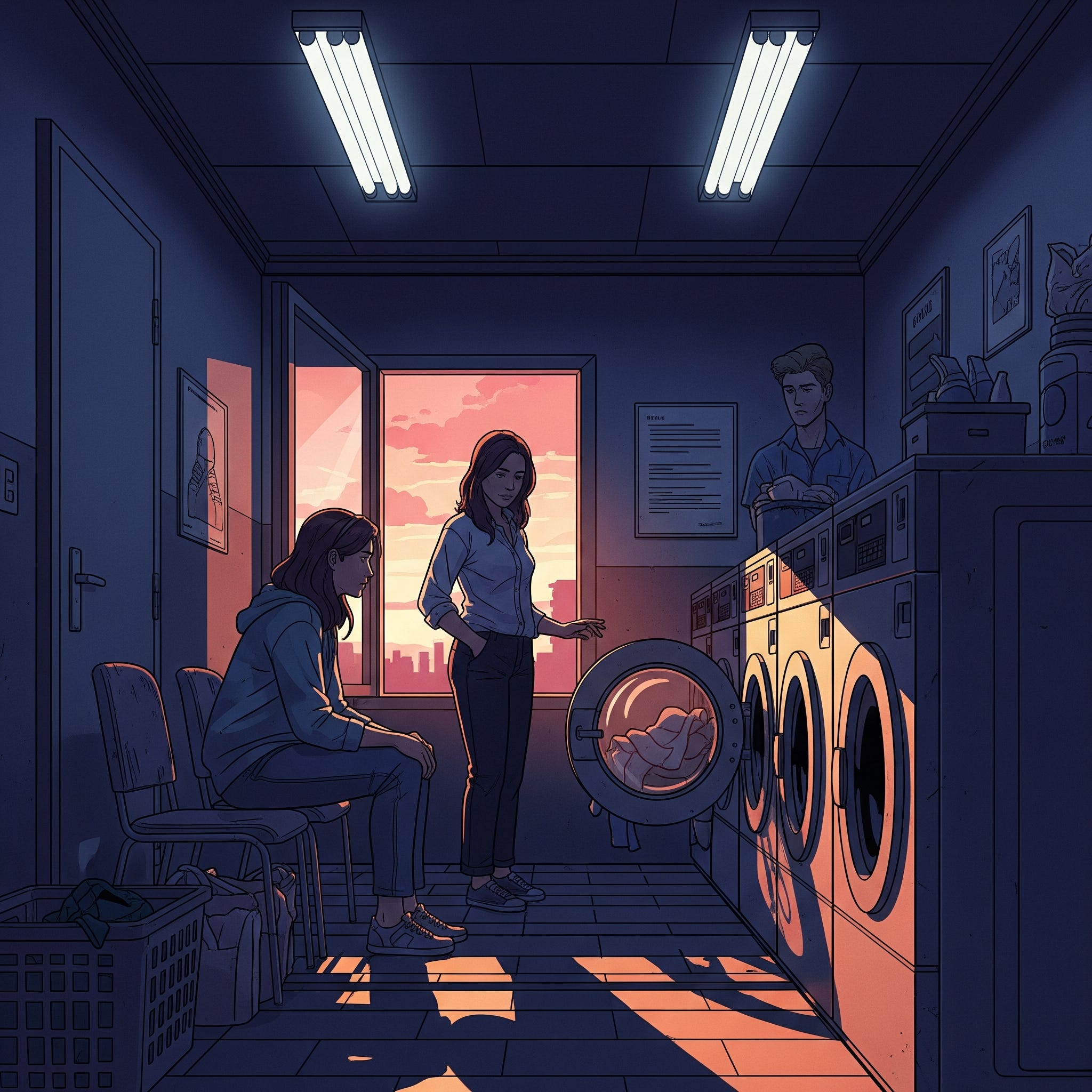
[From my diary]January, 12th 2023I move out two weeks ago. Today, I sat in a self-service laundry and stared at the spinning drum. I … just enjoyed doing simple things by myself. Enjoyed taking care of myself.My ex-husband was very kind. He took over all household tasks. In the end, I was barely doing anything for our home at all. I felt useless. Not trusted.One of the truly harmful mistakes in my marriage was the fact that I started to parentify my husband. And I think, in response, he started “childifying” me.He could had become a great father for our non-existing kids …It took me years (and a divorce) to see the dynamic for what it was.When one partner takes on too much of the practical care in a marriage, the relationship can quietly drift into a parent-child dynamic. The over-functioning partner becomes the caretaker; the under-functioning one becomes the cared-for. Both lose something, even when the arrangement looks generous from the outside. The sense of relief many people feel after leaving such a marriage is not just relief from the conflict. It is the return of basic adult agency.When kindness becomes a quiet form of controlThe dynamic has a name in family-systems therapy: the overfunctioning/underfunctioning couple. One partner takes on more and more of the practical, emotional, or logistical labor. The other does less and less. From outside it can look like an unfair distribution being borne with grace. From inside, it slowly shapes both people into roles they may not have agreed to.What makes this dynamic so difficult to see from within is that the overfunctioning partner is often genuinely kind, and the help is genuinely useful. There is no obvious villain, no withholding, no cruelty. The husband doing all the household tasks is not punishing his wife — he is taking care of her. The trouble is that, over time, being taken care of can stop feeling like care and start feeling like being slowly removed from one’s own life. The competence to do basic things atrophies. The sense of trust runs in only one direction.The underfunctioning partner often does not notice this happening until the relationship ends, at which point the sudden return of small tasks — doing one’s own laundry, choosing one’s own groceries, fixing one’s own small problems — feels surprisingly good. Not because the tasks themselves are pleasant, but because doing them is evidence that one is still capable of being a whole adult in the world.What "parentifying" and "childifying" actually doParentification is a concept from family therapy, originally used to describe children who take on parental roles for their own caregivers — emotional support, decision-making, sometimes physical care. It has been extended to adult relationships, where one partner takes on the role of parent to the other.The mirror process — childification — is less formally named but recognizable to anyone who has lived it. The partner who is being parented gradually loses the small markers of adult life: practical competence, decision-making authority, even the expectation that they will be the one to handle a difficult call or a household problem. They are not infantilized in a single moment. They are slowly retired from adulthood, task by task, with their consent each time.What makes this so painful in retrospect is the recognition that both partners contributed to the arrangement. Parentification rarely arrives unilaterally. One person offers; the other accepts; the offer is renewed; the acceptance hardens into expectation. By the time either notices, the dynamic feels like the natural shape of the relationship, and unwinding it would require either the parent-partner to stop helping or the child-partner to take back territory they have not occupied in years. Both moves feel like aggression. So the arrangement continues.Why the laundromat felt like freedomThis genuinely banal experience — sitting in a self-service laundry, watching the drum spin — is doing real work. It is one of the most ordinary scenes imaginable: a person alone with their own dirty clothes, in a public place full of strangers, performing a chore. It should not feel like much of anything.The relief was not about laundry. It was about being, again, the person who handles her own life. The drum spinning was evidence — slow, repetitive, undramatic evidence — that the small competencies were still there, that they had not been permanently outsourced, that adulthood had survived the marriage.Illustration provided by Supportive StrangerThis is why people leaving over-functioning partners often describe the early period after separation as strangely peaceful, even when they are sad.What it doesn't meanIt does not mean the ex-parther was wrong to be kind, or that his helpfulness was secretly manipulative. Most people who slip into the parent role in a marriage do so out of love, anxiety, or both — not out of a desire to control. The dynamic is structural, not characterological. It can develop between two genuinely good people who simply do not know how to do anything else.It also does not mean the partner who was childified was lazy or ungrateful. The slow retreat from household responsibility usually happens without conscious choice, often in response to subtle signals that one’s contributions were not quite trusted or not quite welcome. It is hard to keep folding the towels when one has been gently re-folding them for the third time.The painful insight — he could have become a great father for our non-existing kids — is exactly the right thing to notice. The over-functioning partner in this kind of marriage often does have the qualities that would have made them an excellent parent. The tragedy is that those qualities ended up directed at a person who needed a partner, not a child. The capacity for care was real. It was just deployed in the wrong direction.How a person rebuilds adult agency after years of being quietly parented — that is a longer story, and one for another post.The “science” anchors, for the further-reading section:* Parentification: Salvador Minuchin (structural family therapy) and Gregory Jurkovic (The Plight of the Parentified Child, 1997) are the foundational sources.* Overfunctioning / underfunctioning couples: Murray Bowen’s family-systems theory; Harriet Lerner’s The Dance of Anger and The Dance of Connection are the most accessible popularizations.* The relief after leaving a caretaking dynamic: less formalized in the research, but discussed extensively in codependency literature (Melody Beattie’s work, though it has its critics) and in newer writing on adult attachment.I write these reflections while building Supportive Stranger, a small iOS app for journaling through difficult moments.Thanks for reading Divorced me! Subscribe for free to receive new posts and support my work. This is a public episode. If you would like to discuss this with other subscribers or get access to bonus episodes, visit divorcedme.substack.com
Embed this episode
Ready to play
The spinning drum: why divorce still felt like freedom
No transcript for this episode yet
Similar Episodes
No similar episodes found.
Similar Podcasts
No similar podcasts found.