
EPISODE · Jun 26, 2026 · 16 MIN
The Struggle to Sound Human in the Age of AI
from Fully Expressed with Ayesha Hilton Podcast · host Ayesha Hilton
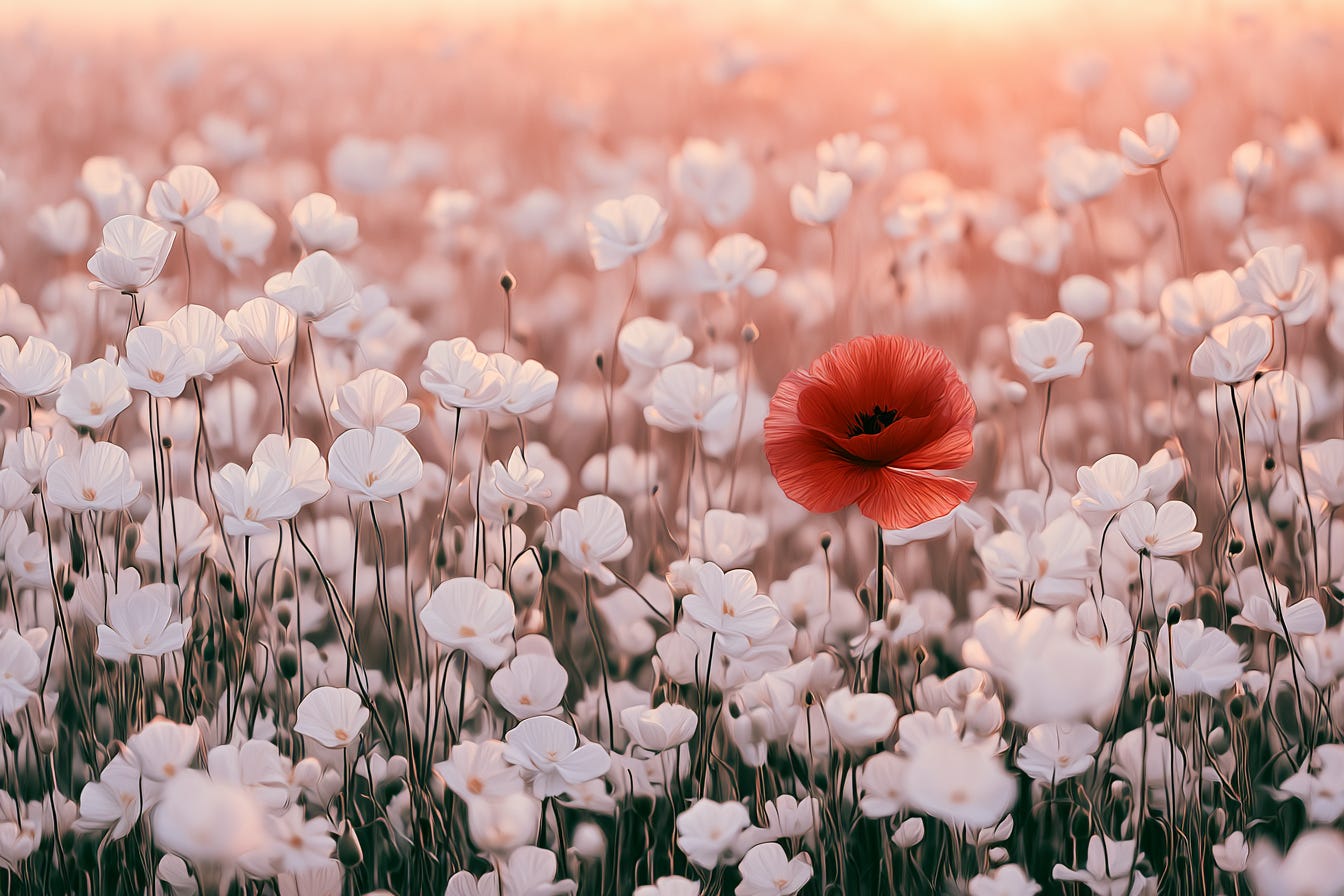
I have always loved technology and started my career working in IT. Which was very exciting as the company I worked for so cool and we felt like the darlings of the IT industry at the time (think Google in the early days).Then when AI came out into the public arena, I was an early adopter of teaching business owners and creatives how to use ChatGPT for all sorts of things and then Midjourney for image generation.I was excited about the creative possibilities of this technology and how we could use it for good (there are so many valid moral issues, but am not addressing them here).I was able to create beautiful images that as an amateur artist, I could never do. (I have generated over 80,000 images with Midjourney and so many of them have been stunning and I have fallen in love with them as have people who have used them.)Now as AI is even more ubiquitous and so much content is being spewed out of Large Language Models (LLMs), everything is starting to sound the same.When I open my Gmail, so many of the emails I receive are clearly generated by ChatGPT, Claude, or some other LLM. As you would have noticed by now, there are patterns in the writing that make it obvious that it’s AI. Now there are even AI tools to run your AI copy through to make it less AI-like.You’re more than likely seeing the same AI generated content in your inbox that I am, and perhaps, you’re evening doing it yourself as it’s such an easy way to craft an email to your list. If you’re writing on Substack, you might be using AI to help you generate your content.There are lots of people that aren’t good writers or need to communicate but English isn’t their native language. This is where LLMs can really help people. There are also many use cases for using AI to generate text like boring manuals, standard operating procedures, or instructions.But when we are trying to share our voice, to speak our truth, to invite people into our world - AI cannot do that for us, even if we do train it on 20 of our blog posts.We need to insert our being into our words. To share our stories, things that an AI wouldn’t know unless we tell it.The most listened to podcasts, and most read articles from my Substack (and I am newbie here) have been those that had emotion and made people feel. I shared about the death of step father Derek, and how he thought he had more time to do his work in the world. But life is not guaranteed. In that episode, I cried, I was feeling all the feels, and that is something that people resonated with.I also did an episode on escaping family violence. This had the most listens. Perhaps because people are naturally voyeuristic but also because it’s such a big issue for so many people around the world.It was vulnerable for me to share myself in those podcasts. I have found (and it is backed up by research) that vulnerability that connects us with each other. I am an over-sharer by nature, I don’t know why that is, but it’s definitely part of my character now.This ability to be vulnerable has seen me have the most interesting and extraordinary connections with people, including random strangers. I was on a cruise once and the tables in the dining room were very close together. Within just a few minutes, the elderly gentleman at the table next to me shared how his wife had died of dementia, how much money he had for his retirement, and what he was going to do next. My partner at the time was gob smacked at how easily this man, and other guests confided in me.My vulnerability is paired with a genuine curiosity. I am naturally curious and interested in people. And they feel this. I love random interactions with strangers that are profound in the moment, even though I mostly won’t see them ever again.There is a thing called a Vulnerability Hangover. Coined Brené Brown, it is the intense feeling of dread, shame, and/or anxiety that washes over you after you take an emotional risk. It occurs when you open up, share your true self, or set boundaries, and subsequently feel uncomfortable about having done so.I have experienced this both as the one who has shared too much, but more often as the one people who have shared too much of their personal story with me and then feel awkward. It’s been very hurtful over the years as I care about the person who has shared with me. Then sometimes, their feelings of shame or anxiety about having shared so much then makes them want to avoid me. I feel emotional sharing this with you now because it really has been painful in my deeper friendships.So it’s a fine line, this dance between sharing and revealing and then over doing it and feeling too exposed.In the age of AI, however, being real is the only thing that will set us apart from the slush and slop of AI generated content. When we show up imperfectly, in our messiness, and also in our glory.As an Aussie, many of us were trained not to shine too brightly. We are the land of the battlers where we champion underdogs and everyone deserves a fair go. Tall Poppy Syndrome is definitely part of Australian culture where highly successful, prominent, or ambitious individuals are criticized, resented, or “cut down to size.”Metaphorically, the “tall poppies” (those who rise above the rest) are “cut down” to bring them back to the perceived norm.Join a growing community of midlife women who are done playing small and ready to express their soul’s music.So it can be extra hard to put yourself out there in the public domain and speak your truth, especially if it makes you stand out. I know many people, who aren’t Australian, have also experienced this in their families where there was so much pressure to fit in, blend in, not stand out.But stand out we must. Sharing our wisdom, our knowledge, and our experiences is vital to the roles we want to play going forward.Amidst the AI slop where everything sounds the same, our voices are needed more than ever. But I have found myself analyzing my human writing style, crafted over decades of professional and personal use, and wondering if I sound like AI even when I am writing a piece.The other day, I even thought about leaving an intentional typo in a piece of writing as evidence of my humanity! I couldn’t do it, though. An accidental typo is one thing, but an intentional one, no.Because Large Language Models have been trained on so much good writing (the moral issue of this aside), it means that AI often writes well and uses common literary devices. Professional writers, who are trained in writing, also write well. And sometimes you can’t tell the difference.Things that stand out as AI, are also things I learnt to use in my degree in writing and communications. Questions. Em Dashes. The Oxford Comma (though I was never a big fan of it). And now even groupings of three which is also taught in marketing to list three things (or at least an odd number like 5 to create interest and tension). I am now often making lists of four.I am now noticing a type of beige-ness to AI generated writing. It’s now being trained on the content it has generated, so the same-ness is being further entrenched into the content. It spews out slop, eats the slop, and then makes even more slop.I guess what many are noticing is that AI generated content feels like AI generated content. Even if we can’t put our finger on it. Our spidey senses can pick it up, especially if we use AI a lot ourselves, like I do.So what are we to do?For me, I have felt the pressure to change my writing style that was honed over years of being a technical writer for technology platforms where words were used succinctly and clearly, to then more emotive writing after that career path ended, and now I find myself just trying to NOT sound like AI.I don’t have any concrete solutions. I just know that the human voice, that speaks from the heart, and from real experience, is worth so much more than AI generated words. And we have to keep sharing from this place of vulnerability and humanity.I love AI and will keep using it where appropriate and to save me time on boring tasks (yes, to that). But I will also keep honing my own craft, and speaking from my heart to yours.Here’s to living fully expressed!LoveAyeshaPS follow me on Substack for more real and deep content. https://fullyexpressedwithayesha.substack.com/ Get full access to Fully Expressed with Ayesha Hilton at fullyexpressedwithayesha.substack.com/subscribe
Embed this episode
Ready to play
The Struggle to Sound Human in the Age of AI
No transcript for this episode yet
Similar Episodes
No similar episodes found.
Similar Podcasts
No similar podcasts found.