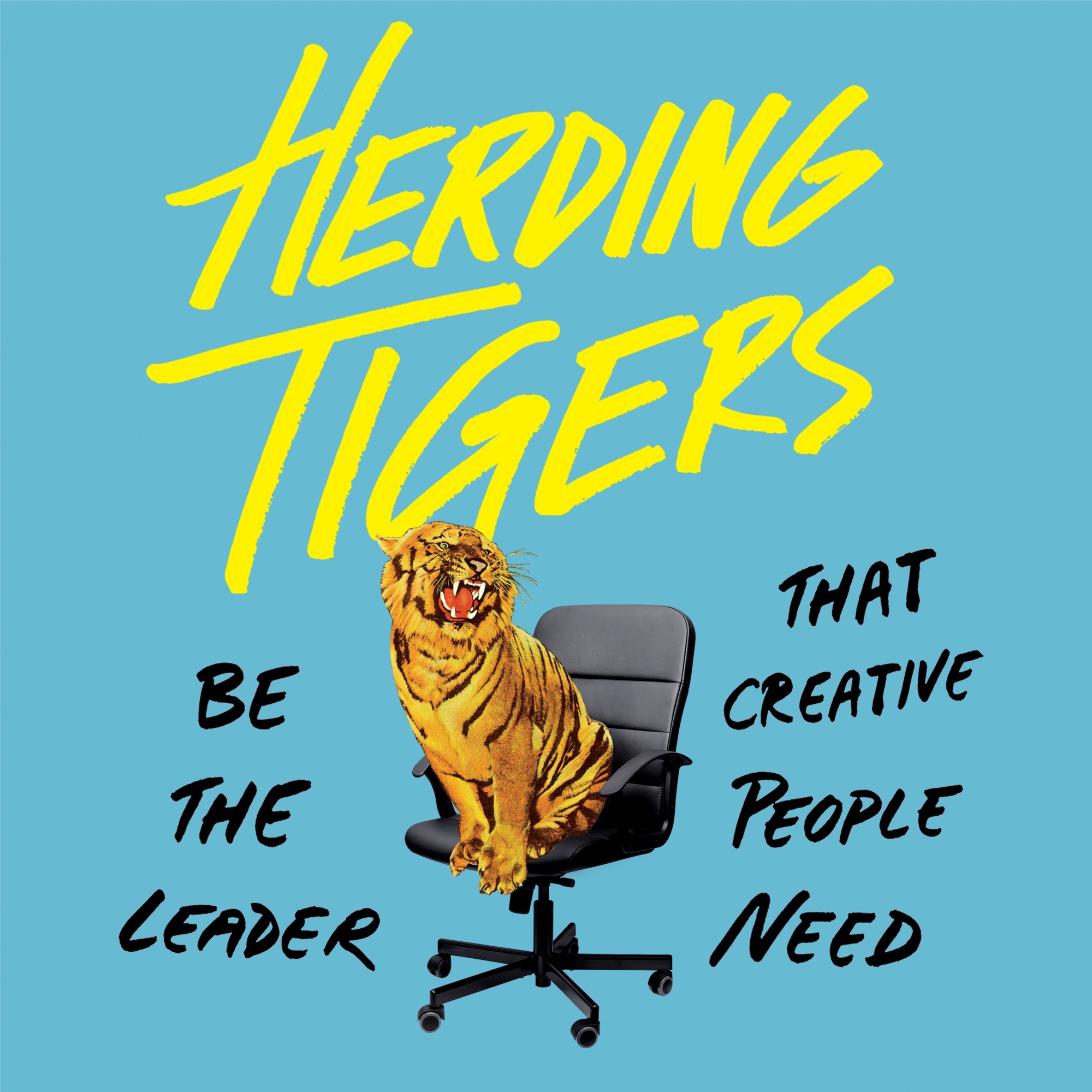
I'm hurting Tiger's podcast. My name is Todd Henry. This is the podcast that's all about being the leader that creative people need. Listen, creative work requires a unique approach, just kind of like as we've heard before, it's like building a bicycle while you're trying to write it.
And the problem is that often the approach is that we take with one project, don't translate directly to future work. So we're constantly having to figure out what my team needs, how I'm gonna give it to them, how I'm gonna protect the space they need to be able to do their work, how I'm gonna provide them with those resources, how I'm gonna negotiate with the stakeholders and make sure that I am protecting my team from last minute requests, from challenges that are gonna require them to do rework. And all of these things are part of the role of a leader. So on this podcast, we talk about some of those unique dynamics and some practical, tactical things we can do every day as leaders of creative people to help us be the leader that they need in order to do their best work.
And I mentioned in the first episode that many of these episodes are gonna feature a conversation between myself and Ricardo Crespo. And we're gonna talk about what we've learned and some of the things that he has observed over the course of time as he leads teams. This is what we could call maybe an in-between episode where I'm just gonna be sharing some insights and some thoughts that I learned in the course of writing the book, Hurting Tigers, that I think could help you be a better leader today. Some things you can practically do today to help you bring more of who you are to your team and to help them have what they need from you in order to do the chaotic, often unpredictable work that they are accountable for doing.
Speaking of Hurting Tigers, if you're interested in checking out the book, you can check it out at hurtingtiggers.net. There you can find out more about the book and also learn more about how you can get a copy now. Even though it doesn't release till January 16th, 2018, you can get a copy now. So go to hurtingtiggers.net or check it out wherever you buy books.
So today we're gonna talk about a couple of the unique dynamics that are involved in doing creative work. Listen, creative work is unlike any other kind of work, right? Because we're not just doing repeatable tasks, we're not just using applying processes to something new and we get a great result. As long as we do the process right, you're gonna get a great result.
You never know where great ideas are gonna come from, when they're gonna come, you never know what's gonna lead to great work. So you're kind of figuring out the process each time as you're engaging in the work, which also by the way is different each time. Now yes, there are systems, yes, there are processes, there are frameworks that help us do the work, but you never know how things are gonna go when you kick off a project. And so I wanna talk about a couple of the unique challenges that we face as leaders because as leaders, we are in the middle.
We are, yes, we're leading our team, we have to protect them, we have to provide for them, we have to stand in the gap for them, we have to make sure that we're clear about our expectations, but to make sure they have what they need from us in order to be able to do the really difficult work they're tasked with. But we also have to negotiate up. We also have to make sure that we are getting stakeholder buy-in, that we're advocating for the organization and advocating for the stakeholders on behalf of both of those entities with our team, to make sure that our team understands the stakes and understands the unique pressures, dynamics, expectations of our clients and of our organization as they're going about their work. So we're in the middle, we manage all kinds of pressures up and all kinds of pressures down.
And with that comes a couple of unique dynamics that we have to learn to manage, to deal with as leaders if we wanna be effective. The first one is right about hurting tigers is opacity. Listen, the problem is that a lot of what we do is opaque to the outside world. People don't understand what it takes to do the work that we do.
And so you've probably heard at some point, let's just let the creative handle that, right? That's a phrase that's often tossed out is if there's some mythical black box that objectives go into and great work pops out the other side, but people have no clue whatsoever what happens in the midst of that process. And to some degree that can be an advantage because you don't have to take them with you through the entire journey of doing the work and they don't have to understand as long as you get a great result. But the problem with that is that people often don't understand what it takes to accomplish requests that they give you.
They don't understand what it's gonna take for your team to be able to shift direction on the dime because there's been a lot of work that's already gone into this project. Now we have to go back and rethink and we strategize and do rework on something that we shouldn't have to do simply because we weren't diligent at the beginning of the process. And so we have to as leaders give some degree of visibility into that process so that stakeholders and organizations, your manager and your manager understand the consequences of decisions they're making and understand that every time they shift direction it's gonna cost something in terms of focus, assets, time, energy that your team needs to be able to do the work it's accountable for. So you have to provide some visibility into that process.
We're gonna talk over coming episodes about how to do that. How do you have those conversations with your manager, your manager's manager, with your clients and how do you get buy in along the way so that your team has what it needs to be able to do its work in a stable, predictable environment. The second thing that often accompanies creative work is insecurity. Now it's not always the case, right?
But sometimes with creative people, especially highly talented creative people comes the ever so pleasant parade of big egos and big insecurities. Now again, that's a bit of a stereotype but the reason that happens, and we all see this, right? The reason happens is because creative work requires that you put something of yourself into the work. It requires that you identify in some ways.
It's your intuition, it's your craftsmanship, it's your unique perspective that goes into that finished product and so it's really difficult to parse who you are from what you do. And I know people say all the time, well you are not your work, I think that's a bit simplistic and naive to say that, right? You are in some respects represented in your work because it's your intuition, your perspective, your skill that has gone into creating that. We become very attached to our ideas.
So when we put ourselves into our work in the way that we do with creative work, with that comes an accompanying sense of insecurity because if my work is being judged, what does that say about me, about my skill, about who I am? And so you have to be able to manage those dynamics with your team and help your team understand that we're creating on demand pros and that means that sometimes we're gonna win, sometimes we're not gonna win but that's okay, that's just the way it goes and we're doing work that matters to us and we're putting ourselves fully into it, we're engaging fully and freely in the process but we can't always control the end result. And so you have to be pushing your team out of its comfort zone, you have to push your team to take risks, to put itself into the work in a meaningful way but you also have to help your team understand that at the end of the day, if they engage fully and freely in a process in a healthy way, they produce a product they're proud of, they can't always control the results. And so that is part of your job as a leader.
And then you also have to balance the sort of delicate tension between ego and insecurity that often exists, right? You also have to quell those people on the team who always have to have their way, they always have to be the lead voice in any conversation and you have to help them understand that this is about the result we're going for, it's about the objective, it's not about them, it's not about them being able to sort of put their unique perspective into the work, it's about making sure that the team is producing the best work it can produce. And so you have to help people understand those places where maybe they're protecting themselves at the expense of the organizational objective. All right, and then finally, the third thing, so we have insecurity, the third thing that's pretty common within creative work that you have to manage is a leader is subjectivity.
Oh, by the way, you're gonna spend days, weeks, months, years working on something and then you're gonna put it in front of someone and they're gonna say, nah, that's really work for me, right? They're gonna give it half a second of partially considered attention and they're gonna determine that it's not the right direction. That's a little overly simplistic, I know, but that's what it can feel like, because often the work we do is largely subjective, it's based on what we think is best, our strategy, our approach, our ideas, our intuition and our unique perspective and as a result, sometimes other people don't share that perspective. So as a leader, we have to bring our organization, our clients and even our team along in that decision making process so that they can get from point A to point B and understand not just what they're looking at but why the little decisions were made along the way that led to that result.
So opacity, insecurity, subjectivity, these are three things that we have to manage, three dynamics we have to manage as leaders of creative people. And we're gonna talk in future episodes about what it is creative people need from us. But now I encourage you today to think about a couple of questions. Number one, where do you need to give better visibility into your process to your manager, to your manager, maybe to your clients, how can you better help them understand what it takes to get the work done so that they can be better partners with you in the process of accomplishing your objectives?
Is there a place you need to give more visibility? Frankly, there are some leaders who push others out of the process because they wanna protect that magic black box, right? That's the value, it's the secret, the secret sauce that they bring and that doesn't really help your team and it doesn't really help your client. Now there is a limit to the amount of visibility you wanna give people into the process but is there a place where you need to have strategic conversations about decisions that are being made now and ensure that you're getting buy-in so that you're not having to re-litigate conversations later in order to get to the right answer because people simply weren't being diligent in the moment and that's gonna cost your team a tremendous amount of focus and time and energy.
So is there some visibility you need to give people into your process to counteract some of that opacity? Is there any conversation that you need to have right now related to insecurity that I talked to in the course of writing, Herding Tiger said that one of her early managers had a philosophy that said make mistakes of commission, not omission and believe I have your back when you make a mistake, right? And that gave her tremendous courage to go out and to take risks to try things on behalf of the client because she recognized that if she made a mistake that the manager was gonna have her back that at the end of the day he owned those decisions and that he was going to stand up for her in front of the client and the organization. So is there a way that you can encourage your team to push them out of their comfort zone and to have conversations with them about some of these issues related to the insecurity that can be involved in creative work or is there anyone who's ego you need to confront?
Is there anyone that you need to sort of push back on and say, hey, hold on, thank you for your zeal, thank you for your insight for all of the ideas you're bringing to the table, but I wanna make sure that we're getting all of the voices in the room into the conversation. And then finally, is there any place in your work right now where you need to ensure that you are bringing your team, your manager, your clients along on the journey? And so that they understand those strategic decision points along the way and they understand why you're taking the approach you're taking. So that you don't end up in a place at the very end of a very long process where your client or your organization says, nah, it's not really doing it for me.
You have to go back and do rework, which is gonna cost your team tremendously. It's gonna cost you as well as a leader tremendously because you have new work, you need to focus on it, now you're doing rework of something that you should have been diligent about in the beginning. These are the unique things that you can do for your team as a leader, right? You have a purview and you have a level of accountability organization that your team does not have.
So you are the only one who can give insight into the process to your manager and your clients. You are the only one who can quell some of the insecurity and ego on your team by having strategic conversations and by pushing your team. You are the only one who can bring your clients and your organization along so that the subjectivity of the work doesn't become a problem later. This is the unique thing you do as a leader.
You have to stand in the gap because you are in the middle and you're managing all of the pressure up and all of the pressure down and that's what it means to lead. A lot of people want to be the leader but not everyone wants to lead. Hey, we'd love to hear your thoughts, your comments, your feedback about this. Interact at accidentalcreative.com is my email address, you can reach me there or at ToddHenry.com.
And of course, Herding Tigers is available wherever books are sold. Go out this week and be the leader you always wish you had. We'll see you next time.