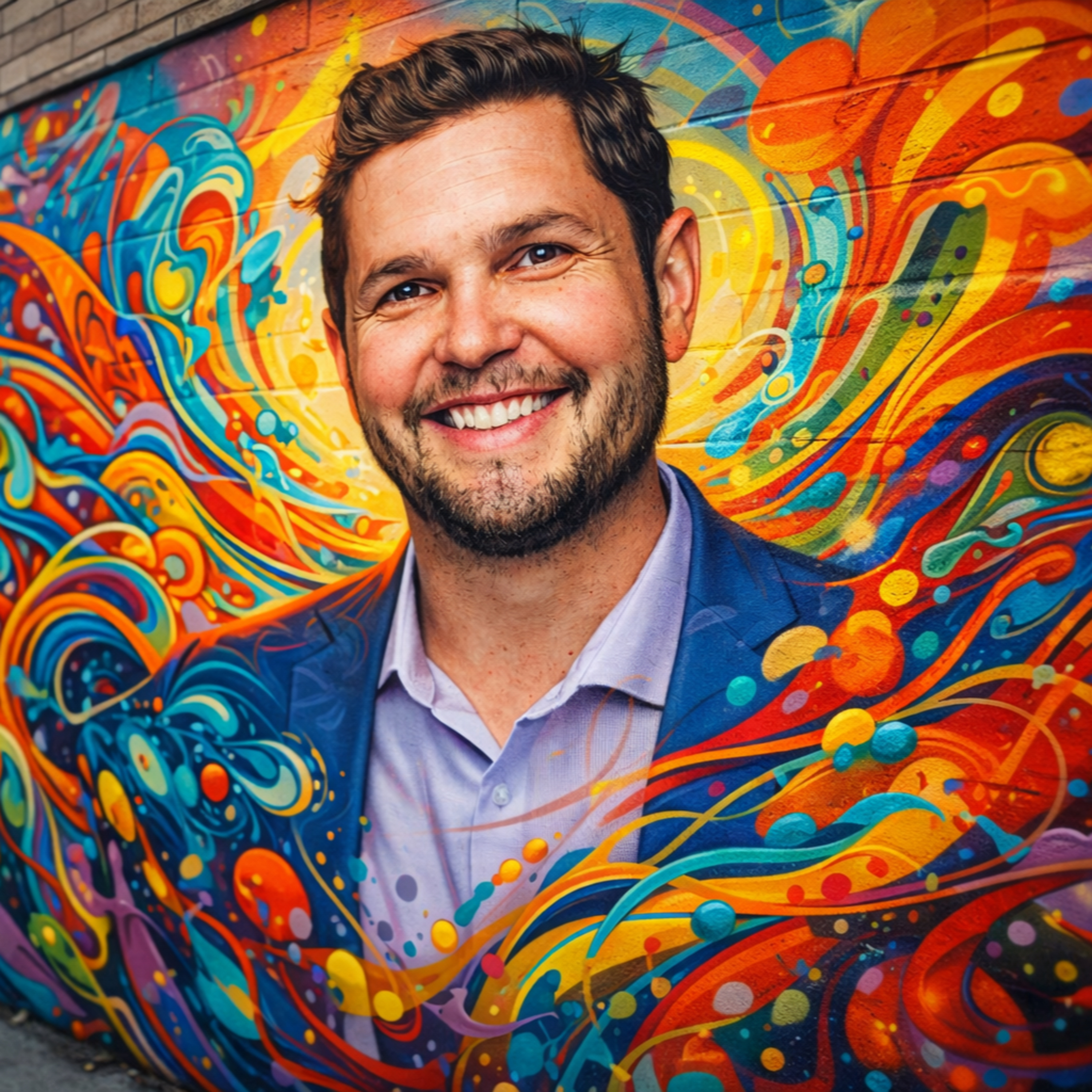
The Truth About Lying to Your Doctor episode artwork

EPISODE · Apr 16, 2026 · 50 MIN

The Truth About Lying to Your Doctor

from AI for Founders with Ryan Estes · host aiforfounders.co

Stephen Rouse didn't set out to pick a fight with Google, OpenAI, Amazon, and Microsoft. He just noticed something broken. Every founder in his orbit was tracking their body through a circus of apps that refused to speak to each other. A Whoop on the wrist. A Garmin for skiing. MyFitnessPal for food. Epic MyChart for labs. Strava for runs. Six logins, zero clarity. Meanwhile, the 21st Century Cures Act had quietly opened the door: third parties could now legally pull patient medical records directly from hospital EHRs. Stephen and his co-founder Amit Shah had already spent years building exactly that infrastructure at their previous company, Protocol First, which was acquired by Roche Pharma via Flatiron Health after becoming the first FHIR app to extract patient health data from Epic hospitals for FDA clinical trial submissions.So they built Savva. A unified health intelligence layer that pulls in your medical records, your wearables, your labs, and your meds, then lets you run them through Claude, GPT, Gemini, Grok, Llama, Falcon, Mistral, and Med Gemma like a round table of second opinions. For ten dollars a year. Stored locally on your device. Not sold to insurers. Not uploaded to a cloud that gets monetized in a bad quarter. Not harvested when the CEO decides he wants a bigger house in Tahoe.The philosophical core of the episode is trust. Stephen argues that people lie to their doctors because the incentives are broken. Admit you smoke a cigar on the golf course and your life insurance premium jumps three hundred dollars a month. Admit you had seven vodka sodas last night and it lives on a clipboard forever. But you'll tell the AI. Because the AI already has the data, doesn't judge you, and isn't reporting back to your payer. When healthcare finally gets a system that sees everything and costs nothing, the entire concierge medicine model starts looking expensive by comparison.The Unidentified Data Principle — Most apps say encrypted, in transit, at rest, de-identified. Stephen goes one step further.No accounts. Nothing tied to a person.Local device storage, not cloud storage.App grows on your phone as records accumulate, not on their servers.If acquired tomorrow, there's no data sitting there to monetize.The business model physically cannot pivot into data harvesting.The Round Table of Second Opinions — Instead of marrying one model, let the user poll them.Ask the same health question to Claude, GPT, Gemini, Grok in sequence.Each model has different training data, different personality, different blind spots.Cost is distributed: roughly 12,000 questions a year across all models for ten dollars.Replaces the "I don't trust that doctor, I want a second opinion" loop with a two-second model switch.The Blue Collar Infrastructure Play — How Savva got to 314,000 connected healthcare institutions without venture capital.Direct EHR integrations instead of Health Information Exchanges like Commonwealth or Health X.No middleman API fees to bleed unit economics.Wearables pulled through Apple HealthKit instead of direct Whoop, Garmin, Oura APIs.Free ingestion on both sides, which is what makes a ten-dollar price point survive.The Global Footprint Thesis — The reason the price is ten dollars a year is not marketing.One hundred million people in the West have access to modern EHRs.A billion people in underserved regions do not, and will not in our lifetimes.An EHR build costs hundreds of millions of dollars and takes a decade.Savva works without an EHR: upload a document, it treats it as a visit, and chronological history emerges.The ten-dollar price is designed to be swallow-able in Dar es Salaam.⁠https://www.savva.ai⁠https://www.linkedin.com/in/rousestephen/⁠⁠https://www.linkedin.com/in/estesryan/⁠⁠⁠⁠https://aiforfounders.co⁠⁠⁠⁠⁠https://kitcaster.com/application ⁠⁠⁠⁠⁠⁠https://ryanestes.info⁠⁠⁠

Stephen Rouse didn't set out to pick a fight with Google, OpenAI, Amazon, and Microsoft. He just noticed something broken. Every founder in his orbit was tracking their body through a circus of apps that refused to speak to each other. A Whoop on the wrist. A Garmin for skiing. MyFitnessPal for food. Epic MyChart for labs. Strava for runs. Six logins, zero clarity. Meanwhile, the 21st Century Cures Act had quietly opened the door: third parties could now legally pull patient medical records directly from hospital EHRs. Stephen and his co-founder Amit Shah had already spent years building exactly that infrastructure at their previous company, Protocol First, which was acquired by Roche Pharma via Flatiron Health after becoming the first FHIR app to extract patient health data from Epic hospitals for FDA clinical trial submissions.So they built Savva. A unified health intelligence layer that pulls in your medical records, your wearables, your labs, and your meds, then lets you run them through Claude, GPT, Gemini, Grok, Llama, Falcon, Mistral, and Med Gemma like a round table of second opinions. For ten dollars a year. Stored locally on your device. Not sold to insurers. Not uploaded to a cloud that gets monetized in a bad quarter. Not harvested when the CEO decides he wants a bigger house in Tahoe.The philosophical core of the episode is trust. Stephen argues that people lie to their doctors because the incentives are broken. Admit you smoke a cigar on the golf course and your life insurance premium jumps three hundred dollars a month. Admit you had seven vodka sodas last night and it lives on a clipboard forever. But you'll tell the AI. Because the AI already has the data, doesn't judge you, and isn't reporting back to your payer. When healthcare finally gets a system that sees everything and costs nothing, the entire concierge medicine model starts looking expensive by comparison.The Unidentified Data Principle — Most apps say encrypted, in transit, at rest, de-identified. Stephen goes one step further.No accounts. Nothing tied to a person.Local device storage, not cloud storage.App grows on your phone as records accumulate, not on their servers.If acquired tomorrow, there's no data sitting there to monetize.The business model physically cannot pivot into data harvesting.The Round Table of Second Opinions — Instead of marrying one model, let the user poll them.Ask the same health question to Claude, GPT, Gemini, Grok in sequence.Each model has different training data, different personality, different blind spots.Cost is distributed: roughly 12,000 questions a year across all models for ten dollars.Replaces the "I don't trust that doctor, I want a second opinion" loop with a two-second model switch.The Blue Collar Infrastructure Play — How Savva got to 314,000 connected healthcare institutions without venture capital.Direct EHR integrations instead of Health Information Exchanges like Commonwealth or Health X.No middleman API fees to bleed unit economics.Wearables pulled through Apple HealthKit instead of direct Whoop, Garmin, Oura APIs.Free ingestion on both sides, which is what makes a ten-dollar price point survive.The Global Footprint Thesis — The reason the price is ten dollars a year is not marketing.One hundred million people in the West have access to modern EHRs.A billion people in underserved regions do not, and will not in our lifetimes.An EHR build costs hundreds of millions of dollars and takes a decade.Savva works without an EHR: upload a document, it treats it as a visit, and chronological history emerges.The ten-dollar price is designed to be swallow-able in Dar es Salaam.⁠https://www.savva.ai⁠https://www.linkedin.com/in/rousestephen/⁠⁠https://www.linkedin.com/in/estesryan/⁠⁠⁠⁠https://aiforfounders.co⁠⁠⁠⁠⁠https://kitcaster.com/application ⁠⁠⁠⁠⁠⁠https://ryanestes.info⁠⁠⁠

NOW PLAYING

The Truth About Lying to Your Doctor

0:00 50:02

No transcript for this episode yet

We transcribe on demand. Request one and we'll notify you when it's ready — usually under 10 minutes.

MG Show MG Show The MG Show, hosted by Jeffrey Pedersen and Shannon Townsend, is a leading alternative media platform dedicated to uncovering the truth behind today’s most pressing political issues. Launched in 2019, the show has grown exponentially, offering unfiltered insights, comprehensive research, and real-time analysis. With a commitment to independent journalism and factual integrity, the MG Show empowers its audience with knowledge and encourages active participation in the political discourse. French Your Way Jessica: Native French teacher founder of French Your Way Boost your French listening skills and test your comprehension with this one of a kind series of podcasts. Get the chance to listen to a real conversation between native speakers talking at normal speed AND customise your learning experience through carefully designed sets of questions (2 levels of difficulty) available for download at www.frenchvoicespodcast.com. All interviews also come with the transcript. French teacher Jessica interviews native speakers of French from around the world who share a bit of their life and passion. Where else would you meet in one same place a French yoga teacher based in Melbourne, a soap manufacturer from Provence, or a couple cycling around the world? That Hoarder: Overcome Compulsive Hoarding That Hoarder Hoarding disorder is stigmatised and people who hoard feel vast amounts of shame. This podcast began life as an audio diary, an anonymous outlet for somebody with this weird condition. That Hoarder speaks about her experiences living with compulsive hoarding, she interviews therapists, academics, researchers, children of hoarders, professional organisers and influencers, and she shares insight and tips for others with the problem. Listened to by people who hoard as well as those who love them and those who work with them, Overcome Compulsive Hoarding with That Hoarder aims to shatter the stigma, share the truth and speak openly and honestly to improve lives. The Small Business Startup School – Business Notes | Financial Literacy | Retail Psychology – For Professionals & Entrepreneurs The Small Business Startup School Inc. Starting or buying a small business? While personal circumstances may vary, business patterns remain timeless. On The Small Business Startup School, we explore strategies, insights, and practical solutions to help entrepreneurs confidently navigate their journey.Hosted by Ola Williams—a retail entrepreneur, fintech founder, and financial coach with over two decades of experience—this podcast marries financial awareness and retail psychology with optimism to deliver actionable takeaways.Join us to learn, grow, and connect as we uncover the keys to business success.Let’s continue to learn together and be encouraged to keep on connecting!

Frequently Asked Questions

How long is this episode of AI for Founders with Ryan Estes?

This episode is 50 minutes long.

When was this AI for Founders with Ryan Estes episode published?

This episode was published on April 16, 2026.

What is this episode about?

Stephen Rouse didn't set out to pick a fight with Google, OpenAI, Amazon, and Microsoft. He just noticed something broken. Every founder in his orbit was tracking their body through a circus of apps that refused to speak to each other. A Whoop on...

Can I download this AI for Founders with Ryan Estes episode?

Yes, you can download this episode by clicking the download button on the episode player, or subscribe to the podcast in your preferred podcast app for automatic downloads.
URL copied to clipboard!