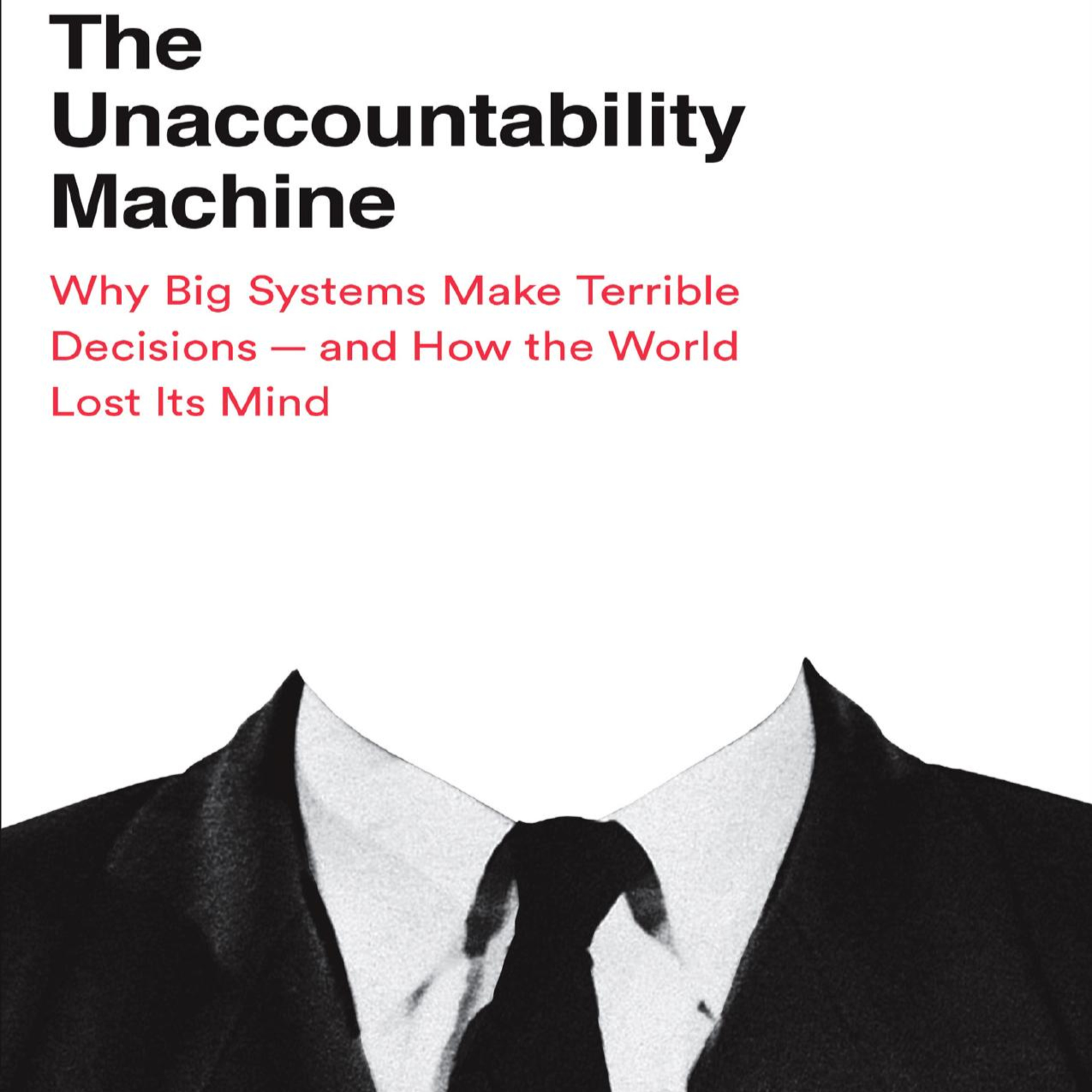
The Unaccountability Machine — Why Nobody Is Accountable
from Crisis in Perception Hosted by Crisis in Perception
When an organisation makes a disastrous decision, why is it often impossible to identify anyone who could have prevented it? This episode presents AI-narrated educational analysis based on published sources. The voices are synthetic and do not represent real conversations, interviews with the authors, or human experts. AI-assisted tools support research synthesis, production, and narration. Source selection, editorial framing, and final editorial decisions are guided by human judgment as part of the Crisis in Perception project. Welcome to Crisis in Perception, where we examine the systems shaping our world. In The Unaccountability Machine: Why Big Systems Make Terrible Decisions – and How the World Lost Its Mind, economist Dan Davies examines why modern corporations, government bureaucracies, and financial institutions repeatedly produce damaging outcomes without any individual appearing fully responsible. Central to his investigation is the concept of the accountability sink: an organisational arrangement in which responsibility is absorbed by rules, procedures, algorithms, or management structures. People make decisions within these systems, yet the systems themselves can become increasingly resistant to correction. Drawing on the overlooked science of cybernetics, particularly the work of Stafford Beer, Davies offers a framework for understanding institutions as complex information-processing systems. Their ability to function depends not simply on intelligent leadership, but on the quality of their feedback channels, decision-making capacity, and ability to adapt. This Deep Dive investigates how England's 2020 algorithmic exam-grading failure exposed the limitations of rigid institutional objectives, and how the 2008 financial crisis revealed deeper weaknesses in financial governance. It also examines Davies's argument that the shareholder value revolution and the growing influence of debt narrowed organisational priorities, allowing short-term financial demands to overwhelm long-term planning and other human concerns. The investigation connects accountability, institutional complexity, cybernetics, economic incentives, and the possibility of designing more responsive organisations. Ultimately, the question is not simply who should be blamed when a system fails. It is how we can create institutions that remain capable of recognising their mistakes, listening to those affected, and changing course. 📺 Watch on YouTube: https://youtu.be/2P5Th08iqbE ❤️ Support / Episode Post on Patreon: https://www.patreon.com/CrisisinPerception/posts/unaccountability-175159881?utm_medium=clipboard_copy&utm_source=copyLink&utm_campaign=postshare_creator&utm_content=join_link If these ideas resonate, consider reading the work yourself or borrowing it from your local library. Supporting authors and libraries helps keep critical inquiry accessible. If you value systems-level analysis like this, please follow, rate, and share the project.
Embed this episode
No transcript yet.