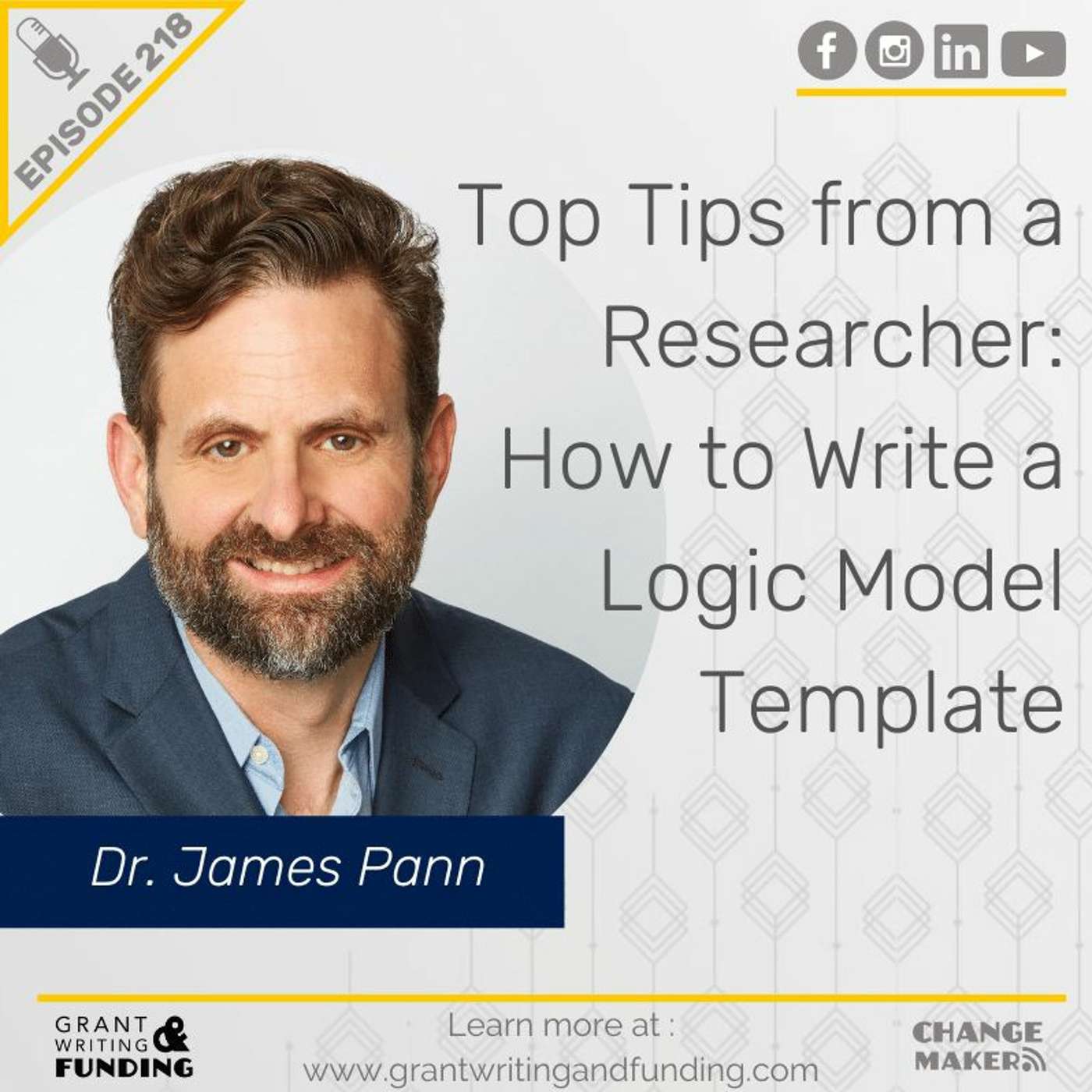
Top Tips from a Researcher: How to Write a Logic Model Template episode artwork

EPISODE · May 12, 2022 · 44 MIN

Top Tips from a Researcher: How to Write a Logic Model Template

from Grant Writing & Funding · host Holly Rustick

A question I often get is, “How do I create a logic model?” This is a great question, and in today’s episode Dr. James Pann describes how to create a logic model.But one also needs to understand what a logic model is and why it’s important to the grant writing process. A logic model is really a process in a visual display. This visual process helps grant reviewers, grant writers, and your nonprofit team really understand the program you are developing.A lot of grant writers even like to develop the logic model as one of their first steps in the grant writing process so they stick to the plan while writing the grant.Grant reviewers like to see a visual representation of what your program is all about to help supplement the text narrative in your grant. Your nonprofit team will benefit from creating this logic model as the program will become clear on what you are trying to accomplish.All in all, a logic model is a healthy way to guide your grant writing process and gives you another tool in your box to earn more points in securing grants and having a successful program.What We Discuss In This Episode:What a logic model isAll the elements in a logic modelThe difference between outcome and outputHow a logic model can help create your evaluation planAdded logic model samples and examplesAbout Dr. James PannJames Pann received his Bachelor of Business Administration in Accounting from the University of Texas at Austin. He obtained his M.S.Ed. in Mental Health Counseling and Ph.D. in Counseling Psychology from the University of Miami. Dr. Pann completed his clinical internship at Nova Southeastern University Community Mental Health Center in neuropsychology, behavioral medicine, and adult and child psychotherapy. Additionally, he had a postdoctoral fellowship in pediatric behavioral medicine at the Department of Psychiatry and Behavioral Sciences, University of Miami/ Jackson Memorial Medical Center. He also completed a Family Therapy Externship at the Center for Family Studies at the University of Miami.Dr. Pann is a Professor at the Abraham S. Fischler College of Education, School of Criminal Justice at Nova Southeastern University where he focuses on teaching program evaluation as well as conducting research and evaluation projects. Dr. Pann is interested in the use of program evaluation approaches to study and improve educational, health and human service programs. He is an evaluation consultant working with education, health and human service organizations and grant making entities. He has worked on a wide variety of projects, from systems of care and other collaborations, to substance abuse, mental health and afterschool programs, with organizations of all sizes. Dr. Pann is a licensed psychologist in Florida and an active member of the American Evaluation Association.Connect with Dr. James:Twitter: https://twitter.com/jpannFacebook: https://www.facebook.com/evalnetwork/LinkedIn: https://www.linkedin.com/in/pannjames/ Website: https://evalnetwork.com/Related Episodes & Links in Podcast:EvalNetwork Podcast: How to determine the impact of your mindfulnessEp. 112: How to Write a Successful Evaluation Section in Grants with James PannEp. 123: Holly Rustick on Grant Writing Lessons LearnedEp. 172: Top Expert Tips to Write the Evaluation Section of a Grant ProposalOTHER RESOURCES:Weekly Newsletter: “Write Grants. Get Paid” - Get thought leadership on grant and freelance grant writing strategies every week in your inbox.  https://grantwritingandfunding.com/Freelance Grant Writer Academy: Replace your Full-Time Income Writing Grants Part-Time from Home. https://grantwritingandfunding.com/freelance-grant-writer-academy/Grant Professional Mentorship: Double your Monthly Revenue with an Income Stream Outside of Grant Writing. https://grantwritingandfunding.com/mentorship RATE, REVIEW, & FOLLOW THE PODCASTFavor, please? If you love this podcast, would you please do me a favor and leave a review on iTunes or your podcast listener?This helps others find the podcast and I read each and every review!“Every time I listen to Holly’s show, I learn something” <– If that sounds like you, please consider rating and reviewing my show!Also, if you haven’t done so already, follow the Grant Writing & Funding podcast to get grant and freelance grant writing proven strategies and conversations in your podcast player every single week.Thanks for listening!Warmly,Holly RustickLeading the $1 Billion for Good Movement: By 2030, aspiring and seasoned grant writers inside the Freelance Grant Writer Academy & Grant Professional Mentorship will 1) WIN $1 Billion in Grants, and 2) MAKE $30 Million in their Grant Writing Businesses. We are on our way already.

A question I often get is, “How do I create a logic model?” This is a great question, and in today’s episode Dr. James Pann describes how to create a logic model.But one also needs to understand what a logic model is and why it’s important to the grant writing process. A logic model is really a process in a visual display. This visual process helps grant reviewers, grant writers, and your nonprofit team really understand the program you are developing.A lot of grant writers even like to develop the logic model as one of their first steps in the grant writing process so they stick to the plan while writing the grant.Grant reviewers like to see a visual representation of what your program is all about to help supplement the text narrative in your grant. Your nonprofit team will benefit from creating this logic model as the program will become clear on what you are trying to accomplish.All in all, a logic model is a healthy way to guide your grant writing process and gives you another tool in your box to earn more points in securing grants and having a successful program.What We Discuss In This Episode:What a logic model isAll the elements in a logic modelThe difference between outcome and outputHow a logic model can help create your evaluation planAdded logic model samples and examplesAbout Dr. James PannJames Pann received his Bachelor of Business Administration in Accounting from the University of Texas at Austin. He obtained his M.S.Ed. in Mental Health Counseling and Ph.D. in Counseling Psychology from the University of Miami. Dr. Pann completed his clinical internship at Nova Southeastern University Community Mental Health Center in neuropsychology, behavioral medicine, and adult and child psychotherapy. Additionally, he had a postdoctoral fellowship in pediatric behavioral medicine at the Department of Psychiatry and Behavioral Sciences, University of Miami/ Jackson Memorial Medical Center. He also completed a Family Therapy Externship at the Center for Family Studies at the University of Miami.Dr. Pann is a Professor at the Abraham S. Fischler College of Education, School of Criminal Justice at Nova Southeastern University where he focuses on teaching program evaluation as well as conducting research and evaluation projects. Dr. Pann is interested in the use of program evaluation approaches to study and improve educational, health and human service programs. He is an evaluation consultant working with education, health and human service organizations and grant making entities. He has worked on a wide variety of projects, from systems of care and other collaborations, to substance abuse, mental health and afterschool programs, with organizations of all sizes. Dr. Pann is a licensed psychologist in Florida and an active member of the American Evaluation Association.Connect with Dr. James:Twitter: https://twitter.com/jpannFacebook: https://www.facebook.com/evalnetwork/LinkedIn: https://www.linkedin.com/in/pannjames/ Website: https://evalnetwork.com/Related Episodes & Links in Podcast:EvalNetwork Podcast: How to determine the impact of your mindfulnessEp. 112: How to Write a Successful Evaluation Section in Grants with James PannEp. 123: Holly Rustick on Grant Writing Lessons LearnedEp. 172: Top Expert Tips to Write the Evaluation Section of a Grant ProposalOTHER RESOURCES:Weekly Newsletter: “Write Grants. Get Paid” - Get thought leadership on grant and freelance grant writing strategies every week in your inbox.  https://grantwritingandfunding.com/Freelance Grant Writer Academy: Replace your Full-Time Income Writing Grants Part-Time from Home. https://grantwritingandfunding.com/freelance-grant-writer-academy/Grant Professional Mentorship: Double your Monthly Revenue with an Income Stream Outside of Grant Writing. https://grantwritingandfunding.com/mentorship RATE, REVIEW, & FOLLOW THE PODCASTFavor, please? If you love this podcast, would you please do me a favor and leave a review on iTunes or your podcast listener?This helps others find the podcast and I read each and every review!“Every time I listen to Holly’s show, I learn something” <– If that sounds like you, please consider rating and reviewing my show!Also, if you haven’t done so already, follow the Grant Writing & Funding podcast to get grant and freelance grant writing proven strategies and conversations in your podcast player every single week.Thanks for listening!Warmly,Holly RustickLeading the $1 Billion for Good Movement: By 2030, aspiring and seasoned grant writers inside the Freelance Grant Writer Academy & Grant Professional Mentorship will 1) WIN $1 Billion in Grants, and 2) MAKE $30 Million in their Grant Writing Businesses. We are on our way already.

NOW PLAYING

Top Tips from a Researcher: How to Write a Logic Model Template

0:00 44:55

No transcript for this episode yet

We transcribe on demand. Request one and we'll notify you when it's ready — usually under 10 minutes.

The Ultraspeaking Podcast Tristan de Montebello, Michael Gendler The Ultraspeaking Podcast explores modern-day solutions to greater confidence, skill, and ease when speaking at work. Each episode features the founders, Tristan and Michael, as they detail unconventional strategies to thrive under pressure and speak with less preparation. Working on hand-gestures and eye contact is OUTDATED advice. Writing a script or creating a structure is a TRAP.It’s time for a better way. Join the Ultraspeaking movement and you’ll never look back. WW2 - the Key Questions, answered by Laurence Rees. Laurence Rees A former Head of BBC TV History programmes, Laurence has specialized in writing books and making television documentaries about World War Two, the Nazis and Stalinism for thirty years. He won a BAFTA and a Peabody for his TV series 'The Nazis: A Warning from History' and a British Book Award for his book on Auschwitz, which is also the world's best selling book on this notorious camp. His book 'the Holocaust: A New History' was described by the Times as 'exemplary' and by the Daily Telegraph as 'the best single volume account of the atrocity ever written'. Educated at Oxford University, for several years he was a visiting senior fellow at the London School of Economics, London University. He holds honorary doctorates from the University of Sheffield and the Open University. Professor Robert Service, of Oxford University, described Rees as 'one of the world's experts on the Second World War'. Sir Max Hastings wrote in the Sunday Times, in a review of Laurence Rees' 'World War Two: Behi Hot Copy Kate Toon & Belinda Weaver The Hot Copy podcast is a collaboration between seasoned copywriters Belinda Weaver and Kate Toon.Tune in for copywriting tips, shortcuts, writing resources, interviews and laughs. All focused on helping you become a better copywriter. The Writers' Show Geoff Hughes A podcast about writing, featuring interviews with authors and songwriters at all levels of success.Inspiring and successful authors reveal the secrets about writing, creativity and the business of independent publishing and songwriting.Featuring interviews with successful authors and songwriters excited to share the journey from idea to published book and song.Host Geoff Hughes is the founder of Madhouse Media PublishingMore info on the Writers Show Website

Frequently Asked Questions

How long is this episode of Grant Writing & Funding?

This episode is 44 minutes long.

When was this Grant Writing & Funding episode published?

This episode was published on May 12, 2022.

What is this episode about?

A question I often get is, “How do I create a logic model?” This is a great question, and in today’s episode Dr. James Pann describes how to create a logic model.But one also needs to understand what a logic model is and why it’s important to the...

Can I download this Grant Writing & Funding episode?

Yes, you can download this episode by clicking the download button on the episode player, or subscribe to the podcast in your preferred podcast app for automatic downloads.
URL copied to clipboard!