
EPISODE · Feb 16, 2024 · 1H 1M
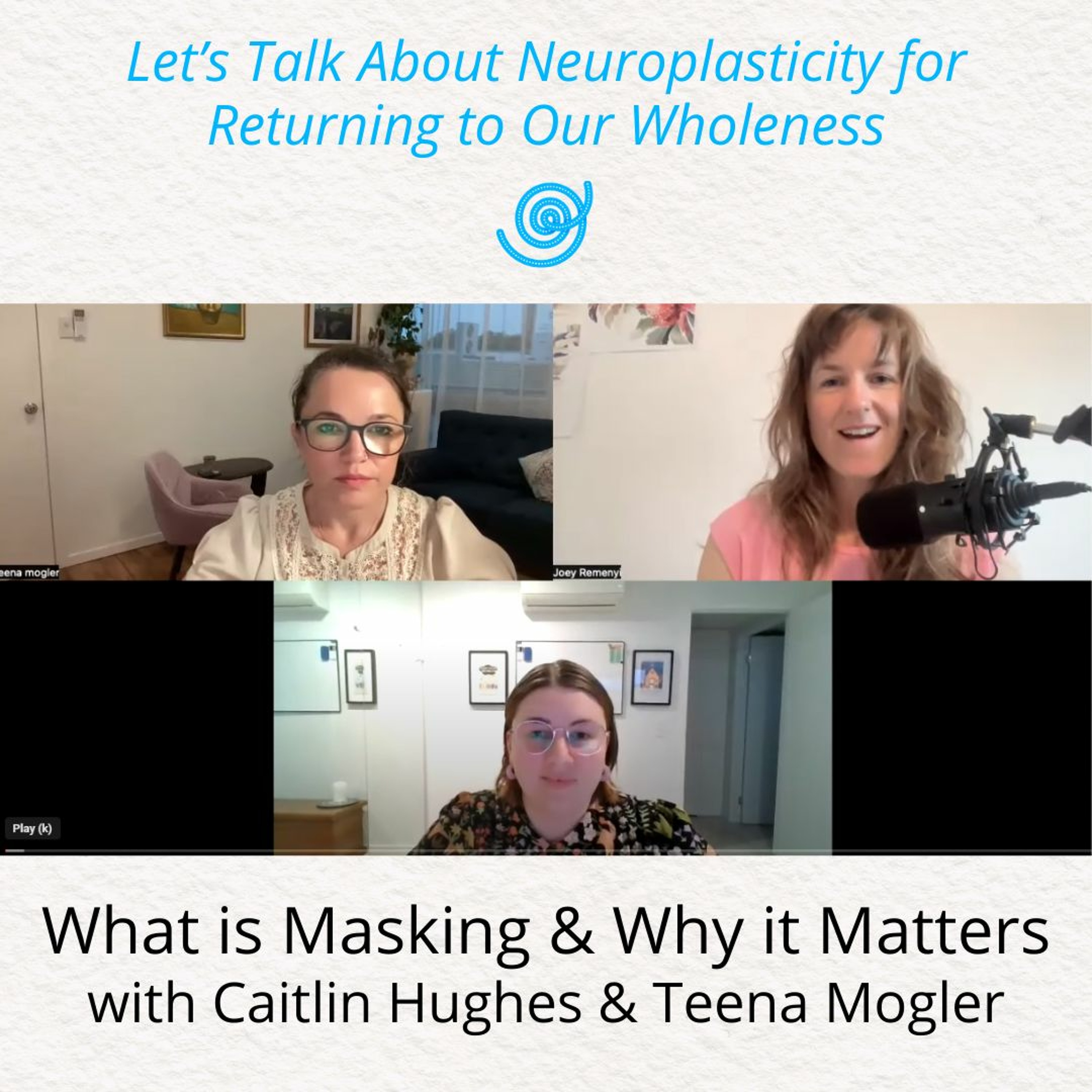
What is Masking & Why it Matters
from Sensing Ground: Beyond Symptoms and Navigating Bodily Sensations · host Sensing Ground: Living with all Eight Senses
Joey Remenyi talks with Caitlin Hughes and Teena Mogler, Social Workers based in Australia. Topics and themes discussed include: What is masking? Camouflaging - Strategies used to blend into our social surroundings, or present ourselves as different from who we are. Profile - Compensation — Strategies used to actively compensate for difficulties in social situations. Examples: copying body language and facial expressions. - Masking — Strategies used to hide characteristics or portray a non-autistic/ADHD persona. Examples: adjusting face and body to appear confident and/or relaxed. - Assimilation — Strategies used to try to fit in with others in social situations. Examples: Putting on an act. Pressure to conform to social norms can come from various sources like social and cultural contexts, academic settings, work environments, and personal circumstances. What is authenticity? - Acceptance of your differences is the first step towards being authentically oneself. It's about embracing your unique traits and experiences, and sharing them with the world. - Being authentic is an essential aspect of your identity and helps foster good mental health and healthy relationships with others. What are some common traps and patterns that we can find ourselves in that lead to more masking and feed a cycle of masking? - People pleasing - Perfectionism How can we gently and tenderly practice more authenticity in our lives? - Acknowledging and accepting your differences without judgement. - Surround yourself with supportive and understanding individuals who appreciate you for who you are. - Practice self-care and self-love, prioritising your own needs and boundaries. - Engage in activities that bring you joy and allow you to express yourself freely. Why does it matter (psychological and physiological harm)? - Masking can result in burnout, exhaustion, and lowered self-esteem. - Concealing one's true self can contribute to mental health problems like anxiety and depression. - Being unable to be authentic can cause a persistent feeling of discomfort, disconnection, and disorientation. - It can also lead to social isolation and difficulty forming meaningful relationships. * Learn more about Caitlin Hughes & Teena Mogler, and their podcast: Divergent Dialogues: Podcast: Divergent Dialogues https://divergentdialogues.substack.com/ Caitlin Hughes Cathartic Collaborations https://catharticcollaborations.com.au/ Social media: @cathartic.collaborations Teena Mogler Balance Centre for Mental Health https://www.balancecentreformentalhealth.com.au/ Social media: @balancecentreformentalhealth
Embed this episode
NOW PLAYING
What is Masking & Why it Matters
No transcript for this episode yet
Similar Episodes
No similar episodes found.
Similar Podcasts
No similar podcasts found.