
EPISODE · Aug 31, 2026 · 10 MIN
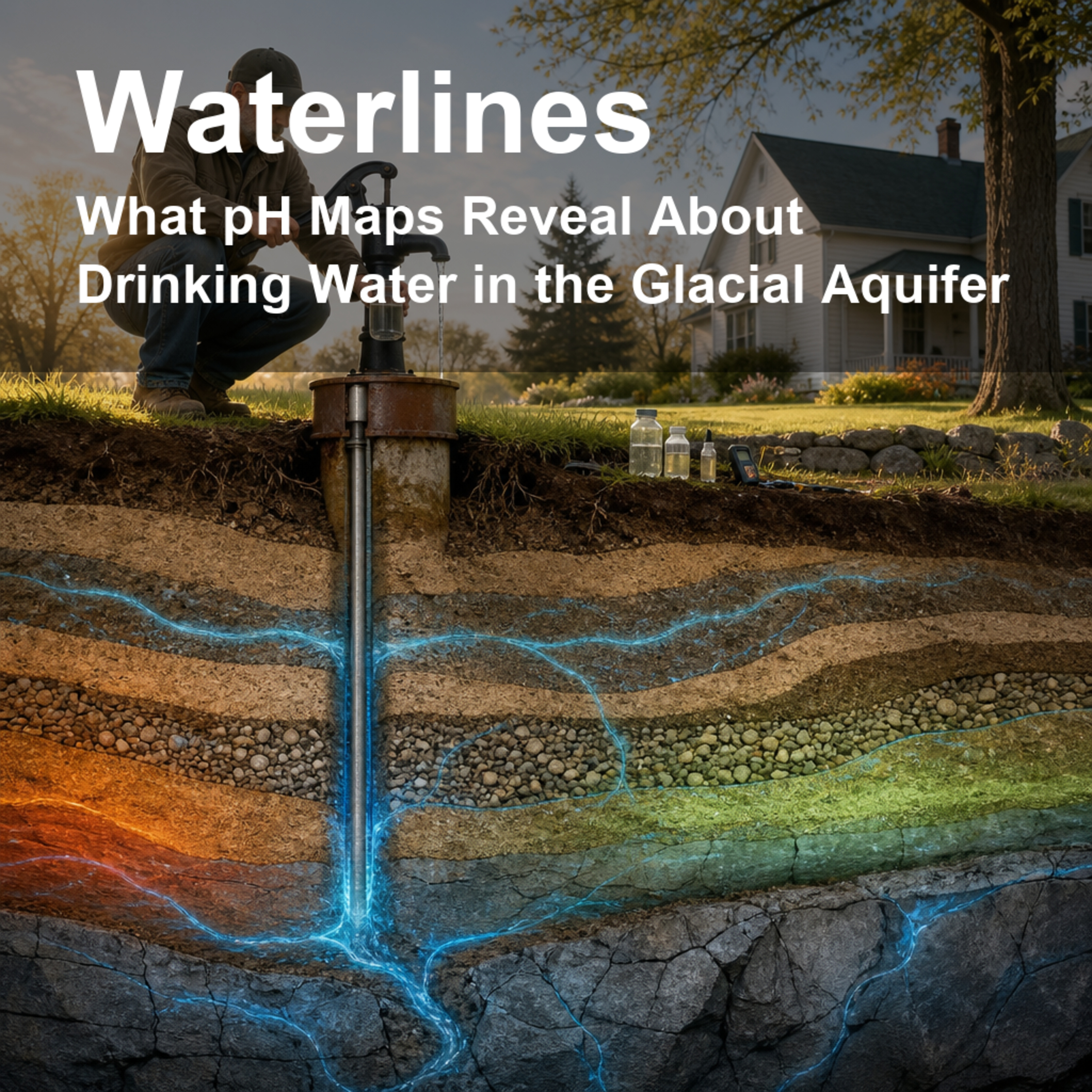
What pH Maps Reveal About Drinking Water in the Glacial Aquifer
from Waterlines: How Water Shapes Our World · host jaywen
Takeaway: In the glacial aquifer, water that rushes through thin, carbonate-poor sediment tends to stay acidic, while water that lingers through carbonate-rich layers often turns alkaline enough to loosen arsenic.A glass of well water can look perfectly clear and still carry clues about the ground it traveled through for years, decades, or longer. In this episode, we explore why groundwater pH is more than a number from chemistry class: it can shape whether arsenic stays stuck to aquifer sediments, whether manganese moves into water, and whether water is more likely to corrode plumbing. The study follows the huge glacial aquifer system across the northern United States, a water source for about 30 million people, and asks how machine learning can help map pH in a place too large and geologically tangled to model grain by grain.We unpack how researchers used pH measurements from 18,386 wells, information about soils and sediments, and estimates of groundwater age and flowpath length to predict where water is more acidic or more alkaline. Along the way, we talk about glaciers as messy aquifer builders, carbonate minerals as natural antacids, and why this kind of map is useful for planning monitoring—but not a substitute for testing an individual well.Citation: Stackelberg, P.E., Belitz, K., Brown, C.J., Erickson, M.L., Elliott, S.M., Kauffman, L.J., Ransom, K.M., and Reddy, J.E. (2021). Machine Learning Predictions of pH in the Glacial Aquifer System, Northern USA. Groundwater, 59(3), 352–368. https://doi.org/10.1111/gwat.13063Disclosure: This Waterlines episode uses AI-generated voices for the host conversation.
Embed this episode
NOW PLAYING
What pH Maps Reveal About Drinking Water in the Glacial Aquifer
No transcript for this episode yet
Similar Episodes
No similar episodes found.
Similar Podcasts
No similar podcasts found.