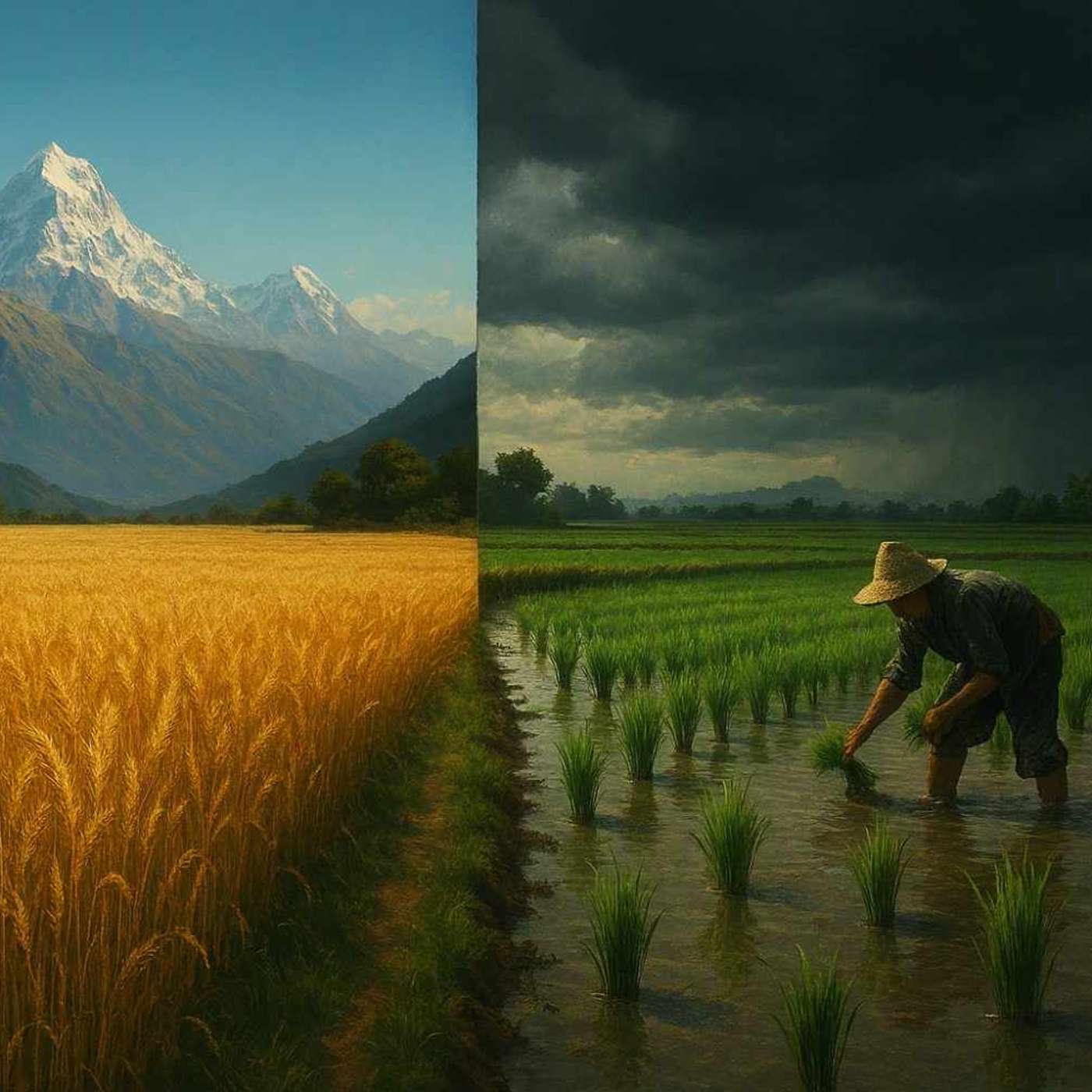
Wheat vs Rice: How Two Grains Quietly Shaped Two Indias episode artwork

EPISODE · Jun 24, 2026 · 20 MIN

Wheat vs Rice: How Two Grains Quietly Shaped Two Indias

from Incredible India Travel | Social Impact & Culture Tours · host 5 Senses Tours | Cultural Experiences & Social Impact Guides

Why does Punjab celebrate its new year in April with bonfires and a festival built around cut wheat, while Tamil Nadu celebrates its harvest festival in January, watching a pot of rice boil over with milk and jaggery.Why do the temples of the south rise in towering gopurams visible from a distance, while many temples of the north sit smaller and more intimately set into a riverbank or hillside.Why does the north's classical music tradition favour a single performer exploring a raga alone, while the south's classical tradition favours an ensemble in constant, audible dialogue with itself.One honest, well documented answer, among several that matter, turns out to be sitting on a plate in front of you at almost every meal.It is the grain.This episode traces how two different staple crops, wheat in the north and rice in the south, quietly shaped two different calendars, cuisines and artistic traditions across India over thousands of years, while being equally honest about where this theory holds up and where it does not.What You Will Discover in This EpisodeHow the Indus Valley Civilisation grew wheat and barley as winter staples and rice as a summer crop over four thousand years ago, and how archaeologists at Rakhigarhi found evidence of sophisticated seasonal multi-cropping that predates comparable evidence from Mesopotamia or EgyptWhy wheat ripens all at once in spring across the entire northern wheat belt, while rice, dependent on monsoon timing that varies by region, staggers its harvest across a much wider stretch of the calendarWhy Punjab's Baisakhi falls every April, marking the wheat harvest and the Punjabi new year, while Tamil Nadu's Pongal falls every January, named for the moment rice cooked with milk and jaggery boils over an earthen pot, and how Onam, Bihu and Nabanna each follow this same underlying logic across other regionsHow North Indian cuisine centres on wheat breads and dairy based gravies while South Indian cuisine centres on rice, fermented batters and coconut based dishes, and why neither tradition should be read as more or less communal than the otherWhy North Indian Nagara temples are built around a curved shikhara tower echoing a mountain peak with a small, dim sanctum at their centre, while South Indian Dravida temples rise in towering gopurams visible for miles, built around vast courtyards for grain storage, education and annual festivals, and why this difference likely reflects geography and centuries of stable patronage rather than any difference in devotionThe genuinely surprising case of Indian classical music, where the northern Hindustani tradition, born in royal courts, favours a single performer's unhurried solo exploration of a raga, while the southern Carnatic tradition, born in temples, favours a tightly coordinated ensemble in constant real time dialogue, a pattern that runs in the opposite direction from what the wheat and rice theory would predictThe honest limits of this entire theory, including why rice growing Bengal produced one of India's most distinguished intellectual traditions and why wheat growing Punjab is home to the deeply communal langar tradition, both of which complicate any simple version of this storyHow 5 Senses Tours brings the complete wheat belt and rice belt heritage circuit to life for international travellersExperience the Two Indias With 5 Senses ToursOur Delhi tours take you through the heart of India's wheat belt, the Indo-Gangetic plain that has grown wheat for over four thousand years, at https://5sensestours.com/home-delhi-tours/Our Kerala tours take you into the rice belt, where the August festival of Onam and centuries of paddy cultivation define the landscape, at https://5sensestours.com/tour/kerala-5-days/Our Kolkata tours and Kolkata city tour take you into rice growing Bengal, where the Nabanna festival celebrates the new rice harvest each winter, at https://5sensestours.com/home-kolkata-tours/ and https://5sensestours.com/tour/kolkata-city-tour/5 Senses Tours is recognised by India's Ministry of Tourism, winner of the Tripadvisor Travellers Choice Award and the Outlook Responsible Tourism Award. Every tour is private, expert guided and completely customised for your group.

Why does Punjab celebrate its new year in April with bonfires and a festival built around cut wheat, while Tamil Nadu celebrates its harvest festival in January, watching a pot of rice boil over with milk and jaggery.Why do the temples of the south rise in towering gopurams visible from a distance, while many temples of the north sit smaller and more intimately set into a riverbank or hillside.Why does the north's classical music tradition favour a single performer exploring a raga alone, while the south's classical tradition favours an ensemble in constant, audible dialogue with itself.One honest, well documented answer, among several that matter, turns out to be sitting on a plate in front of you at almost every meal.It is the grain.This episode traces how two different staple crops, wheat in the north and rice in the south, quietly shaped two different calendars, cuisines and artistic traditions across India over thousands of years, while being equally honest about where this theory holds up and where it does not.What You Will Discover in This EpisodeHow the Indus Valley Civilisation grew wheat and barley as winter staples and rice as a summer crop over four thousand years ago, and how archaeologists at Rakhigarhi found evidence of sophisticated seasonal multi-cropping that predates comparable evidence from Mesopotamia or EgyptWhy wheat ripens all at once in spring across the entire northern wheat belt, while rice, dependent on monsoon timing that varies by region, staggers its harvest across a much wider stretch of the calendarWhy Punjab's Baisakhi falls every April, marking the wheat harvest and the Punjabi new year, while Tamil Nadu's Pongal falls every January, named for the moment rice cooked with milk and jaggery boils over an earthen pot, and how Onam, Bihu and Nabanna each follow this same underlying logic across other regionsHow North Indian cuisine centres on wheat breads and dairy based gravies while South Indian cuisine centres on rice, fermented batters and coconut based dishes, and why neither tradition should be read as more or less communal than the otherWhy North Indian Nagara temples are built around a curved shikhara tower echoing a mountain peak with a small, dim sanctum at their centre, while South Indian Dravida temples rise in towering gopurams visible for miles, built around vast courtyards for grain storage, education and annual festivals, and why this difference likely reflects geography and centuries of stable patronage rather than any difference in devotionThe genuinely surprising case of Indian classical music, where the northern Hindustani tradition, born in royal courts, favours a single performer's unhurried solo exploration of a raga, while the southern Carnatic tradition, born in temples, favours a tightly coordinated ensemble in constant real time dialogue, a pattern that runs in the opposite direction from what the wheat and rice theory would predictThe honest limits of this entire theory, including why rice growing Bengal produced one of India's most distinguished intellectual traditions and why wheat growing Punjab is home to the deeply communal langar tradition, both of which complicate any simple version of this storyHow 5 Senses Tours brings the complete wheat belt and rice belt heritage circuit to life for international travellersExperience the Two Indias With 5 Senses ToursOur Delhi tours take you through the heart of India's wheat belt, the Indo-Gangetic plain that has grown wheat for over four thousand years, at https://5sensestours.com/home-delhi-tours/Our Kerala tours take you into the rice belt, where the August festival of Onam and centuries of paddy cultivation define the landscape, at https://5sensestours.com/tour/kerala-5-days/Our Kolkata tours and Kolkata city tour take you into rice growing Bengal, where the Nabanna festival celebrates the new rice harvest each winter, at https://5sensestours.com/home-kolkata-tours/ and https://5sensestours.com/tour/kolkata-city-tour/5 Senses Tours is recognised by India's Ministry of Tourism, winner of the Tripadvisor Travellers Choice Award and the Outlook Responsible Tourism Award. Every tour is private, expert guided and completely customised for your group.

NOW PLAYING

Wheat vs Rice: How Two Grains Quietly Shaped Two Indias

0:00 20:09

No transcript for this episode yet

We transcribe on demand. Request one and we'll notify you when it's ready — usually under 10 minutes.

Breaking News Show | eTurboNews Juergen Thomas Steinmetz News is relevant to the global travel and tourism industry, human rights and global issues.Breaking news when it happens and only from the source. Solving for Change MOBIA Technology Innovations Solving for Change welcomes business and technology leaders to share stories of bold business transformation within complex organizations. In an era when technology and markets are changing around businesses, the key to staying competitive is to evolve in response to those changes.  MOBIA’s Mike Reeves and Marc LeBlanc investigate business transformation, deconstructing the challenges, ambitions, and market disruptions that drive companies to embark on transformation journeys, and exploring their unique approaches to achieving meaningful outcomes.  What sparks leaders to pursue business transformation? How do they overcome the challenges along the way? What are the keys to creating enduring change?  Through in-depth conversations with business and technology leaders, Mike and Marc answer these questions and explore how businesses evolve by pulling four key transformation levers: people, process, technology, and culture. Cool Story Bro TheSneakyBros Welcome to *Cool Story Bro*, a dynamic podcast hosted by TheSneakyBros, where gaming takes center stage. Join us for engaging discussions, insights, and stories about your favorite games and gaming culture. Tune in for an entertaining exploration of the virtual world! RAISING THE BAR MUSICHYPEBEAST The RAISING THE BAR Podcast is dedicated to providing a fresh and unconventional broadcast platform for the biggest names in music and entertainment.The interview insight provided by the staff of MUSICHYPEBEAST separates us from the pack. The passion of RAISING THE BAR podcast is fueled by Millennial Music culture. Hosted on Acast. See acast.com/privacy for more information.

Frequently Asked Questions

How long is this episode of Incredible India Travel | Social Impact & Culture Tours?

This episode is 20 minutes long.

When was this Incredible India Travel | Social Impact & Culture Tours episode published?

This episode was published on June 24, 2026.

What is this episode about?

Why does Punjab celebrate its new year in April with bonfires and a festival built around cut wheat, while Tamil Nadu celebrates its harvest festival in January, watching a pot of rice boil over with milk and jaggery.Why do the temples of the south...

Can I download this Incredible India Travel | Social Impact & Culture Tours episode?

Yes, you can download this episode by clicking the download button on the episode player, or subscribe to the podcast in your preferred podcast app for automatic downloads.
URL copied to clipboard!