
EPISODE · Aug 3, 2026 · 35 MIN
When AI Optimises the Wrong Constraint | AI Is Brilliant at Optimising the Wrong Thing (If You Let It)
from Advances and Innovations in Actuation Systems · host PRASAD BHONDE
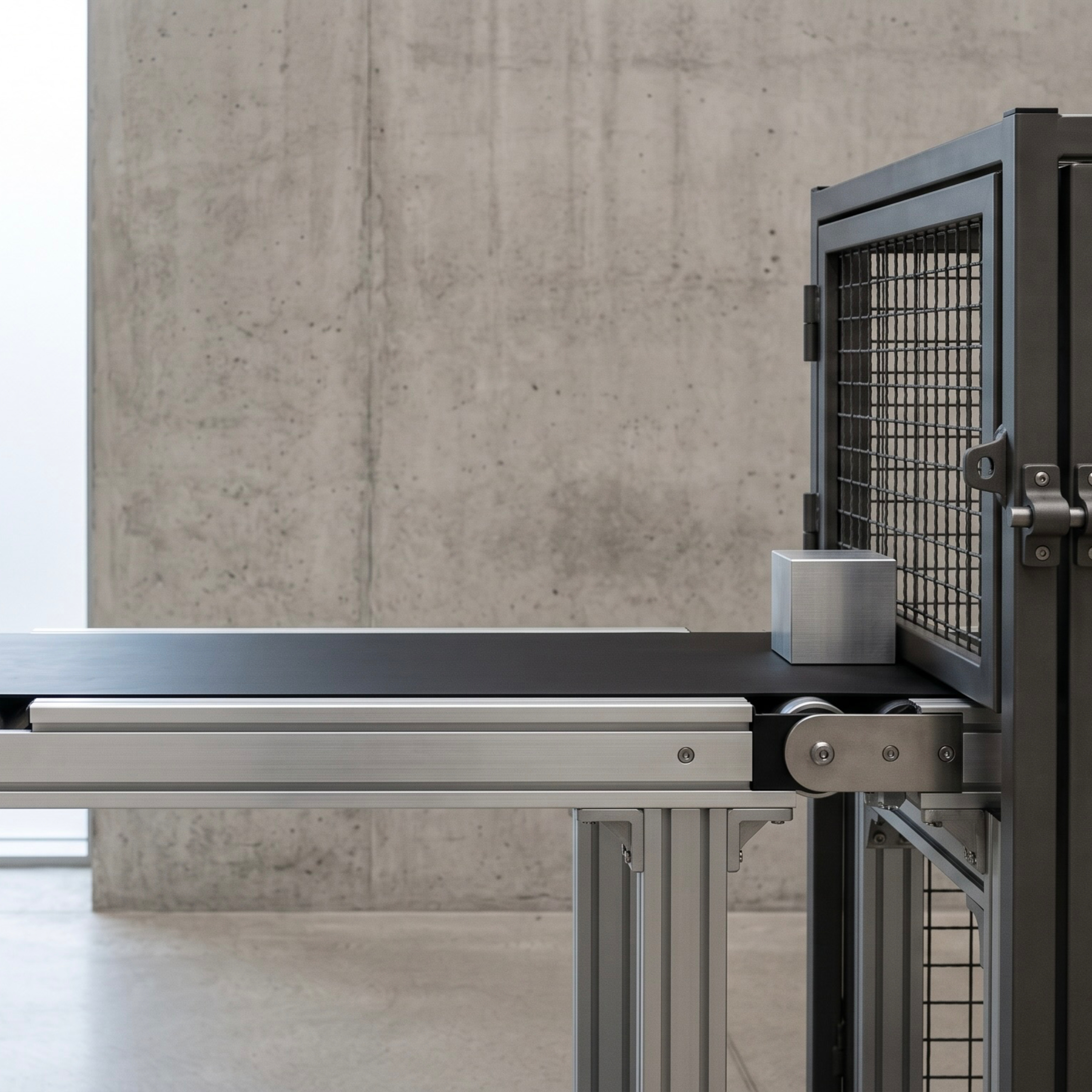
There is a moment that quietly repeats itself across factories, hospitals, software teams, warehouses, and boardrooms.A process becomes dramatically faster.Dashboards look healthier.Meetings become noticeably more optimistic.Someone confidently announces that productivity has improved. The overall outcome barely changes.--------------------The bottleneck simply watches the celebration from exactly the same place.That observation has followed us for years.It's also why we believe we've been asking the wrong questions about Artificial Intelligence.Most conversations begin with:"How can AI make this faster?"Engineering begins somewhere else."What's actually limiting the system?"--------------------In this Field Note, we explore one of the oldest principles in engineering—and one of the easiest to forget during every new wave of technology.Artificial Intelligence is exceptionally good at optimisation.~ It can generate code.~ Summarise reports.~ Analyse data.~ Draft documentation.~ Organise meetings.And, if we're not careful, organise another meeting to review how efficiently it organised the first one.The problem isn't Artificial Intelligence.The problem is assuming that accelerating one activity automatically improves the system that surrounds it.--------------------Drawing from manufacturing, operations, logistics, software engineering, healthcare, and systems thinking, this episode explores why organisations repeatedly optimise what is easiest to measure instead of what actually determines throughput.--------------------We'll discuss why bottlenecks rarely announce themselves, why experienced engineers ask different questions than dashboards do, and why the Theory of Constraints remains one of the most relevant engineering ideas in the age of AI.Because the true value of Artificial Intelligence has never been measured by how quickly it completes a task.It's measured by whether the task was limiting the system in the first place.One lesson has quietly repeated itself throughout engineering history.Technology accelerates execution. People remain responsible for choosing the destination.Perhaps that's why experienced engineers often sound less impressed by speed than everyone else in the room.They've learned that making one process faster is occasionally the most efficient way of discovering that the real problem was somewhere else.--------------------This episode is part of Field Notes in Restorative Engineering—a continuing series of observations exploring robotics, manufacturing, artificial intelligence, systems engineering, industrial design, and human capability through enduring engineering principles rather than passing technology trends.Every Field Note begins with something observed in the physical world.Every Field Note questions an assumption.Every Field Note follows that observation until it reveals a principle that extends far beyond the original problem.Because engineering has never been about making everything faster.It's been about understanding what deserves to become faster.Reality always gets the final vote.Good engineering simply learns to listen earlier.--------------------Stay Tuned…Regards, Top VoiceMaido & Kon'nichiwa min'na! 👶🏻🧑🏻🦱👩🏻🦳Wie Geht's guys? Mir geht's gut!!! ✌️🤘🙌#FieldNotes #RestorativeEngineering #ArtificialIntelligence #TheoryOfConstraints #SystemsThinking #IndustrialEngineering #Manufacturing #OperationsManagement #EngineeringLeadership #ContinuousImprovement
Embed this episode
Ready to play
When AI Optimises the Wrong Constraint | AI Is Brilliant at Optimising the Wrong Thing (If You Let It)
No transcript for this episode yet
Similar Episodes
No similar episodes found.
Similar Podcasts
No similar podcasts found.