
PODCAST · technology
Advances and Innovations in Actuation Systems
by PRASAD BHONDE
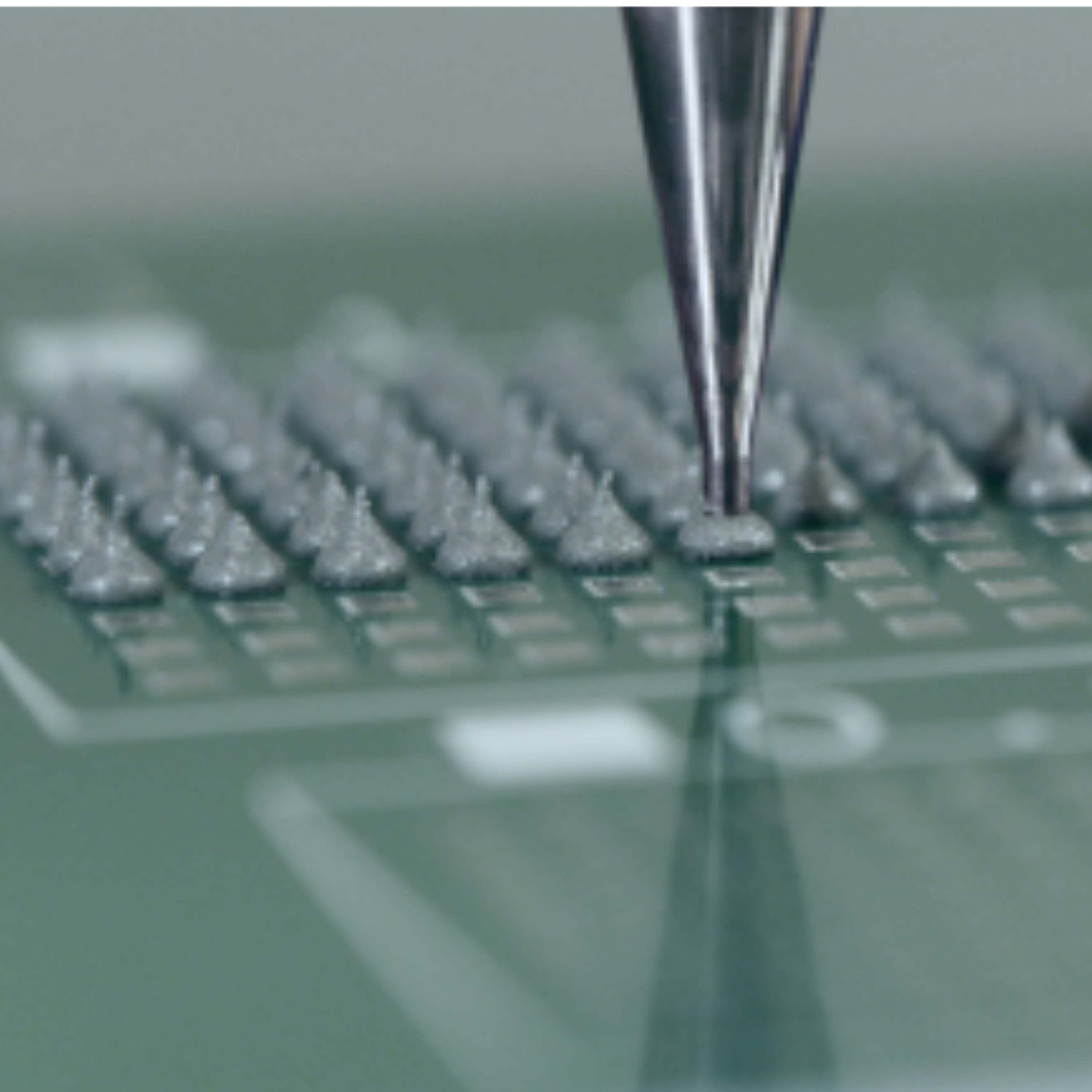
This podcast provides glimpses of the advances and innovations in Actuation systems that facilitate Micro Dispensing Systems, to dispense material in minute sites.
-
140
FIELD NOTE #036 | Every Handover Creates An Interpretation
Information rarely arrives exactly as it leaves.As ideas move between teams, meetings, summaries and updates, context is compressed, assumptions fill gaps and meaning slowly evolves.------In this episode, we explore why many communication problems are not information problems at all.They're interpretation problems.------A reflection on organisational communication, context loss, shared understanding and the hidden cost of handovers.Because the most valuable thing travelling through an organisation is rarely information.It's meaning.------Stay Tuned…Regards, Top VoiceMaido & Kon'nichiwa min'na! 👶🏻🧑🏻🦱👩🏻🦳Wie Geht's guys? Mir geht's gut!!! ✌️🤘🙌#FieldNotes #Leadership #Communication #Management #WorkplaceInsights #Business #OrganisationalBehaviour
-
139
FIELD NOTE #035 | Stability Has Sponsorship
FIELD NOTE #035 | Stability Has SponsorshipMany organisations assume stability means problems have been eliminated.Reality is usually more interesting.------The smoothest operations often depend on people quietly absorbing variation before it reaches everyone else.Because reliability removes visible friction, it also removes visible evidence of the effort creating it.------In this episode, we explore why the most valuable contributors are often the hardest to see, why success frequently conceals its own causes, and why an unexpected absence can reveal more about an operation than months of reporting.Stable outcomes often have silent sponsors.The challenge is noticing them before they become visible through their absence.------Stay Tuned…Regards, Top VoiceMaido & Kon'nichiwa min'na! 👶🏻🧑🏻🦱👩🏻🦳Wie Geht's guys? Mir geht's gut!!! ✌️🤘🙌#Operations #Leadership #ContinuousImprovement #Reliability #Management
-
138
FIELD NOTE #034 | The Exception Is Applying For Full-Time Employment
Most exceptions begin with a reason.Few end with one.------In this Field Note, we examine a recurring organisational pattern: temporary decisions that quietly become permanent systems.A customer request becomes a process.A workaround becomes a policy.An exception gains history.And history often becomes harder to challenge than logic.------The exception never planned to stay.It simply remained after the explanation left.------Stay Tuned…Regards, Top VoiceMaido & Kon'nichiwa min'na! 👶🏻🧑🏻🦱👩🏻🦳Wie Geht's guys? Mir geht's gut!!! ✌️🤘🙌#OrganisationalDesign #Leadership #Management #Operations #FieldNotes
-
137
FIELD NOTE #033 | Information Travels At Different Speeds
A decision can be made instantly.Its consequences rarely arrive so quickly.------In this episode, we explore why information moves unevenly through organisations, why understanding often lags behind announcements, and why the true timeline of a decision begins long after it has been approved.Because most people do not experience change when the decision is made.They experience it when the consequences finally arrive.------A short reflection on communication, organisational behaviour, and the hidden journey between decision and reality.------Stay Tuned…Regards, Top VoiceMaido & Kon'nichiwa min'na! 👶🏻🧑🏻🦱👩🏻🦳Wie Geht's guys? Mir geht's gut!!! ✌️🤘🙌#Leadership #Management #Organisations #Communication #DecisionMaking #FieldNotes
-
136
FIELD NOTE #032 | Friction Often Performs A Function
Not every delay is a waste.Not every extra step is bureaucracy.And not every safeguard is outdated.Some friction exists because experience left a note for the future.The difficulty is that useful friction and legacy friction create the same feeling.------Both slow things down.Both ask for patience.Both demand effort.Only one prevents a problem worth preventing.------In this episode, we explore why many systems become victims of their own success, and why understanding friction is often more valuable than removing it.------Stay Tuned…Regards, Top VoiceMaido & Kon'nichiwa min'na! 👶🏻🧑🏻🦱👩🏻🦳Wie Geht's guys? Mir geht's gut!!! ✌️🤘🙌#FieldNotes #SystemsThinking #Leadership #Operations #Management #DecisionMaking
-
135
FIELD NOTE #031 | Certainty Is Usually Borrowed
Most certainty starts life as an assumption.An assumption is made.The assumption works.The assumption survives.Eventually the assumption becomes knowledge.Or something very similar.------In this episode, we explore why organisations often inherit confidence more easily than evidence.Why conclusions travel further than context.And why some of the most influential beliefs inside a system are not actively defended.They are simply no longer inspected.A conversation about assumptions, familiarity, organisational memory and the quiet ways certainty is manufactured.------Stay Tuned…Regards, Top VoiceMaido & Kon'nichiwa min'na! 👶🏻🧑🏻🦱👩🏻🦳Wie Geht's guys? Mir geht's gut!!! ✌️🤘🙌#SystemsThinking #DecisionMaking #Leadership #OrganisationalBehaviour
-
134
Every Metric Has A Biography
Most organisations discuss metrics as though they appeared fully formed.In reality, metrics usually begin as observations.Someone notices something important.Measure it.Report it.Track it.Over time the measurement becomes embedded in decision-making.The number survives.The original question may not.------In this episode we explore:• Why metrics accumulate authority• How organisational memory becomes embedded inside measurement systems• The difference between a metric and the question that created it• Why long-standing KPIs occasionally deserve historical review• A practical exercise for leaders, operators and decision-makersThis is not a discussion about dashboards.It is a discussion about organisational memory.And what happens when measurements remain unchanged while the world around them evolves.------Source note: Every Metric Has A Biography.That is where enduring authority begins.------Stay Tuned…Regards, Top VoiceMaido & Kon'nichiwa min'na! 👶🏻🧑🏻🦱👩🏻🦳Wie Geht's guys? Mir geht's gut!!! ✌️🤘🙌#SystemsThinking #Leadership #Operations #Management #Strategy
-
133
The Queue Knows First
What if the earliest warning signal in an organisation isn't a dashboard, but a queue?------Listener ValueThis episode explores why work waiting can reveal emerging organisational conditions before those conditions appear in reports, KPIs or management summaries.------Topics CoveredWhy queues deserve attentionObservable signals versus retrospective reportingCapacity, decisions and accumulated workSystems thinking through operational observationThe difference between evidence and explanation------Intended AudienceExecutives, operators, engineers, entrepreneurs, leaders and systems thinkers.------Source NoteBased on Field Note #051 and writer-developed systems observations.------InvitationThe next time a report surprises you, consider visiting the queue that met the problem first.------Stay Tuned…Regards, Top VoiceMaido & Kon'nichiwa min'na! 👶🏻🧑🏻🦱👩🏻🦳Wie Geht's guys? Mir geht's gut!!! ✌️🤘🙌#FieldNotes #SystemsThinking #Operations #Leadership #DecisionMaking
-
132
FIELD NOTE #028: The KPI Arrives After the Money Has Left | Most organisations measure the result. Fewer measure what happened on the way there.
Episode QuestionWhat if the most important performance metric is not on the dashboard?------Listener ValueLearn how process-level observations can expose friction long before monthly KPIs reveal it.------TopicsLagging versus observable indicatorsProcess flow visibilityWaiting as hidden operational costWorksite observationsPractical leadership questions------Source NoteBased on observations supported by Lean Enterprise Institute material regarding process-level standards and indicators. [lean.org](Proposed episode. Not recorded.)------Stay Tuned…Regards, Top VoiceMaido & Kon'nichiwa min'na! 👶🏻🧑🏻🦱👩🏻🦳Wie Geht's guys? Mir geht's gut!!! ✌️🤘🙌#OperationalExcellence #LeanThinking #SystemsThinking #ContinuousImprovement #Leadership
-
131
The Handover Is a Production Process
Most handovers describe what happened.The better ones explain what still matters.------This episode explores a familiar operational pattern:An organisation completes the handover, then spends the next shift reconstructing context that already existed.------We discuss:activity versus context,the hidden cost of rediscovery,why systems compensate for missing information,four questions that improve continuity.The handover may be complete.The transfer of understanding may not be.------Stay Tuned…Regards, Top VoiceMaido & Kon'nichiwa min'na! 👶🏻🧑🏻🦱👩🏻🦳Wie Geht's guys? Mir geht's gut!!! ✌️🤘🙌#Operations #Manufacturing #Leadership #SystemsThinking #OperationalExcellence
-
130
Walking Is Sometimes a Material-Handling System | How much material movement is being done by people?
What can a simple sketch reveal that performance reports often miss?------Learn how workstation layouts create hidden demands and how a ten-minute observation exercise can reveal them.------Topics CoveredHidden motionWorkstation evolutionErgonomic thinkingPoint-of-use storagePractical observation methodsLimits of motion analysis------Source NoteOSHA Ergonomics: Solutions to Control Hazards. [osha.gov]------InvitationNext time you're on the floor, watch the path before you watch the metrics.—----What follows is not an image prompt in the conventional AI-art sense.It is a visual communication brief designed to preserve the governing insight:Large industrial systems often receive broad corrections because one small local detail has not yet received attention.The image should not explain this. The image should allow the viewer to discover it.The moment of recognition is the entire objective.------Stay Tuned…Regards, Top VoiceMaido & Kon'nichiwa min'na! 👶🏻🧑🏻🦱👩🏻🦳Wie Geht's guys? Mir geht's gut!!! ✌️🤘🙌#Manufacturing #Operations #LeanThinking #IndustrialEngineering #Ergonomics
-
129
Why exceptional people can make weak processes look stronger than they are.
Most organisations investigate visible failures.Fewer investigate the people quietly preventing failure every day.------In this Field Note, we explore a subtle operational paradox:~ The best operator in a system may be hiding the weakest process.~ Experienced people learn how to compensate for missing information, awkward handovers, unreliable equipment and imperfect sequencing. Over time, these recoveries become routine. Output remains acceptable. Targets are achieved. The process appears healthy.Yet much of that apparent stability may be manually created.This episode examines the difference between operator capability and process capability, and why observing the effort required to achieve a result can sometimes reveal more than the result itself.------We discuss:• Hidden recovery work• The invisible economy of workarounds• Why KPIs often measure outcomes rather than effort• How expertise can unintentionally conceal systemic weaknesses• Practical ways to identify process dependence before it becomes operational risk------Along the way, we explore a familiar industrial phenomenon:~ Some temporary workarounds remain temporary for so long that eventually they acquire documentation.No blame. No hero narratives. No management theatre.Just a closer look at how real systems succeed, and the often invisible expertise that keeps them moving.A strong operator can support a weak process.A strong process reduces the need for support.If your most experienced operator took two weeks of leave tomorrow, which process would you inspect first?------Business OwnersBoard MembersPlant ManagersManufacturing LeadersReliability EngineersOperations ManagersContinuous Improvement ProfessionalsSystems Thinkers------Field NotesShort observations from operations, manufacturing, maintenance, reliability and organisational systems.Designed to help leaders see what they may already be looking at—but not yet noticing.------Stay Tuned…Regards, Top VoiceMaido & Kon'nichiwa min'na! 👶🏻🧑🏻🦱👩🏻🦳Wie Geht's guys? Mir geht's gut!!! ✌️🤘🙌#OperationalExcellence#SystemsThinking #Leadership #Manufacturing #ContinuousImprovement
-
128
When the Standard Exists Only in Someone's Memory
When does expertise become a hidden operational dependency?In this episode, we examine an issue found across factories, plants, warehouses, utilities, and service operations:Processes that appear standardised but actually depend on a handful of experienced people carrying critical knowledge.Drawing from Lean principles surrounding standardised work, we discuss why undocumented sequences, settings, exceptions, and judgement calls can create variability, training challenges, and resilience risks.------Standardised work and operational consistencyKnowledge transfer versus knowledge retentionTribal knowledge in industrial operationsTraining challenges and hidden dependenciesBuilding resilient processesPractical field observations from operations environments------Select one process within your operation and ask:-Could this process continue performing at the same level if the most experienced operator was unavailable tomorrow?The answer often reveals whether the standard belongs to the organisation—or to individual memory.------Lean Enterprise Institute – Standardised Workhttps://www.lean.org/lexicon-terms/standardized-work/------Operations become stronger when expertise remains valuable.They become resilient when expertise becomes transferable.------Stay Tuned…Regards, Top VoiceMaido & Kon'nichiwa min'na! 👶🏻🧑🏻🦱👩🏻🦳Wie Geht's guys? Mir geht's gut!!! ✌️🤘🙌#Manufacturing #Operations #Lean #ContinuousImprovement #OperationalExcellence #IndustrialEngineering #Leadership #KnowledgeManagement #Quality #StandardisedWork
-
127
When Preventive Maintenance Stops Preventing and Starts Repeating | The overlooked risk of maintenance intervals that outlive the evidence behind them.
Most maintenance conversations begin with a familiar concern:Are we doing enough maintenance?This episode explores a different question:Are we still performing the right maintenance at the right interval for the right reason?Across industry, preventive maintenance schedules are often created with sound engineering judgment and practical experience. Yet operating environments rarely remain static. Production demands evolve. Duty cycles change. Assets age differently. Failure histories accumulate. New data becomes available.The maintenance schedule frequently remains exactly where it started.Over time, a recurring task can acquire a form of organisational authority. Not necessarily because it is continuously validated, but because it is continuously repeated.In this episode, we examine the distinction between reactive, preventive, and predictive maintenance using frameworks discussed by the National Institute of Standards and Technology (NIST), and explore a practical approach to reviewing maintenance intervals through evidence rather than familiarity.Because reliability is not simply about performing maintenance.It is about understanding whether the assumptions behind that maintenance still reflect operational reality.--------------------Why maintenance intervals deserve the same scrutiny as the equipment they governThe differences between reactive, preventive, and predictive maintenanceHow "maintenance interval drift" can occur even when schedules never changeThe relationship between operating conditions, failure history, and maintenance frequencyWhy evidence and habit are not always the same thingA practical interval-review exercise that can be applied immediately--------------------How often has it been performed?How often were no defects found?What does actual failure history suggest?Have operating conditions changed?Does the original rationale still exist?--------------------Plant LeadersMaintenance ManagersReliability EngineersOperations LeadersAsset Management ProfessionalsContinuous Improvement PractitionersOperational and Industrial Executives--------------------Stay Tuned…Regards, Top VoiceMaido & Kon'nichiwa min'na! 👶🏻🧑🏻🦱👩🏻🦳Wie Geht's guys? Mir geht's gut!!! ✌️🤘🙌#Maintenance #Reliability #Manufacturing #Operations #AssetManagement
-
126
Fatigue Is Usually Investigated Too Late | The mistake becomes visible before the capacity constraint does.
Fatigue Is a Capacity Constraint, Not a Character Flaw--------------------Why do organisations often discover the person before discovering the pattern?This episode explores a simple but important distinction:An employee may commit the error.The surrounding operating conditions may influence where that error appears.Drawing from OSHA guidance on fatigue and demanding work schedules, we examine:fatigue as an operational question;visibility versus causation;repetitive work and concentration;why patterns are often harder to see than incidents;a practical review framework called the Capacity Pattern Check.This discussion does not claim that fatigue caused any specific event.Instead, it explores a question leaders can ask before reaching conclusions:--------------------Are we investigating the event, or the conditions that made the event more likely to appear here?Source reference: OSHA Worker Fatigue guidance. [osha.gov], [osha.gov]Review one recent error by shift stage, task position and consecutive work periods before discussing retraining.--------------------Stay Tuned…Regards, Top VoiceMaido & Kon'nichiwa min'na! 👶🏻🧑🏻🦱👩🏻🦳Wie Geht's guys? Mir geht's gut!!! ✌️🤘🙌#Leadership #HumanPerformance #OperationalExcellence #SystemsThinking #FieldNotes
-
125
Failure Rarely Starts With the Alarm | What changed before the machine finally stopped?
The Breakdown Started Long Before the Alarm--------------------Why do teams notice a developing machine problem, yet lose it between shifts?--------------------This proposed episode examines the space between “normal” and “stopped.” It introduces the Still-Running Abnormality Check, a simple handover diagnostic for recording changed noise, vibration, heat, quality and repeated adjustments.--------------------Listeners will explore:why “still running” is not a condition assessment;what evidence should pass between shifts;how temporary adjustments can obscure recurrence;what the diagnostic can and cannot solve.For maintenance, operations, quality and automation teams seeking clearer conversations before failure.--------------------Source note: NIST identifies temperature, noise and vibration as observed inputs in predictive maintenance. [nist.gov]--------------------Stay Tuned…Regards, Top VoiceMaido & Kon'nichiwa min'na! 👶🏻🧑🏻🦱👩🏻🦳Wie Geht's guys? Mir geht's gut!!! ✌️🤘🙌#ConditionMonitoring #Maintenance #Manufacturing #Reliability #IndustrialAutomation
-
124
Nobody Owns the Handoff | Who owns the work while it changes departments?
What happens after one department finishes, but before another can safely begin?This proposed episode of Machines With a Human Purpose examines a frequently overlooked operating boundary: the handoff itself.--------------------Using Field Note #029 as its starting point, the episode would explore:why departmental completion and operational completion differ;what “ready to receive” should clarify;how sending and receiving ownership can be made visible;why acceptance, rejection and escalation need explicit routes;where the proposed Handoff Ownership Check remains limited.Relevant contexts include manufacturing, quality, maintenance, automation and AI-enabled workflows. These are application areas, not claims of universal failure.--------------------For engineers, creators and curious minds asking not only what we can build, but what we should make operationally usable.Inspect one recurring handoff before listening: who can formally accept it?--------------------Stay Tuned…Regards, Top VoiceMaido & Kon'nichiwa min'na! 👶🏻🧑🏻🦱👩🏻🦳Wie Geht's guys? Mir geht's gut!!! ✌️🤘🙌#IndustrialAutomation #Manufacturing #SystemsEngineering #OperationalExcellence
-
123
The Specification Nobody Rechecked
A process can remain stable while the requirement governing it becomes outdated, poorly understood, or disconnected from its current end use.--------------------In this episode of Machines With a Human Purpose, we examine a quiet industrial bottleneck: inherited specifications that continue to demand tighter tolerances, cleaner compressed air, longer testing, or heavier packaging without regular confirmation that those conditions remain necessary.--------------------The episode begins with a specific DOE observation. Compressed-air quality should reflect the dryness and contaminant levels required by end uses, and overtreatment beyond those requirements wastes energy and money. [www1.eere.energy.gov]--------------------From that bounded example, we introduce the Recheck Loop, a writer-developed diagnostic for examining one inherited requirement:Detect what is no longer clearly explained.Trace it to the need it serves.Compare it with the present operating requirement.Verify interpretations across responsible functions.Preserve legitimate protections.Record the evidence and decision.--------------------This is not an argument for weakening specifications. Some requirements protect safety, compliance, reliability, or customer value and should remain firmly in place. The purpose is to distinguish deliberate protection from organisational inheritance.Because “we have always done it this way” may be historically accurate. It is simply not a complete engineering justification.--------------------After listening, choose one specification and spend 30 minutes identifying its owner, purpose, end use, and supporting evidence. Change nothing until the appropriate validation and approval process is clear.--------------------Source: DOE, Analyzing Your Compressed Air System--------------------Machines With a Human Purpose explores mechanical design, industrial automation, collaborative robotics, AI, and bioprinting through one question: not only what can we build, but what should we build?--------------------Stay Tuned…Regards, Top VoiceMaido & Kon'nichiwa min'na! 👶🏻🧑🏻🦱👩🏻🦳Wie Geht's guys? Mir geht's gut!!! ✌️🤘🙌#Manufacturing #IndustrialEngineering #QualityEngineering #EnergyEfficiency #ContinuousImprovement
-
122
Field Note #019: Diagnose Before Pressurising
One pneumatic application is underperforming.The compressor set point becomes the centre of attention.But is the system actually short of pressure, or is one section of the pressure path failing to deliver it?--------------------In this episode we explore a recurring maintenance pattern highlighted by DOE compressed-air guidance: low or fluctuating end-use pressure is often misdiagnosed as inadequate compressor discharge pressure. The distinction sounds minor until a local problem receives a system-wide adjustment.--------------------Using a practical Pressure-Path Diagnostic, we follow the route from symptom to measurement:• Detect the affected application• Verify its actual requirement• Measure pressure along the supply path• Compare readings under representative demand• Locate the significant pressure loss• Preserve the set point until the path is understood--------------------We also discuss an uncomfortable industrial truth: successful adjustments can sometimes hide unsuccessful diagnoses.A higher set point may improve the symptom while leaving the mechanism unexplained.This episode does not provide a universal pressure setting, pressure-drop allowance or guaranteed improvement. The objective is simpler: learn how to ask a better question before changing a system that was never asked.--------------------Field exercise: perform one two-point pressure measurement before the next set-point increase.Because not every pressure complaint belongs to the compressor.--------------------Stay Tuned…Regards, Top VoiceMaido & Kon'nichiwa min'na! 👶🏻🧑🏻🦱👩🏻🦳Wie Geht's guys? Mir geht's gut!!! ✌️🤘🙌#CompressedAir #IndustrialEfficiency #MaintenanceEngineering #FieldNotes
-
121
The Audible Loss Method | What if the leak is not noise, but an ownerless task?
In this episode of Machines With a Human Purpose, we examine a factory problem that often hides in plain sound: compressed-air leakage.--------------------The U.S. Department of Energy describes leaks as a significant source of wasted energy and recommends a prevention program built around identification and tagging, tracking, repair, verification and employee involvement. Source : https://www.energy.gov/sites/prod/files/2014/05/f16/compressed_air3.pdf--------------------We translate that guidance into The Audible Loss Method:Detect. Tag. Track. Repair. Verify. Involve.--------------------It is a practical way to stop treating a hiss as part of the factory soundtrack and start treating it as an owned maintenance signal.Because a leak can be heard by everyone, reported by someone and still remain comfortably “in progress.”--------------------No invented miracle savings. No heroic shutdown story. Just field awareness, clear ownership and one useful question for the next floor walk:- After the leak is heard, who owns the next action?--------------------Stay Tuned…Regards, Top VoiceMaido & Kon'nichiwa min'na! 👶🏻🧑🏻🦱👩🏻🦳Wie Geht's guys? Mir geht's gut!!! ✌️🤘🙌#IndustrialMaintenance #EnergyEfficiency #CompressedAir #FactoryOperations #MachinesWithAHumanPurpose
-
120
A Workaround Is an Unpaid Process Designer | When a Workaround Hides the Real Process
A process may appear reliable because an operator is quietly compensating for poor layout, unreliable information or an awkward sequence.---------------------In this episode, Machines With a Human Purpose examines the difference between a process that works by design and one that works because someone has learned how to rescue it.---------------------The central observation question is simple:What do you do here that is not written down?---------------------We consider how to record the answer without blaming the operator, why undocumented action deserves investigation and why a workaround should not automatically be celebrated, formalised or condemned.---------------------For engineers, creators and curious minds exploring technology through one essential question: not only what can we build, but what should we build?---------------------Stay Tuned…Regards, Top VoiceMaido & Kon'nichiwa min'na! 👶🏻🧑🏻🦱👩🏻🦳Wie Geht's guys? Mir geht's gut!!! ✌️🤘🙌#IndustrialEngineering #ProcessDesign #HumanCenteredDesign #Automation
-
119
The Buffer That Forgot Why It Existed | How temporary inventory quietly becomes part of the operating system
A supplier failed. A machine became unreliable. Demand briefly changed.Extra inventory was introduced as a temporary safeguard.----------------------------------------------The original problem eventually disappeared, but the buffer stayed. It gained a location, a replenishment rule and the unmistakable confidence of something nobody remembers approving.----------------------------------------------In this field note, we examine how temporary countermeasures become permanent operating costs and introduce a low-cost response:Give every buffer an ownerRecord the reason it existsSet a review dateDefine an exit conditionThis is not an argument for removing inventory blindly. It is an invitation to ensure that no buffer outlives its purpose by accident.We explore mechanical design, industrial automation, collaborative robotics, AI and bioprinting through one essential question: not only what can we build, but what should we build?----------------------------------------------Find one buffer in your operation and ask: What condition would allow this inventory to disappear?----------------------------------------------Stay Tuned…Regards, Top VoiceMaido & Kon'nichiwa min'na! 👶🏻🧑🏻🦱👩🏻🦳Wie Geht's guys? Mir geht's gut!!! ✌️🤘🙌#MachinesWithAHumanPurpose #LeanManufacturing #IndustrialAutomation #InventoryManagement #Engineering #OperationalExcellence #ContinuousImprovement
-
118
FIELD NOTE #015: When “Urgent” Work Makes Everything Late
One urgent job enters the workflow.Priorities change, setups stop, people switch context and unfinished work begins collecting quietly.Then another urgent job arrives.-----------------In this episode, the Quiet Architect examines how constant expediting can reduce completion reliability even while everyone appears exceptionally busy.-----------------You will learn:why priority instability behaves like a hidden bottleneckhow unfinished work grows when jobs repeatedly overtake one anotherhow to introduce a visible frozen priority windowthe one question every exception should answerwhich simple indicators can reveal whether stability is improving-----------------Practical question: If this urgent job moves forward, which existing commitment moves back?For the companion template and field notes, see the episode resources.-----------------Stay Tuned…Regards, Top VoiceMaido & Kon'nichiwa min'na! 👶🏻🧑🏻🦱👩🏻🦳Wie Geht's guys? Mir geht's gut!!! ✌️🤘🙌#OperationsManagement #ProcessImprovement #Workflow #Leadership #QuietArchitect
-
117
The Costliest Tool May Be the One Shared by Everyone
A modest gauge, trolley, scanner or lifting device can constrain several processes when their demand overlaps. ----------------------------------------------This episode explains how to map shared-resource demand, improve location and introduce a simple reservation method before deciding whether another unit is genuinely necessary.----------------------------------------------Stay Tuned…Regards, Top VoiceMaido & Kon'nichiwa min'na! 👶🏻🧑🏻🦱👩🏻🦳Wie Geht's guys? Mir geht's gut!!! ✌️🤘🙌#FieldNotes #Manufacturing #LeanManufacturing #OperationalExcellence #IndustrialEngineering
-
116
FIELD NOTE #013: Why Small Stops Disappear From Big Reports
Brief jams, sensor resets and material adjustments may seem too minor to report, yet repeatedly interrupt production flow. ----------------------------------------------This episode explains how a simple machine-side tick sheet can reveal recurring causes without asking operators to calculate downtime while restoring the process.----------------------------------------------Stay Tuned…Regards, Top VoiceMaido & Kon'nichiwa min'na! 👶🏻🧑🏻🦱👩🏻🦳Wie Geht's guys? Mir geht's gut!!! ✌️🤘🙌#FieldNote013 #Manufacturing #OperationalExcellence #LeanManufacturing #ContinuousImprovement #IndustrialEngineering
-
115
FIELD NOTE #012: The Approval Queue Nobody Measures
Work can be complete and still unable to move. ----------------------------------------------This episode examines the inspection releases, signatures, engineering clarifications and system permissions that quietly create production queues, then introduces a low-cost experiment using approval timestamps and waiting-time escalation rules.----------------------------------------------Stay Tuned…Regards, Top VoiceMaido & Kon'nichiwa min'na! 👶🏻🧑🏻🦱👩🏻🦳Wie Geht's guys? Mir geht's gut!!! ✌️🤘🙌#Manufacturing #LeanManufacturing #OperationalExcellence #ContinuousImprovement #FieldNote012
-
114
FIELD NOTE #010: The Machine Is Ready. The Material Isn’t.
A machine can be fully available while production remains stopped. --------------------This Field Note examines how missing material, tooling, drawings and approvals quietly consume capacity, and introduces a simple next-job readiness check that teams can apply before the current job finishes.No new machine required. The existing one would simply appreciate being given something to do.--------------------Stay Tuned…Regards, Top VoiceMaido & Kon'nichiwa min'na! 👶🏻🧑🏻🦱👩🏻🦳Wie Geht's guys? Mir geht's gut!!! ✌️🤘🙌#IndustrialEngineering #Manufacturing #Operations #LeanThinking #ContinuousImprovement
-
113
The Idea Was Perfect. Then We Built It.
Why do experienced engineers become less attached to elegant answers and more interested in inconvenient evidence?--------------------Field Note #009 explores the productive tension between models and physical systems, verification and validation, intention and observation. --------------------A conversation about prototypes, operators, maintenance access and the small professional transformation from “But it should work” to“What is it actually doing?”--------------------Reality is not rejecting the idea.It is completing it.--------------------Stay Tuned…Regards, Top VoiceMaido & Kon'nichiwa min'na! 👶🏻🧑🏻🦱👩🏻🦳Wie Geht's guys? Mir geht's gut!!! ✌️🤘🙌#FieldNotes #RestorativeEngineering #EngineeringDesign #SystemsEngineering #Validation #Prototyping #HumanFactors #DesignThinking
-
112
Fully Paid For. Completely Unfinished.
A component can consume material, labour, energy, machine time and inspection while delivering no finished value because it is still waiting between operations.----------------------------------------------Field Note #008 explores the hidden economics of work in process, the difference between purposeful buffers and concealed problems, and why making one machine faster may simply produce a larger queue more efficiently. Because the most revealing question beside unfinished work is not “Why isn’t it moving?”It is:“Why did we start it before the system was ready to finish it?”----------------------------------------------Stay Tuned…Regards, Top VoiceMaido & Kon'nichiwa min'na! 👶🏻🧑🏻🦱👩🏻🦳Wie Geht's guys? Mir geht's gut!!! ✌️🤘🙌#FieldNotes #RestorativeEngineering #SystemsThinking #IndustrialEngineering #OperationsResearch #TheoryOfConstraints
-
111
The Queue Is Not Waiting. You Are.
Your Backlog Has Requested a Meeting----------------------------------------------The backlog has a tracker, an owner, a priority column and a weekly meeting attended by everyone who might otherwise reduce it.----------------------------------------------Field Note #007 explores why queues are evidence rather than diagnosis, how busy departments can coexist with stalled flow, and why moving work from Pending to Under Review does not necessarily constitute travel.----------------------------------------------Before asking how to clear a queue, ask the more revealing question:Why here?----------------------------------------------Stay Tuned…Regards, Top VoiceMaido & Kon'nichiwa min'na! 👶🏻🧑🏻🦱👩🏻🦳Wie Geht's guys? Mir geht's gut!!! ✌️🤘🙌#FieldNotes #RestorativeEngineering #QueueingTheory #SystemsThinking #OperationsResearch #IndustrialEngineering
-
110
Why Reliability Is More Impressive Than Brilliance
Why do we celebrate the person who saves the day more readily than the person whose work meant the day never needed saving?------------------------------------------------------------In Field Note #006, we explore why brilliance creates memorable moments, while reliability creates something more valuable: trust.------------------------------------------------------------A conversation about maintenance, software, leadership, repeatability, quiet prevention and the peculiar career disadvantage of being so dependable that nothing dramatic happens.------------------------------------------------------------Stay Tuned…Regards, Top VoiceMaido & Kon'nichiwa min'na! 👶🏻🧑🏻🦱👩🏻🦳Wie Geht's guys? Mir geht's gut!!! ✌️🤘🙌#FieldNotes #RestorativeEngineering #ReliabilityEngineering #SystemsThinking #EngineeringLeadership
-
109
What Factory Floors Teach Us About Intelligence
Perhaps intelligence was never about processing more information. Perhaps it has always been about noticing what everyone else walks past.--------------------There are moments in engineering that permanently change the way you see the world.Not because something spectacular happened.Because something almost invisible did.A production line was running normally.The dashboards were comfortable.The sensors had no objections.The KPIs looked exactly the way every morning review hopes they will.An experienced operator walked past a gearbox.Paused.Listened.Then quietly said,"Let's inspect that before lunch."The dashboard, had it possessed a personality, would probably have asked everyone to remain calm.The gearbox had already begun writing a different story.That small moment quietly forced me to reconsider one of the biggest questions of our time.--------------------What is intelligence actually for?Over the last few years, we've become remarkably good at measuring intelligence.Benchmark scores.Inference speed.Context windows.Parameters.Memory.Processing power.Yet factory floors have been measuring something entirely different for generations.Attention.Not the kind competing for notifications.The kind that quietly notices one unfamiliar sound among ten thousand familiar ones.The kind that remembers what normal feels like.The kind that senses reality changing before the dashboard has enough evidence to become concerned.--------------------In this episode of Field Notes in Restorative Engineering, we explore why experienced engineers, technicians, mechanics, pilots, surgeons, electricians, software engineers, and craftspeople often recognise meaningful change long before it becomes statistically obvious.Not because they possess magical intuition.Because years of careful observation have gradually reorganised the way they pay attention.--------------------We'll explore why factory floors remain one of the best classrooms for understanding intelligence—not Artificial Intelligence alone, but the deeper engineering principle that quietly connects human judgment, pattern recognition, reliability, and decision-making.Along the way we'll discuss manufacturing, maintenance engineering, robotics, software systems, aviation, healthcare, and AI—not as separate disciplines, but as different expressions of the same underlying idea.One observation continues to stay with us.The most experienced people we've worked alongside rarely sounded certain.They sounded attentive.They didn't usually say,"I've solved the problem."They said,"Something feels different."That sentence has prevented more expensive mistakes than many beautifully designed dashboards.This episode isn't an argument against machines.Or dashboards.Or Artificial Intelligence.It's an argument for remembering something factory floors have quietly understood for decades.--------------------Field Notes in Restorative Engineering is an editorial podcast exploring the engineering principles that quietly outlast software, technologies, algorithms, management trends, and industries.Every episode begins with a real observation.Every episode questions a familiar assumption.Every episode follows reality until it reveals a principle that remains useful long after today's tools have changed.Technology evolves.Engineering principles compound."Reality always gets the final vote.Good engineering simply learns to listen earlier."--------------------Stay Tuned…Regards, Top VoiceMaido & Kon'nichiwa min'na! 👶🏻🧑🏻🦱👩🏻🦳Wie Geht's guys? Mir geht's gut!!! ✌️🤘🙌#FieldNotes #RestorativeEngineering #ArtificialIntelligence #IndustrialEngineering #Manufacturing #SystemsThinking #HumanFactors #EngineeringLeadership #ReliabilityEngineering #DecisionScience
-
108
The Hidden Cost of Measuring Averages | Why the most dangerous number inside an organisation is often the one everyone agrees on.
There is a moment that quietly repeats itself across factories, hospitals, warehouses, software teams, AI projects, and boardrooms.The dashboard looks healthy.The averages look reassuring.The meeting ends on time.Then reality schedules a follow-up.--------------------In this episode of Field Notes in Restorative Engineering, we explore one of the oldest principles in engineering—and one of the easiest to forget whenever dashboards begin looking too confident.Systems rarely fail at the average.They fail in the variation the average quietly hides.This isn't an episode about statistics.It's an episode about perception.About why experienced engineers instinctively look beyond summaries.About why the first signs of failure almost always begin as small deviations that everyone else politely files under "probably nothing."An average is one of humanity's most useful inventions.It compresses thousands of observations into a single number.That makes reporting easier.Decision-making faster.Meetings are shorter.PowerPoint is considerably happier.Unfortunately...reality never signed the compression agreement.The observations removed to make the dashboard cleaner are often the same observations that eventually stop production, delay deliveries, frustrate customers, or expose weaknesses in AI systems.--------------------Stay Tuned…Regards, Top VoiceMaido & Kon'nichiwa min'na! 👶🏻🧑🏻🦱👩🏻🦳Wie Geht's guys? Mir geht's gut!!! ✌️🤘🙌#FieldNotes #RestorativeEngineering #SystemsThinking #QualityEngineering #StatisticalProcessControl #IndustrialEngineering #Manufacturing #ReliabilityEngineering #EngineeringLeadership #ArtificialIntelligence
-
107
When AI Optimises the Wrong Constraint | AI Is Brilliant at Optimising the Wrong Thing (If You Let It)
There is a moment that quietly repeats itself across factories, hospitals, software teams, warehouses, and boardrooms.A process becomes dramatically faster.Dashboards look healthier.Meetings become noticeably more optimistic.Someone confidently announces that productivity has improved. The overall outcome barely changes.--------------------The bottleneck simply watches the celebration from exactly the same place.That observation has followed us for years.It's also why we believe we've been asking the wrong questions about Artificial Intelligence.Most conversations begin with:"How can AI make this faster?"Engineering begins somewhere else."What's actually limiting the system?"--------------------In this Field Note, we explore one of the oldest principles in engineering—and one of the easiest to forget during every new wave of technology.Artificial Intelligence is exceptionally good at optimisation.~ It can generate code.~ Summarise reports.~ Analyse data.~ Draft documentation.~ Organise meetings.And, if we're not careful, organise another meeting to review how efficiently it organised the first one.The problem isn't Artificial Intelligence.The problem is assuming that accelerating one activity automatically improves the system that surrounds it.--------------------Drawing from manufacturing, operations, logistics, software engineering, healthcare, and systems thinking, this episode explores why organisations repeatedly optimise what is easiest to measure instead of what actually determines throughput.--------------------We'll discuss why bottlenecks rarely announce themselves, why experienced engineers ask different questions than dashboards do, and why the Theory of Constraints remains one of the most relevant engineering ideas in the age of AI.Because the true value of Artificial Intelligence has never been measured by how quickly it completes a task.It's measured by whether the task was limiting the system in the first place.One lesson has quietly repeated itself throughout engineering history.Technology accelerates execution. People remain responsible for choosing the destination.Perhaps that's why experienced engineers often sound less impressed by speed than everyone else in the room.They've learned that making one process faster is occasionally the most efficient way of discovering that the real problem was somewhere else.--------------------This episode is part of Field Notes in Restorative Engineering—a continuing series of observations exploring robotics, manufacturing, artificial intelligence, systems engineering, industrial design, and human capability through enduring engineering principles rather than passing technology trends.Every Field Note begins with something observed in the physical world.Every Field Note questions an assumption.Every Field Note follows that observation until it reveals a principle that extends far beyond the original problem.Because engineering has never been about making everything faster.It's been about understanding what deserves to become faster.Reality always gets the final vote.Good engineering simply learns to listen earlier.--------------------Stay Tuned…Regards, Top VoiceMaido & Kon'nichiwa min'na! 👶🏻🧑🏻🦱👩🏻🦳Wie Geht's guys? Mir geht's gut!!! ✌️🤘🙌#FieldNotes #RestorativeEngineering #ArtificialIntelligence #TheoryOfConstraints #SystemsThinking #IndustrialEngineering #Manufacturing #OperationsManagement #EngineeringLeadership #ContinuousImprovement
-
106
The Best Robots Never Replace Judgment
Most conversations about robotics begin with the same question:"Will robots replace people?"I think we've been asking the wrong question.The more interesting one is this:What work should never have depended on human judgment in the first place?In this Field Note, we leave the headlines behind and spend some time on the factory floor—because that's where robotics reveals its most important lesson.Watch an industrial robot long enough and you'll see extraordinary precision.The same movement.The same speed.The same path.Again.And again.And again.Then stop watching the robot.Watch the operator standing beside it.They're not repeating movements.They're noticing a vibration that wasn't there yesterday.A component that somehow doesn't look right.A sound no sensor has been asked to measure.The robot executes.The operator judges.Those are not competing capabilities.They're different kinds of intelligence.Drawing from years of industrial automation and firsthand experience designing robotic systems for handling explosive components, this episode explores why the most successful automation projects were never about replacing people.They were about removing unnecessary exposure to danger, repetitive work, and cognitive overload—so that human judgment could be applied where it creates the greatest value.One thing I've always admired about robots:They never pretend to understand something they weren't programmed to understand.Humans occasionally write a thirty-slide presentation before reaching the same conclusion.Together, we'll explore why automation doesn't eliminate uncertainty—it relocates it.Why every engineering breakthrough quietly increases the value of good judgment.And why the future of robotics isn't about replacing expertise.It's about protecting it.This conversation isn't only for robotics engineers.It's for anyone building systems where technology and people must work together.Because the best engineering has never been about asking machines to become more human.It's been about allowing humans to become more valuable.This episode is part of Field Notes in Restorative Engineering—a continuing series of reflections from manufacturing, robotics, artificial intelligence, systems engineering, and industrial operations.Every episode begins with something observed in the physical world.Every episode ends with a principle that reaches beyond it.Because engineering has never been about convincing reality to behave.It's about understanding reality well enough to design alongside it.Reality always gets the final vote.Good engineering simply learns to listen earlier.--------------------Stay Tuned…Regards, Top VoiceMaido & Kon'nichiwa min'na! 👶🏻🧑🏻🦱👩🏻🦳Wie Geht's guys? Mir geht's gut!!! ✌️🤘🙌#FieldNotes #RestorativeEngineering #IndustrialRobotics #Automation #Manufacturing #MechanicalEngineering #ArtificialIntelligence #SystemsThinking #EngineeringLeadership #Industry4dot0
-
105
The Most Expensive Queue in Logistics Isn't on the Road
Walk through enough distribution yards and you'll eventually notice something that doesn't quite add up.Inside the control room, every appointment appears to be exactly where it should be.Outside, trucks are waiting.The software says today's operation is on schedule.The operators tell a different story.Neither is wrong.They're simply describing different realities.In this episode of Restorative Engineering, we explore one of the most expensive assumptions in modern logistics: that scheduling creates flow.It doesn't.Scheduling creates intent.Flow emerges from how well a physical system absorbs variation.Together, we'll unpack why Dock Appointment Systems and Truck Appointment Systems often struggle—not because the software is poorly designed, but because physical operations refuse to behave like digital calendars.Traffic doesn't read appointment slots.Equipment doesn't fail according to production plans.Highways have never shown much interest in keeping calendar appointments.Using queueing theory, operational systems thinking, and lessons drawn from industrial engineering, we'll examine how seemingly small variations compound into detention costs, idle equipment, overtime, and persistent congestion.More importantly, we'll discuss a practical alternative.Not another software platform.Not another AI pilot.Just a better way of observing the system before trying to optimise it.Because good engineering doesn't begin by asking, "How do we automate this?"It begins by asking, "What is reality trying to tell us?"• Why scheduling and flow are fundamentally different concepts.• How small operational variations become expensive queues.• Why average KPIs often hide the problems operators deal with every day.• A simple one-week shadow audit that reveals where digital assumptions diverge from physical reality.This episode isn't really about logistics.It's about a pattern that appears in almost every engineering discipline.Whenever our models become more important than the reality they're meant to represent, the queue simply moves somewhere else.Reality always gets the final vote.Good engineering simply learns to listen earlier.
-
104
Your ERP is Hallucinating: The $64 Billion Dump Truck Lie You’re Paying For
What happens when your physical operations start lying to your enterprise software? --------------------------------This week, we dismantle the payload measurement blind spot bleeding $64 billion from heavy industry globally. --------------------------------We explore the structural absurdity of trusting drifting onboard sensors, why incentive structures naturally lead to overloaded trucks and blown maintenance budgets, and why your 30-day reporting cycle is masking the truth.--------------------------------Key Takeaways:The mechanics of payload calibration drift.Why tonnage-based incentives destroy truck suspensions.The 1-week, no-capex dual-measurement protocol you can run tomorrow.--------------------------------Stay Tuned…Regards, Top VoiceMaido & Kon'nichiwa min'na! 👶🏻🧑🏻🦱👩🏻🦳Wie Geht's guys? Mir geht's gut!!! ✌️🤘🙌#HeavyIndustry #MiningEngineering #SupplyChainTech #ERP #OperationalExcellence #FinOps#PayloadManagement #IndustrialIoT #AssetManagement #MaintenanceEngineering #StockpileManagement#IndustrialDesign #RestorativeEngineering
-
103
The $215 Billion Tollbooth: Anatomy of an Engineered Bottleneck
We tolerate a financial structure in healthcare that would get a procurement manager fired in any other industry.Out of the $650 billion spent annually on drugs in the U.S., roughly $215 billion is captured by intermediaries. The system is not broken; it is functioning exactly as its contracts dictate. -----------------Pharmacy Benefit Managers (PBMs) are compensated based on a percentage of drug list prices. They are financially incentivised to ignore cheap generics and push expensive, high-rebate drugs.-----------------In this episode, we break down the mechanics of the gross-to-net pricing bubble. We bypass the standard industry outrage to look directly at the math, the measurement blind spots, and the waste flow.-----------------Inside the Episode:Why your cost-containment dashboards are showing record savings while your actual spending goes up.The mechanics of how percentage-based rebates block biosimilar adoption.How to execute a one-week, zero-capex formulary audit on your top 20 drugs.The financial impact of moving to a flat administrative fee (projected to compress spend by up to 15%).-----------------If you are a finance or operations leader relying on aggregate rebate reporting, you are measuring the size of your blind spot. Listen in to learn how to measure the baseline.-----------------Stay Tuned…Regards, Top VoiceMaido & Kon'nichiwa min'na! 👶🏻🧑🏻🦱👩🏻🦳Wie Geht's guys? Mir geht's gut!!! ✌️🤘🙌#SupplyChain #OperationalExcellence #FinOps #HealthcareFinance #SystemDesign #ProcessEngineering #OperationsManagement #IndustrialEngineering #SystemsThinking #SupplyChainManagement #CostControl
-
102
Inventory Does Not Sell From the ERP
Chronic retail stock-outs are often treated as demand noise. Sometimes they are a quieter problem: no one owns the moment a critical SKU goes dark.-----------------Some retail stock-outs are not demand problems. They are ownership problems.-----------------In this episode, we explain why the real leak often sits between “inventory exists somewhere” and “the customer can actually buy it.” The practical diagnostic: a one-week “never dark” check for critical high-velocity SKUs.-----------------Core idea: Inventory does not sell from the ERP. It sells from the shelf.-----------------Stay Tuned…Regards, Top VoiceMaido & Kon'nichiwa min'na! 👶🏻🧑🏻🦱👩🏻🦳Wie Geht's guys? Mir geht's gut!!! ✌️🤘🙌#RetailOperations #InventoryManagement #StoreExecution #OperationalExcellence #Replenishment #RetailLeadership #ProcessImprovement
-
101
Always-On Non-Production: The Cloud Waste Nobody Owns
A dev environment is created for testing. A QA setup waits for the next release.A staging cluster keeps running overnight because nobody wants to turn off the wrong thing.Then the cloud bill arrives.-----------------In this episode, we examine a quiet but expensive infrastructure pattern: always-on non-production environments.The issue is not careless developers or lazy platform teams. It is an inherited operating assumption from the data centre era:“Servers should stay available unless someone turns them off.”In the cloud, that assumption becomes a running meter.-----------------We break down:why non-production environments become hidden cost centershow idle runtime turns into structural wastewhy ownership and scheduling matter more than another dashboardhow a Non-Production Runtime Charter can create basic runtime hygienewhy the real work is not only rightsizing resources, but rightsizing assumptions-----------------Field note:"Always-on non-production is often not agile.It is an unattended meter with a very good UI."-----------------Stay Tuned…Regards, Top VoiceMaido & Kon'nichiwa min'na! 👶🏻🧑🏻🦱👩🏻🦳Wie Geht's guys? Mir geht's gut!!! ✌️🤘🙌#cloudcomputing#businessstrategy#restorativeengineering#wiseroperations
-
100
Most changeover loss is not inside the machine | It is inside the waiting pattern around the machine.
We explain how non-standardized setups turn external work into downtime, push larger batches, and hide capacity loss inside WIP. --------------------A practical field note on SMED, operator knowledge, and the simple discipline of moving work out of the stoppage window.--------------------Stay Tuned…Regards, Top VoiceMaido & Kon'nichiwa min'na! 👶🏻🧑🏻🦱👩🏻🦳Wie Geht's guys? Mir geht's gut!!! ✌️🤘🙌#SMED #LeanManufacturing #ManufacturingExcellence #OperationsLeadership
-
99
The Detention Haemorrhage: Governing Time-In-System
Facilities absorb immense capital leakage when time is not actively governed. Finance departments budget detention and demurrage as standard operating expenses. They treat these penalties as a tax on doing business.Demurrage is a mathematically solvable flow problem.----------------------------------------In this session, we deconstruct the queueing physics of terminal yards. We examine the exact point where physical asset arrival decouples from information readiness. We review the absurdity of tracking ocean freight via satellite only to lose a truck in a local yard due to incomplete paperwork.----------------------------------------Session Architecture:- Validating the undocumented labor of dock management.- The financial mechanics of dwell (75 to 300 USD daily leakage).- Decomposing the terminal gate bottleneck.- The local optimization trap.- Executing the Zero-Cost Process Shift.- Defining the single ownership of time-in-system.----------------------------------------Operational DirectivesFreeze dock calendars with hard 90-minute dwell limits.Enforce a 24-hour pre-arrival documentation cutoff.Execute daily 15-minute cross-functional reviews for at-risk units.Technology provides visibility. Process discipline stops the haemorrhage.----------------------------------------Stay Tuned…Regards, Top VoiceMaido & Kon'nichiwa min'na! 👶🏻🧑🏻🦱👩🏻🦳Wie Geht's guys? Mir geht's gut!!! ✌️🤘🙌#LogisticsEngineering #SupplyChainOperations #SystemsArchitecture #ProcessControl
-
98
How Edge AI Gateways Prevent Commercial Bioreactor Failures
Your Bioprocess AI Is Fine. Your Sensor Hardware Is Broken.-------------------------------------------Executives fund autonomous biomanufacturing labs. They receive fragmented pilot programs and heavy batch failures.-------------------------------------------In this session, we map the exact structural design flaw draining capital from continuous manufacturing: the lab-to-plant sensor data gap.~ Data scientists train models on clean, small-scale screens. ~ Commercial bioreactors operate on entirely different sampling frequencies. We deconstruct why centralised cloud analytics fail in zero-latency manufacturing environments.-------------------------------------------OPERATIONAL BREAKDOWN:The physical divergence between lab-scale and plant-scale sensor layouts.Why floor staff routinely ignore centralized anomaly alerts.Deploying local edge gateways to standardize raw signal data.Preventing model retraining through hardware translation nodes.The industry default is to demand model retraining. The mechanical reality requires a physical translation layer.-------------------------------------------Fix the physical data bridge. The software executes exactly as designed.-------------------------------------------Stay Tuned…Regards, Top VoiceMaido & Kon'nichiwa min'na! 👶🏻🧑🏻🦱👩🏻🦳Wie Geht's guys? Mir geht's gut!!! ✌️🤘🙌#EdgeComputing #ProcessEngineering #BioPharma #EnterpriseAI#EdgeAI #Biomanufacturing #IndustrialAutomation #ComputeInfrastructure
-
97
Why Junk Sensor Data Sabotages Multimodal AI | The Cost of Centralized Compute in Critical Care
The Junk-Data Bottleneck in Biotech Multimodal AI-------------------------------------------Corporate documentation outlines self-driving labs and rapid time-to-target metrics. The physical reality on the factory floor is entirely different.-------------------------------------------This discussion deconstructs the structural data infrastructure failure that costs the global supply chain billions in degraded chemical yields.A central AI cannot process dirty data. -------------------------------------------Multimodal models fail when they ingest raw, unaligned signals from noisy biosensors. The failure originates in the physical architecture.-------------------------------------------We examine the mechanics of edge-cloud convergence.The Hardware Layer: Installing AI preprocessors directly on biosensor hubs.The Software Filter: Denoising data streams at the exact point of collection.-------------------------------------------Centralized systems blanket ICU staff and lab technicians with alarm fatigue. Moving analytics closer to the biosensor cuts signal latency. It stops the barrage of false positives.-------------------------------------------This intervention protects the core AI model. It protects the operator's psychological bandwidth.-------------------------------------------Stay Tuned…Regards, Top VoiceMaido & Kon'nichiwa min'na! 👶🏻🧑🏻🦱👩🏻🦳Wie Geht's guys? Mir geht's gut!!! ✌️🤘🙌#EdgeAI#Biomanufacturing#DataInfrastructure#IndustrialAutomation#SystemArchitecture#EdgeComputing#ProcessEngineering#Biotech#HardwareEngineering#Biosensors#AppliedAI#ComputeOptimization#IndustrialDesign#SystemsEngineering#EdgeCompute#Hardware
-
96
The Trillion-Dollar Blindspot: The Math of Delayed Sterility
The Trillion-Dollar Blindspot: The Math of Delayed Sterility-------------------------------------------Executives see a yield issue on the P&L. Operators see a broken physical process.In this audio dossier, we examine the structural design flaw of manual sterility checks. -------------------------------------------Frontline scientists execute precise lab assays. They wait hours for results. During this waiting period, the compromised bioreactor continues to run.This episode delivers the physical blueprint for localized compute.-------------------------------------------Core Utility:Translating technical yield improvement into reclaimed capital.The shift from centralized cloud dependency to localized intelligence.-------------------------------------------We train local models to identify micro-particles. We trigger immediate physical halts. You catch the failure in seconds. You save the multi-million-dollar batch.-------------------------------------------Stay Tuned…Regards, Top VoiceMaido & Kon'nichiwa min'na! 👶🏻🧑🏻🦱👩🏻🦳Wie Geht's guys? Mir geht's gut!!! ✌️🤘🙌#EdgeAI #Biomanufacturing #ComputeInfrastructure #RestorativeEngineering
-
95
The Bioreactor Blindspot | The Hardware Reality of Biotech
The Bioreactor Blindspot | The Hardware Reality of Biotech.The Robot That Never Makes Mistakes.-------------------------------------------The system log reads successful execution. The physical tip remains empty.-------------------------------------------Software assumes perfect fluid dynamics. When biopharma manufacturing trusts robotic log files over physical reality, microscopic mechanical errors ruin entire biological batches.This audio asset outlines the integration gap between the server rack and the lab bench.-------------------------------------------- We mount vision sensors directly to the mechanical arm. - We run the inference routing layer at the exact point of physical contact. - We stop the machine before the batch fails.Advanced AI is high-stakes mechanical troubleshooting.~ PRASAD BHONDE-------------------------------------------Stay Tuned…Regards, Top VoiceMaido & Kon'nichiwa min'na! 👶🏻🧑🏻🦱👩🏻🦳Wie Geht's guys? Mir geht's gut!!! ✌️🤘🙌#MachineVision#EdgeComputing#IndustrialAutomation#BiotechManufacturing#EdgeAI#HardwareEngineering#ComputerVision#RestorativeEngineering#PythonEdge#LabAutomation#InferenceArchitecture#OperationsManagement
-
94
The Cognitive DDoS: Why Adding More Sensors is Breaking Your Industrial Supply Chain?
Are your continuous data loggers protecting your inventory, or just creating noise?-------------------------------------In this episode, we dismantle the central error in modern biopharma storage: confusing data density with operational safety. -------------------------------------We unpack the hidden bottleneck of cold-chain alert fatigue, shifting the focus from cloud-level reporting down to the physical reality of floor operations.-------------------------------------If your system relies on human operators to manually filter machine noise, your engineering is broken. We provide a functional blueprint for transitioning from "dumb" static telemetry to context-aware Edge inference.-------------------------------------Core Protocol Addressed in this Episode:The Physical Reality of Static Alarms: Why threshold-based systems generate destructive false positives.Operator Apathy: The psychological and operational reasons technicians instinctively mute critical warnings.Edge-Cloud Convergence: How pushing Python-based inference to the hardware layer eliminates noise at the source.The Reset Audit: A practical, step-by-step guide to auditing your facility's alarm reset logs to locate hidden vulnerabilities.Stop treating operator fatigue as an HR problem. Treat it as a system design failure.-------------------------------------Stay Tuned…Regards, Top VoiceMaido & Kon'nichiwa min'na! 👶🏻🧑🏻🦱👩🏻🦳Wie Geht's guys? Mir geht's gut!!! ✌️🤘🙌#EdgeAI #IndustrialDesign #Operations
-
93
The Siren on the Plant Floor | The Cost of a Crying Machine
In this technical teardown, we analyse a critical failure point in modern GMP facilities: the human-machine interface bottleneck. We examine the physical reality of bioreactor control systems and the psychological toll of continuous "soft alarms."We detail a pragmatic intervention using edge computing and multivariate anomaly detection to restore operator trust and safeguard multi-million dollar batches.------------------------------------------Structural Analysis Topics:The rigid threshold logic of legacy Programmable Logic Controllers (PLCs).The psychological adaptation of the frontline operator.The physics of pH and dissolved oxygen drift in biological cultures.Deploying lightweight anomaly models directly to the PLC gateway.Restoring operational agency through information fasting.------------------------------------------First Principles Intervention:We do not add more dashboards. We subtract noise. By filtering raw sensor data at the edge, we ensure the control system only communicates mathematically certain deviations. This eliminates alarm fatigue entirely.------------------------------------------Stay Tuned…Regards, Top VoiceMaido & Kon'nichiwa min'na! 👶🏻🧑🏻🦱👩🏻🦳Wie Geht's guys? Mir geht's gut!!! ✌️🤘🙌#IndustrialAutomation #EdgeAI #SystemsEngineering #OperatorSafety #Bioreactors
-
92
The Cost of Blind Automation: Bringing Edge AI to the Factory Floor
We analyse the hidden capital drain caused by legacy Automated Optical Inspection (AOI) systems. We break down the physical limitations of hand-tuned rule inspection. We outline the deployment of Edge AI vision modules to restore throughput.-------------------------------------------Core Technical Deployment:- Mount embedded GPUs directly at the inspection station.- Intercept existing camera feeds.- Process visual data through local deep-learning models.-------------------------------------------The Operator Reality:~ We expose the disconnect between executive reporting and factory floor reality. ~ We detail how human operators currently waste hours clearing false positives. ~ We shift their role to high-value model supervision.-------------------------------------------Action Item:Review your manual re-inspection logs. Audit the false-positive rate.-------------------------------------------Stay Tuned…Regards, Top VoiceMaido & Kon'nichiwa min'na! 👶🏻🧑🏻🦱👩🏻🦳Wie Geht's guys? Mir geht's gut!!! ✌️🤘🙌#edgeai #manufacturing #operations#machinevision #restorativeengineering#industrialai #computervision #pcbmanufacturing #factoryphysics
-
91
The Trillion-Dollar Blindspot: Unlocking Dark Data on the Factory Floor
Facilities invest millions in camera infrastructure. They capture endless hours of production footage. This data remains completely dormant until a severe accident forces a review. The physical hardware is present. Analytical intelligence is missing.------------------------------------------In this session, we deconstruct the operational failure of legacy CCTV networks. We examine the exact methodology for attaching localized machine learning models to existing video feeds.We rely strictly on raw data and component realities. We review how near-miss analytics alter physical factory layouts.------------------------------------------Core Technical Discussion:- The physics of dark data on the factory floor.- Deploying machine vision models onto legacy RTSP streams.- The Restorative Engineering mandate.- Translating visual anomalies into actionable safety metrics.Reference Material:SafVR Near-Miss Analytics: https://www.safvr.com/solutions/near-miss-detection-------------------------------------------Stay Tuned…Regards, Top VoiceMaido & Kon'nichiwa min'na! 👶🏻🧑🏻🦱👩🏻🦳Wie Geht's guys? Mir geht's gut!!! ✌️🤘🙌#edgeai #systemarchitecture #computervision #restorativeengineering #operations
We're indexing this podcast's transcripts for the first time — this can take a minute or two. We'll show results as soon as they're ready.
No matches for "" in this podcast's transcripts.
No topics indexed yet for this podcast.
Loading reviews...
ABOUT THIS SHOW
This podcast provides glimpses of the advances and innovations in Actuation systems that facilitate Micro Dispensing Systems, to dispense material in minute sites.
HOSTED BY
PRASAD BHONDE
CATEGORIES
Loading similar podcasts...
Frequently Asked Questions
How many episodes does Advances and Innovations in Actuation Systems have?
Advances and Innovations in Actuation Systems currently has 50 episodes available on PodParley. New episodes are automatically indexed when they're published to the podcast feed.
What is Advances and Innovations in Actuation Systems about?
This podcast provides glimpses of the advances and innovations in Actuation systems that facilitate Micro Dispensing Systems, to dispense material in minute sites.
How often does Advances and Innovations in Actuation Systems release new episodes?
Advances and Innovations in Actuation Systems has 50 episodes. Check the episode list to see recent publication dates and frequency.
Where can I listen to Advances and Innovations in Actuation Systems?
You can listen to Advances and Innovations in Actuation Systems on PodParley by clicking any episode. We provide an embedded audio player for direct listening, and you can also subscribe via your preferred podcast app using the RSS feed.
Who hosts Advances and Innovations in Actuation Systems?
Advances and Innovations in Actuation Systems is created and hosted by PRASAD BHONDE.
URL copied to clipboard!