
EPISODE · Aug 17, 2026 · 11 MIN
When Frozen Ground Lets Water Through
from Waterlines: How Water Shapes Our World · host jaywen
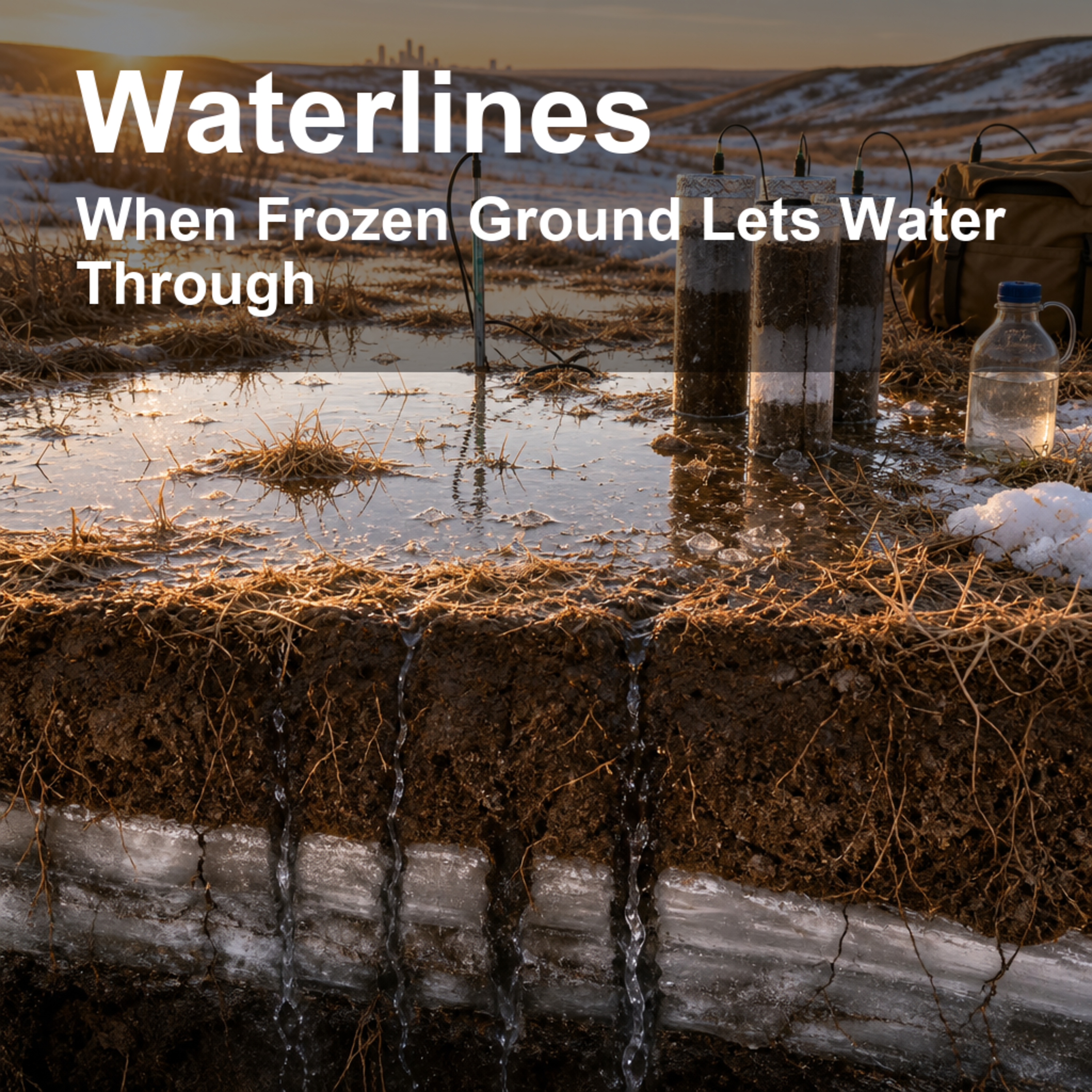
Takeaway: Frozen ground is not always a sealed lid; when it freezes dry, open root holes and cracks can carry meltwater downward fast, while wet frozen soil usually holds it back until the ice thaws.Spring snowmelt can decide whether water soaks into the ground, rushes into streams, recharges groundwater, or carries sediment and pollutants across a landscape. But frozen soil is not simply a solid barrier. This episode follows a careful lab study that asked a surprisingly practical question for cold regions: when does frozen ground act like concrete, and when does it behave more like a hidden drainpipe?Hosts A and B unpack how researchers collected prairie soil columns from Alberta, froze them under wet and dry starting conditions, and compared intact soil full of natural root holes and cracks with repacked soil that lacked those larger pathways. The results show why the history of the soil before winter matters: dry, structured soil let ponded meltwater move through air-filled macropores incredibly fast, while wet frozen soil slowed infiltration to the pace of thawing ice. Along the way, we connect the findings to snowmelt flooding, groundwater recharge, farm fields, urban rain gardens, mine reclamation covers, and a warming climate with more midwinter thaws.Citation: Pittman F, Mohammed A, Cey E. Effects of antecedent moisture and macroporosity on infiltration and water flow in frozen soil. Hydrological Processes. 2020;34:795–809. https://doi.org/10.1002/hyp.13629Disclosure: This Waterlines episode uses AI-generated voices to present and discuss the research in an accessible public-science format.
Embed this episode
NOW PLAYING
When Frozen Ground Lets Water Through
No transcript for this episode yet
Similar Episodes
No similar episodes found.
Similar Podcasts
No similar podcasts found.